Homemade Alfredo Sauce: Rich, Creamy, Ready in 15 Minutes
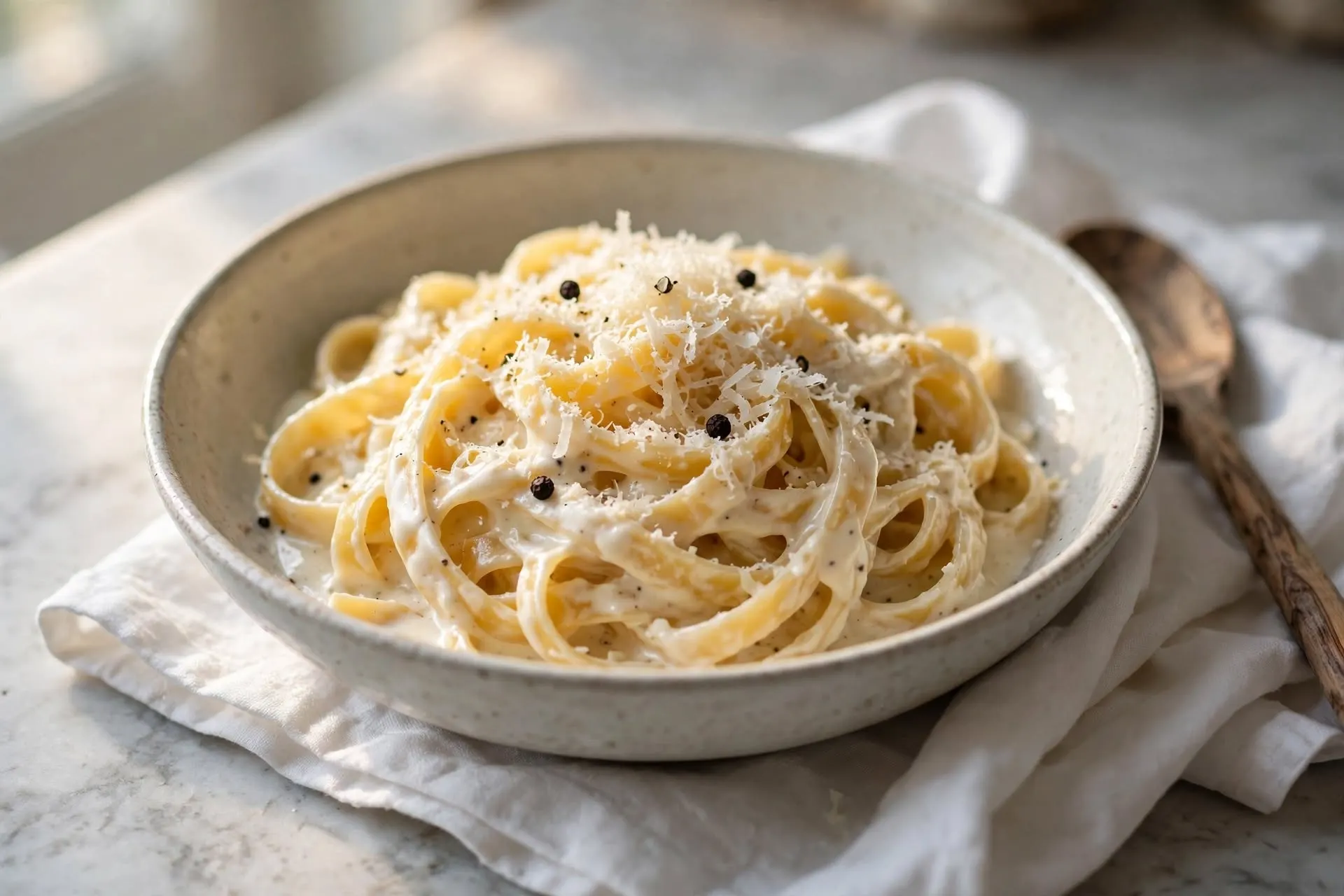
Alfredo sauce from a jar does the job, but it does not taste like homemade alfredo sauce. The difference is obvious the first time you make it properly: real Parmesan, real butter, heavy cream, and 15 minutes produce a sauce thick enough to coat the back of a spoon and rich enough to need nothing else.
My mother kept a block of Parmesan in the fridge every winter and made this every Sunday when the weather was cold. She never measured anything. It took me years of trial and error to figure out that the entire thing comes down to heat: too high at the wrong moment and the sauce breaks or turns grainy.
This version uses no flour, no roux, and no cream cheese. It relies on proper emulsification between the butter fat and the natural starches in Parmesan. Once the technique clicks, the whole thing takes about 15 minutes.
Why You’ll Love This Homemade Alfredo Sauce
- Coats pasta evenly because the butter and cheese form a proper emulsion, not a thin film that slides off
- Ready in 15 minutes, including the time it takes to grate the cheese
- No flour, no roux, no cream cheese: cleaner flavor with fewer steps
- Scales easily: halve it for two portions or double it for a dinner party of eight
- Works as a base for lasagna, white pizza, or any dish that calls for a cream sauce
Ingredients You’ll Need
For the Sauce
(Serves 4)
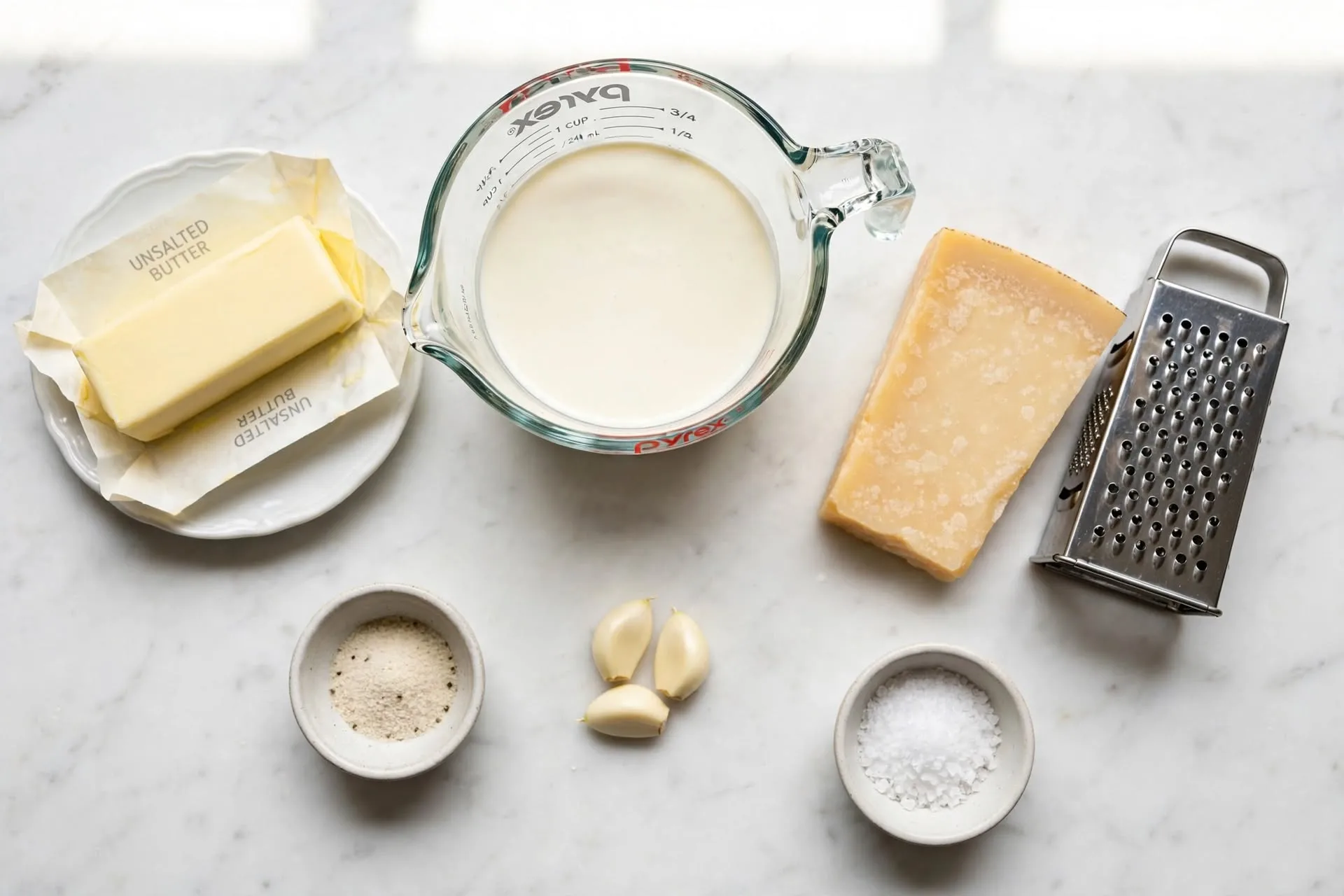
- 4 tablespoons (56g) unsalted butter (unsalted so you control the final salt level from the start)
- 3 garlic cloves, finely minced (minced finer than you would for most dishes so it melts fully into the sauce)
- 1 cup (240ml) heavy cream (full-fat only: low-fat cream does not emulsify properly and produces a thin, broken sauce)
- 1½ cups (135g) Parmesan Reggiano, freshly grated (a block grated yourself, not a bag: pre-shredded Parmesan contains anti-caking agents that turn the sauce grainy)
- ¼ teaspoon white pepper (keeps the sauce visually clean; black pepper works but leaves visible dark flecks)
- ½ teaspoon fine sea salt, plus more to taste
- 2 tablespoons reserved pasta water (the starch in pasta water helps the sauce cling to the noodles when you toss)
Recipe Timing
| Timing Element | Duration |
|---|---|
| Prep Time | 5 minutes |
| Cook Time | 10 minutes |
| Rest/Marinate Time | N/A |
| Total Time | 15 minutes |
Servings: 4 | Difficulty: Easy | Cuisine: Italian-American | Course: Sauce
How to Make Homemade Alfredo Sauce: Step by Step
Step 1: Grate the Parmesan
Grate 135g of Parmesan Reggiano on the fine side of a box grater. Set it aside at room temperature while you prepare the rest of the ingredients.
Why this works: Room-temperature cheese melts more evenly into warm cream. Cold Parmesan straight from the fridge is more likely to clump rather than dissolve smoothly.
Step 2: Melt the butter over low heat
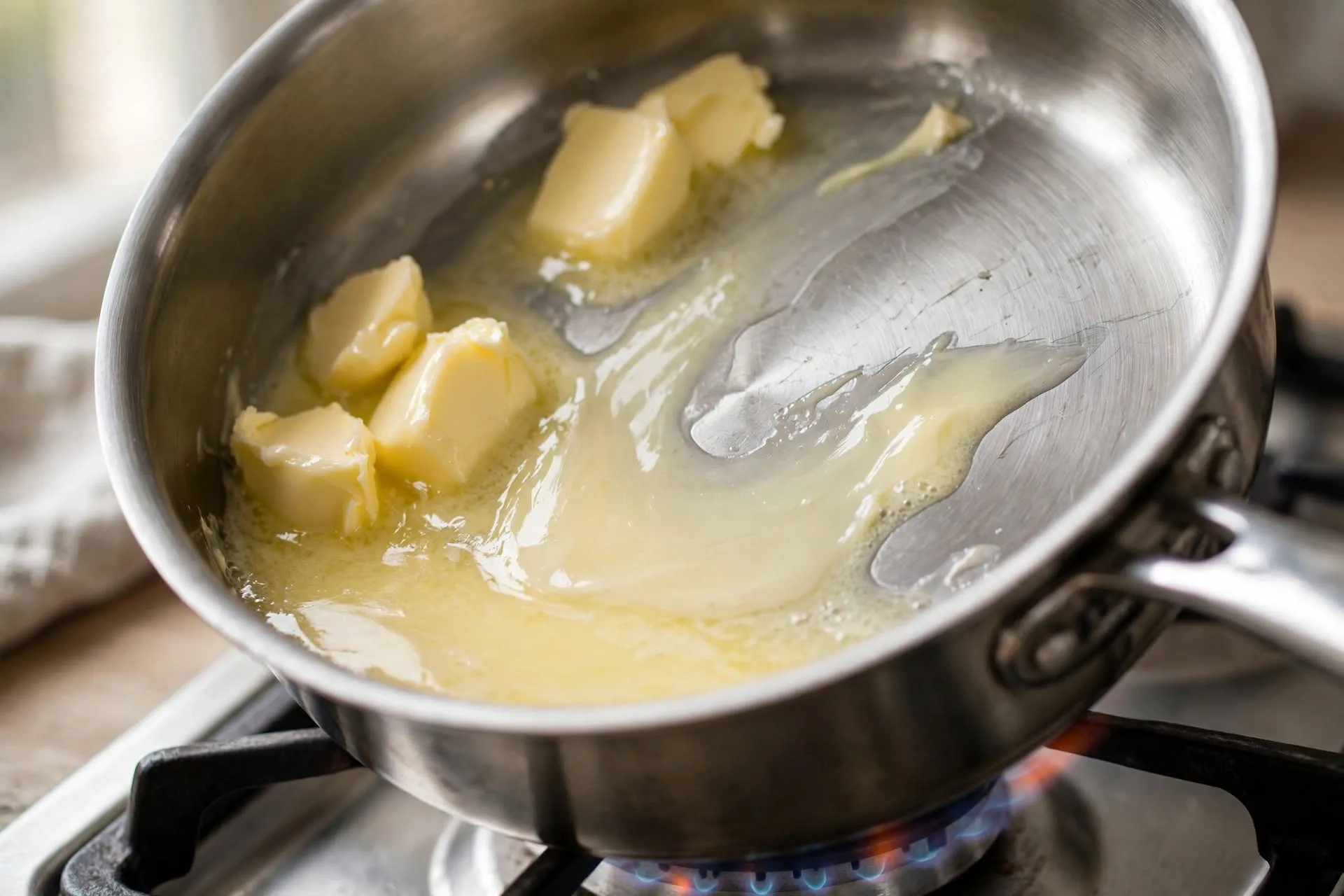
Place a medium saucepan over the lowest heat setting on your burner. Add the butter and let it melt completely without foaming or browning.
Why this works: Low heat keeps the butter fat intact and the milk solids from separating. If the butter browns, the sauce will taste nutty rather than clean, and the fat can begin to split from the cream later.
Step 3: Cook the garlic
Add the finely minced garlic to the melted butter. Stir constantly for 60 to 90 seconds until the garlic is fragrant and softened, but not browned. The edges should remain pale gold, not dark.
Step 4: Add the cream and simmer gently
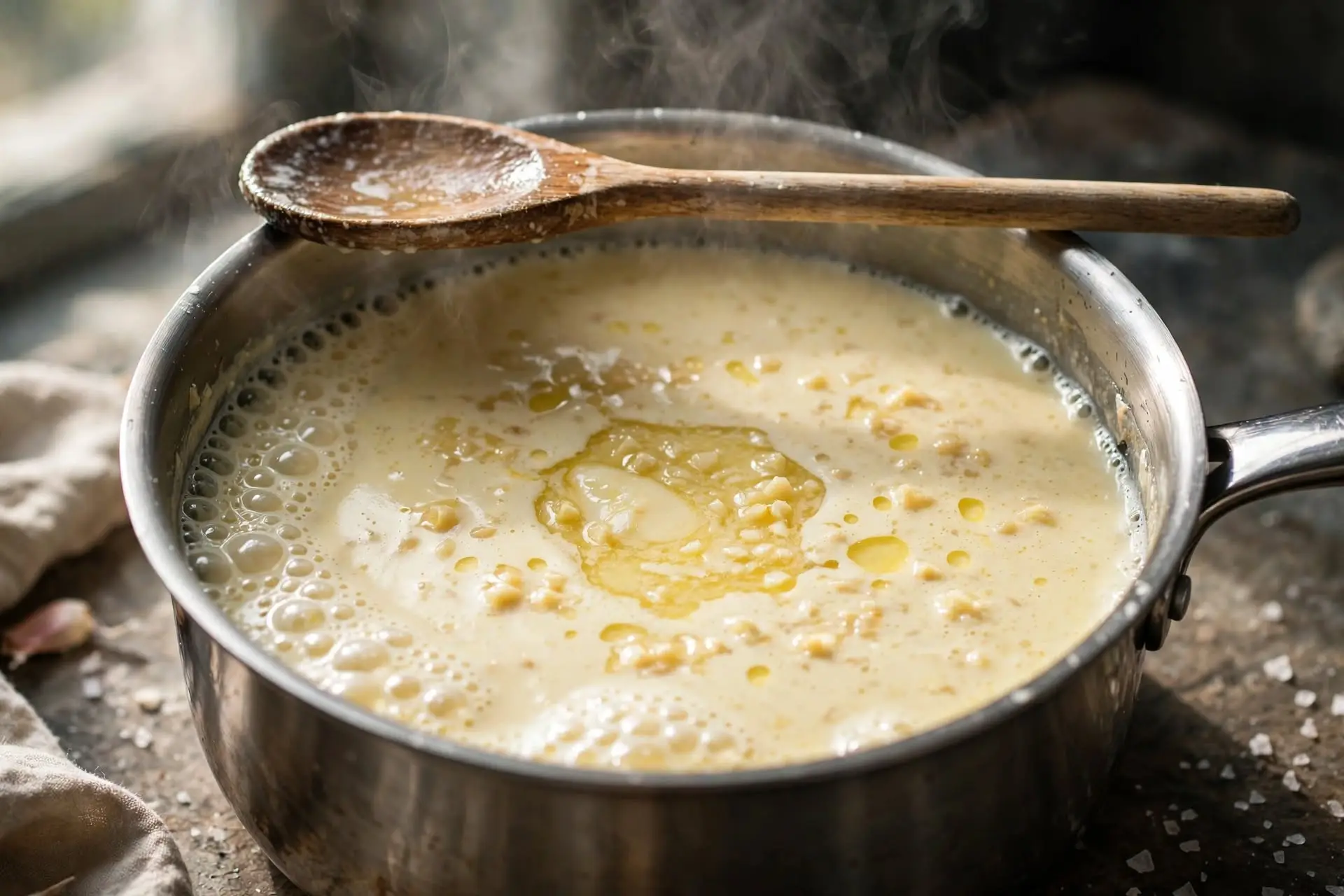
Pour in the heavy cream and raise the heat to medium-low. Stir to combine with the garlic butter and bring the mixture to a gentle simmer: small bubbles forming around the edge of the pan, not a rolling boil.
Why this works: A gentle simmer thickens the cream slowly through evaporation. A hard boil forces the dairy fat to separate and is the second most common reason a homemade alfredo sauce breaks.
Step 5: Reduce the cream slightly
Let the cream simmer uncovered for 3 to 4 minutes, stirring occasionally, until it just starts to coat the back of a spoon lightly. Do not reduce beyond this point: the sauce will thicken further once the Parmesan goes in.
Step 6: Remove from heat and add the Parmesan
Take the pan completely off the heat. Add the grated Parmesan in three additions, stirring well between each one until the cheese is fully melted before adding the next batch.
Why this works: Adding cheese off the heat is the single most reliable way to get a smooth sauce. High heat causes cheese proteins to seize and form lumps. This is the most common technical error and the one most worth getting right.
Step 7: Season and adjust
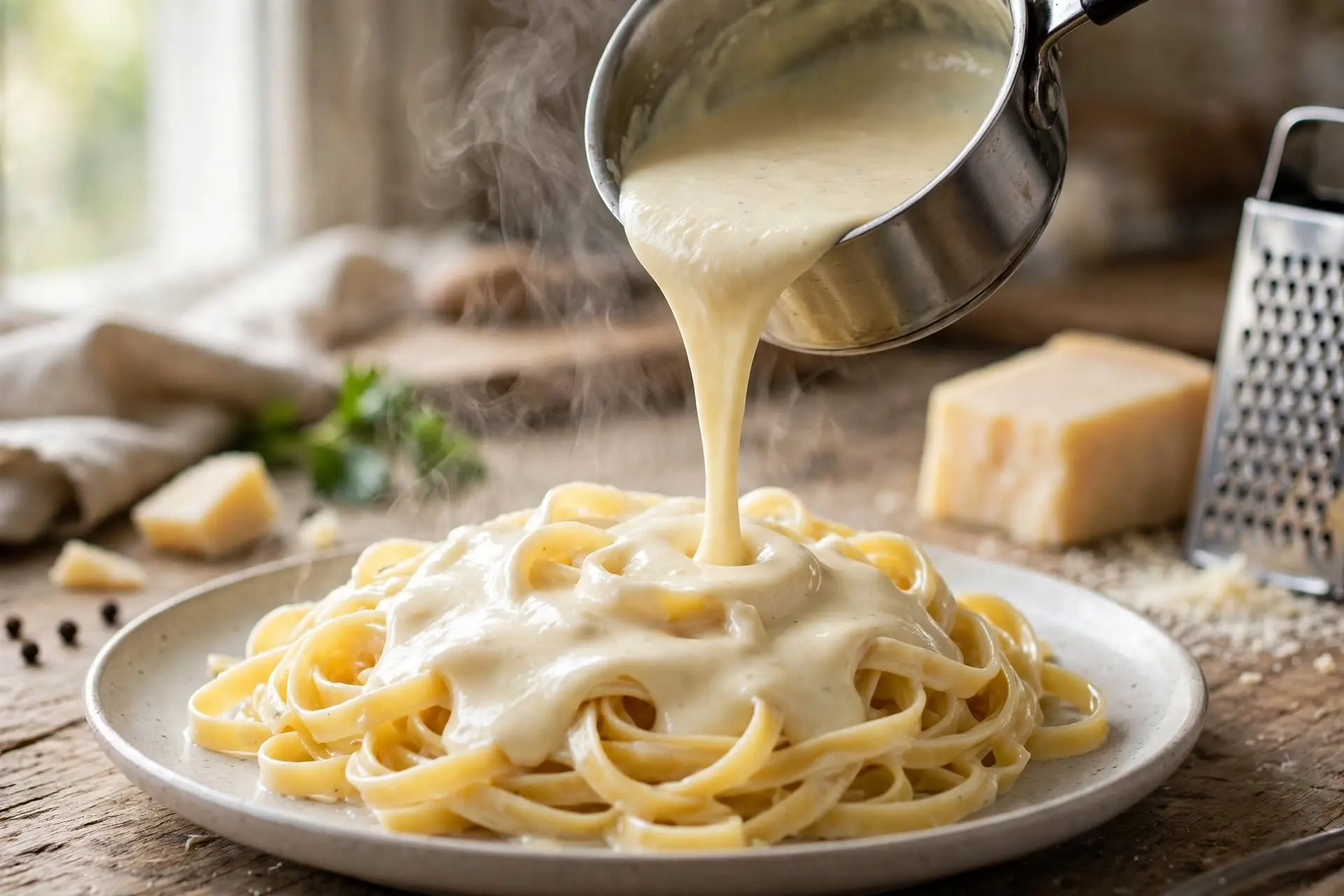
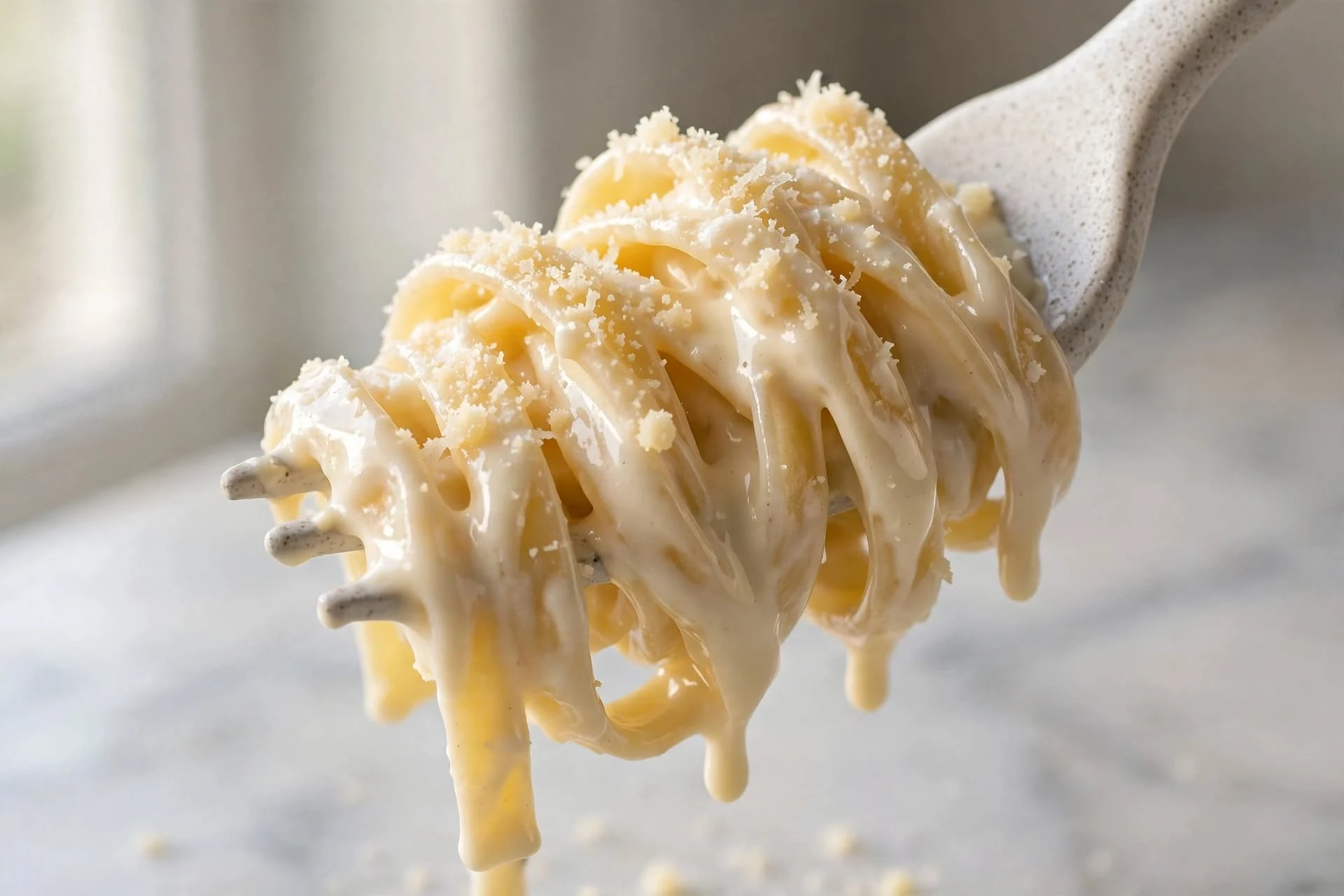
Stir in the white pepper and salt. Taste and adjust. If the sauce is too thick, add reserved pasta water one tablespoon at a time, stirring after each addition, until it falls off a spoon in a slow, steady ribbon.
Step 8: Toss with pasta immediately
Pour the sauce over freshly drained pasta and toss to coat. Serve within 5 minutes. The sauce firms up quickly as it cools, and reheating it after it has absorbed into the pasta changes the texture noticeably.
Common Mistakes to Avoid
Using pre-grated Parmesan from a bag
Most store-bought shredded Parmesan contains cellulose, an anti-caking agent that does not melt cleanly into cream. It creates a grainy, separated texture regardless of how careful your technique is. Buy a block and grate it yourself on the fine side of a box grater.
Adding the cheese while the pan is still on the burner
Even low residual heat can cause the cheese proteins to seize and clump. Remove the pan from the heat completely before you add the Parmesan: thirty seconds off the burner makes a real difference to the final texture.
Using light cream or half-and-half
These do not carry enough fat to emulsify properly with the butter and cheese. The sauce will be thin and prone to breaking. Use heavy cream (at least 36% fat) or double cream for a stable, glossy result.
Over-reducing the cream before adding the cheese
If the cream simmers for more than 5 minutes, it becomes too thick before the cheese even goes in. The finished sauce will be stiff, pasty, and hard to toss with pasta. Watch for the moment the cream lightly coats a spoon, then stop.
Variations and Substitutions
Dairy-free version
Replace the butter with a vegan butter that has a fat content above 78% and substitute full-fat coconut cream for the heavy cream. The sauce will have a faint coconut undertone. Use a hard cashew-based Parmesan alternative, grated fine on the same setting.
Lighter version
The sauce will be noticeably thinner if you substitute half-and-half for heavy cream, but you can compensate by dissolving 1 tablespoon of cornstarch in 2 tablespoons of cold cream and stirring it in before the rest of the liquid. This introduces just enough starch to hold the sauce together.
With mushrooms
Sauté 200g of sliced cremini mushrooms in a separate pan until golden and most of the moisture has cooked off, then stir them into the finished sauce before tossing with pasta. They absorb the cream and add a savory depth that pairs well with the Parmesan.
What to Serve With Alfredo Sauce
Fettuccine:
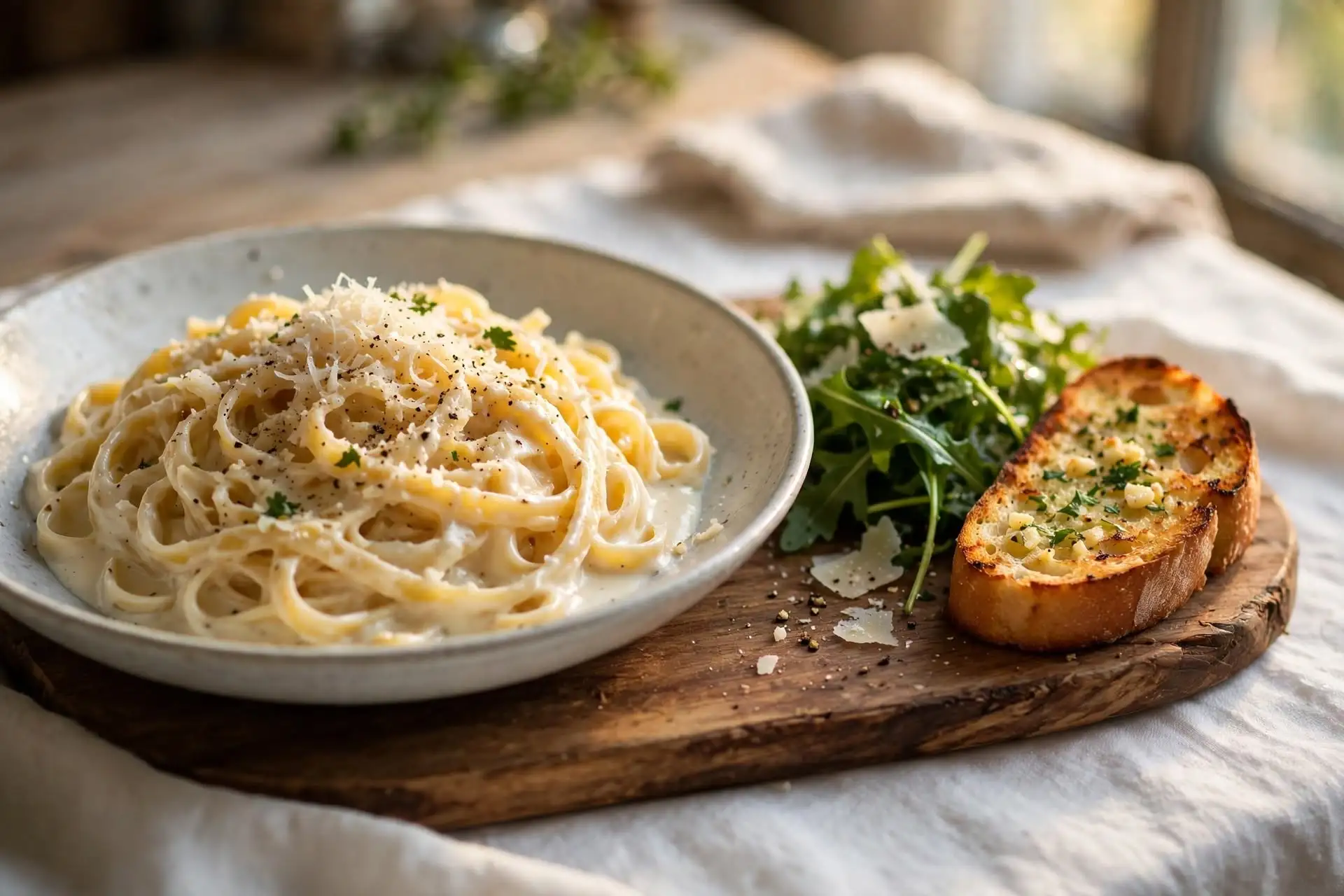
Homemade alfredo sauce pairs best with fettuccine. The wide, flat surface holds cream sauce more evenly than thin pasta and gives the best coating per bite. Cook the noodles to al dente: they will continue absorbing sauce in the bowl.
Penne or rigatoni:
The ridged exterior and hollow center trap the sauce inside, which works especially well if you are adding vegetables.
Steamed broccoli:
Add it directly to the pan with the pasta when you toss. The florets absorb the cream and soften slightly from the residual heat, which ties the vegetable into the sauce rather than leaving it sitting on top.
Garlic bread:
Use a crusty ciabatta or sourdough. A simple rub of raw garlic on toasted bread is all it needs to cut through the richness.
Simple green salad with lemon vinaigrette:
The acidity from the lemon cuts through the fat in the sauce and keeps the full meal from sitting too heavily.
Storage, Reheating and Make-Ahead
Fridge
Store leftover alfredo sauce in an airtight glass container for up to 3 days. Keep it separate from cooked pasta if possible: pasta absorbs the sauce quickly and the two reheat differently.
Freezer
Alfredo sauce does not freeze well. The dairy emulsion breaks during freezing and the sauce becomes watery and grainy after thawing. It takes 15 minutes to make from scratch, so fresh is always the better call.
Reheat
Warm the sauce in a small saucepan over low heat. Add 1 to 2 tablespoons of milk or cream and stir constantly while it heats. Do not microwave it directly from cold: the uneven heat breaks the emulsion. If a microwave is the only option, heat at 50% power in 20-second intervals and stir between each cycle.
Make-ahead
Cook the garlic in the butter and store the garlic butter in a sealed container in the fridge for up to 24 hours. When ready to finish, reheat the garlic butter gently over low heat and continue from Step 4. This saves about 3 minutes at mealtime without sacrificing texture.
Allergen and Dietary Notes
Contains dairy (butter, heavy cream, Parmesan Reggiano). To make this dairy-free, substitute vegan butter, full-fat coconut cream, and a hard cashew-based Parmesan alternative.
The sauce itself contains no gluten. If you serve it with standard wheat pasta, the full dish contains gluten. Use certified gluten-free pasta for a gluten-free meal.
Nutrition Information
Per serving (sauce only, serves 4, based on exact ingredient quantities listed above)
| Nutrient | Per Serving |
|---|---|
| Calories | 430 kcal |
| Protein | 12 g |
| Total Carbohydrates | 3 g |
| Dietary Fiber | 0 g |
| Total Sugars | 1 g |
| Total Fat | 42 g |
| Saturated Fat | 27 g |
| Sodium | 780 mg |
| Cholesterol | 130 mg |
| Potassium | 90 mg |
| Calcium | 350 mg |
| Iron | 0.2 mg |
Nutritional values are estimates only and may vary based on specific ingredients, brands, and portion sizes used. For precise dietary needs, consult a registered dietitian.
Frequently Asked Questions
Why does my alfredo sauce turn grainy?
Almost always caused by one of two things: adding the Parmesan while the pan is still on direct heat, or using pre-shredded Parmesan that contains anti-caking additives. Remove the pan from the burner completely before adding any cheese, and grate your own Parmesan from a block every time.
Can I make homemade alfredo sauce without heavy cream?
Full-fat coconut cream is the most reliable substitute and follows the same emulsification process as heavy cream. Single cream or half-and-half does not carry enough fat and typically produces a thin sauce that breaks. If using coconut cream, expect a faint sweetness in the background flavor.
How do I thicken alfredo sauce if it comes out too thin?
Let the cream simmer uncovered for another 2 to 3 minutes before adding the Parmesan. Alternatively, stir in an extra 2 tablespoons of freshly grated Parmesan off the heat: the cheese naturally tightens the sauce as it melts. Do not turn up the heat to speed up the thickening.
How long does homemade alfredo sauce last in the fridge?
Up to 3 days in an airtight container, stored separately from any cooked pasta. After day three, the cream begins to separate and the flavor flattens. Make a fresh batch rather than pushing it to day four.
Can you freeze homemade alfredo sauce?
Freezing is not recommended. The dairy emulsion breaks when frozen and the sauce turns grainy and watery after thawing. Since the recipe takes 15 minutes from scratch, making it fresh is the practical choice.
What pasta works best with alfredo sauce?
Fettuccine is the traditional choice because the flat, wide surface holds cream sauce more evenly than thin pasta like spaghetti or angel hair. Penne and rigatoni work well as alternatives, especially when you are adding vegetables or protein to the dish.
Can I make alfredo sauce ahead of time?
The garlic butter base can be made up to one day ahead and kept in the fridge. Finish the sauce with cream and Parmesan immediately before serving. Fully made alfredo sauce thickens significantly as it sits and is difficult to reheat back to the right consistency.
Conclusion
Homemade alfredo sauce gets a reputation for being tricky, but the recipe is genuinely short: five ingredients, low heat, and cheese added off the burner. Those three decisions determine whether the sauce is smooth or grainy. Everything else is pasta and timing. Pre-grated Parmesan is the single most common failure point. Grate it yourself, pull the pan off the heat, and the sauce takes care of itself.
Homemade Alfredo Sauce: Recipe Card
Homemade Alfredo Sauce: Rich, Creamy, Ready in 15 Minutes
Ingredients
Method
- Grate 135g of Parmesan Reggiano on the fine side of a box grater. Set aside at room temperature.
- Place a medium saucepan over the lowest heat setting. Add the butter and melt fully without foaming or browning.
- Add the finely minced garlic and stir for 60 to 90 seconds until fragrant and pale gold at the edges, not browned.
- Pour in the heavy cream, raise the heat to medium-low, and bring to a gentle simmer: small bubbles at the edges, not a rolling boil.
- Simmer uncovered for 3 to 4 minutes, stirring occasionally, until the cream lightly coats the back of a spoon.
- Remove the pan completely from the heat. Add the Parmesan in three additions, stirring well between each until fully melted.
- Stir in the white pepper and salt. Adjust to taste. Add pasta water one tablespoon at a time if the sauce is too thick.
- Toss immediately with freshly drained pasta and serve within 5 minutes.