Chicken Meatballs — Juicy, Tender, and Done in 30 Minutes
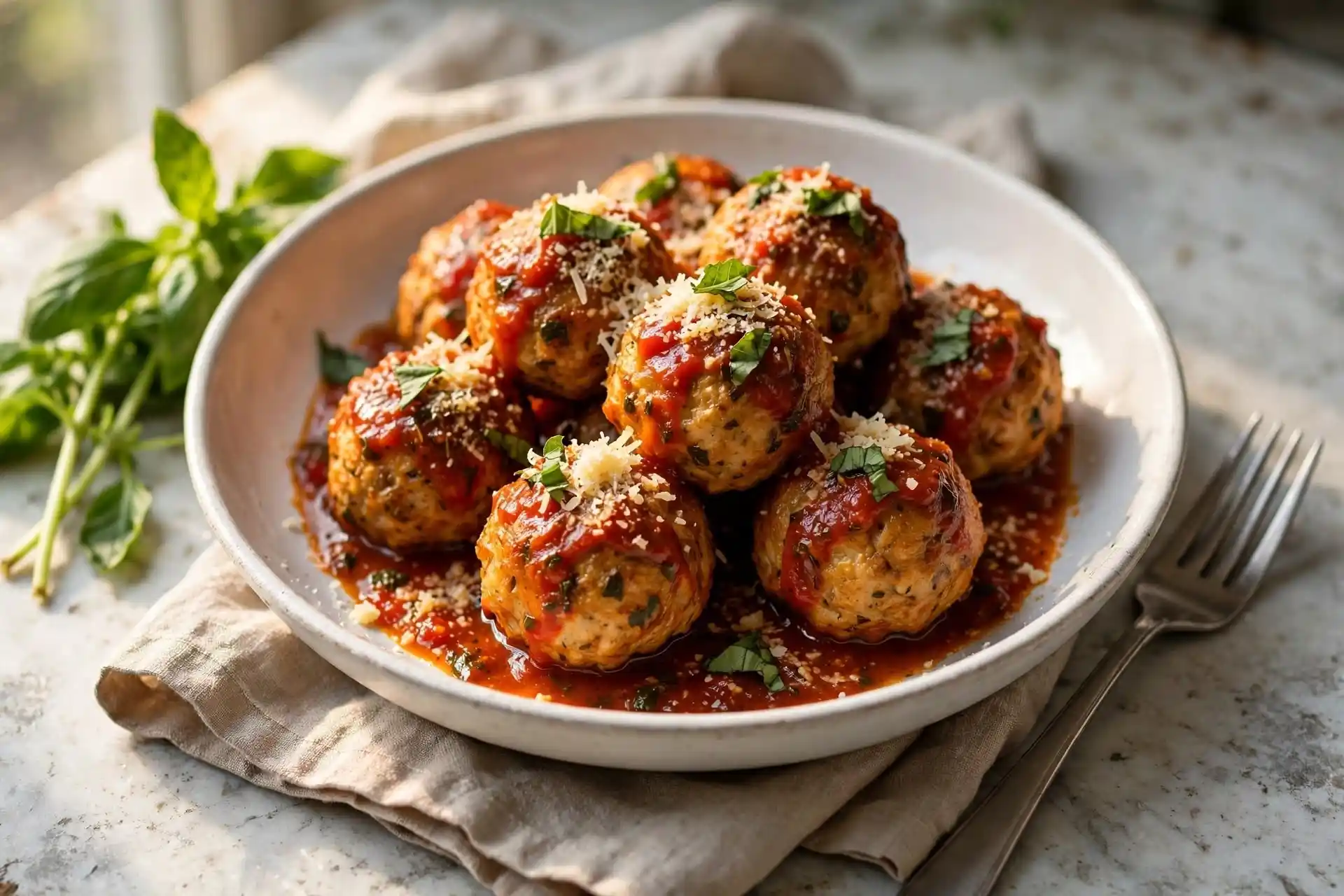
Ground chicken has a reputation for being dry and bland, but these chicken meatballs prove otherwise. The fix is simple: a panade (milk-soaked breadcrumbs) folded into the mix keeps each meatball tender from the inside out, even after they’ve been seared and simmered.
These come together in about 30 minutes with one skillet and a handful of pantry staples. They hold their shape, brown properly, and stay moist enough to eat straight off the pan, which they rarely make it past in my house.
Why You’ll Love These Chicken Meatballs
- Genuinely juicy — the panade does real work here; there’s no dry, rubbery texture
- Pan-seared, not baked — you get proper color and a better fond for building sauce in the same pan
- No pork — ground chicken keeps this 100% halal-friendly without any substitutions needed
- Flexible size — make them small for soup, medium for pasta, larger for serving as a main
- Make-ahead ready — they freeze well cooked or raw, shaped and ready to go
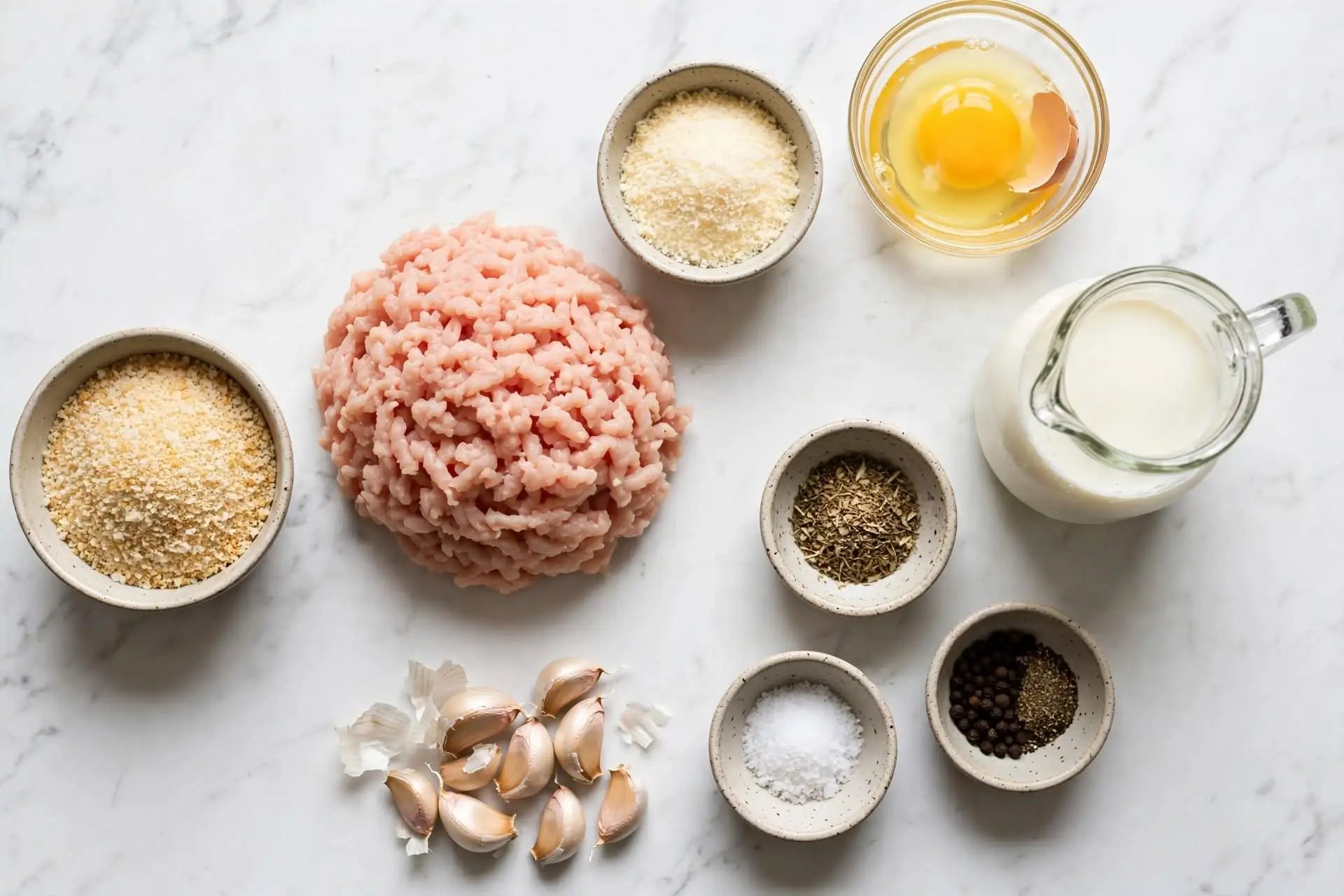
Ingredients You’ll Need
For the Meatballs
- 500g (1.1 lb) ground chicken (thigh is preferred over breast for flavor and fat content)
- ¼ cup (25g) dry breadcrumbs (regular or panko — panko gives a slightly lighter texture)
- 3 tablespoons whole milk (soaked into breadcrumbs to form a panade — this is the moisture insurance)
- 1 large egg (binds everything; without it, the meatballs crack and crumble)
- 3 garlic cloves, finely grated (grated releases more allicin than minced; stronger flavor)
- 3 tablespoons finely grated Parmesan (adds salt, umami, and structure in one go)
- 1 teaspoon dried oregano
- ½ teaspoon onion powder
- ½ teaspoon salt
- ¼ teaspoon black pepper
- 2 tablespoons olive oil (for searing)
For the Optional Pan Sauce
- 1 can (400g) crushed tomatoes
- 2 garlic cloves, thinly sliced
- 1 tablespoon olive oil
- ½ teaspoon dried basil
- Salt and pepper to taste
Recipe Timing
| Timing Element | Duration |
| Prep Time | 10 minutes |
| Cook Time | 18 minutes |
| Rest Time | 2 minutes |
| Total Time | 30 minutes |
Servings: 4 (makes approximately 20 meatballs at 25g each)
Difficulty: Easy
Cuisine: Italian-inspired
Course: Main, meal prep
How to Make Chicken Meatballs — Step by Step
Step 1 — Make the panade
In a large mixing bowl, combine the breadcrumbs and milk. Stir them together and let the mixture sit for 2 minutes until the breadcrumbs have fully absorbed the milk and the texture looks like wet sand.
Why this works: Soaking the breadcrumbs before mixing ensures they stay moist inside the meatball throughout cooking. Dry breadcrumbs pull moisture from the meat; wet ones release it back.
Step 2 — Mix the meatball mixture
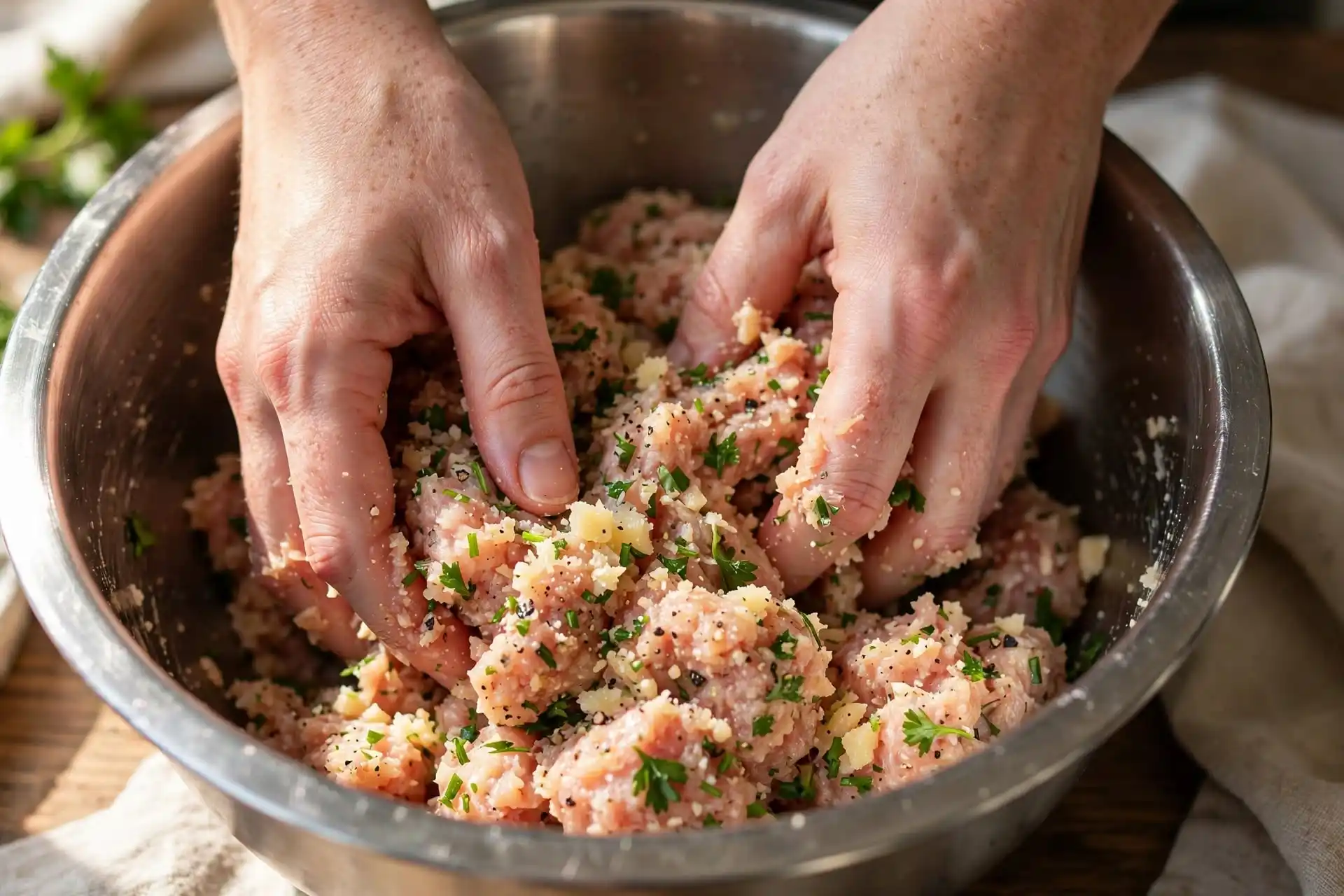
Add the ground chicken, egg, grated garlic, Parmesan, oregano, onion powder, salt, and pepper to the panade. Using your hands, mix until just combined — about 20 seconds of active mixing. Stop as soon as no streaks remain.
Why this works: Overworking ground chicken activates the proteins and produces a dense, rubbery meatball. Mix minimally, same as you would a burger.
⚠️ Food Safety: Raw ground chicken must be handled carefully. Wash hands thoroughly with soap and hot water immediately after mixing. Use a separate board and knife for any raw poultry work.
Step 3 — Portion and shape
Scoop the mixture using a 1.5-tablespoon cookie scoop or two spoons, portioning each meatball to approximately 25g. Roll each portion briefly between your palms — 3 to 4 rotations maximum. Place them on a plate as you go. You should have approximately 20 meatballs.
Wet your hands lightly between rolling to prevent sticking.
Step 4 — Sear the meatballs
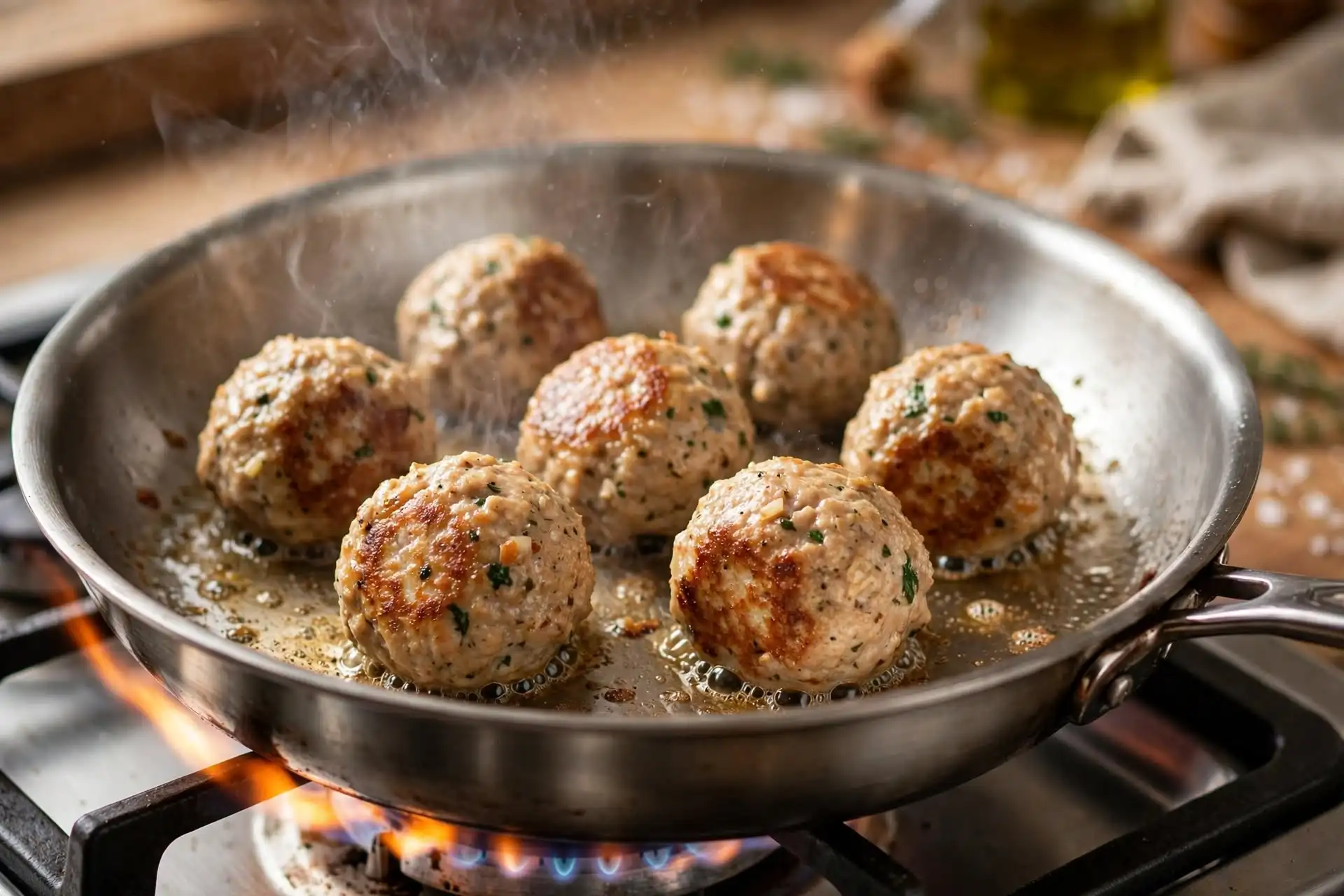
Heat 2 tablespoons of olive oil in a large skillet (28–30cm / 11–12 inch) over medium-high heat until the oil shimmers and begins to move freely across the pan. Add the chicken meatballs in a single layer, spacing them at least 1cm apart. Do not move them for 3 minutes.
Why this works: Leaving the meatballs undisturbed lets the Maillard reaction build a proper brown crust. Moving them too early tears the sear and causes sticking.
Step 5 — Turn and finish cooking
Using tongs, turn each meatball to an uncooked side. Cook for another 3 minutes. Turn once more to brown any remaining pale spots, about 2 more minutes. Total searing time: 8 minutes.
⚠️ Food Safety: Chicken meatballs are safe to eat when they reach an internal temperature of 75°C (165°F). Use an instant-read thermometer inserted into the center of the largest meatball to confirm. Do not rely on color alone.
Step 6 (Optional) — Build the pan sauce
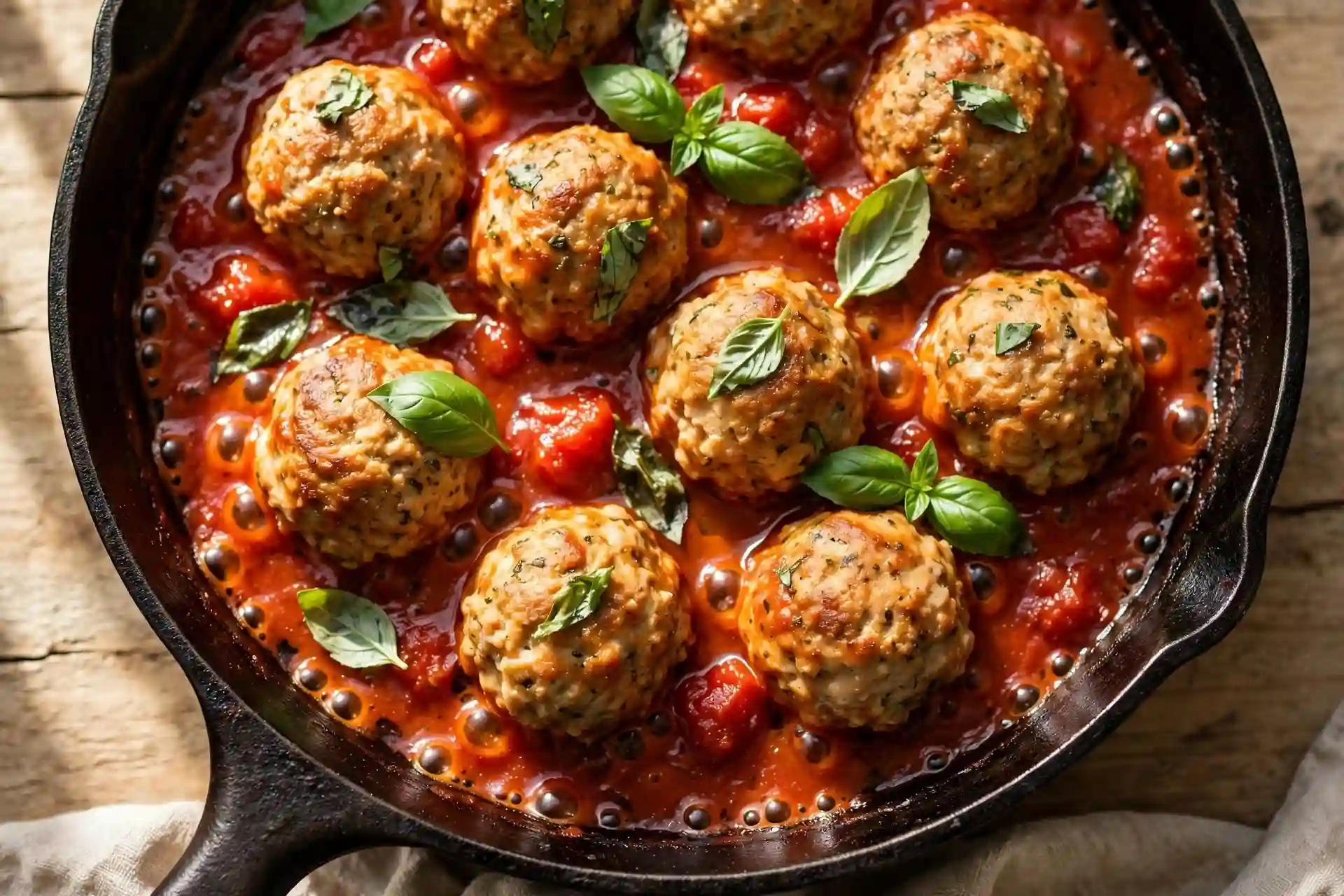
Remove the seared chicken meatballs to a plate. Reduce heat to medium. Add 1 tablespoon olive oil and the sliced garlic to the same pan. Cook for 60 seconds until the garlic is fragrant and just starting to color. Pour in the crushed tomatoes and dried basil, scraping up any browned bits from the pan floor. Season with salt and pepper. Simmer for 5 minutes until the sauce thickens slightly.
Step 7 — Return meatballs to the sauce
Nestle the meatballs back into the sauce. Reduce heat to low, cover, and cook for an additional 5 minutes. The meatballs will reach a final internal temperature of 75°C (165°F) and absorb flavor from the sauce.
Why this works: Finishing in sauce adds moisture back to the exterior and integrates the flavors between the meatball and the sauce instead of serving them as separate components.
Common Mistakes to Avoid
- Using breast meat only — Chicken breast is very lean — less than 3% fat. Ground chicken made from breast alone will produce dry, dense meatballs even with a panade. Look for ground chicken made from thighs, or mix half-and-half. If you can only find breast, add 1 tablespoon of olive oil directly to the mix.
- Skipping the resting step — Cutting into or serving meatballs straight off the heat loses moisture fast. Two minutes of resting lets the juices redistribute. It’s a small window, but it makes a visible difference.
- Crowding the pan — Too many meatballs too close together drop the pan temperature and steam instead of sear. Work in two batches if your skillet is under 28cm. A proper sear is worth the extra 4 minutes.
- Over-mixing the meat — Ground chicken is more protein-dense than beef. Mixing too long — more than 30 to 40 seconds of active kneading — tightens the proteins and you end up with a meatball that chews like a dense patty. Mix until just combined, then stop.
Variations and Substitutions
Breadcrumb-free version: Replace the breadcrumbs and milk with 2 tablespoons of plain Greek yogurt. The yogurt provides moisture and a mild tang, and the meatballs hold together well, though the texture is slightly denser.
Spiced version: Add ½ teaspoon cumin, ¼ teaspoon coriander, and ¼ teaspoon smoked paprika to the mix. Skip the Parmesan and oregano. These work well in a yogurt-based sauce or wrapped in flatbread.
Baked instead of pan-fried: Arrange the shaped meatballs on a lightly oiled baking sheet. Bake at 200°C (400°F) for 18 to 20 minutes until internal temperature reaches 75°C (165°F). You lose the sear and the pan fond, but it works for batch cooking when you need hands-off time.
What to Serve With Chicken Meatballs
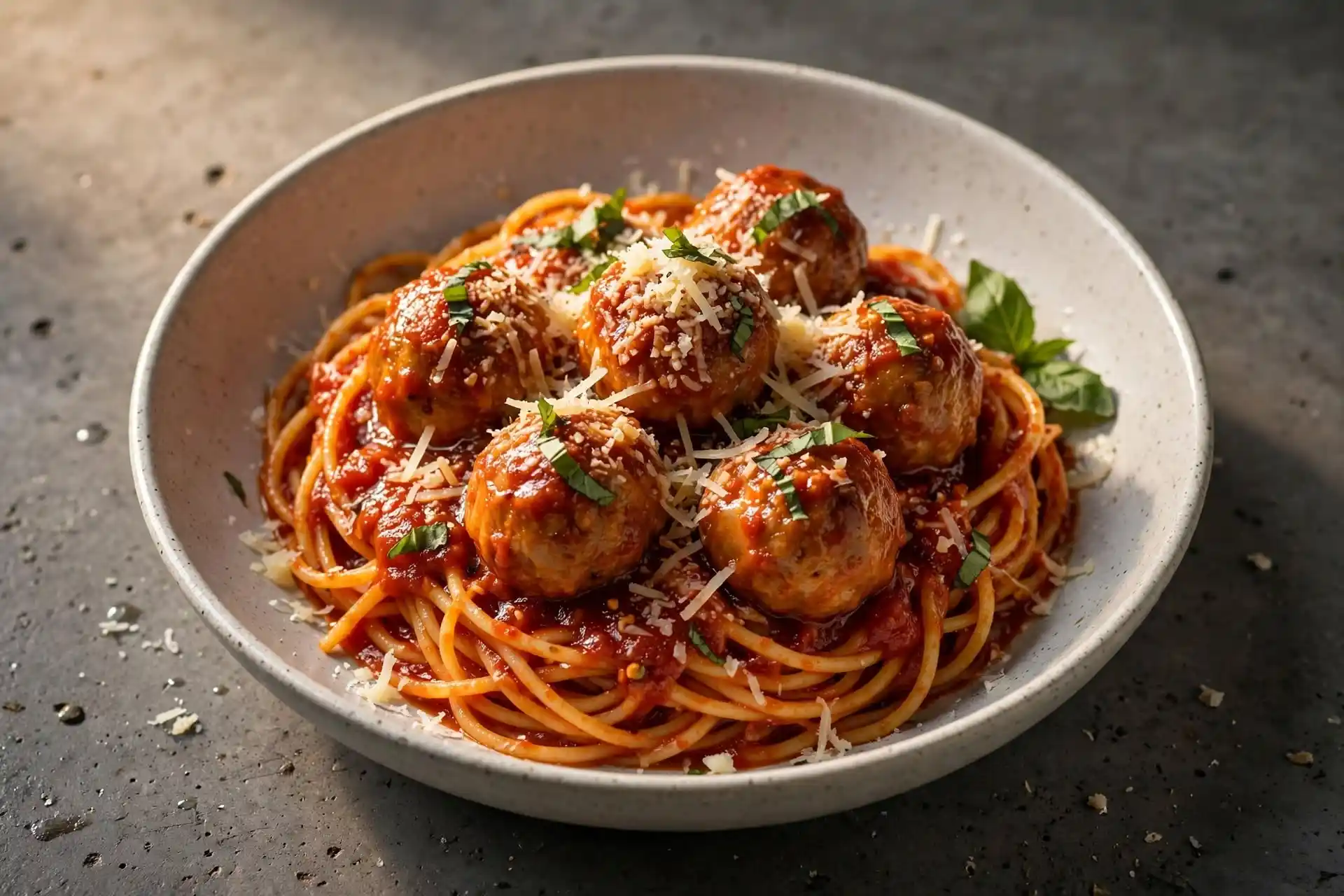
Spaghetti or rigatoni — the classic combination works because the ridged pasta catches the tomato sauce between every meatball.
Rice pilaf — plain rice lets the meatball flavor lead without competition; add a side of sliced cucumber and yogurt to round it out.
Sub rolls — split a roll, spoon in 4 to 5 meatballs with sauce, and finish with grated Parmesan. Properly satisfying.
Soup base — drop unsauced chicken meatballs into a clear chicken broth with orzo, spinach, and lemon for a simple weeknight soup.
Mezze platter — the spiced variation above works well alongside hummus, tabbouleh, and warm pita.
Storage, Reheating, and Make-Ahead
Fridge: Store cooked meatballs (with or without sauce) in an airtight container for up to 4 days.
Freezer: Freeze cooked meatballs on a baking sheet in a single layer for 1 hour, then transfer to a zip-lock bag or freezer container. They keep for 3 months. Thaw overnight in the fridge before reheating.
Reheat: Add meatballs and a splash of water or broth to a covered saucepan over medium-low heat for 8 to 10 minutes, turning once. The added liquid restores moisture that freezing can pull out. You can also microwave on medium power for 90 seconds, but the stovetop method gives better texture.
Make-ahead: Shape raw meatballs and refrigerate uncovered on a plate for up to 24 hours before cooking. This firms them up slightly and makes searing easier. Alternatively, cook a full batch and freeze; they reheat well directly from frozen in a simmering sauce over 15 minutes.
Allergen and Dietary Information
Contains gluten (from breadcrumbs). For a gluten-free version, substitute the breadcrumbs with certified gluten-free oat breadcrumbs or 2 tablespoons of almond flour. Check that your Parmesan brand is also certified gluten-free if this is a strict dietary requirement.
Contains dairy (from Parmesan and milk). To make this dairy-free, replace the milk with unsweetened oat milk and omit the Parmesan, adding an extra ¼ teaspoon salt and 1 teaspoon nutritional yeast to compensate for the savory depth.
Contains eggs. No tested substitution recommended for this recipe — the egg is structural here. Removing it without a reliable binder will cause the meatballs to break apart during searing.
“To make this gluten-free or dairy-free, try substituting as listed above. Always check all product labels if you are managing a diagnosed allergy.”
Nutrition Information
Calculated per serving (approximately 5 meatballs, no sauce)
| Nutrient | Per Serving |
| Calories | 265 kcal |
| Protein | 28 g |
| Total Carbohydrates | 7 g |
| Dietary Fiber | 0.5 g |
| Total Sugars | 1 g |
| Total Fat | 14 g |
| Saturated Fat | 3.5 g |
| Sodium | 430 mg |
| Cholesterol | 130 mg |
| Potassium | 310 mg |
| Calcium | 80 mg |
| Iron | 1.2 mg |
“Nutritional values are estimates only and may vary based on specific ingredients, brands, and portion sizes used. For precise dietary needs, consult a registered dietitian.”
Frequently Asked Questions
Q: Why do my chicken meatballs fall apart?
A: The most common cause is skipping or under-using the egg. Ground chicken is lean and needs a binder — one full egg per 500g of meat is the minimum. The second cause is over-mixing, which breaks down the protein structure. Mix the ingredients just until combined and no further.
Q: How do I know when chicken meatballs are fully cooked?
A: Use an instant-read thermometer. The center of the largest meatball must read 75°C (165°F). Color is not reliable with chicken — the inside can look white before it is safe, or pink after it is safe, depending on the acidity of ingredients like tomatoes.
Q: Can I use chicken breast instead of chicken thigh?
A: You can, but add 1 tablespoon of olive oil directly into the mix to compensate for the lower fat content. Breast-only chicken meatballs cooked without added fat tend to be noticeably drier, especially after reheating.
Q: Can I make chicken meatballs ahead of time?
A: Yes. Shape them raw and refrigerate for up to 24 hours, or cook a full batch and freeze for up to 3 months. Both methods work well. For best texture after freezing, reheat in simmering sauce rather than the microwave.
Q: What can I use instead of breadcrumbs?
A: Rolled oats blended briefly in a food processor work as a 1:1 swap. Almond flour is a lower-carb option at the same ratio. Cooked white rice (2 tablespoons per 500g) is another option — it adds moisture rather than bulk. Each changes the texture slightly; oats are the closest to a traditional result.
Q: How do I stop chicken meatballs from sticking to the pan?
A: Make sure the oil is properly hot before you add the meatballs — it should shimmer and move freely when you tilt the pan. Cold oil causes sticking. Also, let the meatballs sit undisturbed for the full 3 minutes before turning. They release naturally once the crust has formed.
Q: Can I bake these instead of frying?
A: Yes. At 200°C (400°F) on a lightly oiled sheet pan for 18 to 20 minutes. They won’t have the same caramelized crust, but the interior stays moist and the method is lower-effort for larger batches.
Conclusion
Chicken meatballs are straightforward once you understand two things: lean meat needs a moisture strategy (the panade), and the sear needs time (don’t rush the 3-minute undisturbed crust). Everything else in this recipe follows from those two points. Make a batch on Sunday and you have a versatile protein ready across pasta, soup, and sandwiches for the whole week. The spiced variation in particular is worth trying at least once — it takes 2 minutes of extra measuring and opens up an entirely different set of serving options.
Chicken Meatballs — Recipe Card
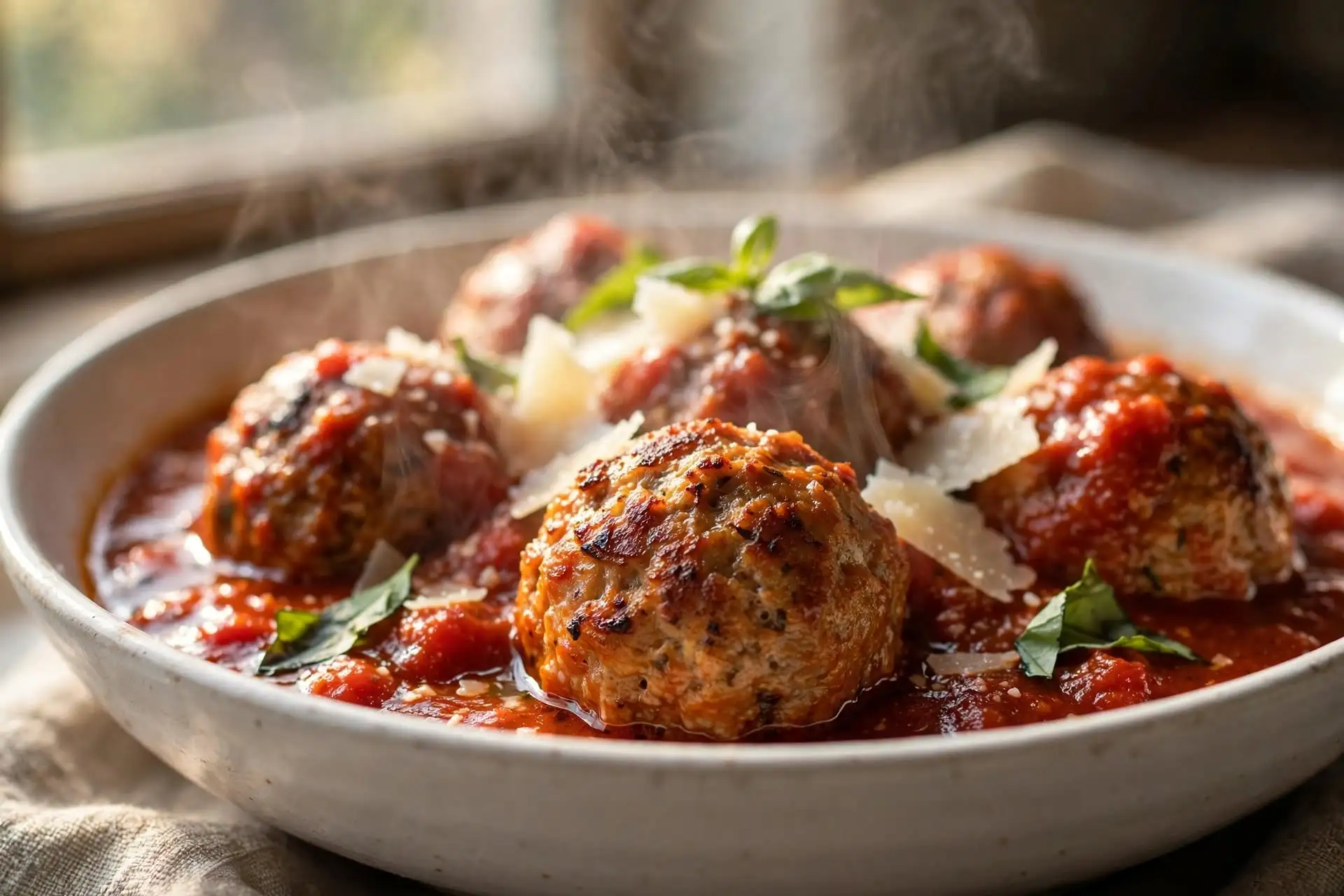
Chicken Meatballs
Ingredients
Method
- Combine breadcrumbs and milk in a large bowl. Let sit 2 minutes until fully absorbed.
- Add ground chicken, egg, garlic, Parmesan, oregano, onion powder, salt, and pepper. Mix by hand for 20 seconds, just until combined.
- Portion into approximately 20 balls at 25g each. Roll briefly between wet palms.
- Heat 2 tablespoons olive oil in a large skillet over medium-high heat until shimmering. Add meatballs in a single layer and do not move for 3 minutes.
- Turn and cook 3 more minutes. Turn once more for 2 minutes to brown any remaining pale sides. Verify internal temperature of 75°C (165°F) with a thermometer.
- (Optional sauce) Remove meatballs. Add oil and sliced garlic to same pan; cook 60 seconds. Add crushed tomatoes and basil, scrape up fond, season, and simmer 5 minutes.
- Return meatballs to sauce, cover, and cook on low for 5 more minutes. Rest 2 minutes before serving.