
Alfredo Sauce Recipe: Rich and Creamy in 20 Minutes
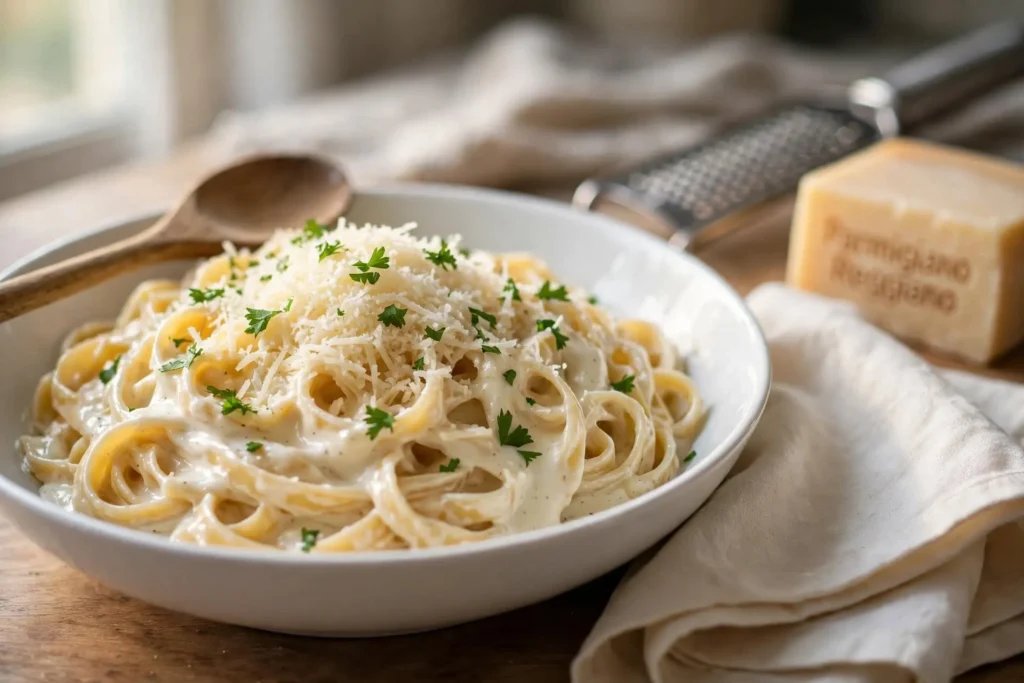
This alfredo sauce recipe uses three main ingredients: butter, heavy cream, and real Parmesan. Most store-bought versions include thickeners and stabilizers that make the sauce gluey and one-dimensional. Skip those. When you make it from scratch, the sauce is silky, coats pasta properly, and takes less than 20 minutes.
The thing that changed how I make this is the Parmesan. For a long time I used the pre-grated variety from a can because it was convenient. The sauce always came out slightly gritty, with a faint processed taste I could never quite fix. Switching to a block of Parmigiano-Reggiano grated fresh right before use made a bigger difference than any other adjustment.
This recipe covers every step clearly, including why the sauce sometimes breaks and exactly how to prevent it.
Why You’ll Love This Alfredo Sauce Recipe
- No flour, no roux — the cream reduces naturally to the right consistency without any thickening agents
- Freshly grated Parmesan melts cleanly into the cream, giving you a smooth sauce with no gritty texture
- The cream reduces by roughly a third during cooking, concentrating the flavor without additives
- The sauce stays loose and pourable when you toss it immediately with hot pasta — no clumping
- It works as a base for grilled chicken, sautéed mushrooms, or roasted vegetables tossed in at the end
Ingredients You’ll Need
For the Sauce
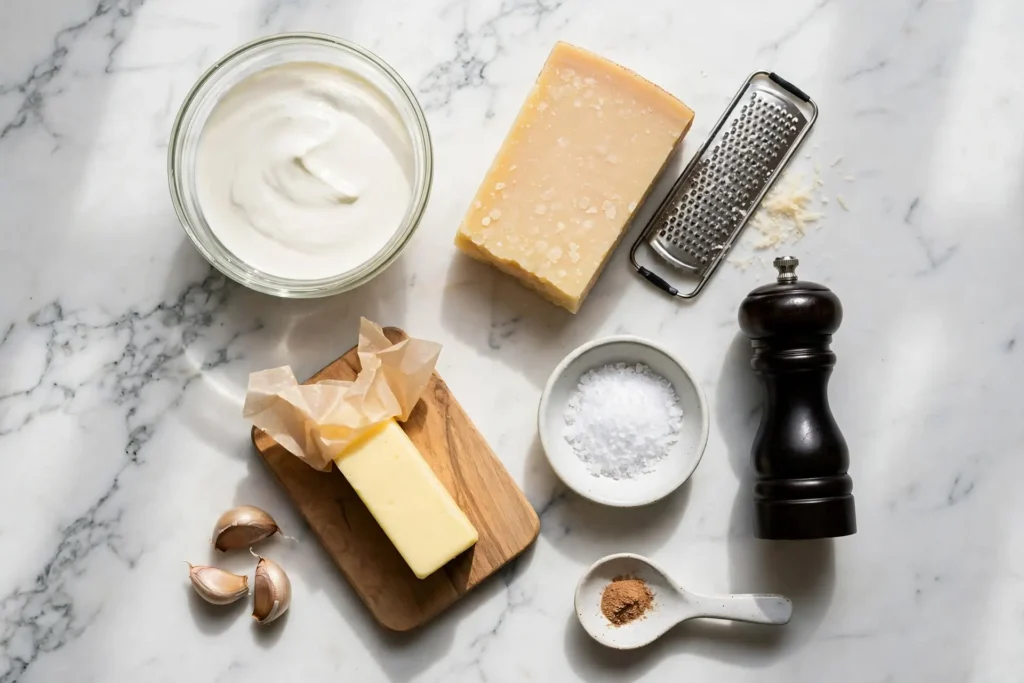
- 3 tbsp (42g) unsalted butter — the fat base; unsalted gives you control over the final salt level
- 3 cloves garlic, finely minced — adds depth without overpowering the Parmesan
- 1 cup (240ml) heavy cream — full-fat only; lighter cream won’t reduce properly and the sauce will be thin
- 1 cup (100g) Parmesan cheese, freshly grated from a block — pre-grated contains anti-caking agents that prevent clean melting
- 1/2 tsp fine salt, or to taste
- 1/4 tsp freshly ground black pepper
- Pinch of freshly grated nutmeg (optional, but it rounds out the richness of the cream)
Servings: 4 | Difficulty: Easy | Cuisine: Italian-American | Course: Sauce / Main
Recipe Timing
| Timing Element | Duration |
|---|---|
| Prep Time | 5 minutes |
| Cook Time | 15 minutes |
| Total Time | 20 minutes |
How to Make Alfredo Sauce Recipe — Step by Step
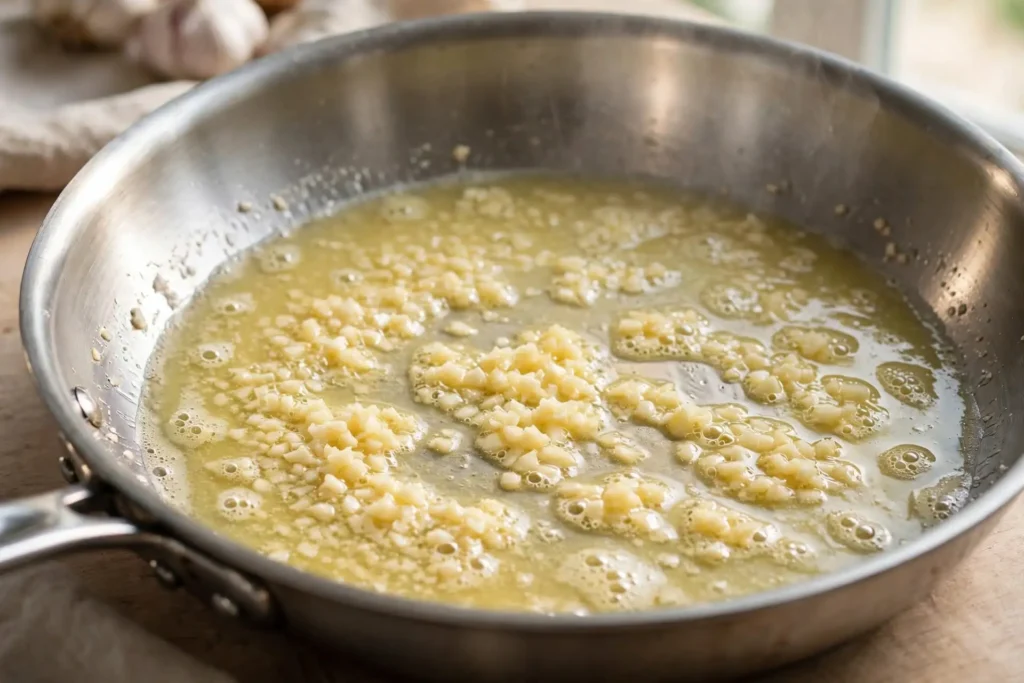
Step 1: Melt the butter over medium-low heat
Place a wide skillet or heavy-bottomed saucepan over medium-low heat. Add the butter and let it melt completely, swirling the pan occasionally. The butter should be fully liquid and glossy, not bubbling. If it starts to foam and the edges turn brown, your heat is too high — pull it off immediately and let the pan cool slightly before continuing.
Step 2: Cook the garlic until fragrant
Add the minced garlic to the melted butter and stir constantly for 60 to 90 seconds. The garlic should turn pale gold and smell fragrant. Take the pan off the heat the moment you see any browning starting.
Why this works: Garlic burns quickly in butter because butter’s smoke point is lower than oil. Browning creates bitterness that carries through the entire finished sauce.
⚠️ Food Safety: Burnt garlic is not just unpleasant — it’s a sign the pan has gotten hot enough to degrade the butter fat, which can cause the sauce to separate later. Keep the heat low from the start.
Step 3: Pour in the heavy cream
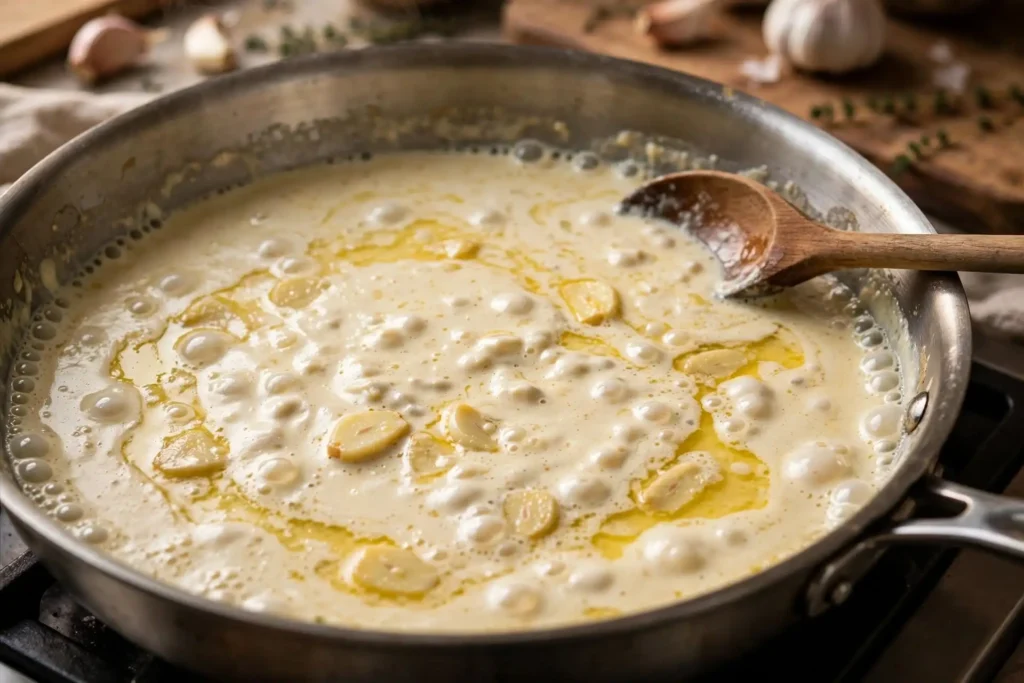
Pour the heavy cream into the skillet and stir to combine it with the garlic butter. Raise the heat to medium. Bring the cream to a gentle simmer, watching for small bubbles forming steadily around the edges of the pan.
Why this works: Adding the cream while the garlic butter is still warm (not scorching hot) allows them to combine without shocking the fat. Pouring cold cream into an overheated pan is one of the main causes of a broken alfredo sauce.
Step 4: Reduce the cream for 5 to 6 minutes
Keep the cream at a steady simmer, stirring every 30 to 60 seconds. After 5 to 6 minutes, the cream should thicken enough to coat the back of a spoon in a light, even layer. Drag your finger across the back of the spoon — the line should hold without the cream running back through it.
Step 5: Remove the pan from heat before adding the Parmesan
Take the skillet fully off the heat. Add the grated Parmesan in three separate additions, stirring each one until completely melted before adding the next. Do not rush this. The residual heat in the cream is enough to melt the cheese through.
Why this works: Parmesan proteins seize and clump when they hit temperatures above roughly 85°C (185°F). Removing the pan from the heat drops the temperature just enough for the cheese to melt smoothly into the cream without breaking.
⚠️ Food Safety: Do not place the finished sauce back on direct heat after adding the cheese. If you need to reheat it later, do so slowly over low heat with a splash of cream, stirring the whole time.
Step 6: Season and taste
Add the salt, black pepper, and nutmeg if you’re using it. Stir to combine, then taste. Go slowly with the salt — Parmesan is already quite salty and the sauce will taste saltier once it cools slightly. The finished sauce should be smooth, pourable, and lightly coat the back of a spoon.
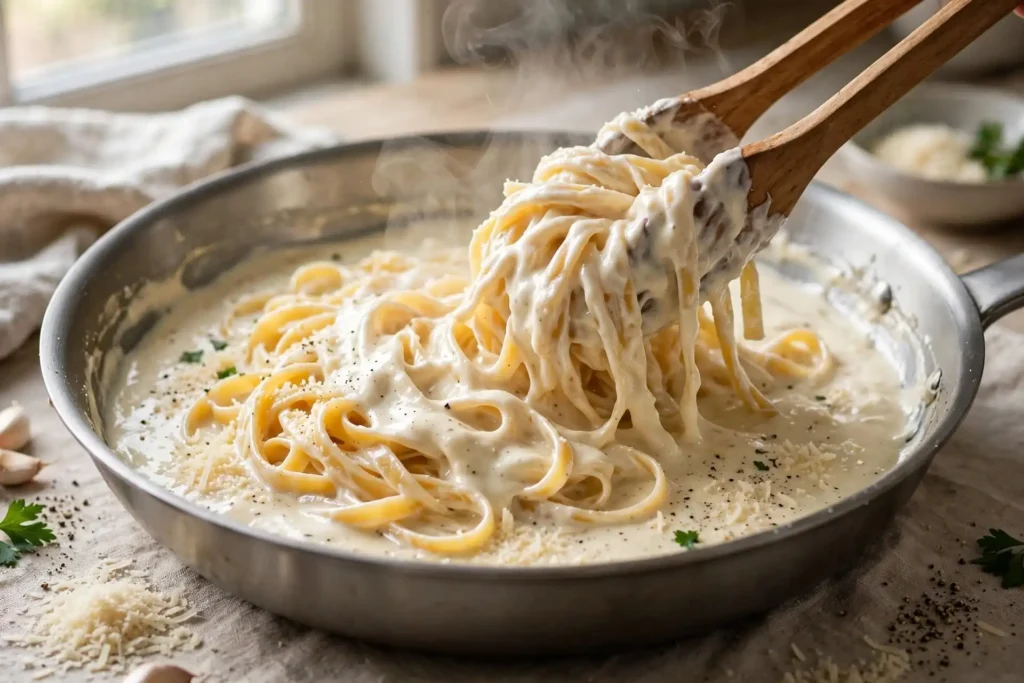
Step 7: Toss with pasta immediately and serve
Add hot, freshly cooked pasta directly to the sauce and toss quickly with tongs to coat every strand. If the sauce feels too thick, add pasta cooking water one tablespoon at a time, tossing after each addition. Serve within two to three minutes of tossing.
Why this works: Pasta water contains dissolved starch from cooking, which loosens the sauce without diluting its flavor. Plain water thins the sauce and dulls the taste — always save a cup of pasta water before draining.
⚠️ Food Safety: Do not leave the finished, sauced pasta at room temperature for more than two hours. According to USDA food safety guidelines, cooked dairy-based dishes should be refrigerated within two hours of preparation.
Common Mistakes to Avoid
Mistake 1: Using pre-grated Parmesan from a container
This is the most common reason alfredo sauce turns out gritty. Pre-grated Parmesan contains cellulose powder and other anti-caking agents that prevent it from melting into the cream. Buy a block of Parmigiano-Reggiano and grate it fresh on a fine microplane or box grater right before you use it.
Mistake 2: Adding the Parmesan while the pan is still on the heat
People keep the heat on to speed things up, and the cheese seizes immediately. Take the pan fully off the burner before you add a single handful of cheese. The cream holds enough residual heat to melt it completely.
Mistake 3: Using half-and-half or whole milk instead of heavy cream
Lower-fat dairy doesn’t have enough fat to emulsify properly with the butter. The sauce will be thin, and it’s far more likely to break. Heavy cream with at least 35% fat content is the minimum for this recipe.
Mistake 4: Making the sauce too far in advance
Alfredo thickens quickly as it sits and cools. If it’s been sitting for more than 10 minutes before you toss the pasta, you’ll need to loosen it with cream or pasta water. Make the sauce right before the pasta finishes cooking.
Variations & Substitutions
Garlic-Forward Alfredo: Double the garlic to 6 cloves and add an extra tablespoon of butter at the very end, after the cheese. The sauce becomes richer and more pungent, with garlic as the main flavor rather than Parmesan.
Mushroom Alfredo: Sauté 200g of sliced cremini mushrooms in butter in the same skillet before starting the sauce. Set them aside on a plate, make the sauce as written, then stir the mushrooms back in just before tossing with pasta. The mushrooms add a savory depth that works well with the cream.
Lighter Cream Substitute: If heavy cream isn’t available, combine 3/4 cup whole milk with 1/4 cup softened cream cheese. Whisk them together before adding to the pan. The texture will be slightly lighter and the sauce a little less glossy, but it still produces a creamy, cohesive result.
What to Serve With Alfredo Sauce
- Fettuccine — the classic choice. The wide, flat noodle gives the sauce a lot of surface area to cling to.
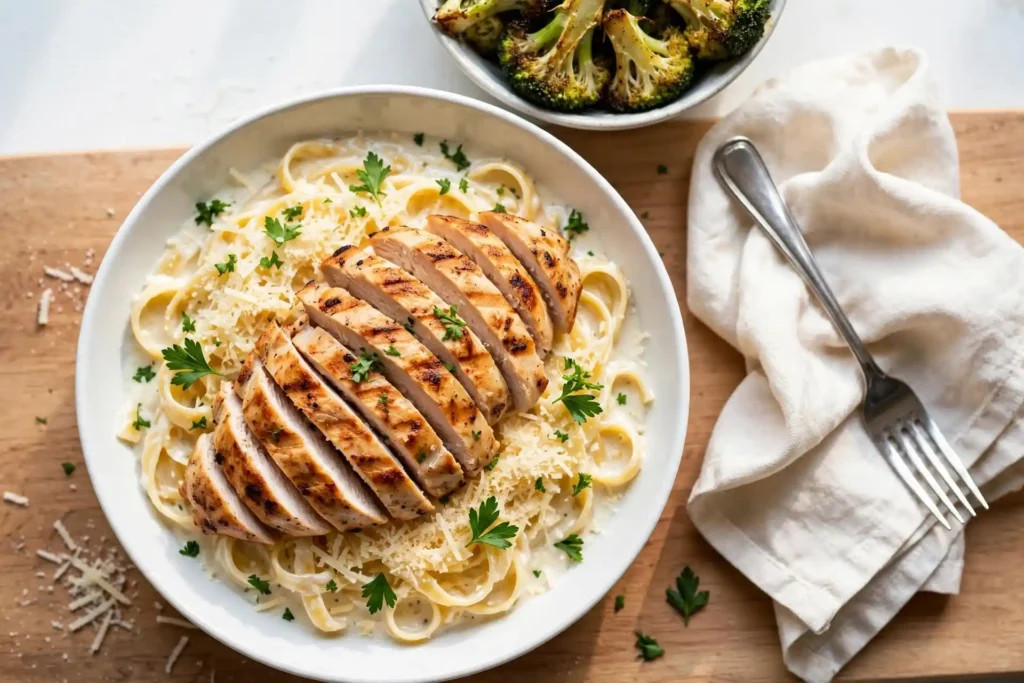
- Grilled chicken breast — slice it thin and lay it over the finished pasta. The mild flavor doesn’t compete with the Parmesan.
- Garlic bread — good for scooping up any sauce left at the bottom of the bowl, and it takes about the same time to prepare.
- Simple green salad with a lemon dressing — the acidity cuts through the richness of the cream and gives the meal some balance.
- Roasted broccoli — toss it directly into the pasta before serving. The slight bitterness of the broccoli works well against the cream.
Storage, Reheating & Make-Ahead
Fridge: Store leftover sauce in an airtight glass container for up to 3 days. Keep it separate from the pasta if possible — storing them together means the pasta absorbs the sauce completely overnight.
Freezer: Alfredo sauce does not freeze well. The cream-based emulsion breaks when thawed, separating into a greasy liquid you can’t bring back together. Make it fresh each time.
Reheating: Warm the sauce in a small saucepan over low heat. Add 2 to 3 tablespoons of whole milk or heavy cream as it heats up, stirring constantly. Do not microwave it — uneven heat causes the sauce to separate. The sauce is ready when it’s smooth, warm, and pourable again, around 3 to 4 minutes. For more detail on safe food storage temperatures, refer to FDA guidelines on refrigerating leftovers{target=”_blank”}.
Make-Ahead: Grate the Parmesan and mince the garlic up to a day ahead and store them separately in the fridge. The actual sauce is best made fresh, right as the pasta finishes cooking.
Allergen & Dietary Information
Contains dairy (unsalted butter, heavy cream, Parmesan cheese). To make a dairy-free version, substitute the heavy cream with full-fat coconut cream and use a plant-based Parmesan alternative. The texture and flavor will differ noticeably — coconut cream is sweeter and less neutral — but it still produces a thick, creamy sauce.
This recipe contains no gluten, eggs, tree nuts, peanuts, soy, sesame, shellfish, or fish as written.
Nutrition Information
Per serving, sauce only, based on 4 equal servings
| Nutrient | Per Serving |
|---|---|
| Calories | 380 kcal |
| Protein | 11 g |
| Total Carbohydrates | 3 g |
| Dietary Fiber | 0 g |
| Total Sugars | 1 g |
| Total Fat | 36 g |
| Saturated Fat | 22 g |
| Sodium | 614 mg |
| Cholesterol | 115 mg |
| Potassium | 80 mg |
| Calcium | 300 mg |
Nutritional values are estimates only and may vary based on specific ingredients, brands, and portion sizes used. For precise dietary needs, consult a registered dietitian.
Frequently Asked Questions
Why does my alfredo sauce turn grainy or clumpy?
Grainy alfredo almost always comes down to two things: adding the cheese while the pan is still on the heat, or using pre-grated Parmesan that contains anti-caking powder. Remove the pan fully from the burner before adding any cheese, and grate fresh Parmesan from a block right before use.
Can I make alfredo sauce ahead of time?
The sauce doesn’t hold well once made. It thickens significantly as it cools and doesn’t reheat to exactly the same texture. If you need to prep ahead, grate the cheese and mince the garlic the day before, then make the sauce fresh when you’re ready to serve. That prep takes less than five minutes off the total.
What can I substitute for heavy cream?
A mix of 3/4 cup whole milk and 1/4 cup softened cream cheese works reasonably well. Whisk them together before adding to the pan. Avoid half-and-half — it doesn’t have enough fat to reduce properly and the sauce will be too thin to coat pasta.
How do I fix alfredo sauce that’s too thick?
Add reserved pasta cooking water, one tablespoon at a time, stirring after each addition. The starch in pasta water loosens the sauce without diluting the flavor. Plain water works in a pinch but it flattens the taste — always save a cup of pasta water before you drain.
Can I use pre-grated Parmesan from a can?
Technically yes, but the result will be grainy. The cellulose powder added to prevent clumping in the container also prevents the cheese from melting cleanly into the cream. A block of Parmigiano-Reggiano and two minutes with a fine grater is worth it.
Does homemade alfredo sauce freeze well?
No. Cream-based sauces break when frozen and thawed — the fat separates from the liquid and the texture can’t be recovered by stirring or reheating. Make it fresh each time rather than in a large batch.
How long does this sauce last in the fridge?
Up to 3 days in a sealed glass container. Reheat it slowly over low heat with a splash of cream, stirring constantly. It won’t be identical to fresh, but it’s still good.
Conclusion
Two things separate a smooth alfredo sauce from a broken one: fresh Parmesan grated from a block, and pulling the pan off the heat before the cheese goes in. Get those right and the rest of the alfredo sauce recipe is straightforward. The cream does the work on its own as it simmers — no flour, no cornstarch, no effort. If you have leftover sauce, store it in glass, reheat it low and slow, and use a little cream to bring it back. But honestly, it’s fast enough to make fresh. Start it when the pasta water comes to a boil and both will be ready at the same time.
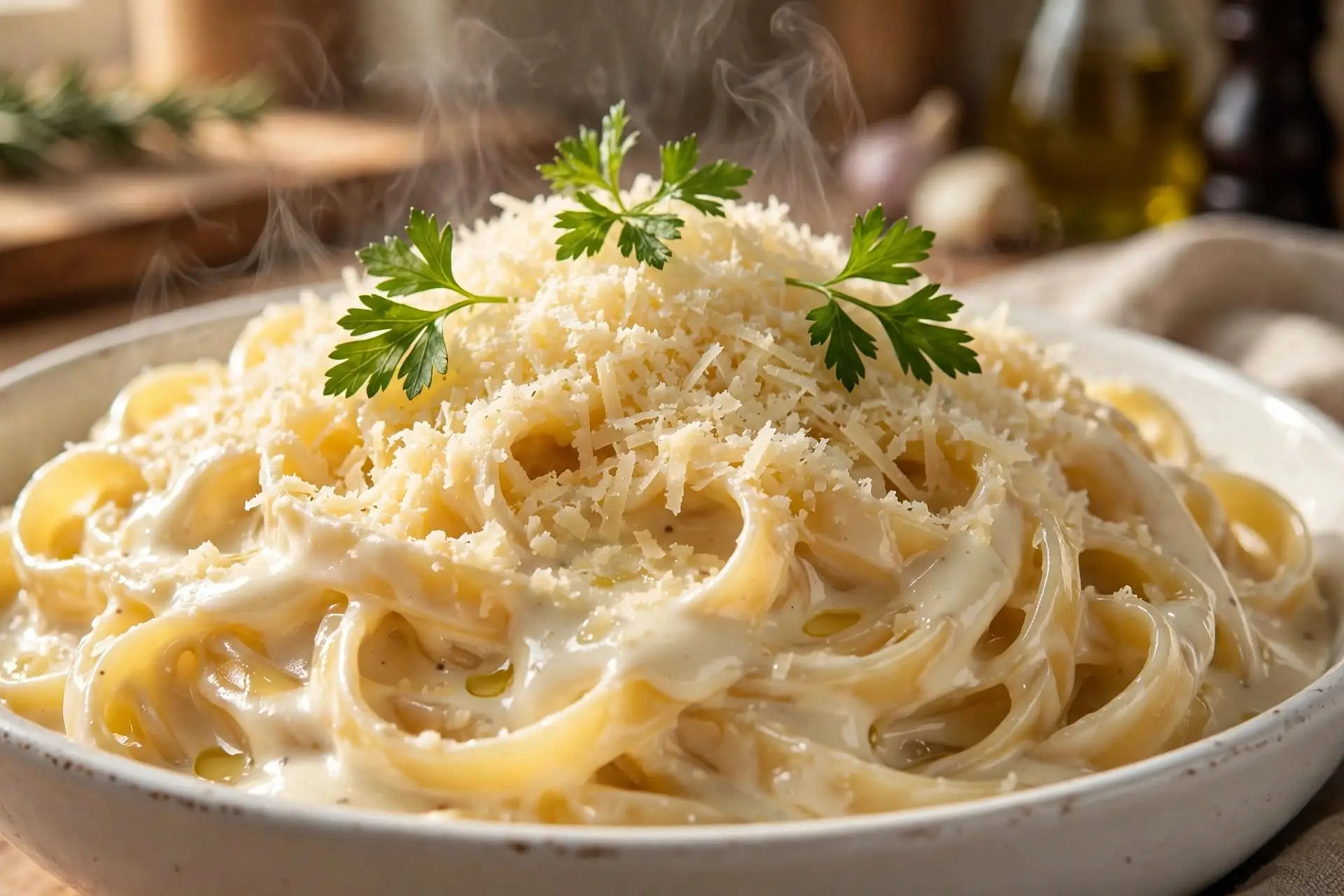
Alfredo Sauce Recipe: Rich and Creamy in 20 Minutes
Ingredients
Method
- Place a wide skillet over medium-low heat. Melt the butter fully, swirling the pan — do not let it foam or brown.
- Add the minced garlic and stir constantly for 60 to 90 seconds until pale gold and fragrant. Remove from heat immediately if it begins to darken.
- Pour in the heavy cream and stir to combine. Raise heat to medium and bring to a gentle simmer — small bubbles around the edges.
- Simmer for 5 to 6 minutes, stirring every 30 to 60 seconds, until the cream thickens enough to coat the back of a spoon.
- Remove the pan fully from the heat. Add the grated Parmesan in three additions, stirring each until completely melted before adding the next.
- Season with salt, pepper, and nutmeg. Taste and adjust salt carefully — Parmesan adds saltiness of its own.
- Toss immediately with hot, freshly cooked pasta. Add pasta cooking water one tablespoon at a time if the sauce is too thick. Serve right away.