Guacamole Recipe: Fresh, Creamy, and Ready in 10 Minutes
In This Article
- Why You’ll Love This Guacamole Recipe
- Ingredients for This Guacamole Recipe
- Recipe Timing
- How to Make This Guacamole Recipe: Step by Step
- Key Tips for Best Results
- Common Mistakes to Avoid
- Variations and Substitutions
- What to Serve With Guacamole
- Storage and Make-Ahead
- Nutrition Information
- Frequently Asked Questions
- Guacamole Recipe Card
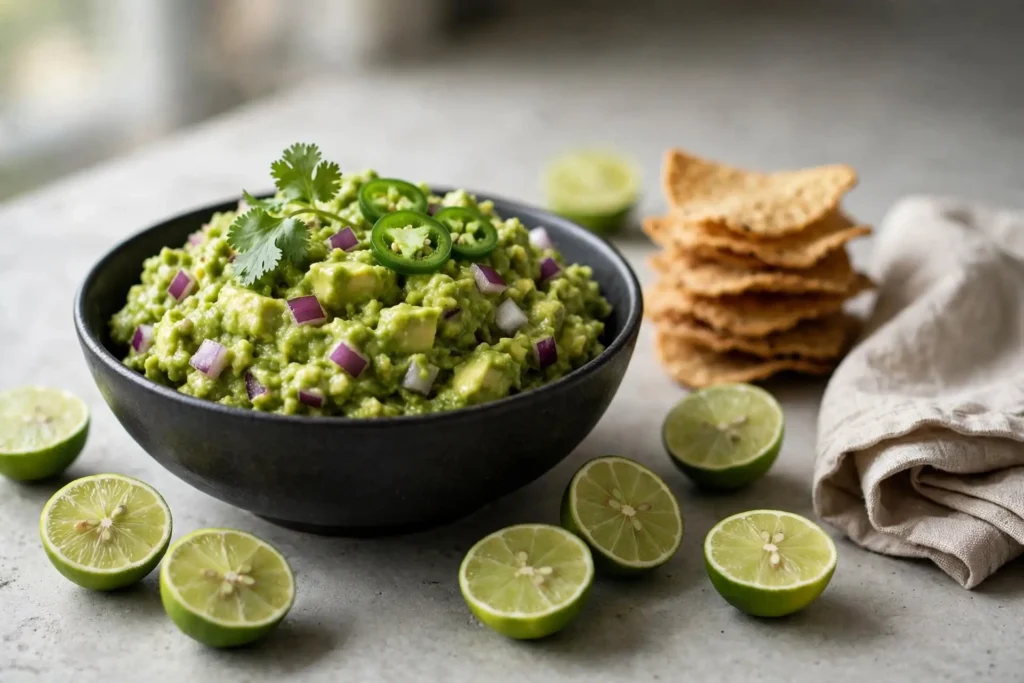
Guacamole Recipe: Fresh, Creamy, and Ready in 10 Minutes
Store-bought guacamole tastes mostly of lime and salt. The avocado gets lost. This guacamole recipe keeps the avocado front and center, with lime, jalapeño, and red onion supporting it rather than drowning it out.
You get real texture: part smooth, part chunky, with enough acid to stay bright and enough heat to notice. It takes 10 minutes, uses one bowl and a fork, and comes out better than anything from the refrigerated section.
Why You’ll Love This Guacamole Recipe
- Ready in 10 minutes with no cooking required
- One bowl, one fork — no blender or food processor needed
- Stays bright green for up to 24 hours with one simple storage trick
- Scales from two people to a full party without changing the method
- Works as a dip, a spread, or a topping for tacos and grilled meats
Ingredients for This Guacamole Recipe
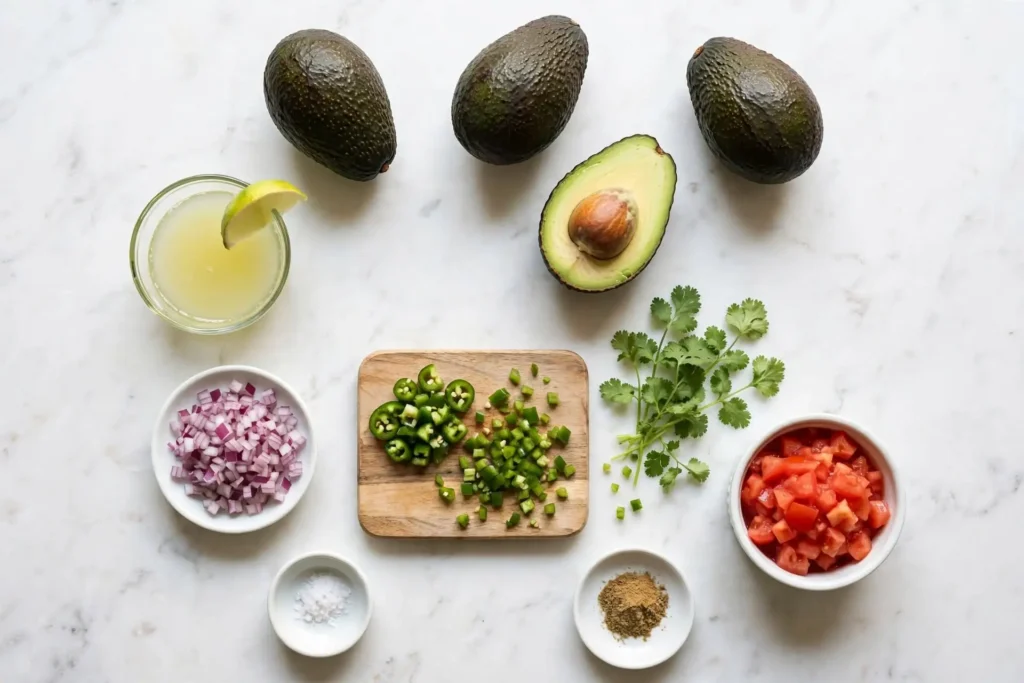
For this guacamole recipe, you need eight ingredients at most, and the cumin is optional:
- 3 ripe Hass avocados (about 450g flesh total) — the riper the avocado, the creamier and richer the base
- 2 tablespoons fresh lime juice (about 1 large lime) — brightens the flavor and slows browning; bottled lime juice does not work as well here
- ½ teaspoon fine sea salt — start here and adjust at the end; under-seasoning is much easier to fix than over-seasoning
- ¼ cup red onion, finely diced (about ½ small onion) — sharper and more complex than white onion; soak in cold water for 5 minutes to mellow it if raw onion is too intense
- 1 jalapeño, seeds removed, finely chopped — seeds and membrane hold most of the heat; leave some in if you want more kick
- 2 tablespoons fresh cilantro, roughly chopped — see Variations and Substitutions if you prefer to leave it out
- 1 medium Roma tomato, seeds removed, finely diced — Roma holds its shape better than beefsteak or vine tomatoes; cherry tomatoes also work
- ¼ teaspoon ground cumin (optional) — adds a quiet earthy note without overpowering; easy to skip if you prefer a clean, simple flavor
Recipe Timing
| Timing Element | Duration |
| Prep Time | 10 minutes |
| Cook Time | 0 minutes |
| Total Time | 10 minutes |
Servings: 6 | Difficulty: Easy | Cuisine: Mexican | Course: Appetizer / Condiment
How to Make This Guacamole Recipe: Step by Step
Step 1: Test your avocados for ripeness
Pick up each avocado and press it gently near the stem end with your thumb. It should give slightly under firm pressure, similar to pressing the fleshy base of your palm. If it feels completely solid, leave it at room temperature for 1 to 2 more days. If it feels uniformly mushy, open one and check the flesh for browning or stringiness before using.
Why this works: Avocado ripeness is the most important variable in any guacamole recipe. An underripe avocado tastes grassy and starchy and mashes unevenly. An overripe one turns stringy and slightly bitter. Neither gives you a good result.
Step 2: Halve, pit, and scoop
Slice each avocado in half lengthwise and twist both halves gently to pull them apart. Press a large spoon under the pit and lever it out. Scoop the flesh into a medium mixing bowl, scraping close to the skin to capture the dark green flesh near the surface.
IMAGE PROMPT:
“Avocado halves being scooped into a clear glass mixing bowl, deep green flesh visible against dark skin, a wooden spoon mid-scoop, natural side light, kitchen counter slightly blurred in the background, photorealistic food photography, 45-degree angle”
ALT TEXT: “Avocado flesh being scooped from skin into a mixing bowl — early step in making guacamole recipe”
FILE NAME: guacamole-recipe-step-1.jpg
⚠️ Food Safety: Capsaicin from jalapeño transfers easily from your hands to your eyes or skin. Wash your hands thoroughly with soap and water immediately after chopping the jalapeño. Wearing disposable gloves makes the process more comfortable if your skin is sensitive.
Step 3: Add lime juice and salt, then mash
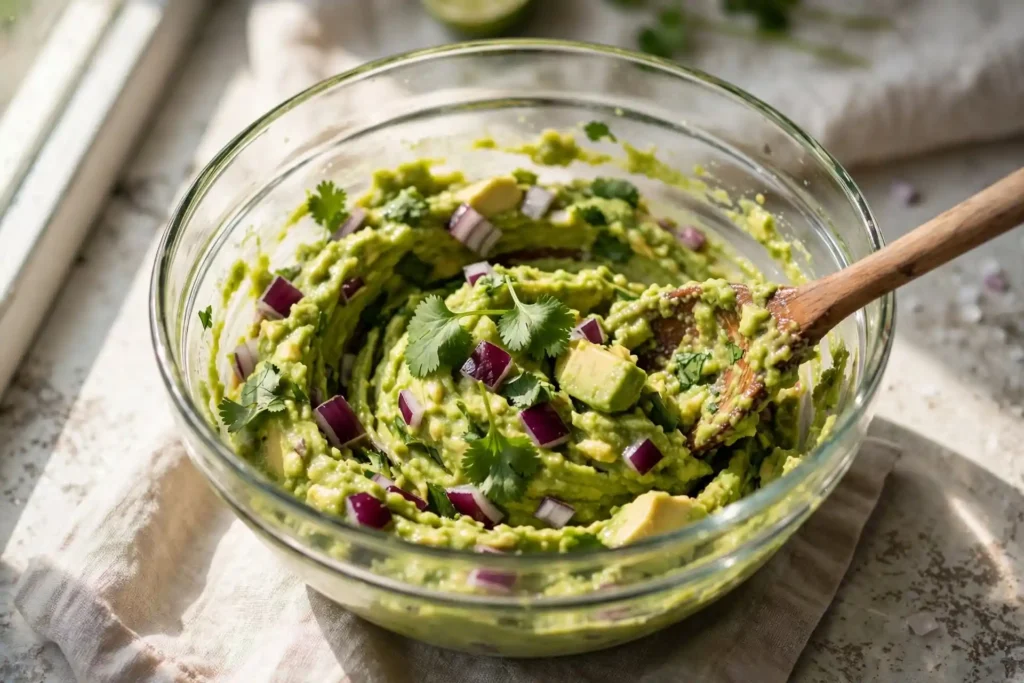
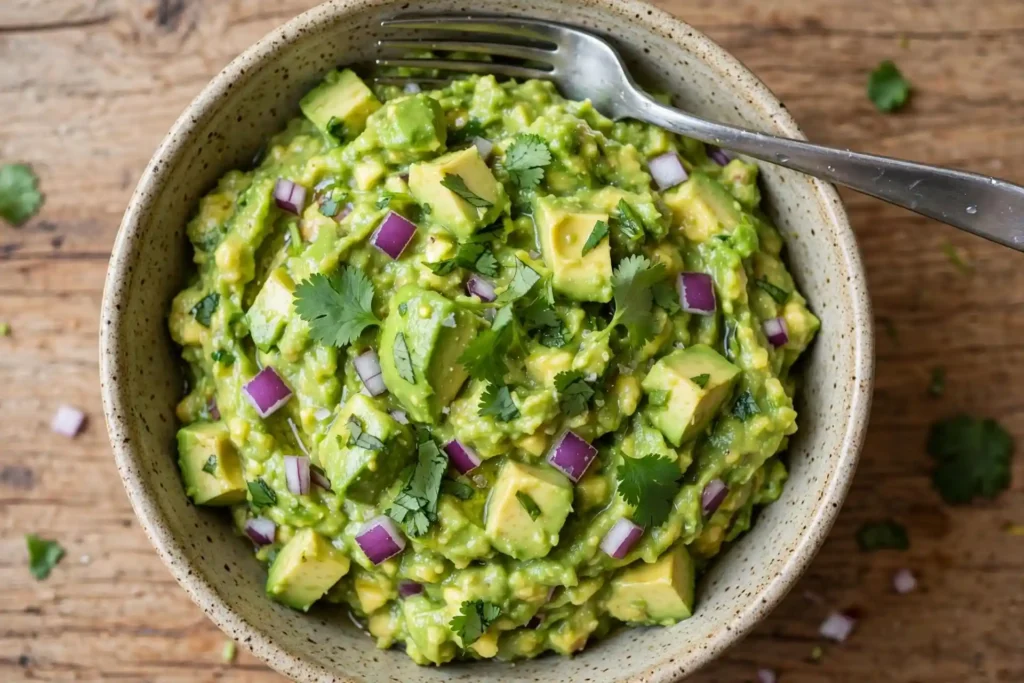
Pour the lime juice over the avocado and add the salt right away. Use a fork to mash by pressing down and folding rather than stirring in circles. Stop when the mixture is roughly 60% smooth and 40% visible chunks. This takes about 30 seconds of active mashing.
Why this works: Adding lime juice before mashing coats the avocado as you break it down, distributing the acid evenly through the base. You get consistent flavor in every bite and better color protection from the start.
Step 4: Fold in the aromatics
Add the diced red onion, jalapeño, and cilantro to the bowl. Use a large spoon to fold the mixture over itself 8 to 10 times. The goal is even distribution without overworking the avocado. Aggressive stirring at this stage makes the texture pasty and flat.
Step 5: Add the tomato and season to taste
Fold in the diced tomato using the same gentle motion. Taste now and adjust: more lime juice if it tastes flat, more salt if it needs a lift, more jalapeño if you want more heat. If you’re using cumin, add the ¼ teaspoon here and taste again.
Why this works: Adding tomato last prevents its water content from loosening the guacamole during mixing. Roma tomatoes have less moisture than beefsteak or vine varieties, keeping the finished texture thick and scoopable.
Step 6: Rest 5 minutes before serving
Leave the guacamole uncovered in the bowl for 5 minutes. The salt draws a small amount of moisture from the onion and tomato, and the lime rounds out slightly as everything settles together.
Key Tips for Best Results
Choose Hass avocados specifically. Hass have a significantly higher fat content than Florida or other large green varieties, which gives you the creamy texture that makes a guacamole recipe worth making from scratch. Florida avocados contain more water; they produce a thinner, blander result regardless of how well you season them.
Dice the onion very small. Pieces larger than 3mm dominate individual bites. Aim for a fine dice every time. If raw onion still tastes too sharp for you, soak the diced onion in cold water for 5 minutes, drain it well, and pat it dry before adding.
Season in stages, not all at once. Salt amplifies lime and jalapeño. What tastes undersalted right after mixing often tastes right 2 minutes later. Add a little, taste, wait, then adjust. This is faster than fixing an oversalted batch.
Common Mistakes to Avoid
Using avocados that are not fully ripe. If an avocado only yields near the stem, or not at all, it is not ready. It will mash into a starchy, off-flavored paste. Speed up ripening by placing avocados in a paper bag with a banana at room temperature for 24 hours.
Over-mashing. The texture of a properly made guacamole recipe matters as much as the seasoning. Stop mashing while chunks are still clearly visible. If you keep going until it’s completely smooth, you lose the character entirely and the texture becomes closer to baby food.
Leaving tomato seeds in. Tomato seeds and their surrounding gel are mostly water. They make the guacamole visibly watery within 10 to 15 minutes. Halve the tomato, squeeze it gently over the sink, then dice the flesh only.
Over-salting at the start. Season before mashing and again at the very end, after tasting. There is no reliable fix for over-salted guacamole.
Variations and Substitutions
No cilantro: Leave it out entirely, or replace it with 1 tablespoon of flat-leaf parsley. The dip loses some brightness but still works well. The soapy taste some people experience with cilantro comes from a real genetic variant, and no substitution perfectly replicates it. Parsley adds a mild fresh note that fills the gap reasonably well.
Mango guacamole: Fold in ¼ cup of finely diced ripe mango after the tomato and reduce the tomato quantity by half. The sweetness works well against the jalapeño and lime. This version is good as a topping for grilled chicken or fish.
More heat: Leave some jalapeño seeds in, or add a small amount of minced serrano chili. Serranos run noticeably hotter than jalapeños, so start with half the quantity.
What to Serve With Guacamole
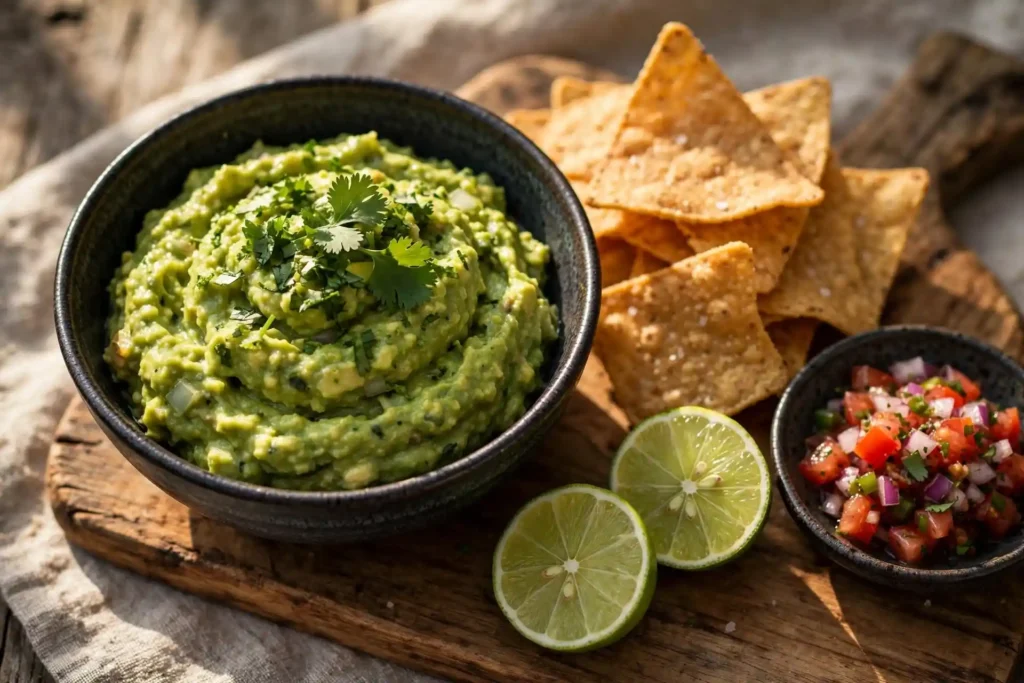
This guacamole recipe works in several situations beyond the chip bowl:
Tortilla chips — thick-cut or restaurant-style chips hold up to chunky guacamole without snapping mid-scoop.
Warm flatbread or pita — a softer option that complements the chunky texture well and stretches the dip further for a group.
On tacos — spoon directly onto beef, chicken, or grilled fish tacos instead of using it as a separate side dip.
With rice and beans — adds richness to a plain plate without much effort.
On toast with a fried egg — a practical use for leftover guacamole the next morning before the color starts to fade.
Storage and Make-Ahead
Fridge: Transfer leftover guacamole to an airtight container. Press a sheet of plastic wrap directly against the surface of the dip, smoothing out all air pockets before sealing the container. This guacamole recipe stays freshest for the first 24 hours. After that, the color fades and the flavor dulls, though it remains safe to eat.
The avocado pit trick: Placing a pit in the guacamole does not prevent browning in any meaningful way. Air causes oxidation, and a pit does not remove air. Plastic wrap pressed flat against the surface is what actually works.
Make-ahead: Prep the red onion, jalapeño, cilantro, and tomato up to 8 hours ahead and store them together in a sealed container in the fridge. When ready to serve, mash fresh avocado with lime juice and fold in the pre-prepped mix. This gives you the freshest possible result with minimal last-minute work.
Freezing: Not recommended. Avocado breaks down poorly when frozen and thaws with a grainy, watery texture. Make only what you’ll eat within 24 hours.
Nutrition Information
Per serving (based on 6 servings)
| Nutrient | Per Serving |
| Calories | 130 kcal |
| Protein | 2 g |
| Total Carbohydrates | 8 g |
| Dietary Fiber | 5 g |
| Total Sugars | 1 g |
| Total Fat | 11 g |
| Saturated Fat | 1.6 g |
| Sodium | 200 mg |
| Cholesterol | 0 mg |
| Potassium | 430 mg |
| Vitamin C | 11 mg |
| Calcium | 10 mg |
| Iron | 0.5 mg |
Nutritional values are estimates only and may vary based on specific ingredients, brands, and portion sizes used. For precise dietary needs, consult a registered dietitian.
Frequently Asked Questions
How do I know if my avocado is ripe enough for guacamole?
Press near the stem end with your thumb. It should give slightly under firm pressure, similar to a ripe peach. Completely solid means it needs more time at room temperature. Soft all over, or very dark flesh inside, usually means it’s past its best. Buy avocados 1 to 2 days early if they feel firm at the store.
How do I stop guacamole from turning brown?
Air contact causes browning, not time. Press plastic wrap directly against the guacamole’s surface before refrigerating, leaving no air pockets between the wrap and the dip, then seal it in an airtight container. This keeps it green for up to 24 hours. The avocado pit trick has no reliable effect.
Can I make guacamole the night before a party?
The mix-ins (onion, jalapeño, cilantro, tomato) can be prepped the night before. Mash the avocado fresh within a few hours of serving, though. Pre-mashed avocado held overnight browns and loses its fresh, clean flavor even with the plastic wrap method.
What if my guacamole tastes bland?
Start with lime juice: add a small squeeze, stir, and taste again. If it still falls flat, add a small pinch of salt, wait 1 minute, then taste. A pinch of cumin and a bit more jalapeño also help if the overall flavor seems dull. Most bland guacamole is simply undersalted.
Can I make this guacamole recipe without cilantro?
Yes. Leave it out entirely or replace it with 1 tablespoon of flat-leaf parsley. The character changes slightly, but the dip still works well. The soapy taste some people experience with cilantro comes from a specific genetic variant affecting how certain flavor compounds register on the palate — there’s nothing wrong with the cilantro and nothing wrong with the cook.
Should I use lemon or lime juice in guacamole?
Lime is the standard choice and holds up better over time without becoming overpowering. Lemon works as a substitute but adds a slightly sweeter, more floral note that shifts the flavor noticeably. Use the same quantity either way.
How long does guacamole last in the fridge?
Up to 24 hours with proper storage: plastic wrap pressed against the surface with no air gaps, kept in a sealed container. After that the color and fresh taste decline, though the guacamole remains safe to eat.
Conclusion
A good guacamole recipe comes down to three things: ripe avocados, enough lime to keep it bright, and stopping the mash before the texture goes flat. Get those right and the seasoning almost sorts itself out.
The plastic wrap trick is worth remembering above everything else from this article. Press it flat against the surface before the bowl goes in the fridge, and your guacamole stays green and fresh through the next day.
Guacamole Recipe
Ingredients
Method
- Press each avocado near the stem end to confirm it yields slightly under firm pressure. Slice in half lengthwise, twist apart, and remove the pit with a spoon.
- Scoop the flesh into a medium bowl. Add lime juice and salt immediately. Mash with a fork by pressing and folding until you have roughly 60% smooth and 40% visible chunks.
- Fold in the red onion, jalapeño, and cilantro using 8 to 10 gentle turns of a spoon.
- Fold in the diced tomato. Taste and adjust: more lime juice if flat, more salt if needed, more jalapeño for heat. Add cumin if using.
- Rest uncovered for 5 minutes before serving.