Homemade Tartar Sauce Recipe Ready in 10 Minutes
In This Article
- Why You’ll Love This Tartar Sauce Recipe
- Ingredients You’ll Need
- Recipe Timing
- How to Make Tartar Sauce: Step by Step
- Key Tips for Best Results
- Common Mistakes to Avoid
- Variations and Substitutions
- What to Serve With Tartar Sauce
- Storage and Make-Ahead
- Nutrition Information
- Frequently Asked Questions
- Tartar Sauce: Recipe Card
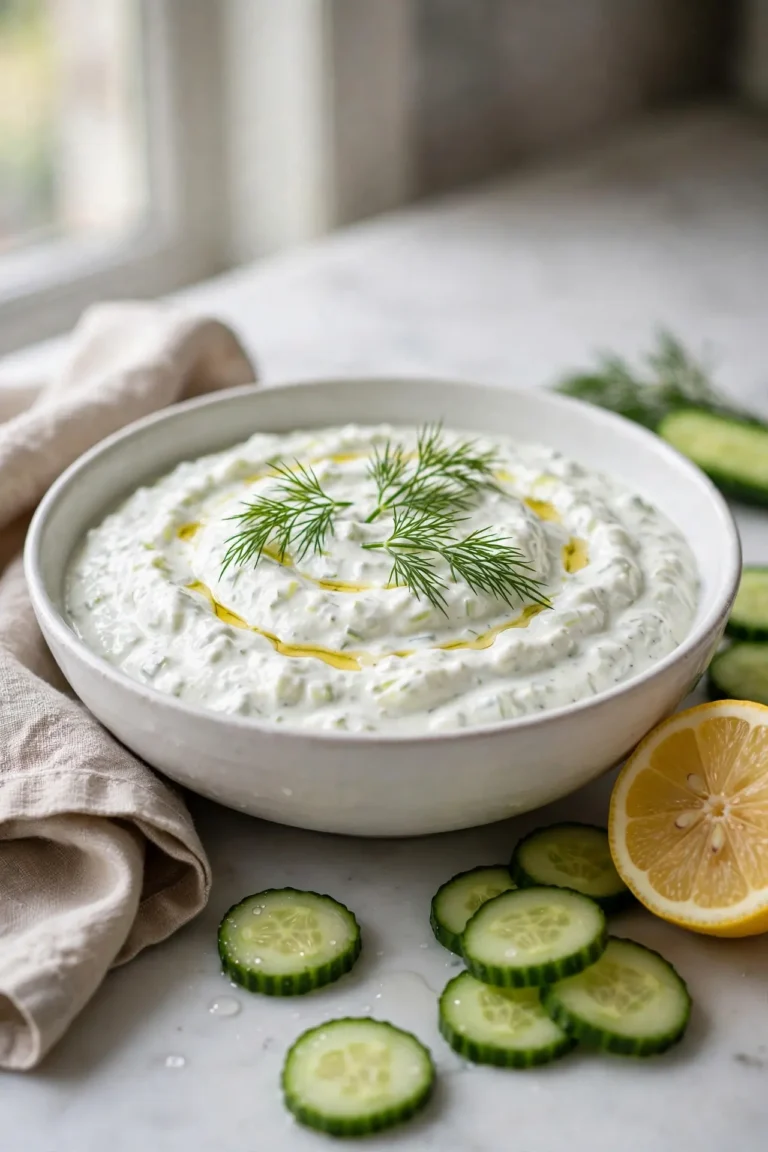
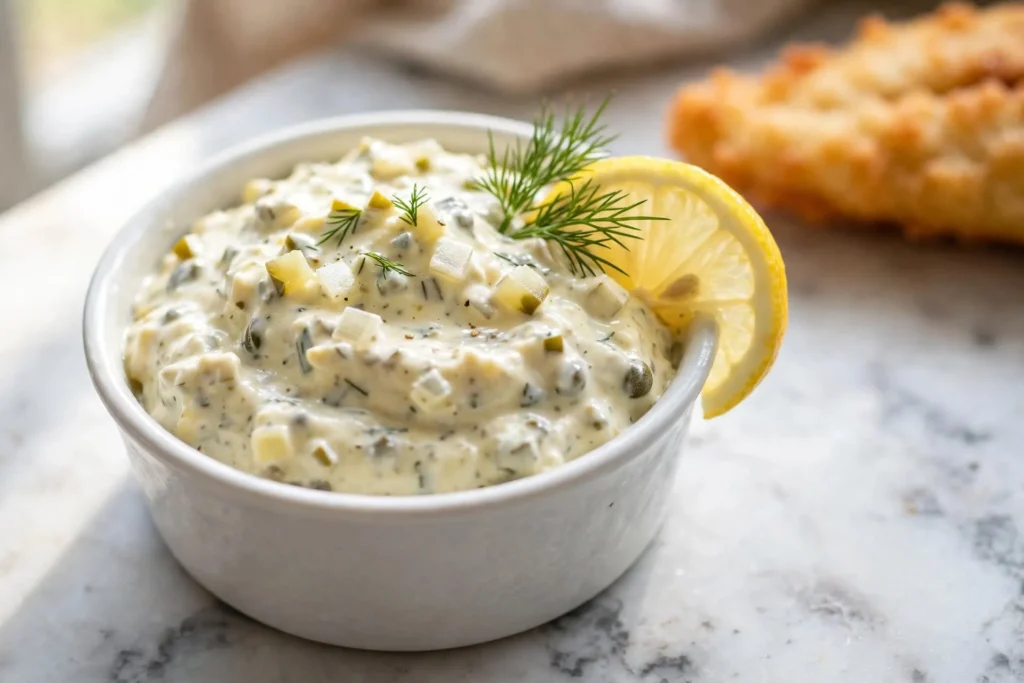
Store-bought tartar sauce is mostly mayonnaise thinned with brine, with a few pickle fragments that barely register once you dip anything into it. This tartar sauce recipe uses real chopped dill pickles, capers, fresh lemon juice, and Dijon mustard — ingredients you can actually taste.
My mother made this every Friday, the same way every time: one bowl, a spoon, five minutes. Fish was always on the table, and a small jar of this sat in the fridge door. It never lasted past the weekend. Once you’ve had it fresh, the version from a jar genuinely doesn’t hold up.
Why You’ll Love This Tartar Sauce Recipe
- Ready in 10 minutes with no cooking at all
- Uses real dill pickles for sharp, briny flavor, not sweet relish
- Holds together properly with no watery pooling after a day in the fridge
- Noticeably better after 30 minutes of chilling, so you can make it well ahead
- Works beyond fried fish: crab cakes, grilled prawns, oven-baked fillets
Ingredients You’ll Need
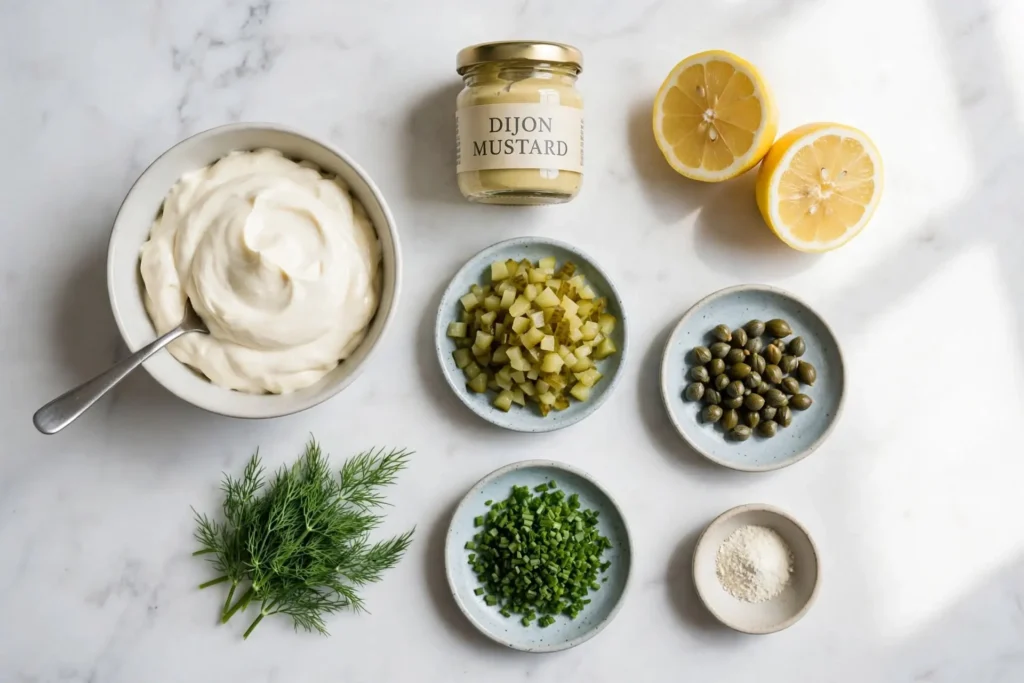
- 1 cup (240g) full-fat mayonnaise — the base; full-fat holds the emulsion and gives the sauce body
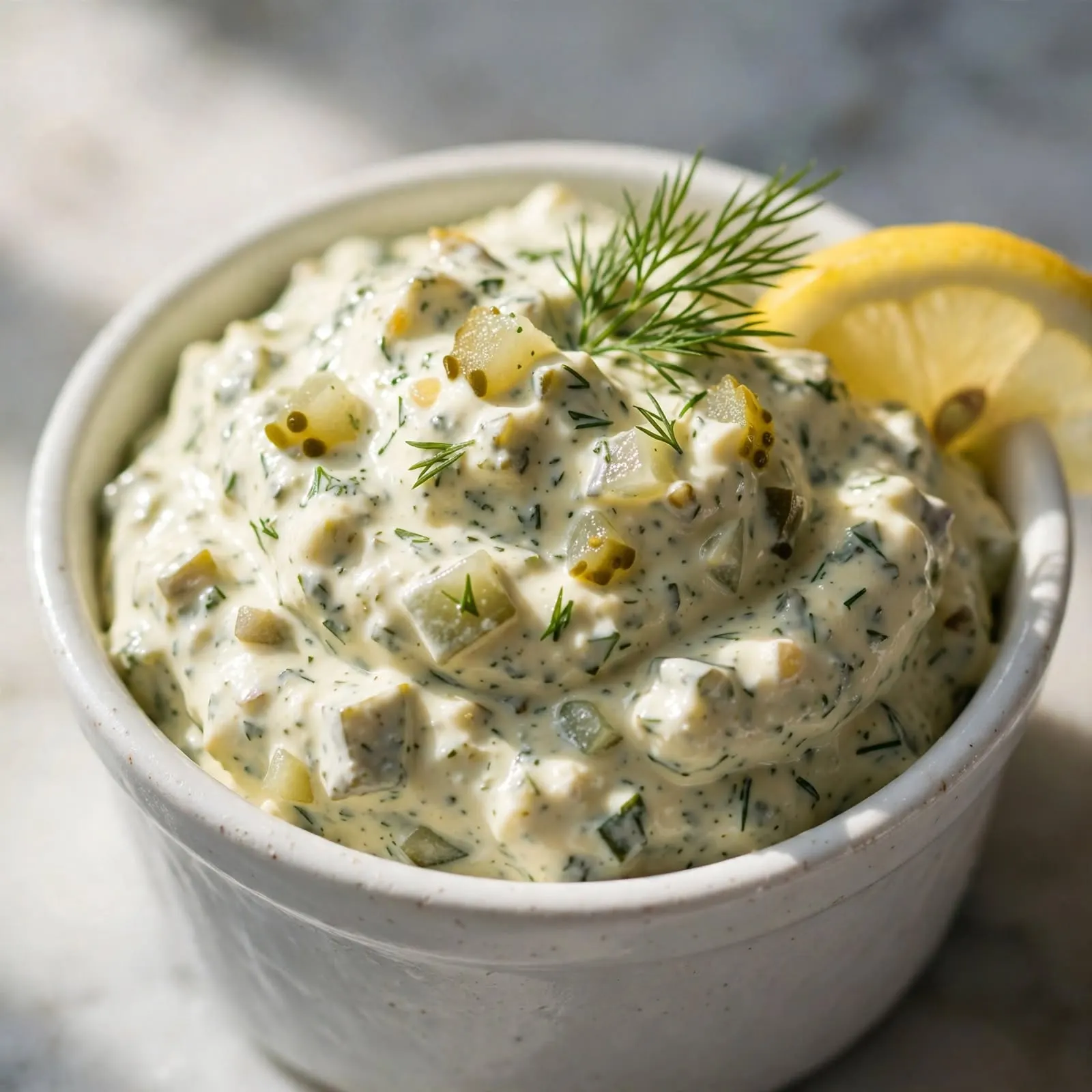
- 3 tablespoons finely chopped dill pickles (about 2 medium pickles) — the primary flavor; chop fine so the flavor distributes evenly
- 1 tablespoon capers, drained and roughly chopped — adds brininess and a slightly floral sharpness that dill pickles alone don’t give
- 1 tablespoon fresh lemon juice — balances the richness of the mayo; add by the teaspoon, not all at once
- 1 teaspoon Dijon mustard — adds depth and helps bind the sauce slightly
- 1 tablespoon finely chopped fresh dill — optional, but noticeably better than dried
- 1 tablespoon finely sliced chives — mild onion note that doesn’t overpower
- 1/4 teaspoon fine salt — adjust after tasting
- 1/8 teaspoon white pepper — subtler than black pepper in a pale sauce
Substitution note for mayonnaise: Use full-fat only. Light or reduced-fat versions contain more water, which thins the sauce and causes it to separate after a day in the fridge.
Recipe Timing
| Timing Element | Duration |
| Prep Time | 10 minutes |
| Chill Time | 30 minutes (strongly recommended) |
| Total Time | 40 minutes |
Servings: 8 (approx. 2 tablespoons each) | Difficulty: Easy | Cuisine: American / European | Course: Condiment / Sauce
How to Make Tartar Sauce: Step by Step
Step 1: Chop the pickles and capers
Finely chop the dill pickles to about 3mm pieces. Then roughly chop the drained capers. Both should be small enough to blend into the sauce rather than sit as identifiable chunks.
Why this works: Fine chopping distributes flavor evenly through every spoonful. Large pieces of pickle create an uneven sauce where most bites taste plain and one bite tastes overwhelmingly acidic.
Step 2: Combine everything in one bowl
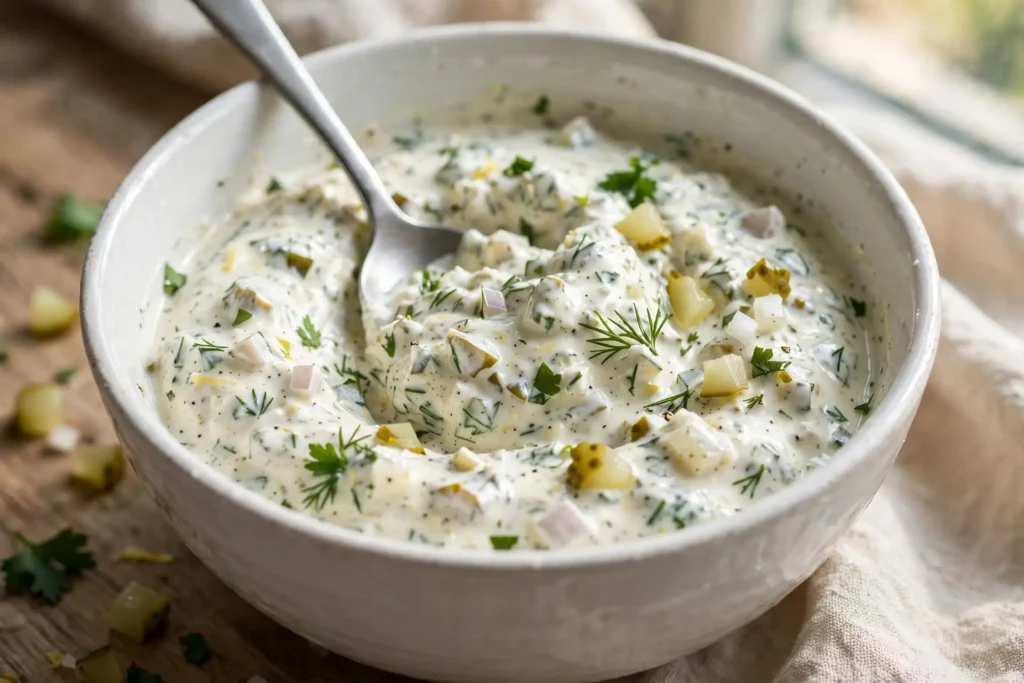
Add the mayonnaise, chopped pickles, capers, lemon juice, Dijon mustard, fresh dill, and chives to a medium bowl. Stir with a spoon until evenly combined. Season with salt and white pepper.
Why this works: Stirring rather than whisking keeps the mayo’s emulsion intact. Whisking aggressively can loosen the texture and make the sauce slightly runny.
Step 3: Taste and adjust
Taste the sauce. If it needs more brightness, add a small squeeze of lemon juice. If it tastes flat, add a pinch of salt. If it needs more brine without extra acid, stir in half a teaspoon of pickle juice from the jar.
Why this works: Pickle brine fixes a dull tartar sauce faster than any other adjustment. It adds both salt and acidity at once without thinning the sauce the way extra lemon juice can.
Step 4: Chill before serving
Cover the bowl tightly with plastic wrap or transfer to a lidded jar. Refrigerate for at least 30 minutes before serving.
Why this works: The rest time lets the lemon juice and mustard fully work into the mayo. Without it, the sauce tastes sharp and disconnected, like the ingredients haven’t spoken to each other yet.
Key Tips for Best Results
Use full-fat mayonnaise. Reduced-fat versions have higher water content, which thins the sauce and causes it to pool at the bottom of the bowl after a day in the fridge. Full-fat holds its consistency for the full storage period.
Chop everything small. The texture of this sauce should be creamy with tiny flecks of herbs and pickle, not chunky. Run your knife over the pickles a second time if the pieces look too large after the first pass.
Make it the day before when you can. A 30-minute chill is the minimum. Overnight is genuinely better. The difference is clear: the day-before version tastes made, not assembled.
Common Mistakes to Avoid
Using sweet pickle relish instead of dill pickles.
Sweet relish turns this sauce into something that tastes closer to Thousand Island dressing than tartar sauce. The sugar in sweet relish fights against the savory richness of mayonnaise instead of cutting through it. Dill pickles provide the sharp brine the sauce actually needs.
Adding all the lemon juice at once without tasting.
Lemon juice added in excess thins the sauce and can cause the mayonnaise to look slightly curdled. Add it one teaspoon at a time, stirring and tasting between additions until the brightness is where you want it.
Skipping the chill time and serving immediately.
Straight from the mixing bowl, the sauce tastes sharp and unfinished. The acids need time to mellow into the mayonnaise. Even 20 minutes makes a clear difference; 30 minutes is better.
Variations and Substitutions
No capers: Replace them with an extra tablespoon of finely chopped dill pickle and a small splash of white wine vinegar. The result is slightly simpler but still works well.
No fresh dill: Use half a teaspoon of dried dill. The flavor is less bright but acceptable. Flat-leaf parsley is also a reasonable substitute if dried dill isn’t available.
Lighter version: Replace half the mayonnaise with full-fat Greek yogurt. The sauce will be tangier and slightly thinner. It holds together well and works particularly well as a dipping sauce for baked rather than fried fish.
What to Serve With Tartar Sauce
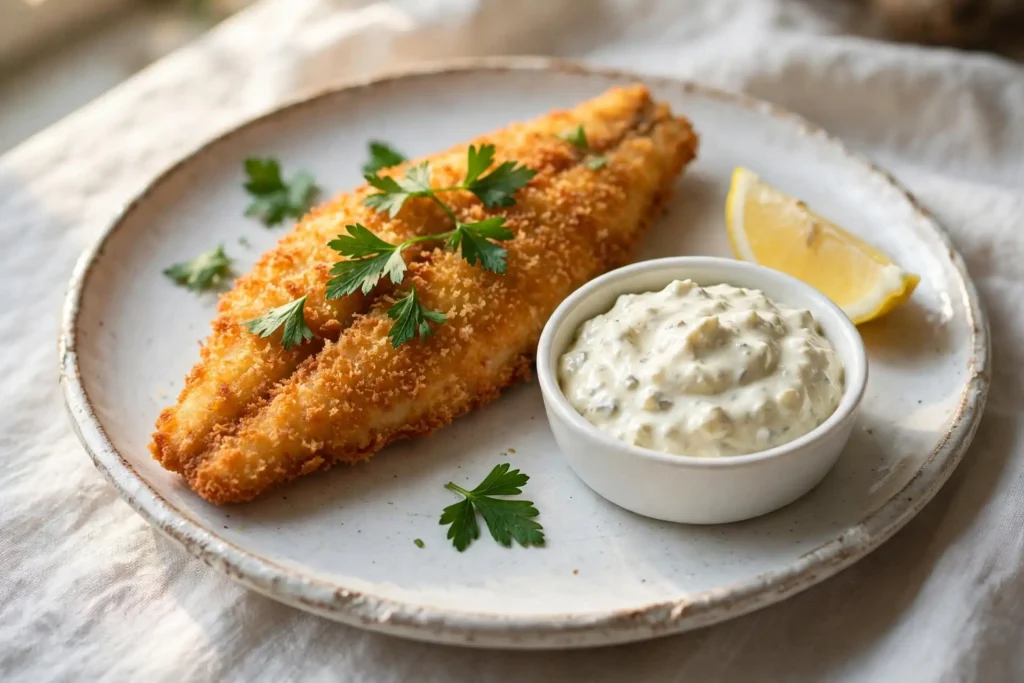
- Fried fish fillets: The classic pairing. The acidity cuts through the oil in deep-fried batter in a way that plain lemon juice can’t quite match. [INTERNAL LINK: “crispy fried fish fillet recipe” — fried fish main recipe]
- Fish and chips: Serve alongside malt vinegar for a full British-style spread.
- Grilled prawns: The capers in the sauce pair well with the natural brininess of grilled seafood.
- Crab cakes: A textured sauce like this one works better here than a smooth aioli. The pickle pieces provide contrast to the soft interior of the cakes.
- Oven-baked fish: Works just as well with lighter preparations. The sauce doesn’t need the frying oil to justify itself.
Storage and Make-Ahead
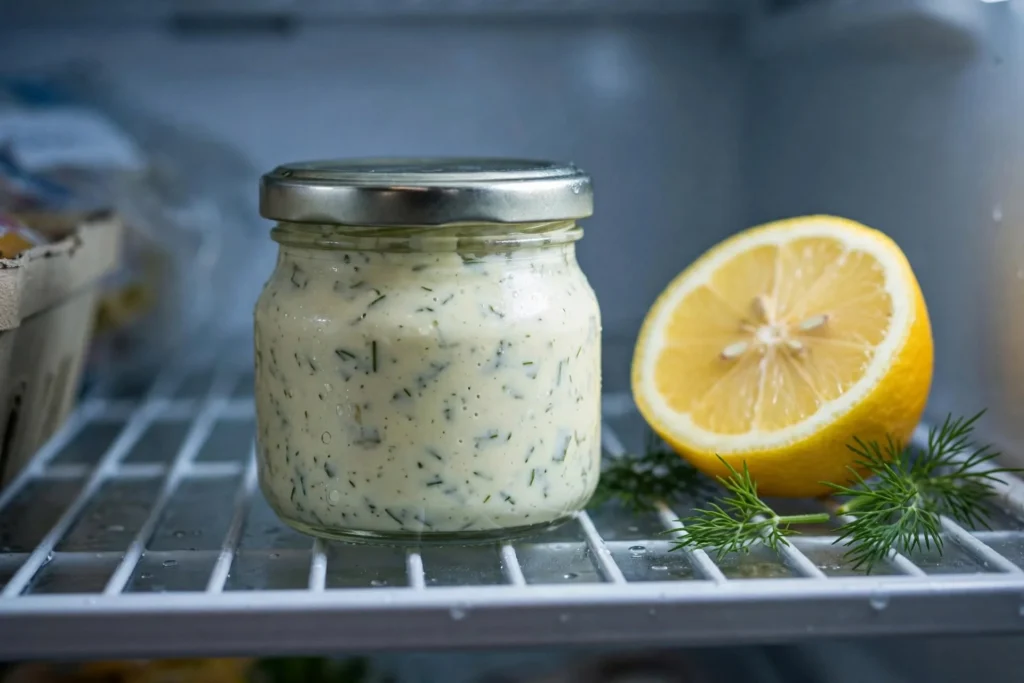
Fridge: Store in a clean, airtight glass jar or sealed container for up to 5 days. Stir before using; a small amount of separation is normal after a day or two.
Freezer: Do not freeze. Mayonnaise-based sauces break when frozen and thaw into a greasy, split liquid that cannot be fixed by stirring.
Make-ahead: Mix the full batch the day before you need it. Jar it and refrigerate overnight. The overnight rest produces a more cohesive, better-developed flavor than a 30-minute chill. Store the jar toward the back of the fridge where the temperature is most consistent.
According to the FDA’s refrigerator and freezer storage guidelines{target=”_blank”}, prepared condiments with mayonnaise should be kept refrigerated at or below 4°C (40°F) and discarded after the recommended storage window.
Nutrition Information
Per serving (approximately 2 tablespoons):
| Nutrient | Per Serving |
| Calories | 190 kcal |
| Protein | 0.3 g |
| Total Carbohydrates | 1.2 g |
| Dietary Fiber | 0.1 g |
| Total Sugars | 0.5 g |
| Total Fat | 20 g |
| Saturated Fat | 3 g |
| Sodium | 280 mg |
| Cholesterol | 10 mg |
| Potassium | 25 mg |
| Vitamin C | 1.5 mg |
Nutritional values are estimates only and may vary based on specific ingredients, brands, and portion sizes used. For precise dietary needs, consult a registered dietitian.
Frequently Asked Questions
Can I make tartar sauce without capers?
Yes. Replace them with an extra tablespoon of finely chopped dill pickle and a small splash of white wine vinegar. The sauce loses a little of its floral, briny depth but still tastes like proper tartar sauce.
How long does homemade tartar sauce last in the fridge?
Up to 5 days in a sealed container. After that, the fresh herbs begin to discolor and the texture softens. Give it a stir before each use and discard if it smells off or looks separated beyond what a stir can fix.
Should I use sweet pickles or dill pickles?
Dill pickles. Sweet relish or sweet pickles make the sauce taste more like a salad dressing than a seafood condiment. The sharp brine from dill pickles is what gives this sauce its character.
Why does my homemade tartar sauce taste bland?
Usually one of three things: the mayonnaise brand is too mild, the lemon juice wasn’t enough, or the sauce went to the table without chilling first. Add a pinch of salt and a small squeeze of lemon, stir, then give it 30 more minutes in the fridge before tasting again.
Can I make this tartar sauce recipe ahead of time?
Making it the day before is recommended, not just acceptable. The overnight rest in the fridge lets the flavors settle and blend in a way that 30 minutes can’t replicate. It also means one less thing to do before dinner.
What is the difference between tartar sauce and remoulade?
Both are mayo-based cold sauces, but remoulade (particularly Louisiana-style) typically includes hot sauce, smoked paprika, horseradish, and sometimes anchovy paste. Tartar sauce is milder and built around pickles and herbs with lemon as the primary acid. They’re related but clearly different once you taste them side by side.
Does this recipe contain common allergens?
Standard full-fat mayonnaise is gluten-free and dairy-free. This recipe contains eggs (from the mayo) and mustard. Always check the label of your specific mayonnaise brand, as formulations and manufacturing conditions vary. For a mustard-free version, omit the Dijon and add a small extra squeeze of lemon juice for brightness.
According to Healthline’s allergen overview{target=”_blank”}, mustard is classified as a major allergen in several countries including Canada and the EU. If you are cooking for someone with a mustard allergy, leave it out entirely.
Conclusion
Tartar sauce is one of the few condiments where the homemade version genuinely and obviously beats the store-bought one. This tartar sauce recipe takes 10 minutes, uses ingredients most kitchens already have, and produces a sauce with actual flavor at every bite, not just the edges of the bowl. The one thing worth repeating: don’t skip the chill. Make it before you start cooking the fish, put it in the fridge, and it’ll be ready when the food is.
Homemade Tartar Sauce Recipe
Ingredients
Method
- Finely chop the dill pickles to approximately 3mm pieces. Roughly chop the drained capers.
- Combine the mayonnaise, pickles, capers, lemon juice, Dijon mustard, fresh dill, and chives in a medium bowl. Stir with a spoon until evenly combined.
- Season with salt and white pepper. Taste and adjust: add more lemon juice for brightness, a pinch of salt if flat, or a splash of pickle brine for extra acidity and brine without thinning the sauce.
- Cover and refrigerate for at least 30 minutes before serving. Store in a sealed jar in the fridge for up to 5 days.