Tzatziki Sauce Recipe: Thick, Creamy, and Ready in 45 Minutes
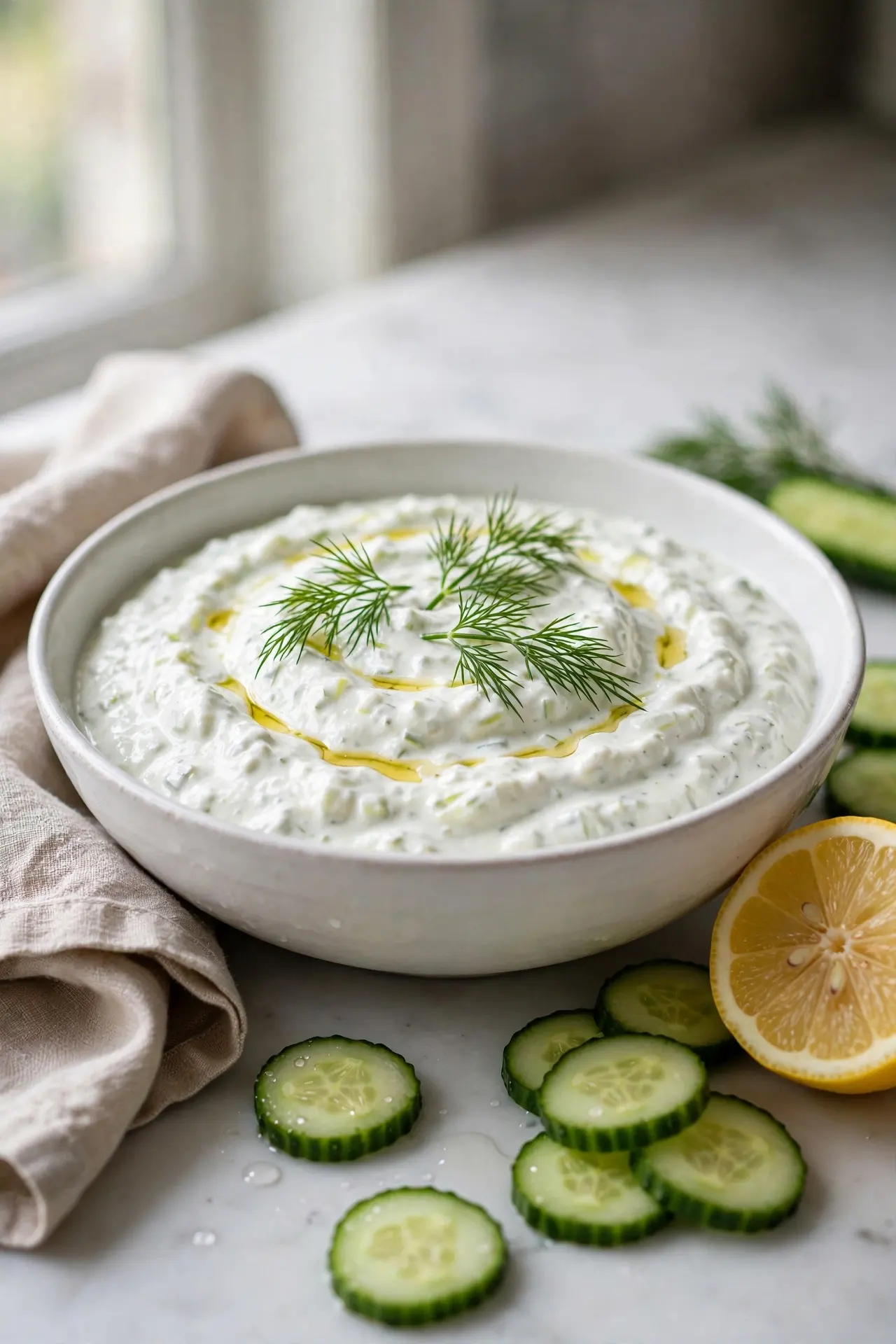
Most store-bought tzatziki tastes fine the day you open it and thin and chalky by day two. After one too many watery bowls at the bottom of a grocery container, I started making it from scratch and quickly found the problem had nothing to do with the yogurt.
This homemade tzatziki sauce recipe starts with one step most people skip: salting and squeezing the cucumber before it ever meets the yogurt. That single move removes the moisture that normally dilutes the sauce over time. What you end up with is thick enough to mound on a spoon, bright from fresh lemon and dill, and genuinely good four days later straight from the fridge.
Full-fat Greek yogurt does the structural work here. Use a runny, low-fat version and you’ll fight the texture the whole way through.
Why You’ll Love This Tzatziki Sauce Recipe
- The cucumber stays crisp for four days because you remove the moisture before mixing, not after the fact
- Three cloves of raw garlic give it real depth that mellows into something rounder after 30 minutes of resting
- Fresh dill adds brightness that dried dill cannot replicate
- No cooking required, and the 15 minutes of active prep can be done hours ahead
- The flavor peaks on day two once the garlic and lemon have had time to settle into the yogurt
Ingredients You’ll Need
For the Sauce
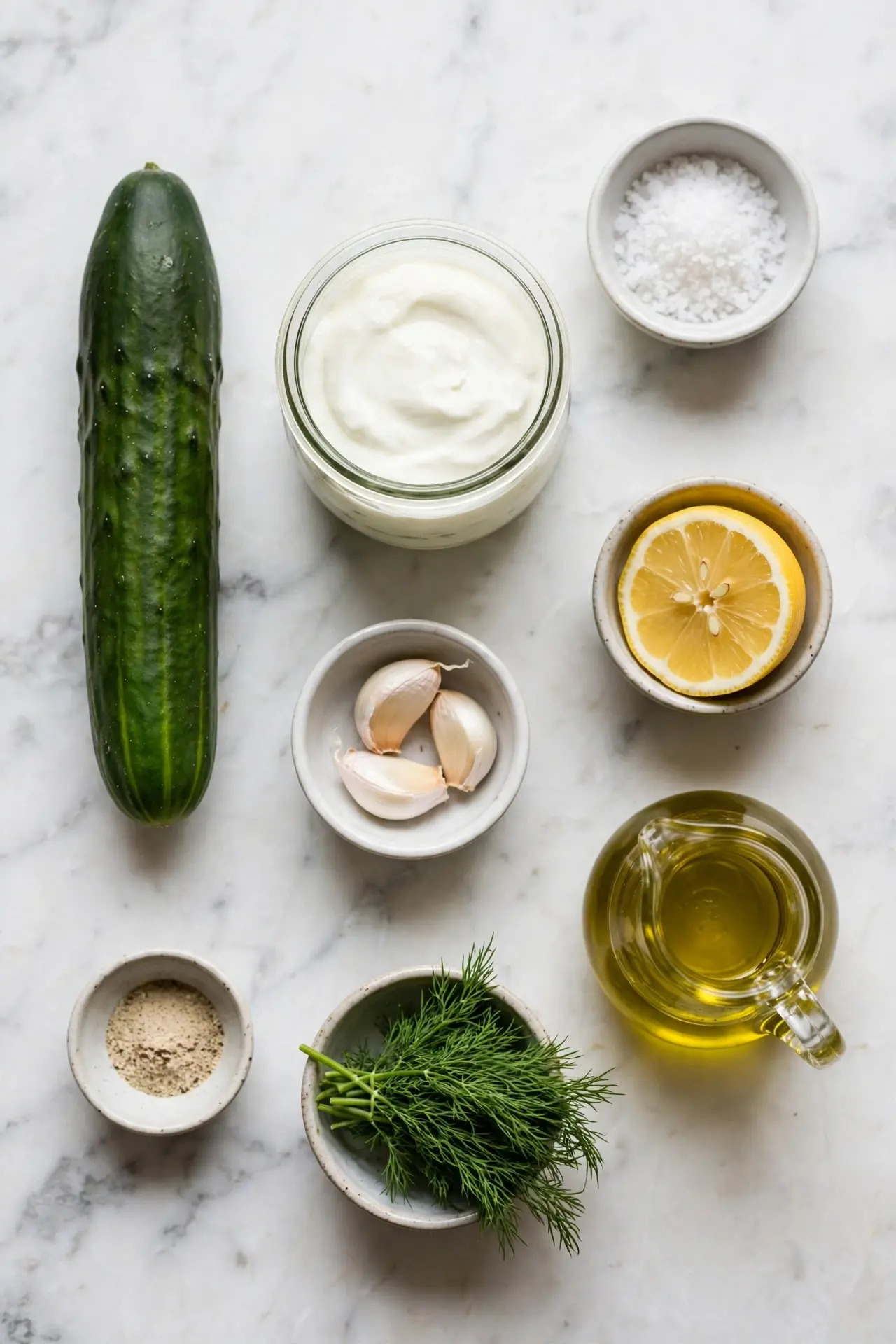
1 large English cucumber (about 300g / 10.5 oz)
1/2 tsp fine sea salt, for the cucumber
2 cups (480g) full-fat Greek yogurt, well-strained
Use a yogurt thick enough to hold its shape on a spoon; avoid anything pourable or low-fat
3 cloves garlic, minced fine
Mince with a knife rather than pressing; it distributes more evenly and tastes cleaner
2 tbsp fresh lemon juice (about 1 medium lemon)
Balances the fat in the yogurt and keeps the flavor forward rather than flat
2 tbsp extra-virgin olive oil
Added at the end; adds richness without making the sauce greasy
2 tbsp fresh dill, finely chopped
Dried dill works in a pinch; use 2 tsp if substituting, and expect less brightness
1/2 tsp fine sea salt, for the final sauce
1/4 tsp white pepper
Keeps the sauce visually clean; black pepper works but leaves visible specks
Allergen note: Contains dairy. To make this dairy-free, substitute with a thick, plain, unsweetened coconut yogurt strained overnight through a cheesecloth-lined colander.
Recipe Timing
| Timing Element | Duration |
|---|---|
| Prep Time | 15 minutes |
| Rest Time (cucumber + sauce) | 30 minutes |
| Cook Time | 0 minutes |
| Total Time | 45 minutes |
Servings: 8 (approximately 3 tbsp each) | Difficulty: Easy | Cuisine: Greek / Mediterranean | Course: Sauce, Dip, Condiment
How to Make Tzatziki Sauce, Step by Step
Step 1: Grate the cucumber
Using the large holes of a box grater, grate the cucumber with the skin on. Transfer the shredded cucumber to a fine-mesh sieve set over a bowl, sprinkle with 1/2 tsp sea salt, and toss to coat evenly.
Why this works: Salt draws water out of the cucumber cells through osmosis. Without this step, that moisture releases slowly into the yogurt after mixing and the texture goes from thick to thin within an hour.
⚠️ Food Safety: Wash the cucumber thoroughly under cold running water before grating, even if you plan to use the skin.
Step 2: Let the cucumber drain for 30 minutes
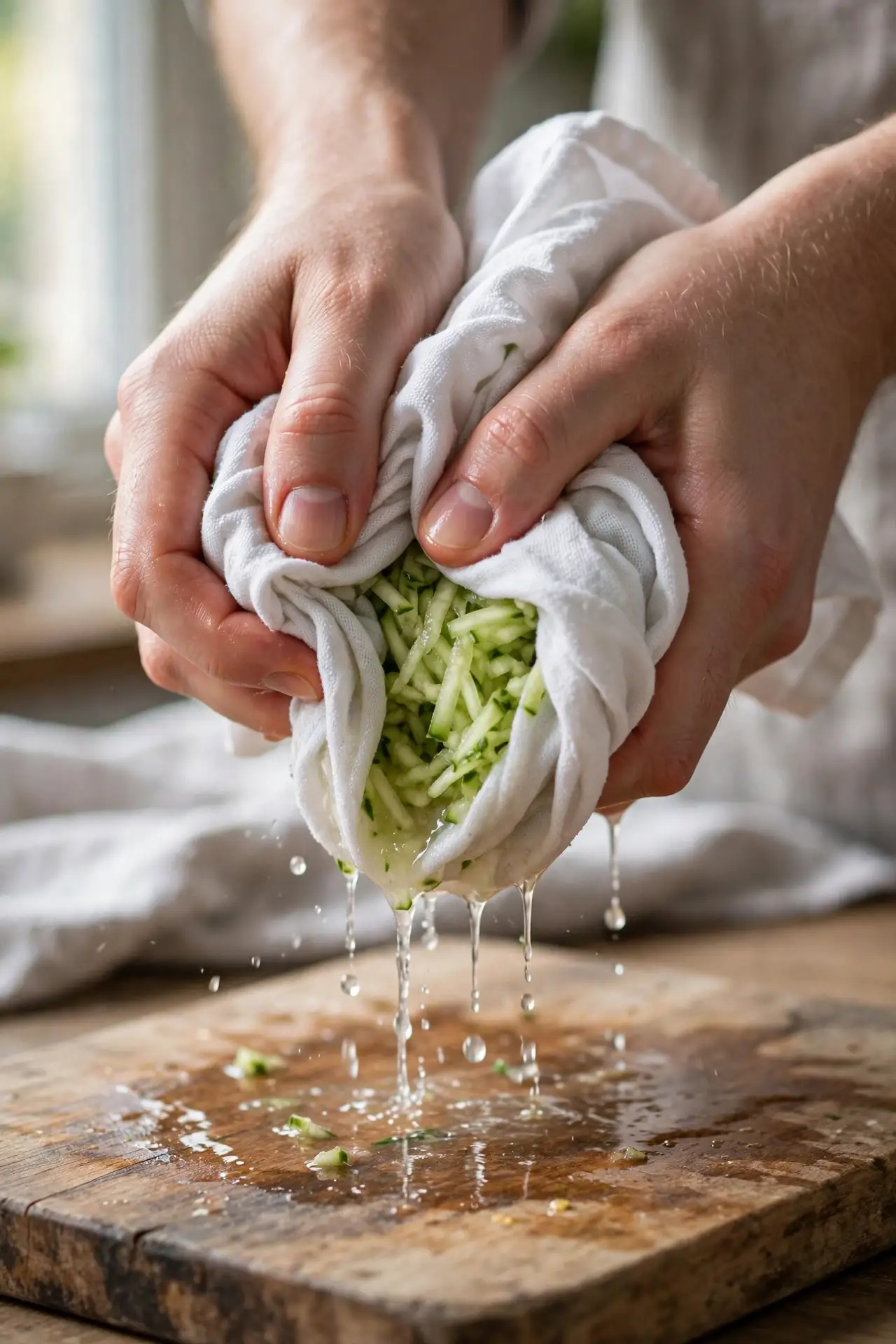
Leave the salted cucumber in the sieve at room temperature for 30 minutes. Then transfer it to a clean kitchen towel or several layers of cheesecloth and squeeze firmly over the sink.
Keep squeezing until no more liquid drips out. One large cucumber typically releases four to five tablespoons of water.
Step 3: Prepare the garlic
Mince the garlic cloves as finely as possible with a sharp knife. For a more even, less sharp flavor, use the flat of the knife to smear the minced garlic across the board with a small pinch of salt until it becomes a rough paste.
Why this works: Garlic paste distributes uniformly through the yogurt. Minced chunks create uneven pockets of raw garlic, so some bites taste sharp and others barely register.
Step 4: Combine the base
In a medium bowl, stir together the strained Greek yogurt, squeezed cucumber, garlic, lemon juice, and 1/2 tsp sea salt until fully combined. The mixture should be thick enough to mound slightly rather than spread flat.
Taste at this point and adjust the salt before adding anything else.
Step 5: Add the dill and finish with oil
Fold in the chopped fresh dill, then drizzle in the olive oil and stir gently until incorporated. Stop stirring once the oil is mixed in.
Why this works: Adding olive oil at the end, rather than mixing it in from the start, keeps the sauce creamy and cohesive. Overworking it after the oil goes in can make the texture slightly greasy.
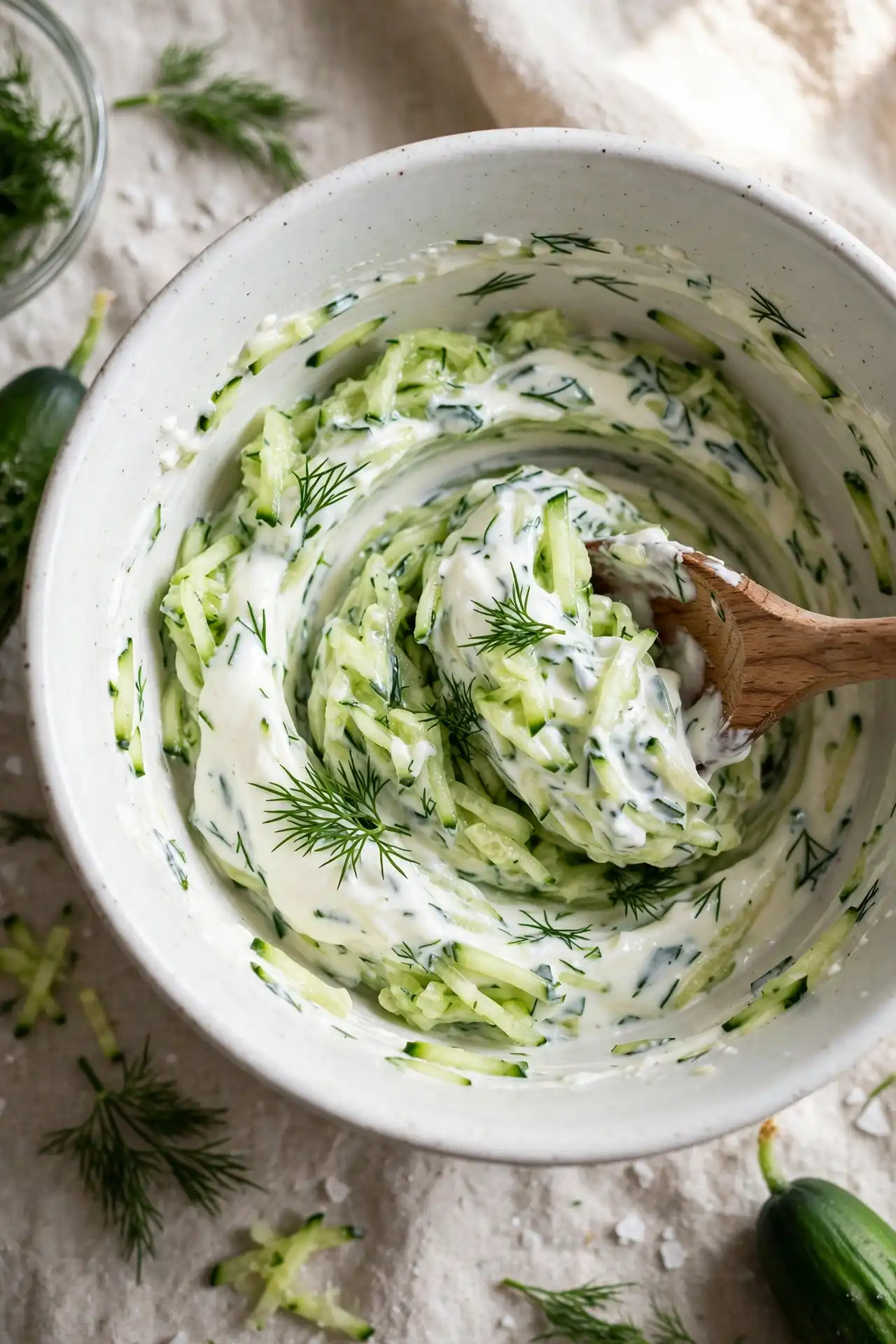
Step 6: Taste, rest, and serve
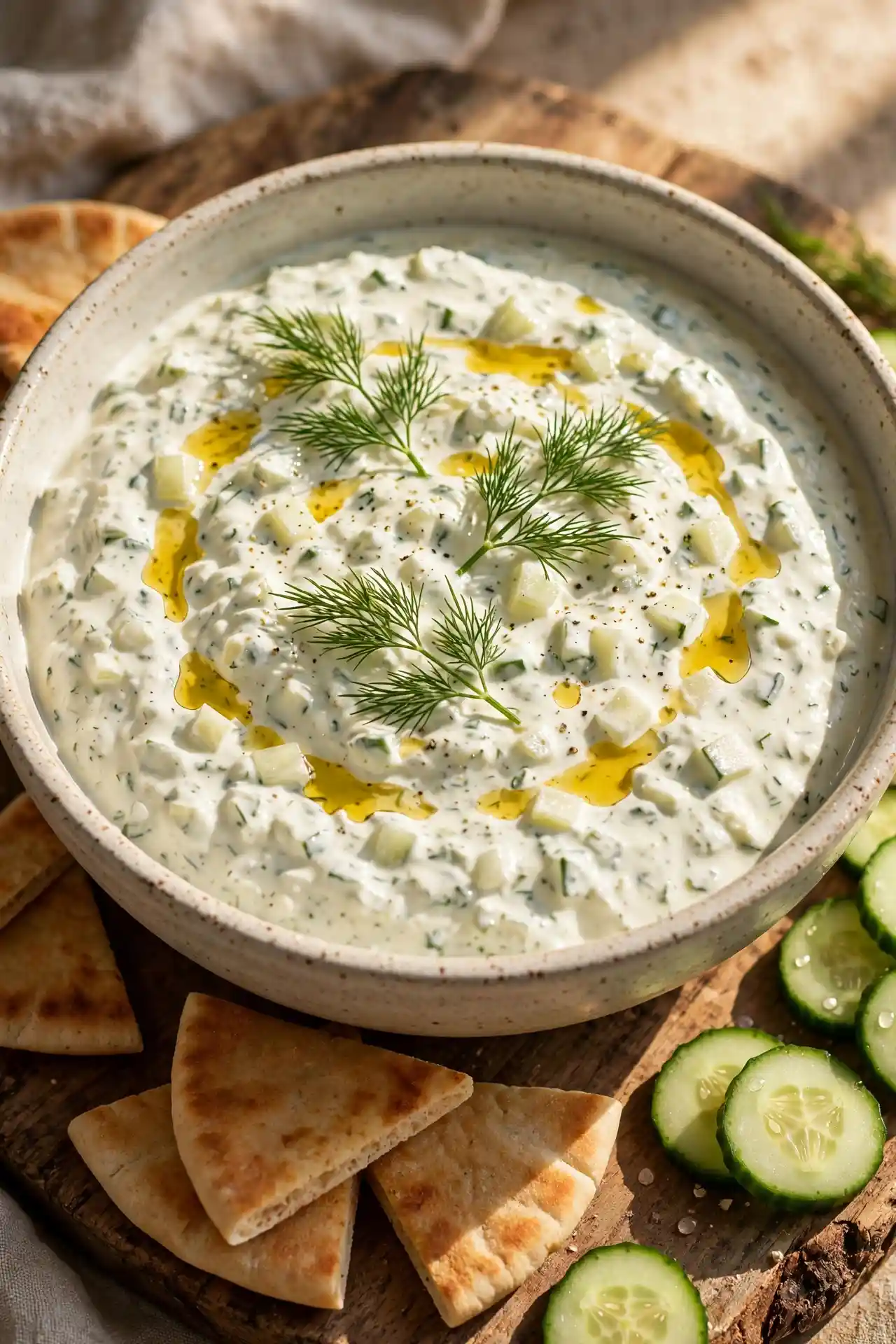
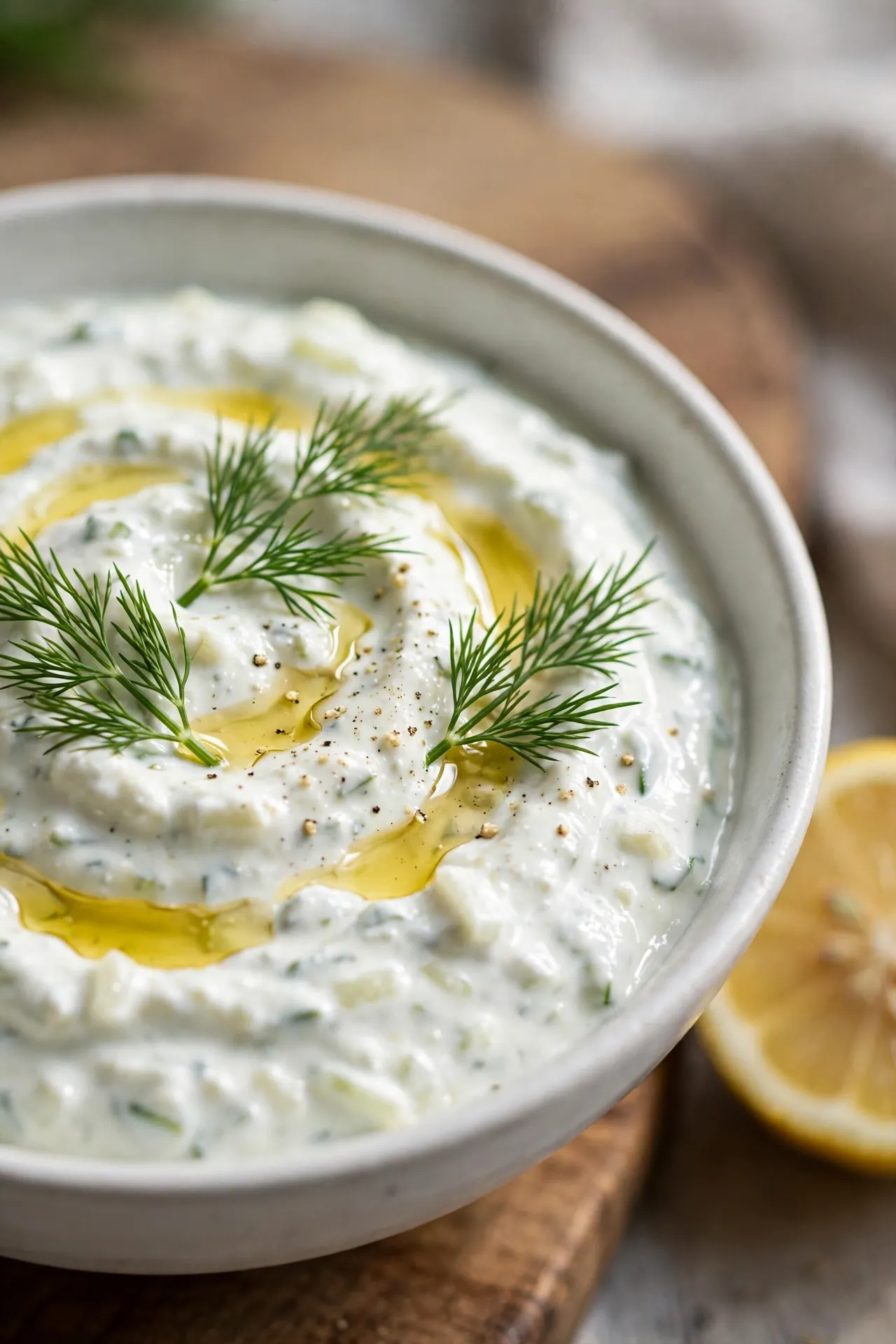
Taste the sauce and adjust with more lemon juice, salt, or dill as needed. Transfer to a serving bowl, drizzle a thin layer of olive oil across the surface, and add a few dill sprigs on top.
Cover and refrigerate for at least 30 minutes before serving. The garlic mellows considerably during this rest and the flavors pull together.
Common Mistakes to Avoid
Skipping the cucumber squeeze
This is the single reason most homemade tzatziki turns watery. Salting loosens the moisture; squeezing physically removes it. Both steps are necessary. Salt without squeezing leaves most of that water still in the cucumber and it releases slowly after mixing.
Using low-fat or runny yogurt
Low-fat Greek yogurt has a higher whey content and less structure. It produces a thinner sauce that separates faster in the fridge and cannot hold the cucumber and garlic the way a full-fat yogurt can. Full-fat is not optional here.
Running garlic through a press
A garlic press releases juice along with small fragments, which can give the sauce a sharper and slightly metallic edge when used raw. Mincing finely by knife, then optionally mashing to a paste with salt, gives you cleaner, more even flavor throughout.
Serving immediately after mixing
A freshly mixed tzatziki tastes sharp, heavily lemon-forward, and a little raw from the garlic. The 30-minute refrigerator rest lets everything mellow and integrate. Same sauce, noticeably different result.
Variations and Substitutions
Mint instead of dill
Several regional Greek versions use fresh mint rather than dill. It gives the sauce a cooler, more herbal edge that pairs particularly well with lamb. Use the same quantity: 2 tablespoons finely chopped.
Add lemon zest
Half a teaspoon of lemon zest stirred in alongside the juice adds a sharpness the juice alone cannot replicate. Worth trying if you want the citrus flavor to come forward more strongly.
Roasted garlic version
Swap the three raw garlic cloves for four to five roasted cloves mashed to a paste. The flavor becomes sweeter and less sharp, which works better as a spread than as a fresh dipping sauce.
What to Serve With Tzatziki Sauce
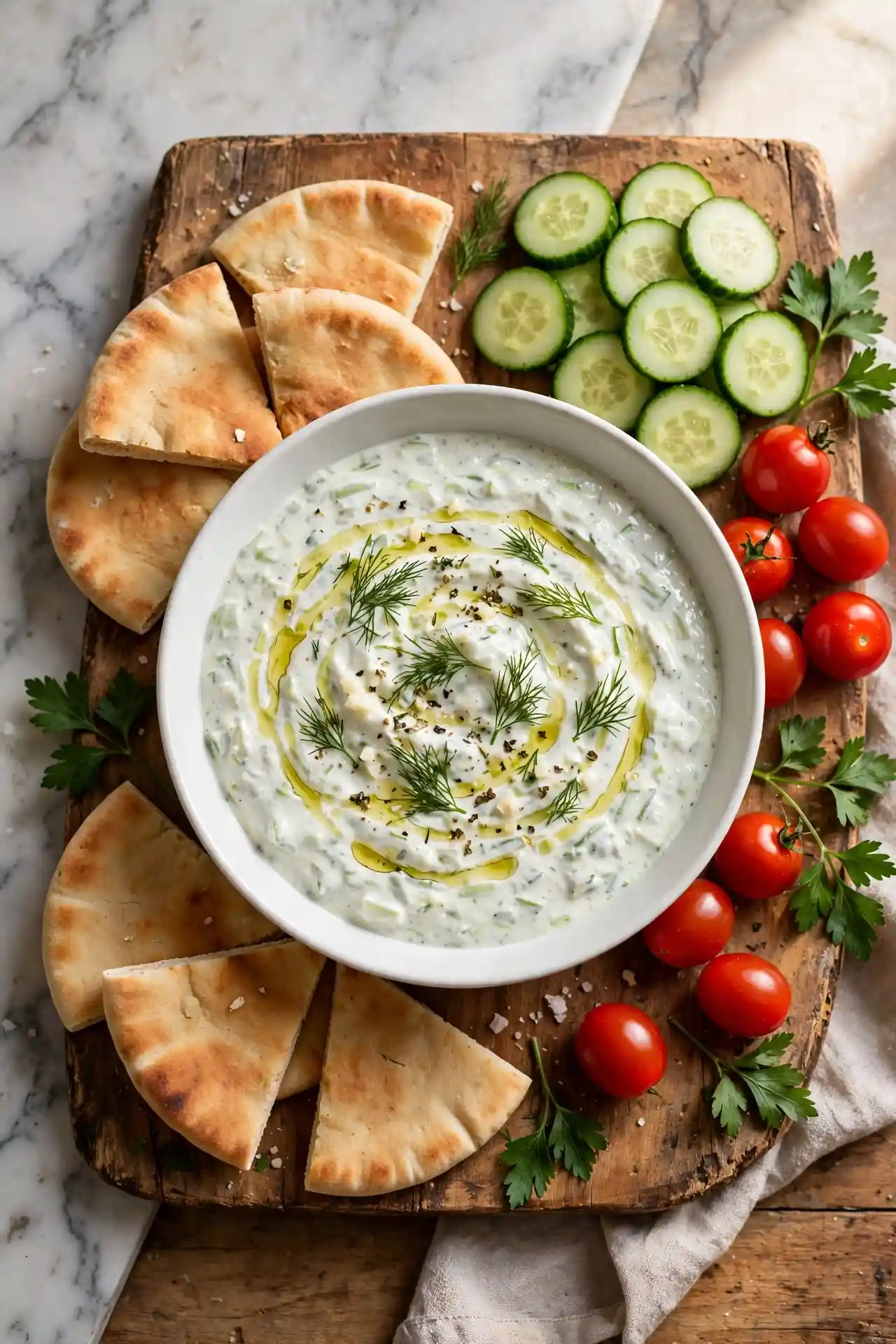
Warm flatbread or pita is the most natural pairing. Hold a piece over a gas flame for 20 to 30 seconds per side until it blisters slightly, then serve immediately.
Grilled chicken or lamb kebabs are where tzatziki earns its place on the table. The garlic and acid cut through the richness of grilled meat better than most condiments.
Falafel benefits from the cooling creaminess of tzatziki in a way that tahini cannot always deliver. The contrast between the hot, crisp exterior of fresh falafel and cold tzatziki is the point.
Raw vegetables require no adjustment at all. Cucumber spears, carrot sticks, and bell pepper strips all work, and the yogurt base adds protein that a standard vegetable dip doesn’t provide.
Rice or grain bowls can use tzatziki in place of a dressing. Drizzle it over roasted vegetables and chickpeas on plain rice. It adds creaminess, acidity, and protein in one spoonful.
Storage and Make-Ahead
Fridge: Store in a sealed glass container for up to four days. A small amount of liquid may collect on the surface; stir it back in or drain it off before serving.
Freezer: This sauce does not freeze well. The yogurt separates and the cucumber texture deteriorates completely after thawing. A fresh batch takes 15 minutes of active work, which makes freezing a poor trade-off.
Make-ahead prep: Grate, salt, and squeeze the cucumber up to 24 hours in advance. Keep it in a separate container in the fridge and combine the full sauce 30 to 60 minutes before serving so it has time to rest properly.
For food safety guidance on storing dairy-based sauces and dips, the USDA recommends keeping refrigerated items at or below 4°C (40°F) and discarding anything left at room temperature for more than two hours.
Nutrition Information
Per serving (approximately 3 tablespoons):
| Nutrient | Per Serving |
|---|---|
| Calories | 80 kcal |
| Protein | 6 g |
| Total Carbohydrates | 4 g |
| Dietary Fiber | 0 g |
| Total Sugars | 3 g |
| Total Fat | 4 g |
| Saturated Fat | 1 g |
| Sodium | 150 mg |
| Cholesterol | 5 mg |
| Potassium | 120 mg |
“Nutritional values are estimates only and may vary based on specific ingredients, brands, and portion sizes used. For precise dietary needs, consult a registered dietitian.”
Frequently Asked Questions
Why is my tzatziki sauce watery?
Almost always the cucumber. Even if you salt it and wait the full 30 minutes, if you don’t squeeze the moisture out completely before mixing, it releases slowly into the yogurt. Squeeze until the towel feels nearly dry and no more liquid drips out. Using full-fat Greek yogurt also helps maintain structure over time.
Can I make tzatziki sauce without dill?
Yes. Fresh mint is the most common substitute and is used in several Greek regional versions. Parsley is a weaker option and produces a blander, less herby result. If using dried herbs in place of fresh, halve the quantity.
How long does homemade tzatziki sauce last in the fridge?
Up to four days in a sealed container. The flavor actually improves on day two after the garlic mellows. Stir before serving, as some light liquid separation on top is normal.
Can I use regular yogurt instead of Greek yogurt for this tzatziki sauce recipe?
You can, but you need to strain it first. Line a colander with cheesecloth, add the yogurt, and let it drain in the fridge for at least four hours or overnight. Regular yogurt has too much whey to hold a thick texture without that step.
Can tzatziki sauce be frozen?
No. The yogurt separates and the cucumber goes soft and watery after thawing. Since a fresh batch takes 15 minutes of active prep, freezing is not worth the result you get back.
What is the difference between tzatziki and cucumber yogurt sauce?
The terms are often used interchangeably outside Greece, but traditional tzatziki has a specific combination: strained yogurt, raw garlic, fresh herbs (dill or mint), lemon juice, and olive oil. A generic cucumber yogurt sauce may skip the garlic and oil entirely. The garlic, fresh herb, and olive oil combination is what makes a proper tzatziki sauce recipe distinctly Greek in character and flavor.
Is this recipe gluten-free?
All the ingredients are naturally gluten-free. If cross-contamination is a concern, check the labels on your Greek yogurt and olive oil for shared-facility warnings.
Conclusion
The two things that separate a good tzatziki from a forgettable one are dry cucumber and thick yogurt. Get both right, rest the sauce for 30 minutes, and the rest takes care of itself. This tzatziki sauce recipe works just as well spooned over grilled chicken as it does alongside raw vegetables or stirred into a grain bowl. Make it the day before if you can. The garlic softens overnight and the lemon rounds out, and what you taste on day two is noticeably better than what came out of the bowl right after mixing.
Tzatziki Sauce Recipe Card
Tzatziki Sauce Recipe
Ingredients
Method
- Grate the cucumber on the large holes of a box grater, skin on. Toss with 1/2 tsp sea salt and place in a fine-mesh sieve over a bowl. Let drain for 30 minutes at room temperature.
- Transfer the cucumber to a clean kitchen towel and squeeze firmly over the sink until no more liquid drips out.
- Mince the garlic finely. Optionally, mash it with a pinch of salt using the flat of a knife into a rough paste.
- In a medium bowl, combine the strained Greek yogurt, squeezed cucumber, garlic, lemon juice, and 1/2 tsp sea salt. Stir until fully combined. Taste and adjust salt if needed.
- Fold in the chopped fresh dill. Drizzle in the olive oil and stir gently to incorporate.
- Taste and adjust with lemon juice, salt, or dill. Transfer to a serving bowl, drizzle with olive oil, and garnish with fresh dill sprigs. Refrigerate for at least 30 minutes before serving.