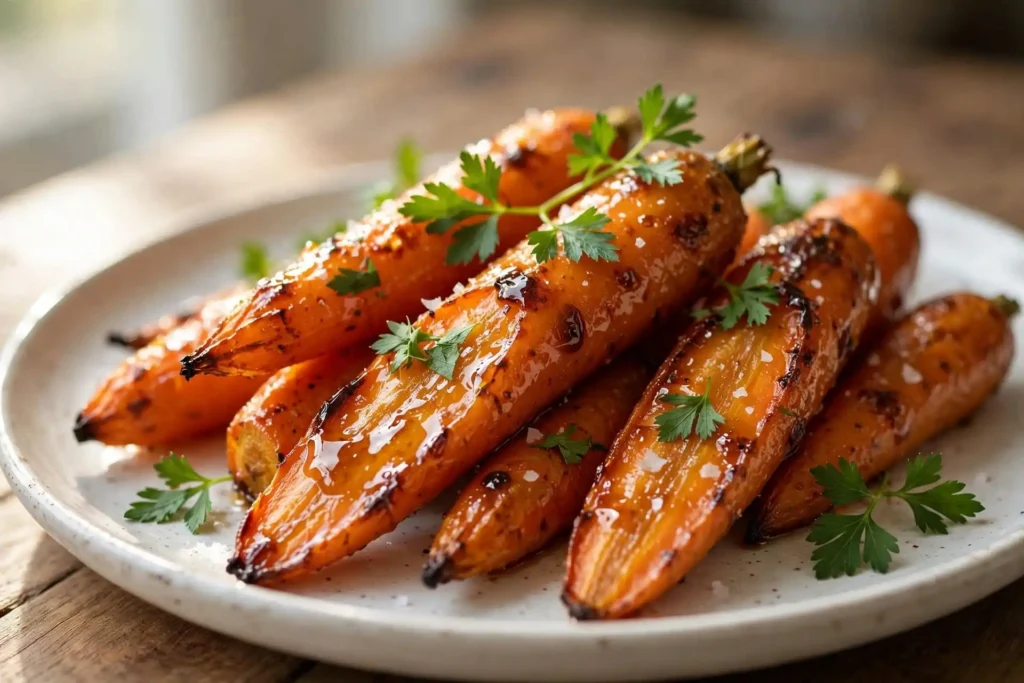
Roasted Carrots with Honey, Garlic, and Fresh Herbs
In This Article
- Why You’ll Love These Roasted Carrots
- Ingredients You’ll Need
- Recipe Timing
- How to Make Roasted Carrots Step by Step
- Key Tips for Best Results
- Common Mistakes to Avoid
- Variations and Substitutions
- What to Serve with Roasted Carrots
- Storage, Reheating, and Make-Ahead
- Nutrition Information
- Frequently Asked Questions
- Roasted Carrots Recipe Card
Roasted carrots practically take care of themselves. You peel, cut, and toss them in a honey-garlic mixture, slide them into a hot oven, and 25 minutes later you have something caramelized, slightly sweet, and genuinely worth eating as more than an afterthought on the plate.
This version uses one tablespoon of honey, three cloves of garlic, and dried thyme. The honey creates a glaze without making the dish taste like dessert. The garlic adds a savory counterpoint that keeps the sweetness in check. Roasting at 220°C (425°F) drives off surface moisture fast, which is what produces golden edges instead of soft, pale, steamed-tasting carrots.
My mother used to roast carrots with nothing but olive oil and salt. They were fine. Adding honey and garlic is a small change that makes a noticeable difference in how the carrots taste, and in how fast they disappear off the plate.
Why You’ll Love These Roasted Carrots
The natural sugar in carrots intensifies when they roast. A carrot that tastes mildly sweet raw becomes noticeably richer and more concentrated after 25 minutes at high heat.
- Caramelized edges and a tender center — not mushy all the way through
- One sheet pan, 35 minutes from start to finish, minimal cleanup
- The honey-garlic glaze takes 30 seconds to mix and coats every piece evenly
- Works as a quick weeknight side or as part of a larger spread for guests
- Reheats well, so make a double batch of roasted carrots and use the leftovers the next day
Ingredients You’ll Need
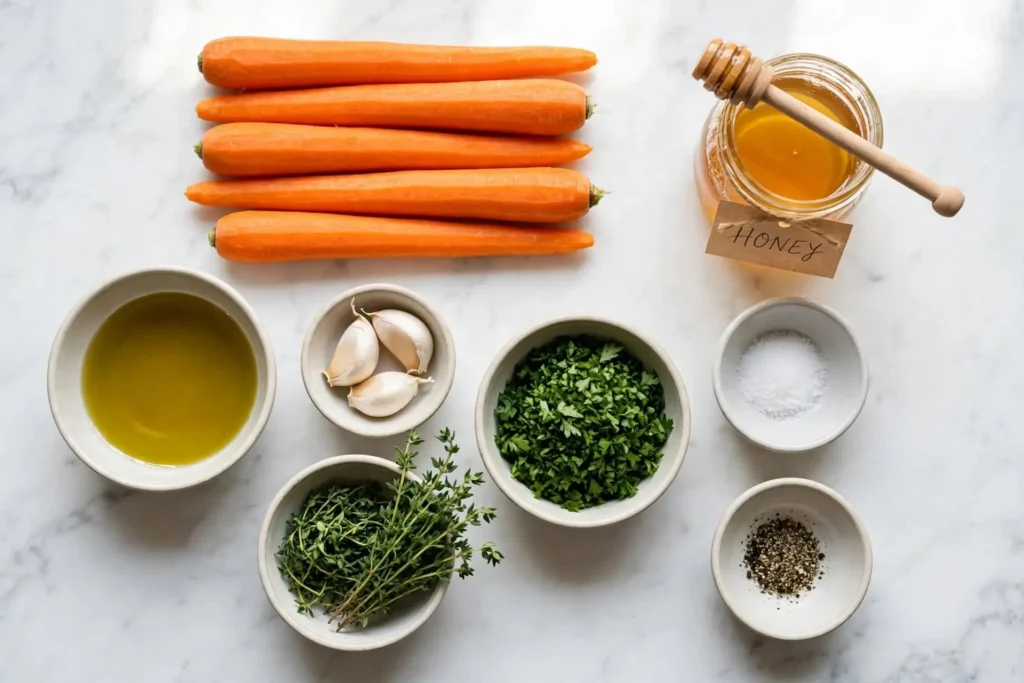
For the roasted carrots:
- 500g (1 lb) carrots, peeled — medium whole carrots work best; they hold their shape through roasting and develop even browning on the cut edges
- 2 tbsp olive oil — coats the carrot surfaces and helps conduct heat for browning
- 1 tbsp honey — use a mild, light-colored honey so it glazes without overpowering the garlic
- 3 garlic cloves, finely minced — minced fine so it adheres to each piece and doesn’t burn before the carrots finish cooking
- 1/2 tsp fine salt
- 1/4 tsp freshly ground black pepper
- 1/2 tsp dried thyme — or 1 tsp fresh thyme leaves; adds an earthy note that balances the sweetness of the honey
- 2 tbsp fresh flat-leaf parsley, roughly chopped — added after roasting so it stays bright green rather than wilting and turning bitter in the oven
Recipe Timing
| Timing Element | Duration |
| Prep Time | 10 minutes |
| Cook Time | 25 minutes |
| Rest/Marinate Time | N/A |
| Total Time | 35 minutes |
Servings: 4 | Difficulty: Easy | Cuisine: Global | Course: Side Dish
How to Make Roasted Carrots Step by Step
Step 1: Preheat the oven and prepare the baking sheet
Set your oven to 220°C (425°F) and allow it to fully preheat before the carrots go in. Line a large baking sheet with parchment paper.
Why this works: Starting with a fully preheated oven at high temperature means the carrot surfaces begin caramelizing immediately. A warm oven that hasn’t reached temperature will slow-cook them instead of browning them.
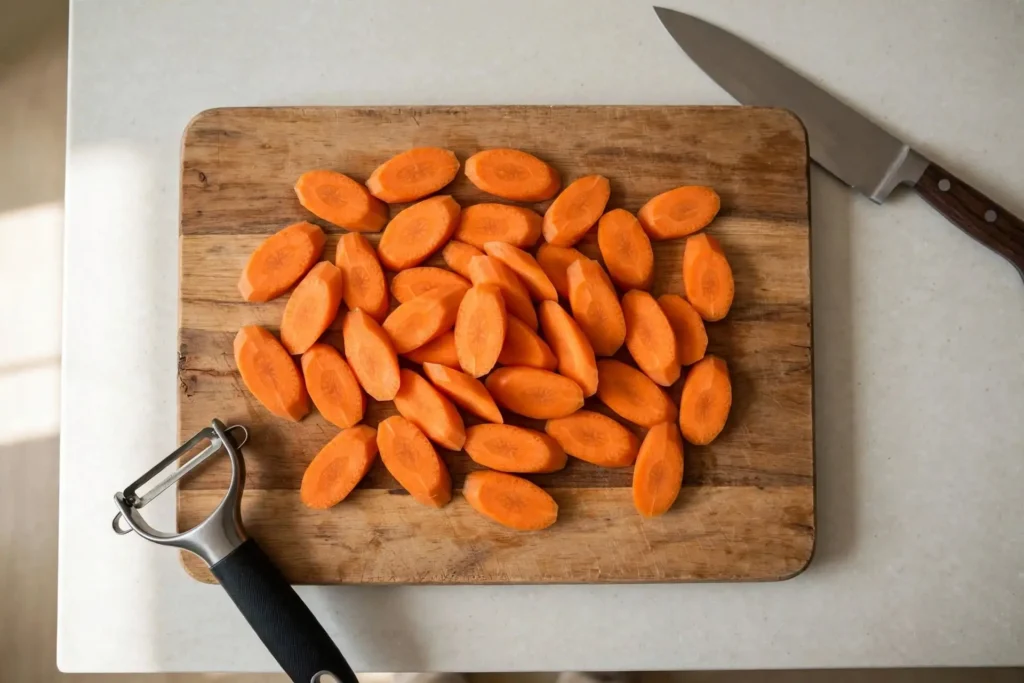
Step 2: Peel and cut the carrots
Peel the carrots and cut them diagonally into pieces approximately 1.5cm (1/2 inch) thick. Keep all pieces as close to the same size as possible.
Why this works: Uniform pieces cook at the same rate. If thicker pieces sit alongside thin ones, the thin ends burn while the thick centers are still firm.
Step 3: Make the glaze and coat the carrots
In a large mixing bowl, combine the olive oil, honey, minced garlic, salt, pepper, and dried thyme. Add the carrot pieces and toss until every piece is thoroughly coated.
Step 4: Arrange the carrots on the baking sheet
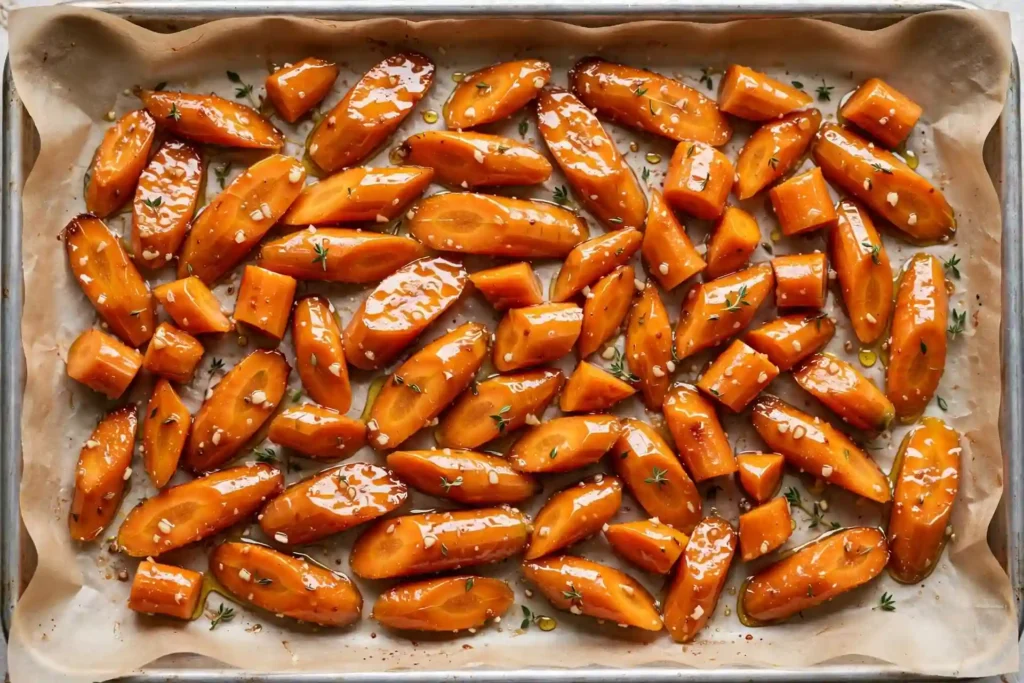
Spread the coated carrots on the prepared baking sheet in a single layer. Leave visible space between each piece. Pour any remaining glaze from the bowl over the top.
Why this works: Carrots release moisture as they cook. Space between pieces lets steam escape so the oven heat can actually brown the surfaces. Packed-together carrots trap steam and stew in their own liquid rather than roasting.
Step 5: Roast, flip halfway, and check for doneness
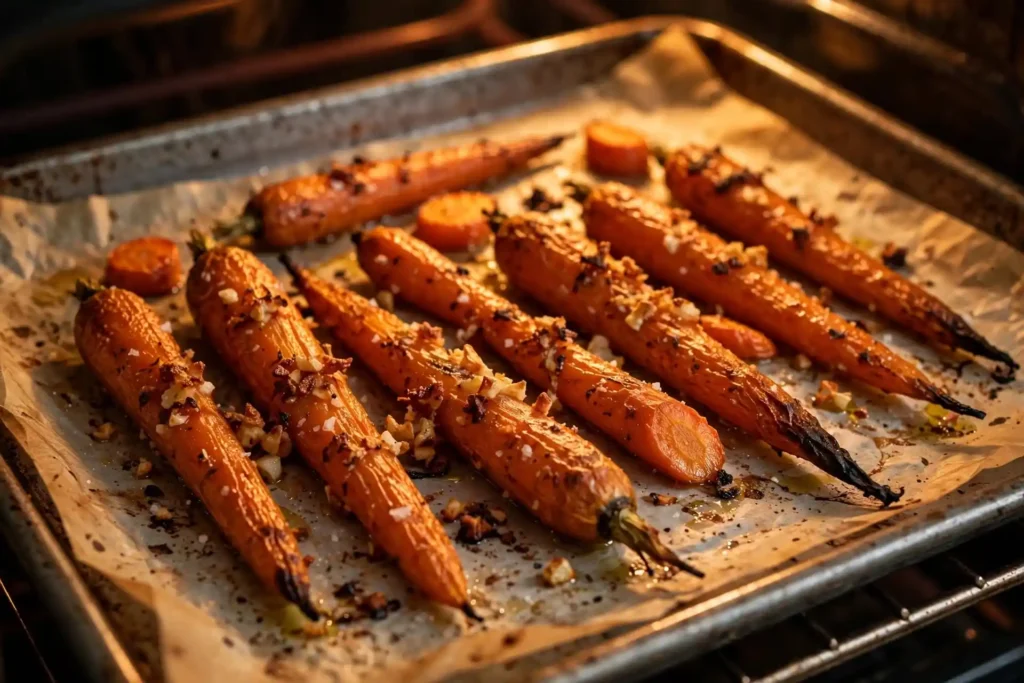
Place the baking sheet on the middle rack. Roast for 12 minutes, then flip each piece with tongs. Return the pan to the oven and roast for another 10 to 13 minutes until the carrots are tender when pierced through the center with a fork and the edges are golden brown with darker caramelized spots.
Step 6: Garnish and serve
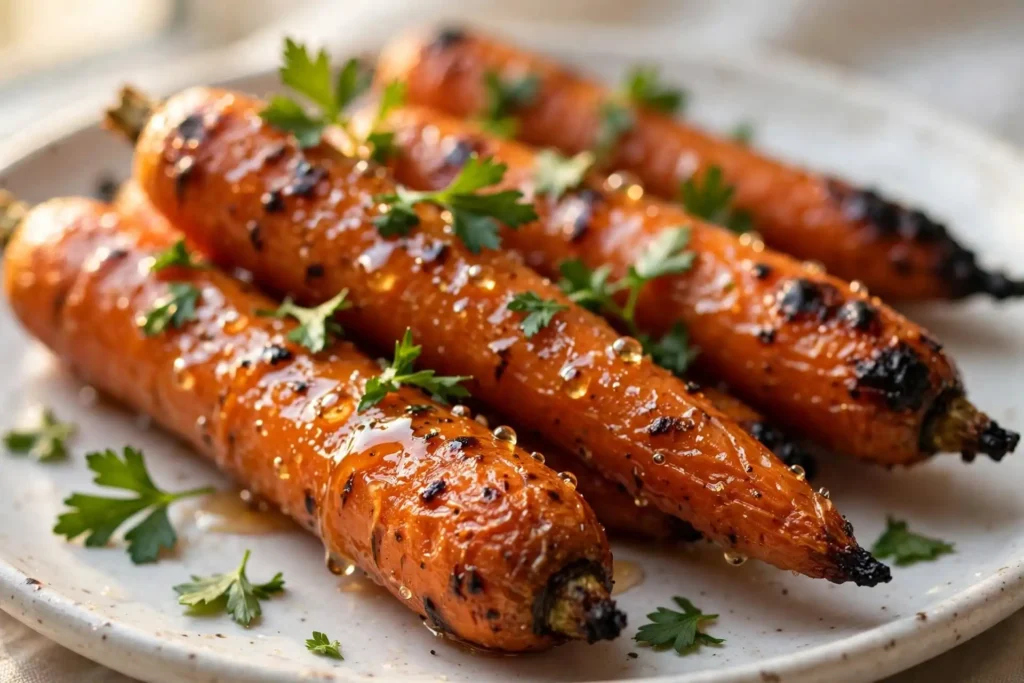
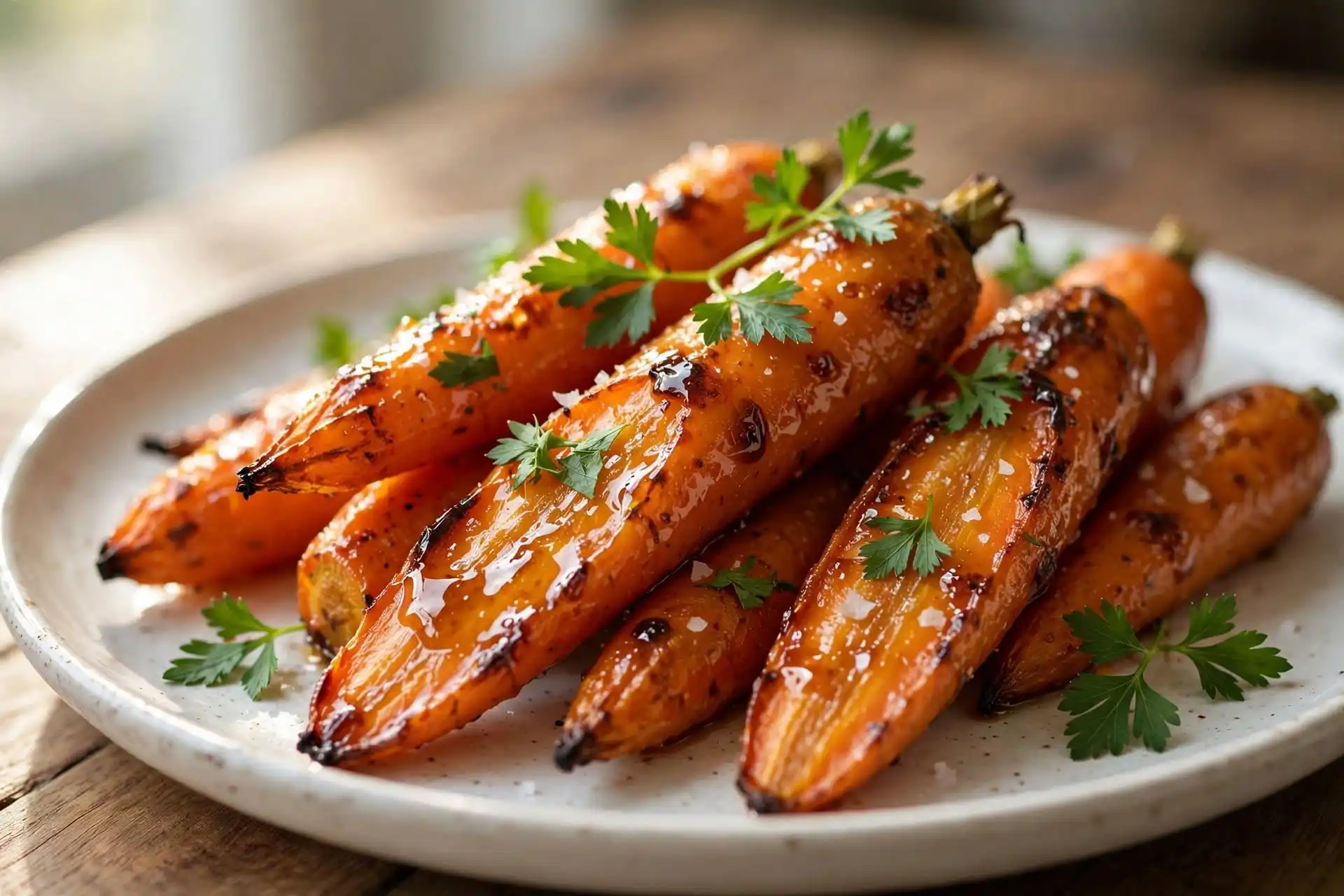
Transfer the carrots to a serving plate and scatter the fresh parsley over the top. Serve immediately while hot.
Why this works: Parsley added after roasting stays bright and fresh-tasting. Added before, it presses against a scorching pan surface and turns brown and bitter within the first few minutes.
Key Tips for Best Results
Pat the carrots dry before tossing. After peeling, press the carrot pieces briefly with a paper towel if the surfaces feel wet. Excess moisture on the surface delays browning significantly and can mean the difference between caramelized and pale.
Use the right size pan. A half-sheet pan (46cm x 33cm / 18″ x 13″) holds 500g of carrots in a single layer with room to spare. If your largest pan is smaller than this, use two and rotate them between shelves at the halfway flip.
Resist opening the oven door. Each time the door opens, the oven temperature drops and recovery takes several minutes. Open it once at the 12-minute mark to flip, and leave the carrots alone for the rest of the cook time.
Common Mistakes to Avoid
Cutting uneven pieces.
This usually happens when slicing too quickly without comparing thickness. Pieces that are significantly thicker will still be firm when the thin ones are done. Take a minute to check each piece and cut consistently throughout.
Using too much honey.
One tablespoon is enough for 500g of carrots. More than that and the sugars in the glaze burn on the pan surface before the carrots cook through. If you want a stronger honey flavor, drizzle a small amount over the finished carrots right before serving rather than adding more to the raw glaze.
Roasting at too low a temperature.
Carrots cooked at 180°C (350°F) turn soft without real caramelization. You need 220°C (425°F) for proper browning. Make sure the oven is fully preheated before the pan goes in, and use an oven thermometer if you’re not confident your oven runs accurately.
Crowding the pan.
This is the most common reason roasted carrots turn out soft and pale instead of golden. Crowded pieces trap steam and stew rather than roast. When in doubt, split the batch across two pans.
Variations and Substitutions
Cumin and coriander: Swap the thyme for 1/2 tsp ground cumin and 1/4 tsp ground coriander. The flavor shifts toward warmer, earthier notes that pair well with rice dishes or braised lamb.
Balsamic version: Replace the honey with 1 tablespoon of balsamic vinegar and add a pinch of brown sugar to offset the acidity. The glaze turns darker and the sweetness is less forward, which suits richer main dishes.
Baby carrots: Skip the cutting step entirely. Baby carrots roast at the same temperature but tend to need 5 extra minutes because they’re denser. Check the thickest one with a fork — it should give with no resistance.
What to Serve with Roasted Carrots
Roast chicken. The sweetness of the glaze works naturally against savory roasted chicken skin. Both cook at similar temperatures, so you can put them in the oven at the same time on separate racks.
Rice pilaf. A herb rice pilaf adds a neutral base that lets the carrots’ flavor come through clearly. The color contrast also improves the plate.
Mezze spread. Roasted carrots hold up well at room temperature, which makes them a good fit alongside hummus, flatbread, and yogurt dip. They don’t need to be piping hot to taste good.
Grilled or braised lamb. The sweetness of the carrots cuts through lamb’s richness in a way that feels balanced rather than accidental.
Couscous with lemon and raisins. Add the carrots on top of couscous dressed with lemon juice and olive oil, with a small handful of raisins mixed in. The sweet-savory contrast works across all three components.
Storage, Reheating, and Make-Ahead
Fridge: Store cooled roasted carrots in an airtight container for up to 4 days. The flavor holds well, though the texture softens slightly after the first day.
Freezer: Freeze in a single layer on a baking sheet first, then transfer to a sealed freezer bag to prevent clumping. They keep for up to 2 months. Thaw overnight in the fridge before reheating.
Reheat: Spread the carrots on a baking sheet and heat at 200°C (400°F) for 8 to 10 minutes until warmed through and the edges firm back up. Microwaving works but makes them noticeably softer and less appealing.
Make-ahead: Peel, cut, and toss the carrots in the honey-garlic glaze up to 4 hours before roasting. Keep them covered in the fridge and roast when needed. Hold the parsley garnish until after roasting.
For safe vegetable handling and washing before prep, refer to FDA guidelines on fresh produce safety{:target=”_blank”}.
Nutrition Information
Per serving (4 servings total):
| Nutrient | Per Serving |
| Calories | 130 kcal |
| Protein | 1 g |
| Total Carbohydrates | 17 g |
| Dietary Fiber | 3.5 g |
| Total Sugars | 10 g |
| Total Fat | 7 g |
| Saturated Fat | 1 g |
| Sodium | 290 mg |
| Cholesterol | 0 mg |
| Potassium | 400 mg |
| Vitamin C | 7 mg |
| Calcium | 41 mg |
| Iron | 0.4 mg |
Figures calculated from the USDA FoodData Central database{:target=”_blank”} for the exact ingredient quantities listed above.
Nutritional values are estimates only and may vary based on specific ingredients, brands, and portion sizes used. For precise dietary needs, consult a registered dietitian.
Frequently Asked Questions
How long do roasted carrots take at 425°F (220°C)?
Cut to 1.5cm (1/2 inch) thickness, carrots take 22 to 25 minutes total at 425°F, with one flip at the 12-minute mark. They’re ready when the center is tender when pierced with a fork and the edges are golden brown with some caramelization at the tips. Thicker pieces take a few minutes longer — check with a fork rather than relying purely on time.
Why are my roasted carrots coming out soggy?
Soggy carrots come down to two things: an overcrowded pan or an oven that wasn’t fully preheated. Carrots release moisture as they cook. If the pieces are packed together, that moisture becomes steam and the carrots stew rather than roast. Leave space between each piece and make sure your oven reaches 220°C (425°F) before the pan goes in.
Should I peel carrots before roasting?
Yes. Carrot skin becomes slightly tough and bitter at high roasting temperatures. Peeling takes two minutes and the texture of the finished dish is noticeably better. Pre-packaged baby carrots are already peeled and can go straight into the glaze.
Can I make roasted carrots ahead of time?
You can prep and glaze the raw carrots up to 4 hours in advance and keep them covered in the fridge. Cooked leftovers also reheat well: spread them on a baking sheet and heat at 200°C (400°F) for 8 to 10 minutes. The texture won’t be as crisp as freshly roasted, but the flavor is fully intact.
Can I use baby carrots instead of whole carrots?
Baby carrots work well and skip the cutting step entirely. They’re denser than diagonal-cut whole carrots, so add about 5 minutes to the total roasting time. Pierce the thickest one at the center with a fork — it should go through with no resistance before you pull the pan out.
What herbs go best with roasted carrots?
Thyme is the most versatile choice; it complements the sweetness of the honey and the savory note from the garlic without taking over. Rosemary is stronger and works well when serving alongside roasted meats. Cumin shifts the flavor toward warmer, earthier notes, which suits Middle Eastern-style meals and rice dishes particularly well.
Are there any allergens in this recipe?
This recipe contains none of the common allergens: no gluten, dairy, eggs, tree nuts, peanuts, soy, sesame, shellfish, or fish. As written, it is naturally vegan and gluten-free. If you use pre-made spice blends or store-bought stock with any accompanying dishes, check those labels separately.
Conclusion
Roasted carrots are one of those side dishes that looks like effort but costs almost none. Three things determine the result more than anything else: cut the pieces uniform, leave space on the pan, and roast at 220°C (425°F). The honey-garlic glaze handles itself from there. If you’ve made roasted carrots before and gotten pale, soft results, the oven temperature and pan crowding are almost always where the problem started. Get those right and the caramelization follows on its own.
Roasted Carrots with Honey, Garlic, and Fresh Herbs
Ingredients
Method
- Preheat oven to 220°C (425°F). Line a large baking sheet with parchment paper.
- Peel the carrots and cut diagonally into 1.5cm (1/2 inch) thick pieces, keeping all pieces uniform in size.
- In a large bowl, combine olive oil, honey, minced garlic, salt, pepper, and thyme. Add carrots and toss until every piece is evenly coated.
- Spread carrots in a single layer on the baking sheet with visible space between each piece. Pour any remaining glaze from the bowl over the top.
- Roast on the middle rack for 12 minutes. Flip each piece with tongs, then roast for another 10 to 13 minutes until tender through the center when pierced with a fork and edges are golden brown.
- Transfer to a serving plate, scatter fresh parsley on top, and serve immediately.