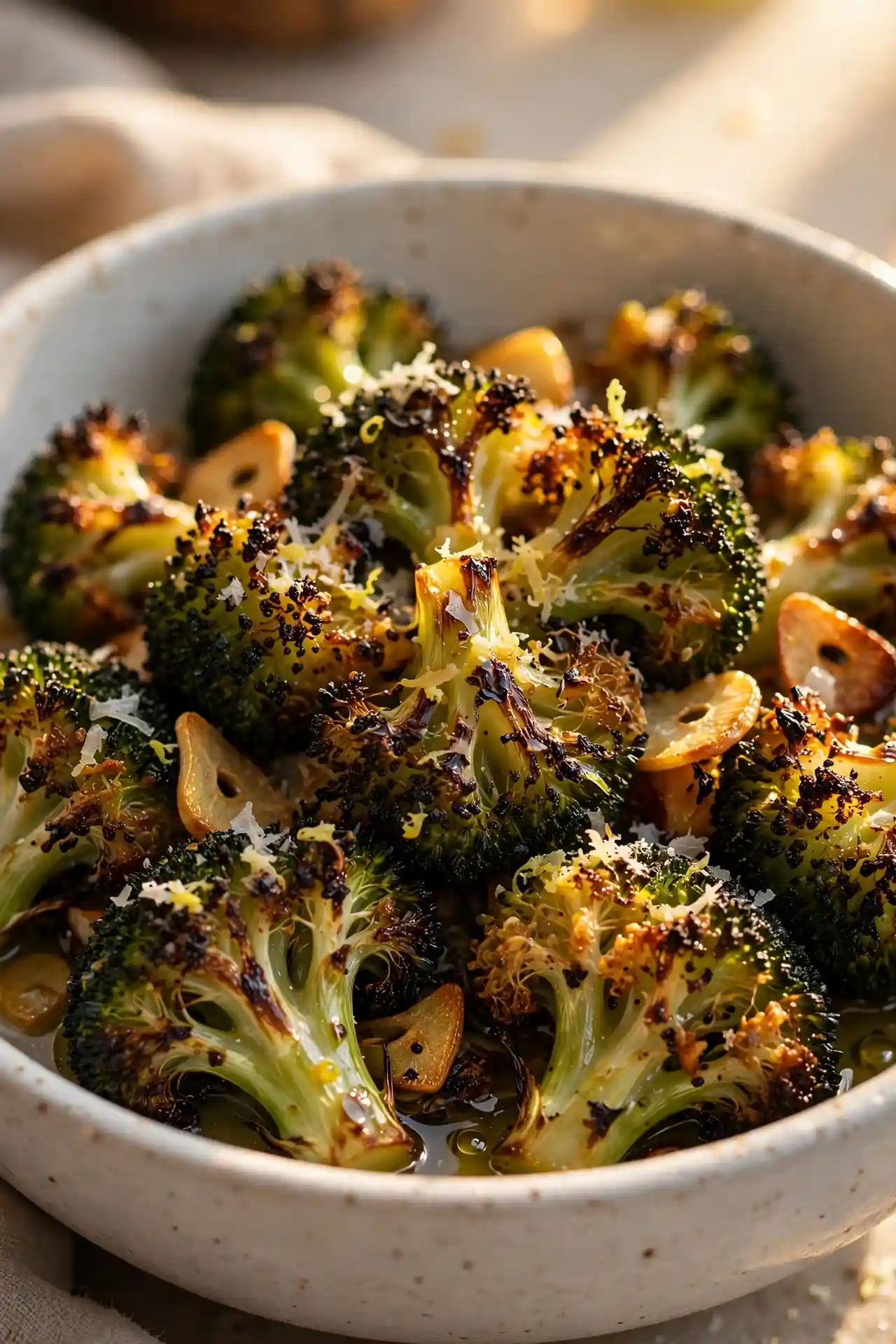
Crispy Roasted Broccoli With Garlic and Lemon
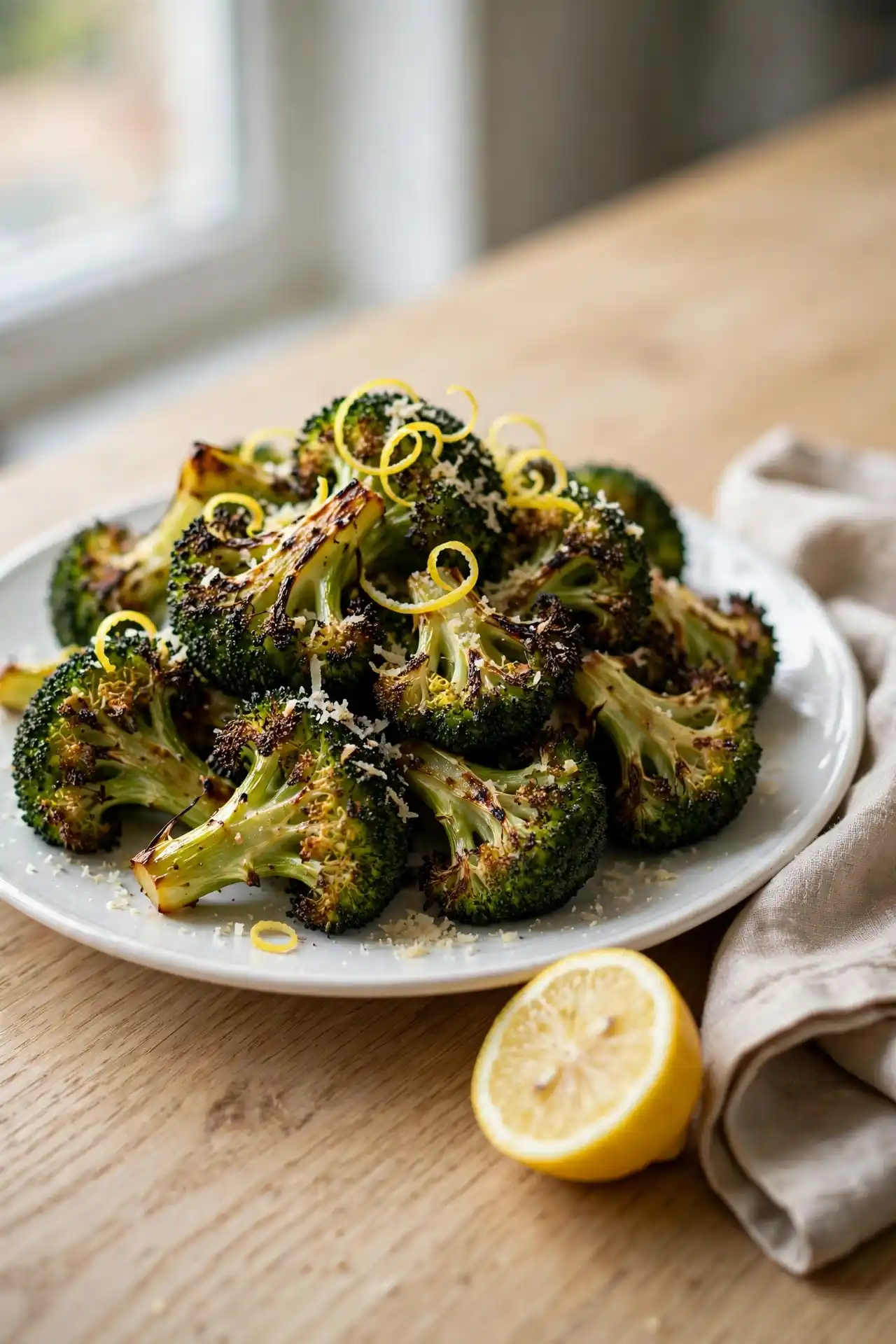
Roasted broccoli is not the broccoli you had as a kid. When you put it in a hot oven with enough oil and enough space on the pan, the florets turn golden at the edges, the stems soften without going mushy, and the whole thing takes on a nutty, slightly charred flavor that steamed broccoli never comes close to.
This version uses olive oil, garlic, lemon, and a little parmesan. The technique matters most. Get the temperature right, leave enough space on the pan, and you get a side dish that works next to almost anything and that people actually reach back for seconds of.
Why You’ll Love It:
- The floret edges get genuinely crispy, not just softened
- High heat draws out a nutty sweetness that no other cooking method gives you
- Garlic slices toast directly on the pan without burning
- A squeeze of lemon added at the very end gives brightness without bitterness
- Works as a side dish, a grain bowl topping, or folded into a warm flatbread
Why You’ll Love This Roasted Broccoli
Most people who say they don’t like broccoli have only ever had it steamed or boiled. Roasted broccoli is a different thing. The oven pulls out surface moisture, concentrates the flavor, and lets the edges caramelize the same way a hot pan would, just with far less effort on your part.
The garlic in this recipe goes in partway through roasting, not at the beginning. That one step stops it from burning while still giving it enough time in the heat to turn golden and slightly sweet. The lemon goes on at the very end, off the heat, so you get a bright citrus note without any bitterness from prolonged cooking.
Ingredients You’ll Need
For the broccoli:
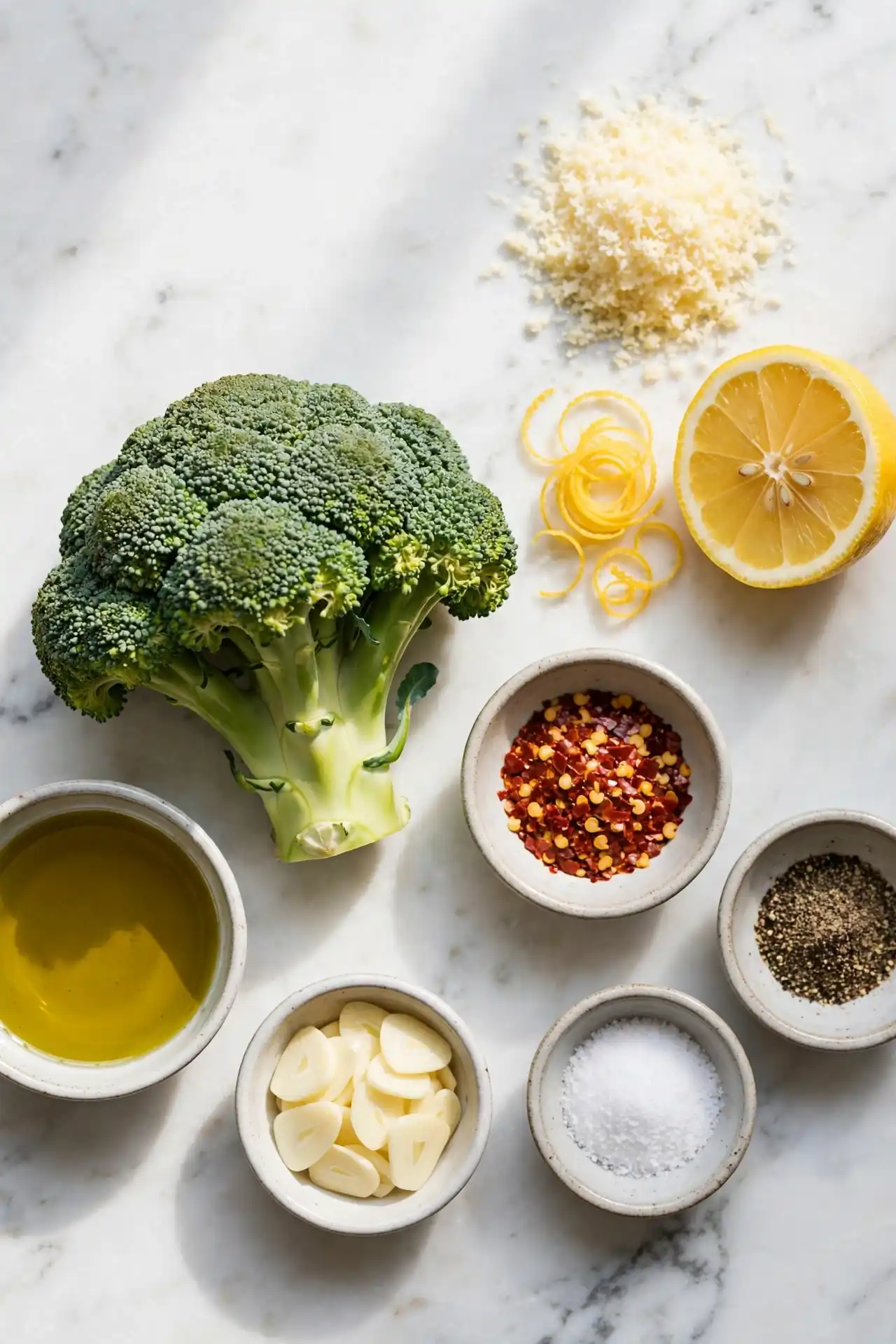
1 large head of broccoli (about 600g / 1.3 lbs), cut into even florets — uniform sizing ensures all pieces finish cooking at the same time
3 tablespoons olive oil — enough to coat every floret lightly; too little causes steaming rather than browning
4 garlic cloves, thinly sliced — thin slices toast evenly at high heat; minced garlic burns well before the broccoli is done
1/2 teaspoon fine salt
1/4 teaspoon black pepper
1/4 teaspoon red pepper flakes (optional, for heat)
1 tablespoon fresh lemon juice — added off the heat to keep the flavor bright
1 teaspoon lemon zest — adds fragrance without extra acidity
30g (1 oz) parmesan, finely grated (optional; use halal-certified or vegetarian rennet parmesan if needed)
Recipe Timing
| Timing Element | Duration |
|---|---|
| Prep Time | 10 minutes |
| Cook Time | 25 minutes |
| Total Time | 35 minutes |
Servings: 4 | Difficulty: Easy | Cuisine: American | Course: Side Dish
How to Make Roasted Broccoli Step by Step
Step 1: Preheat the oven
Set your oven to 220°C (425°F). Position the rack in the upper third of the oven, where heat is most intense. Let it reach full temperature before anything goes in.
Why this works: starting at full heat means the broccoli hits a blast of hot air the moment it enters the oven. A partially heated oven extends cooking time and lets moisture build up on the florets, which causes steaming instead of roasting.
Step 2: Dry the broccoli
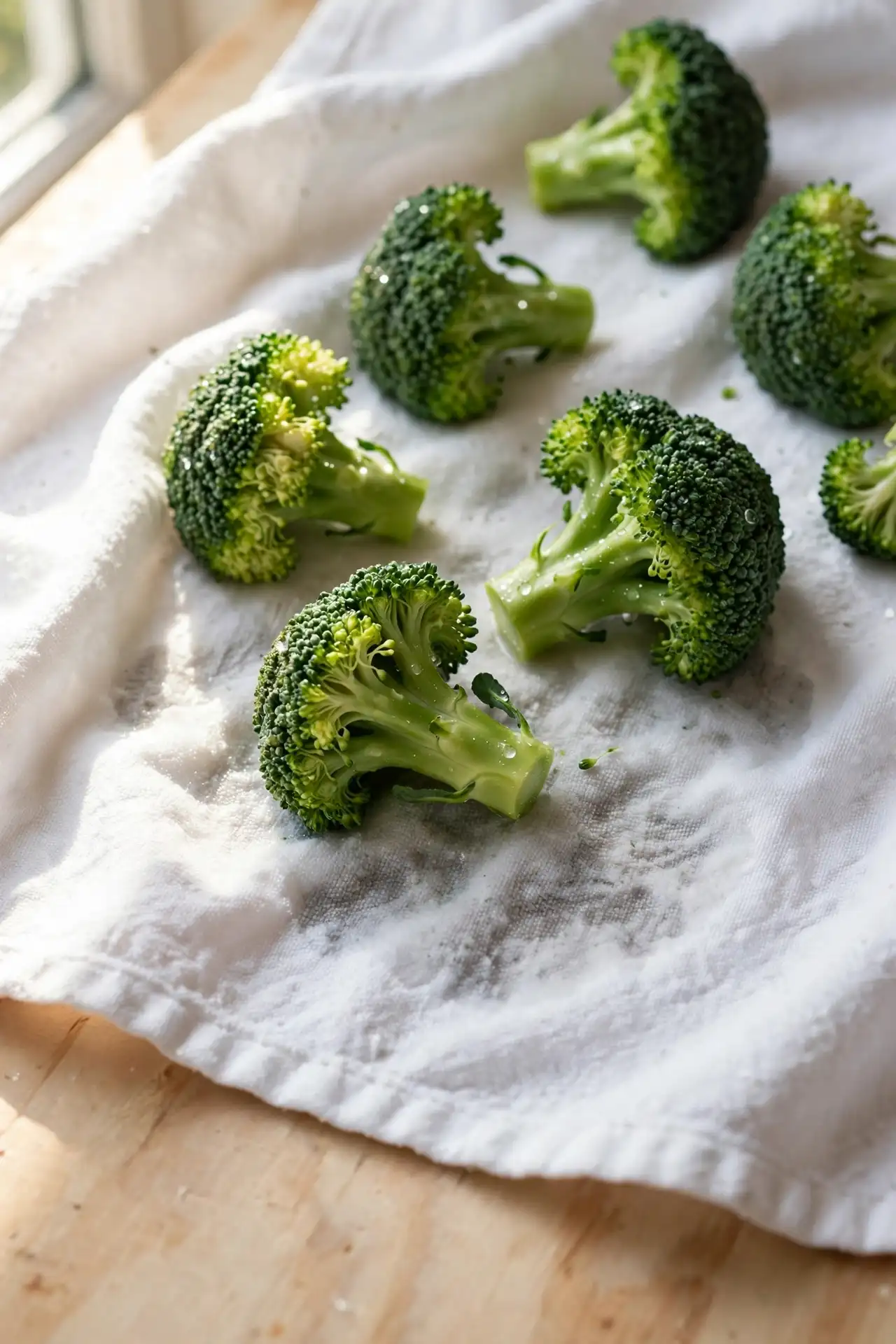
Cut the broccoli into florets of roughly equal size, about 4 to 5 cm (1.5 to 2 inches) across. Pat them thoroughly dry with a clean kitchen towel or several layers of paper towel.
Why this works: surface moisture is the main reason roasted broccoli turns out soft and pale. Even a thin film of water on the florets generates steam inside the oven, and steam blocks the browning you’re trying to achieve.
⚠️ Food Safety: If the broccoli was stored in a drawer near raw meat or poultry, rinse and dry your hands and cutting board before moving to the next step.
Step 3: Toss with oil and seasoning
Transfer the dried florets to a large mixing bowl. Pour over the olive oil, then add the salt, black pepper, and red pepper flakes if you’re using them. Toss until every floret is evenly coated.
Step 4: Spread on the baking sheet
Tip the broccoli onto a large sheet pan. Spread the florets in a single layer with a clear gap between each piece. If the pan looks crowded, divide the broccoli across two pans. Use the larger of your two pans first.
Why this works: florets that touch each other trap moisture between them. A single layer with visible gaps allows hot air to circulate around every piece, which is what produces crispy, caramelized edges instead of soft, pale ones.
Step 5: Roast the broccoli
Place the pan in the oven. Roast for 18 to 20 minutes without opening the door.
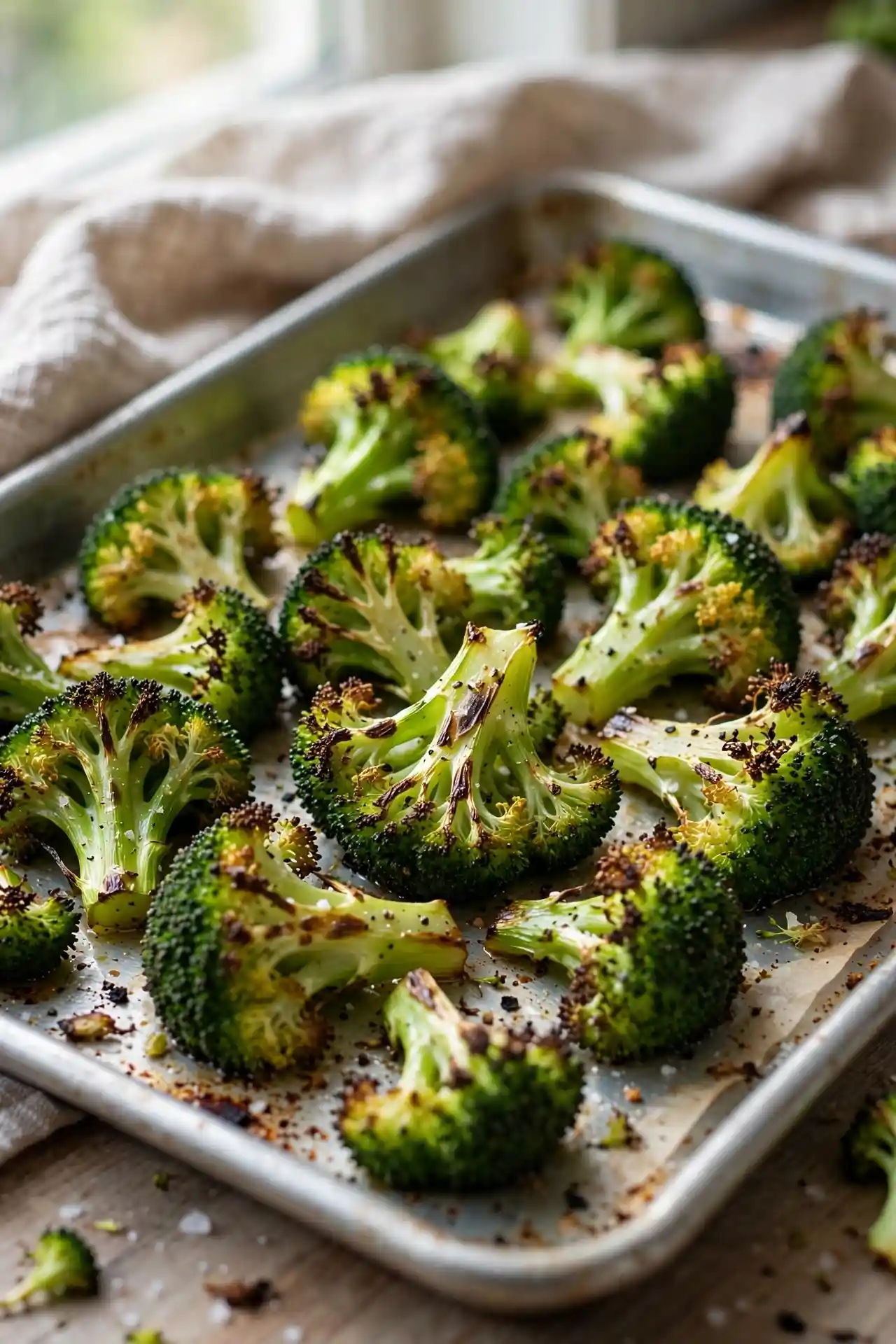
After that time, the florets should show bright green color with dark brown edges forming at the tips. Scatter the sliced garlic across the pan at this point.
Step 6: Add the garlic and finish
Return the pan to the oven. Roast for another 5 to 7 minutes until the garlic slices are golden at the edges and the broccoli stems feel completely tender when pierced with the tip of a sharp knife. Total roasting time will be 23 to 27 minutes depending on your oven.
The broccoli is done when the floret edges are deep brown and the stems offer no resistance to a knife. Color and texture are your cues here.
Step 7: Finish and serve
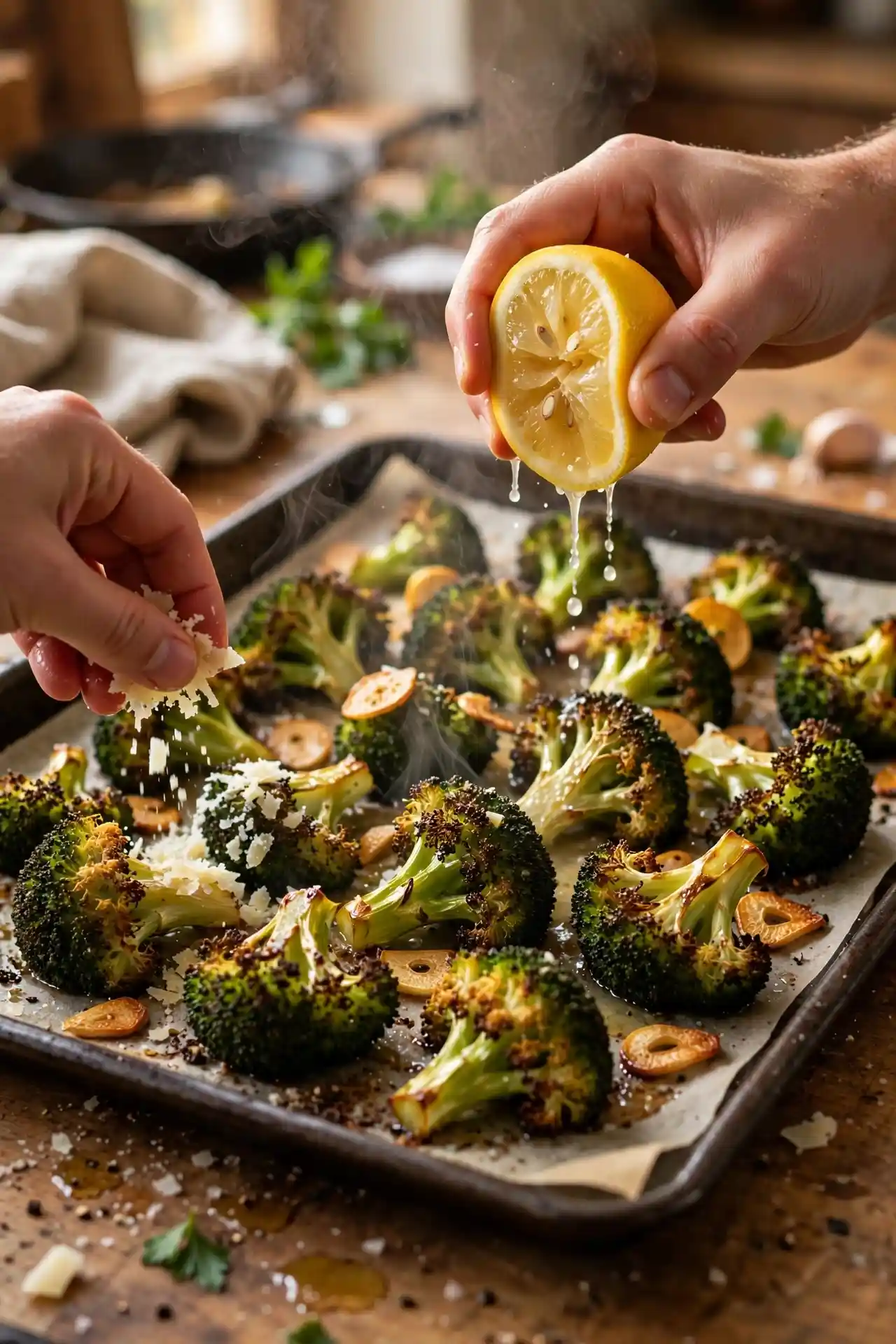
Remove the pan from the oven. Squeeze the lemon juice directly over the hot broccoli, then scatter the lemon zest over it. If you’re using parmesan, add it now while the broccoli is still hot so it softens slightly and clings to the florets.
Taste and adjust salt. Serve straight from the pan.
Key Tips for Best Results
Use a properly hot oven. 220°C (425°F) is the minimum. If your oven runs cool and the broccoli is still pale after 20 minutes, raise the temperature by 10 degrees for the remaining time. Pale florets after 20 minutes means the oven temperature is the problem.
Roast the stems too. The thick stalk at the base of the broccoli head is worth keeping. Peel the outer layer if it feels tough, then cut the stem into batons roughly the same size as your florets. They take the same time to cook and have a tender, slightly sweeter flavor than the florets.
Keep the lemon off until the end. Citric acid softens vegetables during prolonged heat. Adding lemon juice after the pan comes out of the oven gives you brightness without undermining the crisp texture you worked for.
Common Mistakes to Avoid
Adding the garlic at the start
Garlic burns before broccoli is properly caramelized at high heat. Sliced garlic goes onto the pan only after the first 18 to 20 minutes, which gives it just enough time to turn golden without going acrid.
Using too little oil
Three tablespoons for 600g of broccoli is the working amount. Less than that and the florets come out dehydrated and pale rather than golden. Broccoli absorbs more oil than it looks like it will.
Crowding the pan
This is the most consistent reason roasted broccoli turns out soft. Florets touching each other create steam pockets. A pan that looks slightly too empty before going in is correct. A pan that looks full will produce steam, not crispness.
Opening the oven door in the first 18 minutes
Each time the door opens, the oven temperature drops and the dry heat that drives browning escapes. Leave it alone until the 18-minute mark.
Variations and Substitutions
Without parmesan: The recipe works well on its own. A drizzle of tahini, a spoon of harissa stirred through while the broccoli is still hot, or a scatter of toasted sesame seeds each take it in a different direction worth trying.
With different aromatics: Swap the garlic slices for one teaspoon of whole cumin seeds tossed on with the olive oil, or add half a teaspoon of smoked paprika to the seasoning before roasting. Both give the dish a different character without changing the method.
For a sharper finish: A thick balsamic glaze drizzled over the finished broccoli adds sweetness and acidity together. Use a reduced glaze, not plain balsamic vinegar, which will spread too thin.
What to Serve With Roasted Broccoli
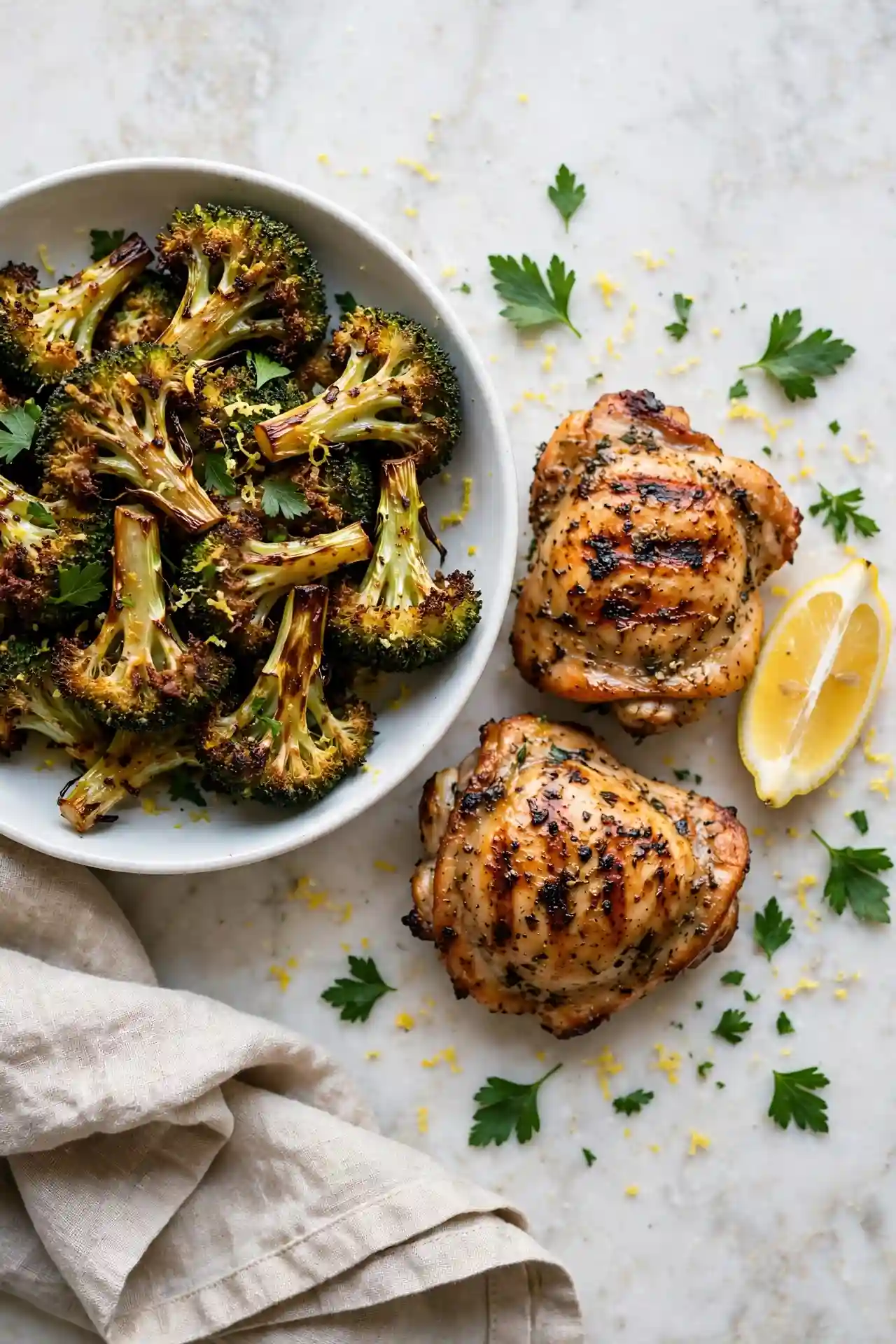
With grilled or baked chicken. The charred, slightly bitter edges of the broccoli hold up well next to the richness of roasted meat. The lemon keeps the combination from feeling heavy.
Over rice or quinoa. Spoon the broccoli over a bowl of plain rice with a drizzle of extra olive oil. The crispy bits soften slightly as they sit into the grain, which works well in a bowl format.
With soft-boiled or fried eggs. Two eggs on top of a plate of roasted broccoli makes a fast, filling meal. A pinch of extra chili flakes on the eggs ties the two together.
Alongside lentil soup. The crispy texture of the broccoli contrasts well with something smooth and warm. It also works scattered directly over the soup before serving.
In a flatbread. Fold the broccoli into warm flatbread with a spoon of thick yogurt and a few coriander leaves. It holds together well and the garlic pieces add a lot to every bite.
Storage, Reheating and Make-Ahead
Fridge: Store leftovers in an airtight container for up to 3 days. The broccoli will soften as it sits, but the flavor stays good and the garlic actually deepens overnight.
Freezer: Roasted broccoli does not freeze well. The cell structure of broccoli breaks down after freezing, and reheated frozen broccoli loses all texture. Freeze raw broccoli instead and roast from fresh.
Reheat: Spread cold broccoli on a baking sheet and place in an oven at 200°C (400°F) for 8 to 10 minutes. This restores most of the crispness. A microwave heats it quickly but leaves it soft and slightly waterlogged, so use it only when texture doesn’t matter.
Make-ahead: Cut and dry the florets up to 24 hours in advance and store them uncovered in the fridge on a paper-towel-lined tray. Uncovered refrigerator air draws out extra surface moisture, which actually improves the final roast. Season and roast when ready.
Allergen Notes
Contains dairy (parmesan). To make this dairy-free, leave out the parmesan entirely or scatter 2 tablespoons of nutritional yeast over the finished broccoli. Nutritional yeast gives a similar salty, savory note without the cheese.
Nutrition Information
Per serving (recipe makes 4 servings, with parmesan included):
| Nutrient | Per Serving |
|---|---|
| Calories | 170 kcal |
| Protein | 7g |
| Total Carbohydrates | 10g |
| Dietary Fiber | 4g |
| Total Sugars | 3g |
| Total Fat | 13g |
| Saturated Fat | 1g |
| Sodium | 460mg |
| Cholesterol | 5mg |
| Potassium | 480mg |
| Vitamin C | 90mg |
| Calcium | 100mg |
| Iron | 1mg |
Nutritional values are estimates only and may vary based on specific ingredients, brands, and portion sizes used. For precise dietary needs, consult a registered dietitian.
Frequently Asked Questions
Why is my roasted broccoli coming out soggy instead of crispy?
The most likely cause is either surface moisture on the florets before roasting or too many pieces on the pan. Pat the broccoli completely dry before tossing with oil, and spread the florets with visible gaps between them. A low oven temperature can also cause the broccoli to steam rather than roast, so make sure you’re working at 220°C (425°F) minimum.
What temperature should I use to roast broccoli?
220°C (425°F) is the target. Lower temperatures produce softer, paler results because the broccoli cooks through before the surface has a chance to brown. If your oven runs cool and the florets aren’t coloring after 20 minutes, raise the temperature to 230°C (450°F) for the remainder.
How long does roasted broccoli actually take?
In a properly preheated oven at 220°C (425°F), most florets take 23 to 27 minutes total. The garlic goes in at the 18 to 20-minute mark. The broccoli is done when the edges are deep brown and a knife slides through the stem with no resistance.
Can you roast frozen broccoli?
You can, but the results are different. Frozen broccoli contains significantly more water, which makes true crispness difficult. If using frozen, do not thaw it first: spread it straight from the freezer onto the pan, raise the oven to 230°C (450°F), and add 5 to 10 minutes to the total cook time.
Can I substitute the parmesan?
Yes. Nutritional yeast is the closest dairy-free alternative for that salty, savory finish. Two tablespoons scattered over the finished broccoli works well. Crumbled feta added after roasting is another option if dairy is fine but parmesan isn’t what you want.
Can roasted broccoli be prepped in advance for the week?
The florets can be cut, dried, and stored uncovered in the fridge for up to 24 hours before roasting. This actually helps because the fridge air draws out extra moisture. Once roasted, keep leftovers in the fridge for up to 3 days and reheat in a hot oven for best texture.
Will kids eat roasted broccoli if they normally refuse it?
Many do, because the caramelization changes the flavor profile significantly. The nutty, slightly sweet taste from high heat is much more palatable than the sulfurous flavor that boiling produces. Leave out the red pepper flakes when cooking for young children.
Conclusion
Roasted broccoli at the right temperature, on a dry pan with real space between the florets, is a genuinely different vegetable from the boiled or steamed version most people grew up with. The technique is simple, but the details matter: dry the broccoli, use a hot oven, give it space, add the garlic late, and finish with lemon off the heat.
If one thing from this article is worth remembering, it is the temperature. Most home ovens default to 180°C (350°F) for vegetable roasting, and that is too low for broccoli. Bump it to 220°C (425°F) and the difference in color, texture, and flavor from that one change alone is significant.
Roasted Broccoli Recipe Card
Crispy Roasted Broccoli With Garlic and Lemon
Ingredients
Method
- Preheat the oven to 220°C (425°F). Position the rack in the upper third of the oven.
- Cut the broccoli into even florets and pat them completely dry with a clean kitchen towel.
- Toss the florets in a large bowl with the olive oil, salt, black pepper, and red pepper flakes until evenly coated.
- Spread the florets on a large sheet pan in a single layer with clear gaps between each piece. Use two pans if needed.
- Roast for 18 to 20 minutes without opening the oven door.
- Scatter the sliced garlic across the pan. Return to the oven for 5 to 7 more minutes until the garlic is golden and the broccoli stems are tender when pierced with a knife.
- Remove from the oven. Squeeze lemon juice over the hot broccoli, scatter the lemon zest, and top with parmesan if using. Serve immediately.