12 Omelette Recipes for Every Morning of the Week
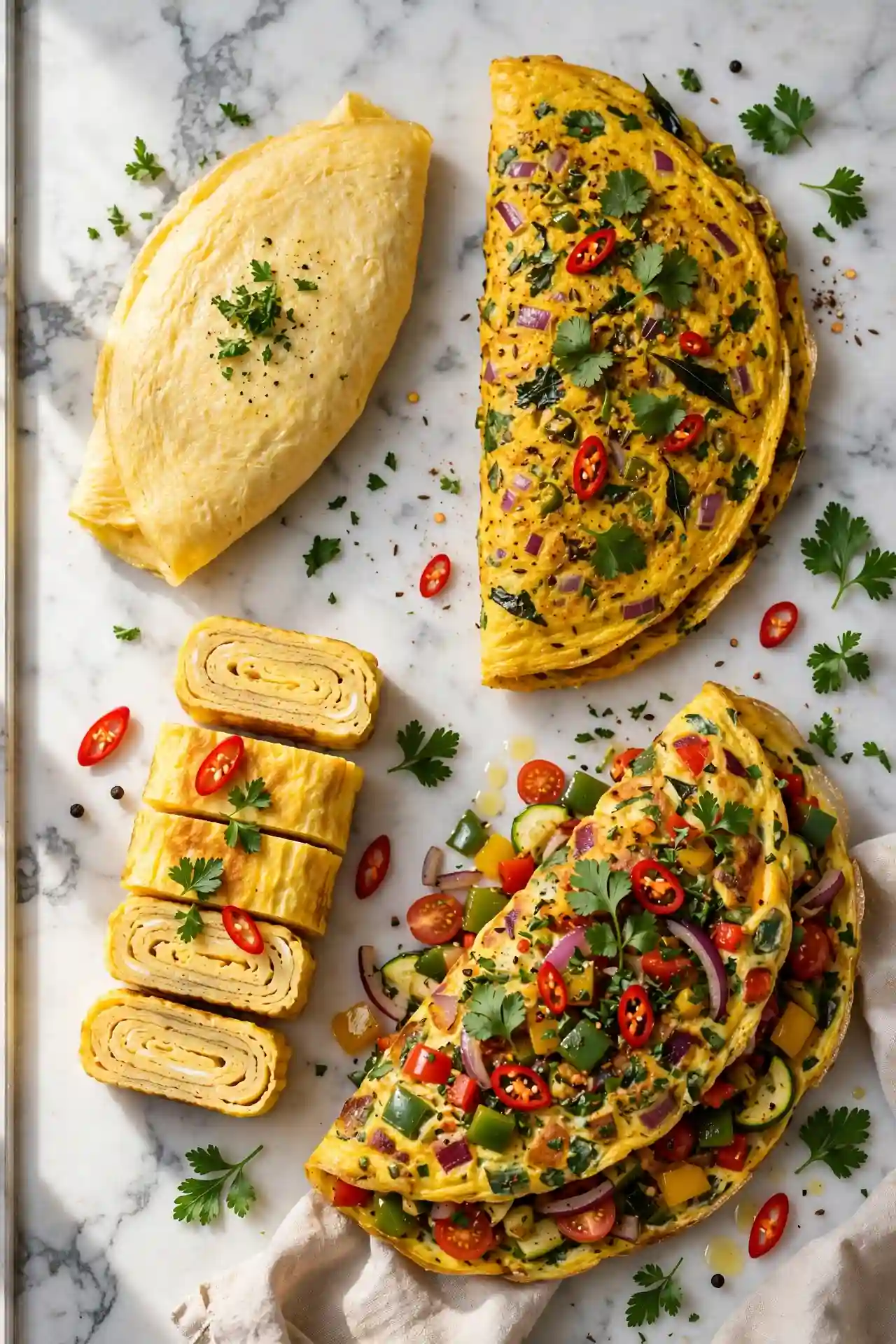
If your mornings feel like a race and breakfast is the first casualty, a solid omelette recipe is the fastest path back to a real meal. Two eggs, a hot pan, and three minutes cover most mornings completely. This list brings together 12 genuinely different omelette recipes, from the pale buttery French fold that professionals use to test technique, to the deeply spiced masala version that turns breakfast into something you would actually look forward to eating.
What is in this list:
- A foundational French omelette that teaches the core skill every other style builds on
- South Asian and North African omelette recipes with bold spice and fresh herbs
- International styles including Japanese tamagoyaki and Spanish tortilla
- A lighter egg white option that does not taste like a compromise
- A protein-rich chicken version for mornings when breakfast needs to carry you to lunch
Why These 12 Recipes Work
Each omelette recipe here was chosen for a specific reason. The French omelette teaches heat control. The masala version fills a real gap for families who want something beyond salt and pepper. The Spanish tortilla earns its place because it is the only entry in the list that genuinely rewards making ahead.
This is not a list organized purely by difficulty. It moves from foundational technique through internationally inspired styles and into dietary alternatives, so you can follow it as a learning path or skip directly to whatever your morning calls for. Every entry includes specific ingredient notes and tips written for that recipe, not recycled generic advice that could apply to any egg dish.
1. Classic French Omelette
Why We Love It
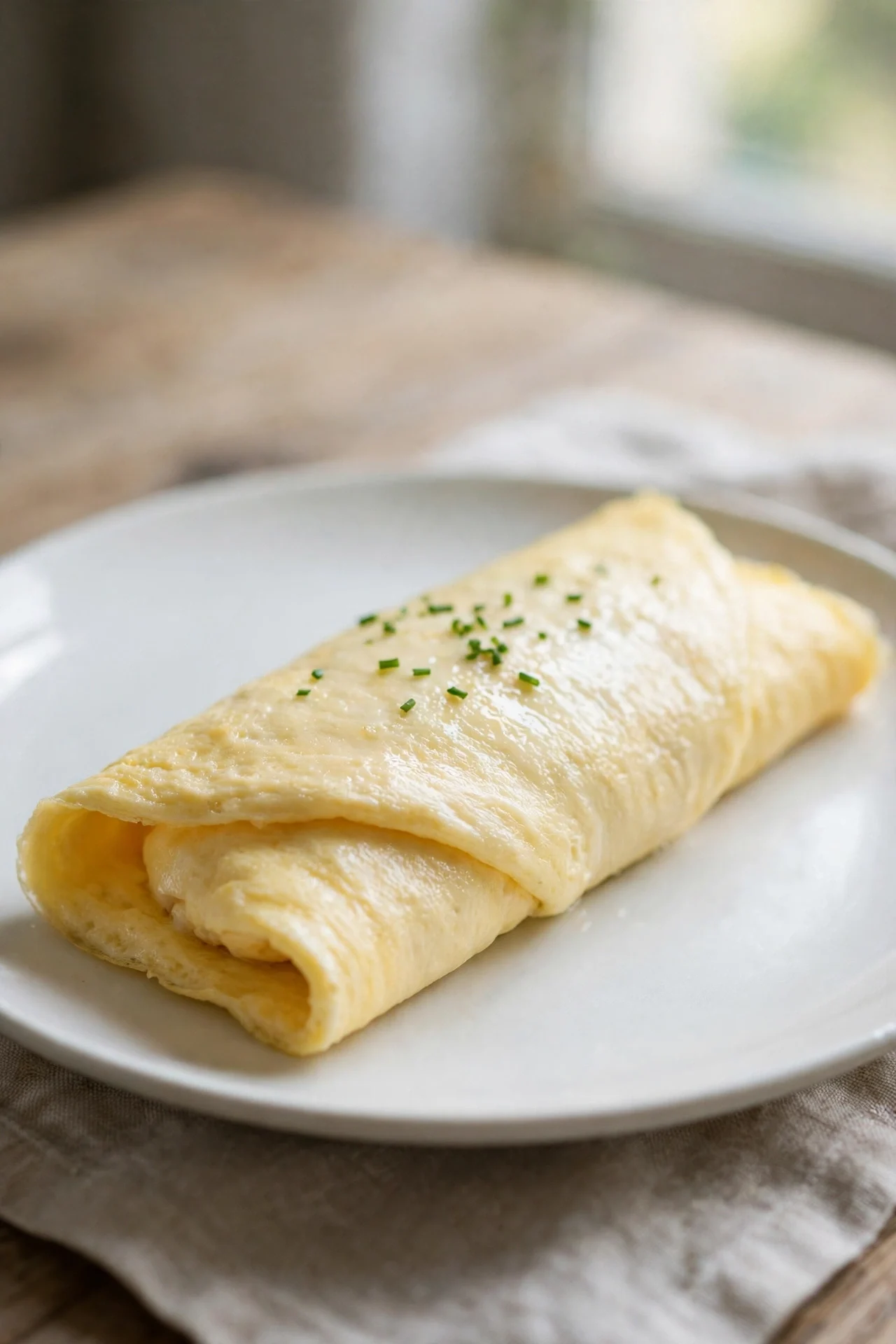
The French omelette is the one omelette recipe that exposes every technical gap at once. It is pale, slightly glossy, and folded without any browning, which sounds simple until you are at the stove realizing the pan was 20 degrees too hot. Getting it right once changes how you approach every other egg dish you make after that.
Key Ingredients
- Eggs (2 to 3 large) — freshness matters here; older eggs spread thinner and cook faster
- Unsalted butter — adds richness and slows the cook without burning at low heat
- Fine sea salt — season before whisking, not after, for even distribution
- Fresh chives or tarragon — stirred in at the end for a clean herbal finish
Quick Tips
Whisk the eggs thoroughly until whites and yolks are completely uniform with no visible streaks. Use a 20cm (8-inch) non-stick pan and hold the heat at medium-low for the entire cook. If the eggs set faster than you can fold, pull the pan off the heat for 10 seconds rather than rushing the fold.
Prep: 3 min | Cook: 3 min | Total: 6 min | Serves: 1
2. Cheese Omelette
Why We Love It
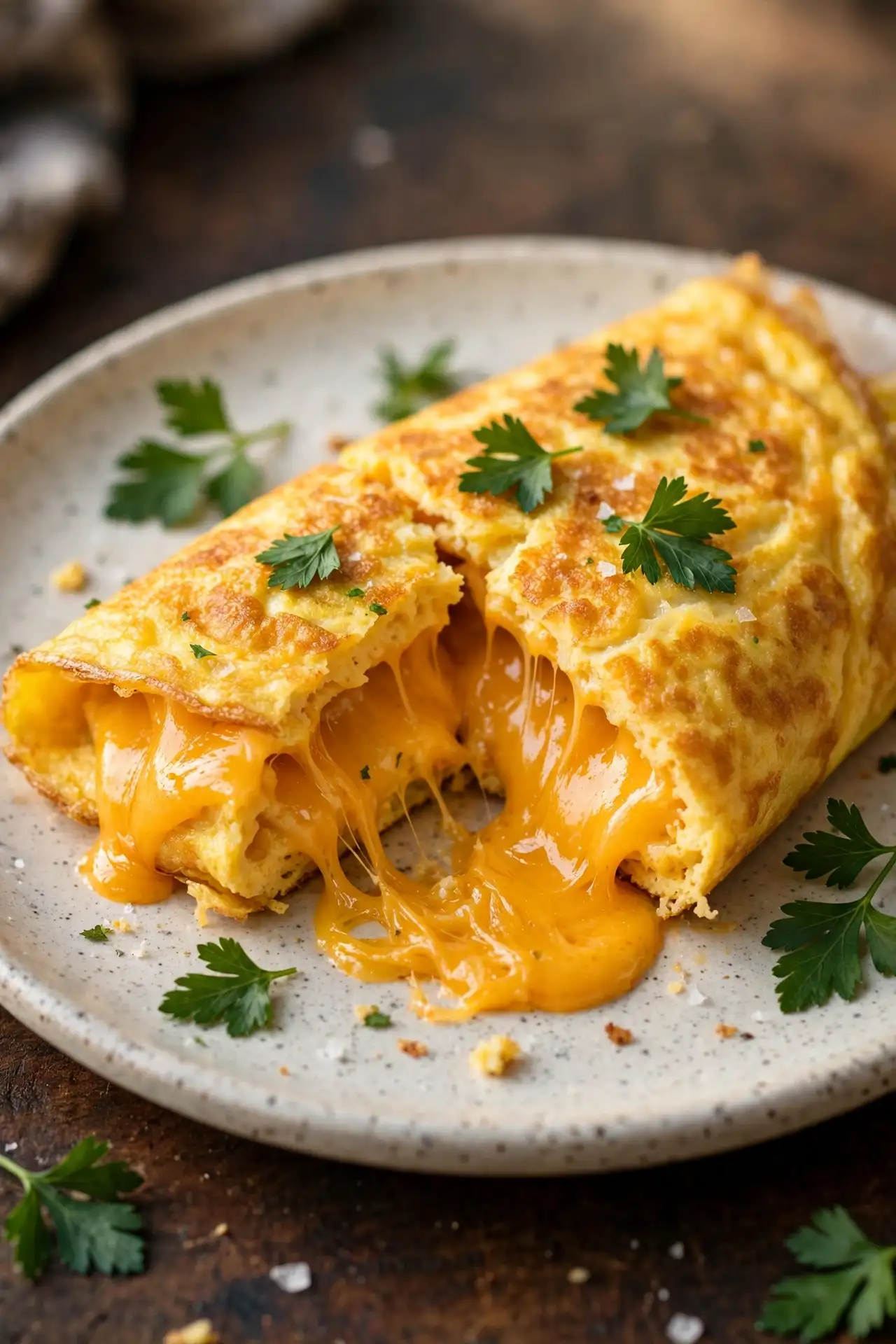
The cheese omelette is the version most people grew up eating and the one they return to when they want comfort without effort. Melted cheese inside a lightly golden egg fold is hard to argue with at 7am. The difference between a good one and a forgettable one comes down to two things: cheese selection and timing.
Key Ingredients
- Eggs (2 to 3 large) — beaten with a splash of water rather than milk for a lighter texture
- Cheddar or Gruyère — cheddar for a sharper flavor, Gruyère for a silkier, creamier melt
- Unsalted butter — a thin even layer prevents sticking and adds a subtle richness to the egg
Quick Tips
Add the cheese when the eggs are about 80 percent set, not before. Fold immediately after adding, then cover the pan with a lid for 30 seconds. The trapped steam melts the cheese from the inside out, which prevents overcooking the egg while you wait for the cheese to soften.
Prep: 2 min | Cook: 4 min | Total: 6 min | Serves: 1
3. Masala Omelette
Why We Love It
The masala omelette is South Asia’s answer to the plain egg, and it has no equal for flavor density in a three-minute cook. Chopped onion, green chili, tomato, and coriander go directly into the egg mixture before it hits the pan, so every bite carries heat, freshness, and texture at the same time. This is the omelette recipe people make when they want breakfast to actually taste like something.
Key Ingredients
- Eggs (2 to 3) — beaten loosely with all vegetables mixed straight in before cooking
- Green chili (1, finely chopped) — provides direct heat; remove seeds for a milder result
- Tomato (half a medium, deseeded and finely diced) — freshness without adding excess moisture
- Fresh coriander — stirred in for a bright herbal contrast to the chili heat
- Ground cumin (a pinch) — deepens the overall savory profile without overpowering
Quick Tips
Deseed the tomato before mixing it in. The wet pulp thins the egg mixture and makes it harder to get a clean set. Cook on medium-high heat so the onion and vegetables soften slightly through the cook rather than staying raw inside the fold.
Prep: 5 min | Cook: 4 min | Total: 9 min | Serves: 1

4. Mushroom and Herb Omelette
Why We Love It
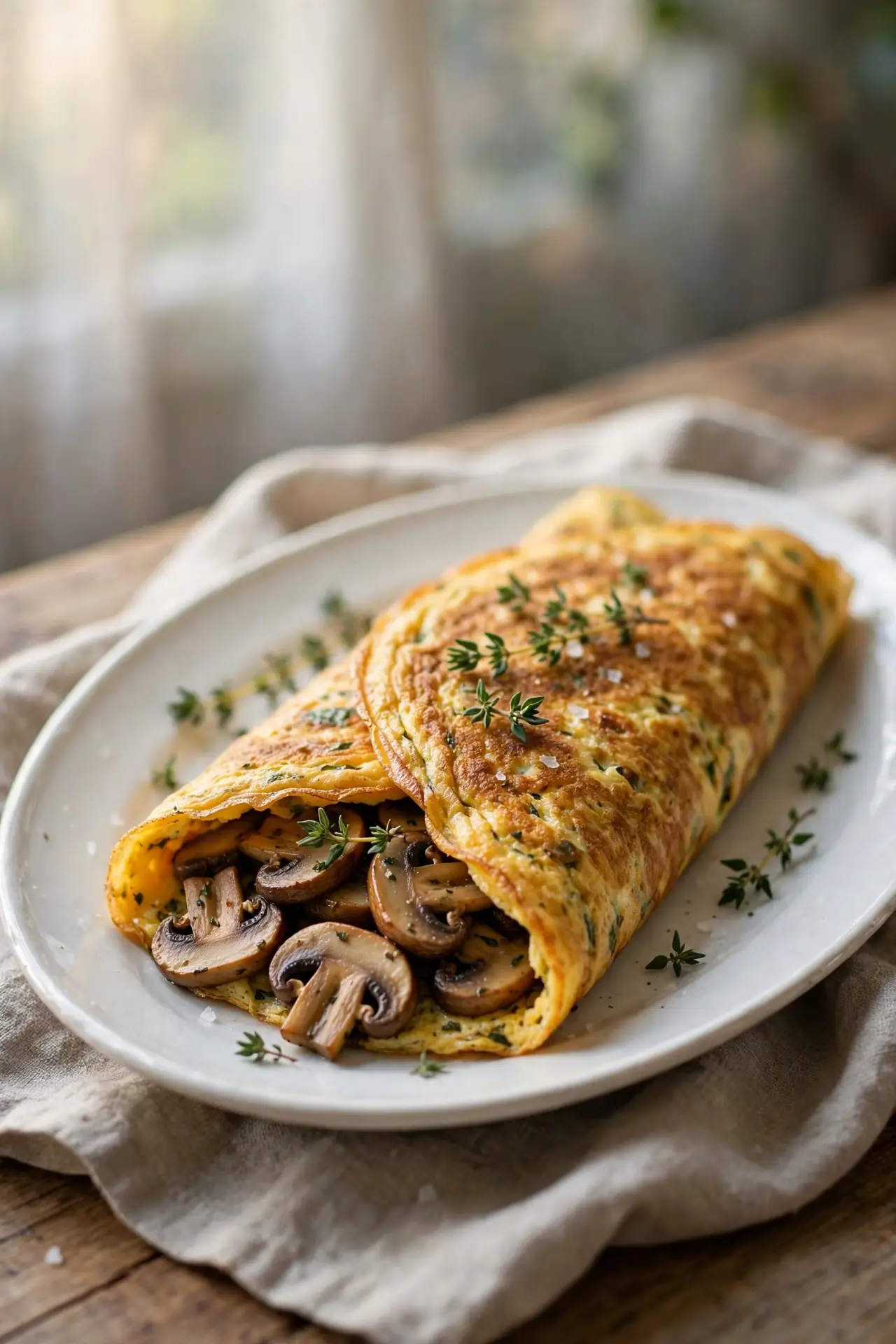
Mushrooms develop a meaty, savory depth when cooked correctly, which makes this omelette recipe genuinely filling without any protein beyond the eggs. The step most people skip is sautéing the mushrooms separately until they are golden and dry before they touch the egg. Wet mushrooms steam the egg from inside the fold rather than contributing texture.
Key Ingredients
- Cremini or button mushrooms (80g, sliced thin) — cook separately until all moisture has evaporated and edges are browned
- Garlic (1 clove, minced) — added to the mushrooms during the final minute of sautéing
- Eggs (2 to 3 large) — beaten simply with salt and black pepper, nothing else
- Fresh thyme or flat-leaf parsley — folded in just before serving to add brightness
Quick Tips
Salt the mushrooms after they have browned, not before you put them in the pan. Salt draws moisture out early and turns the sauté into a steam, which prevents browning. Give the mushrooms 5 to 6 minutes in a dry pan first, then add a small knob of butter and the garlic for the final minute.
Prep: 5 min | Cook: 8 min | Total: 13 min | Serves: 1
5. Spanish Potato Omelette
Why We Love It
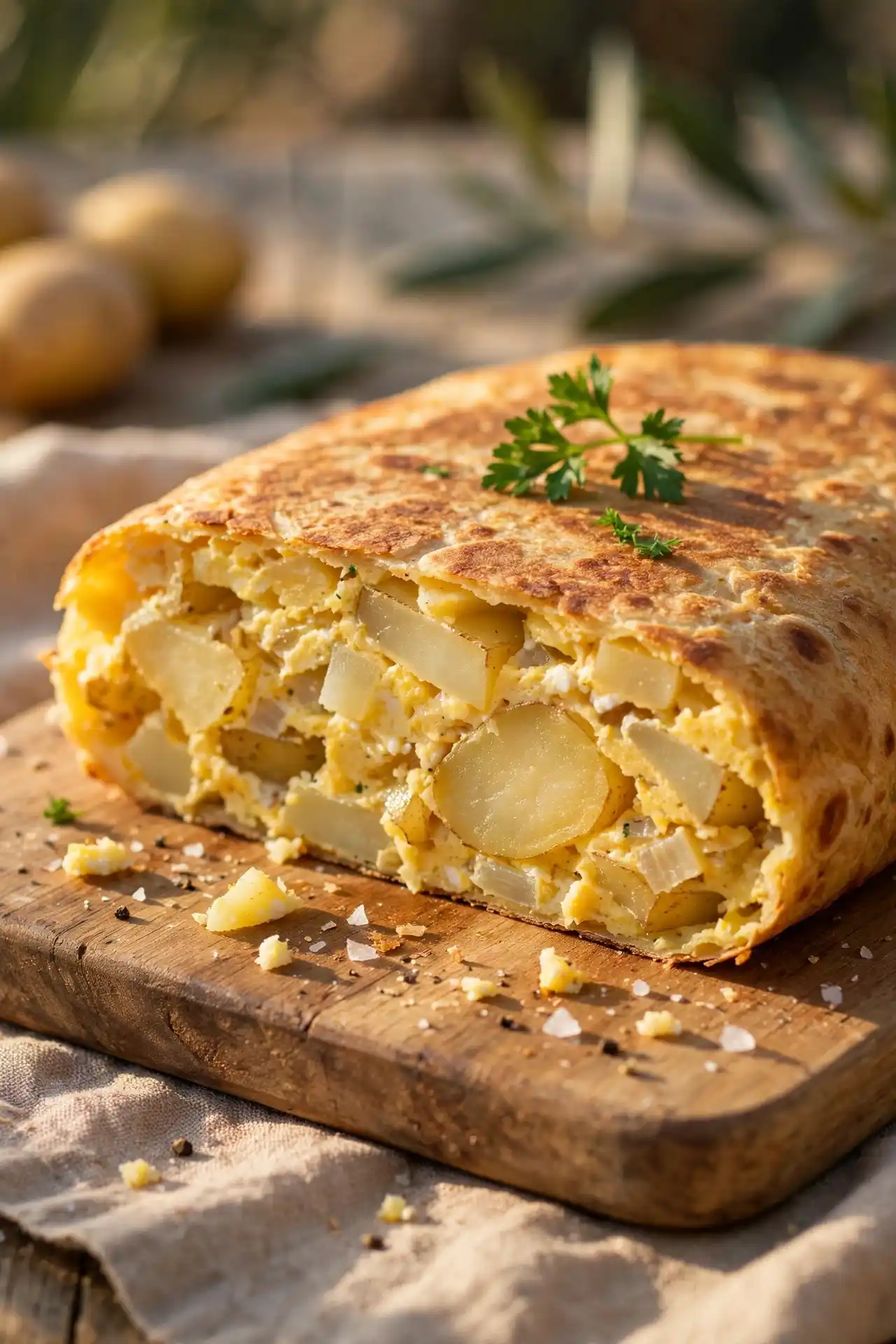
The Spanish tortilla is technically a different creature from a folded omelette. It is thick, firm, sliceable, and served at room temperature as often as warm. It belongs on any serious omelette recipe list because it shows what eggs become when you slow things down and treat them as a binder rather than a base. Thinly sliced potatoes cooked slowly in olive oil, then bound with beaten egg and set into a round cake, one of the most satisfying egg dishes in any cuisine.
Key Ingredients
- Potatoes (300g, peeled and sliced about 3mm thin) — Yukon Gold holds shape and does not turn mushy
- Olive oil (enough to partially submerge the potato slices) — the slow confit-style cook is what makes the texture
- Onion (1 medium, thinly sliced) — optional in some regions but adds natural sweetness
- Eggs (5 to 6 large) — beaten just enough to combine, not whipped
Quick Tips
Do not rush the potato stage. They should be tender and translucent, not browned, before you combine them with the eggs. A 24cm non-stick pan with an oven-safe handle makes the flip much safer, or finish the top under a grill set to medium heat for 3 to 4 minutes rather than attempting the flip.
Prep: 15 min | Cook: 30 min | Total: 45 min | Serves: 4
6. Greek Omelette
Why We Love It
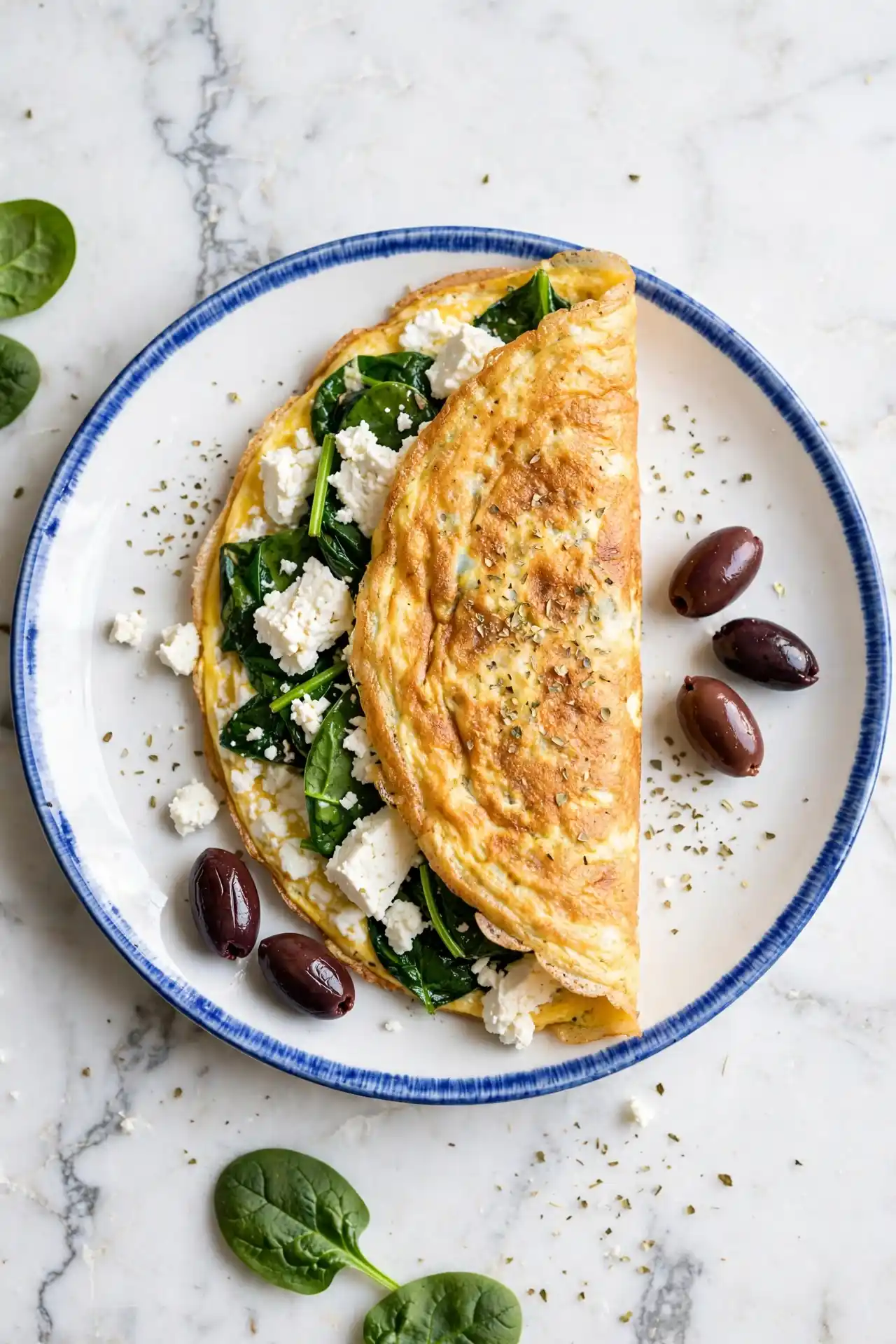
Feta, olives, sun-dried tomatoes, and baby spinach in one pan — this omelette recipe delivers a Mediterranean breakfast that tastes like something you would pay for at a café, in about 10 minutes at home. The saltiness of the feta means you barely need to season the egg separately. The fillings carry almost all the flavor work here.
Key Ingredients
- Feta cheese (30g, crumbled from a block) — a block crumbles freshly and stays creamier than pre-crumbled
- Kalamata olives (5 to 6, halved) — briny and meaty, a direct contrast to the mild egg
- Baby spinach (a small handful) — wilts in the residual heat of the pan, no pre-cooking needed
- Sun-dried tomatoes (2 tbsp, roughly chopped) — concentrated tomato flavor without adding liquid
Quick Tips
Add the feta after folding, not before. Cooking feta directly in the egg mixture turns it dry and grainy. Place it on top of the nearly-set eggs just before the fold so it stays creamy inside and does not lose its texture.
Prep: 5 min | Cook: 5 min | Total: 10 min | Serves: 1
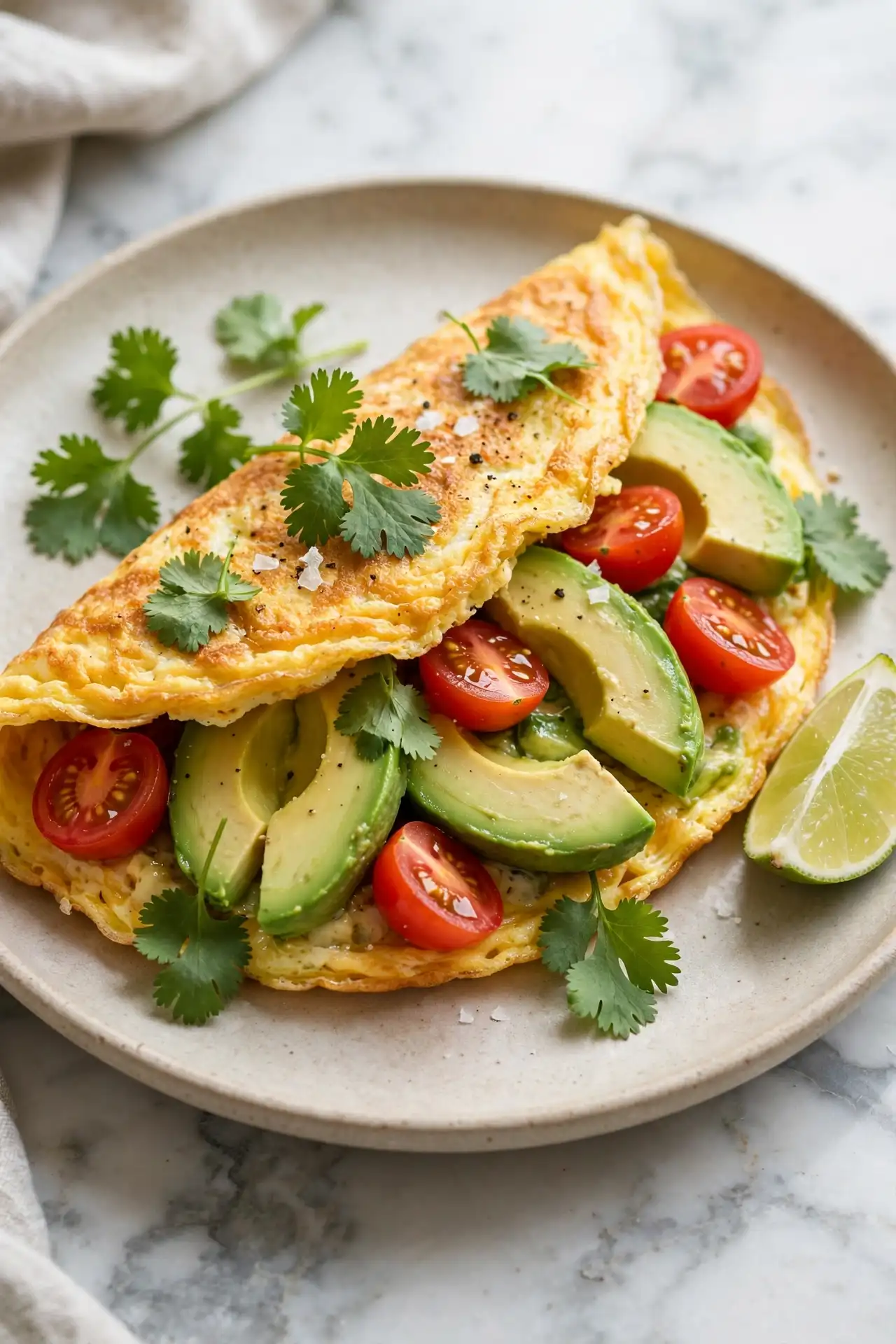
7. Avocado and Tomato Omelette
Why We Love It
Avocado inside a warm fold works in a way that sounds better than it should on paper. The heat from the egg softens the avocado slightly without cooking it through, leaving a cool, creamy contrast against the egg. Paired with fresh cherry tomatoes and a small amount of lime juice, this omelette recipe skips the toast entirely and covers the same ground.
Key Ingredients
- Avocado (half, sliced just before assembling) — heat softens it slightly; adding it raw before folding is the right move
- Cherry tomatoes (5 to 6, halved) — fresh acidity that cuts through the creaminess of the avocado
- Lime juice (a small squeeze) — lifts the avocado flavor and prevents browning
- Eggs (2 to 3 large) — seasoned simply with salt, white pepper, and a pinch of chili flakes
Quick Tips
Slice the avocado just before assembling to prevent oxidation. If you are prepping ingredients ahead, store the sliced avocado covered in lime juice. Keep the egg base slightly underdone in the center — the fold finishes it, and a fully cooked egg base makes the avocado turn warm and mushy from the residual heat.
Prep: 5 min | Cook: 4 min | Total: 9 min | Serves: 1
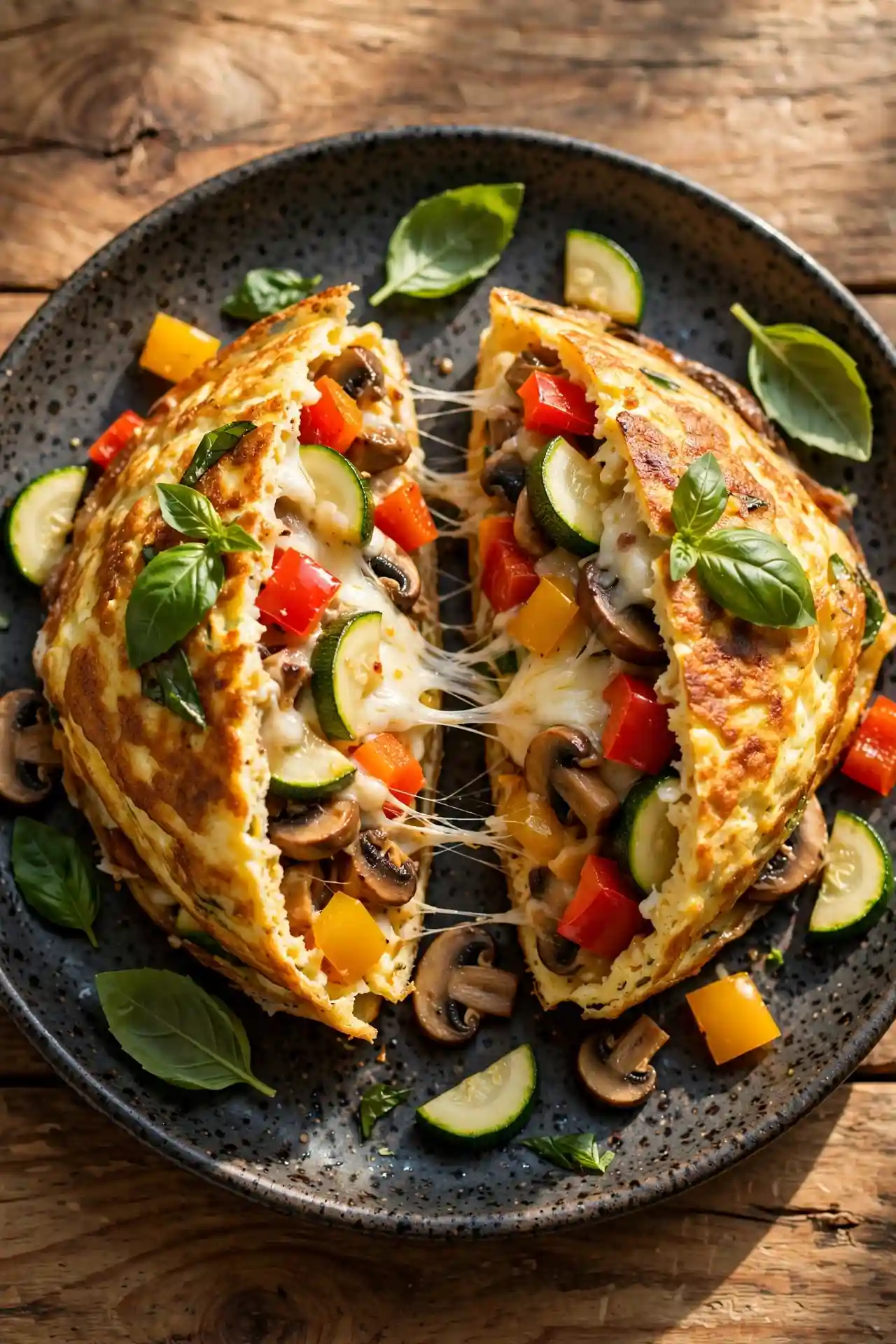
8. Loaded Veggie Omelette
Why We Love It
The loaded veggie omelette is what happens when you use the pan as a vehicle for clearing out the vegetable drawer and ending up with a meal rather than a snack. Bell pepper, zucchini, red onion, and mushrooms give you something dense, colorful, and filling without any meat. This omelette recipe works because the variety of textures across the vegetables makes each bite different from the last.
Key Ingredients
- Bell pepper (half, small dice) — red or orange for sweetness; green for a sharper, more bitter note
- Zucchini (half, small dice) — cooks fast when cut small and adds body without releasing much moisture
- Red onion (a quarter, thinly sliced) — sweetens significantly after 2 to 3 minutes in the pan
- Eggs (3 large) — use 3 rather than 2 to handle the volume of filling without the fold splitting
- Mozzarella (a small handful, torn) — melts evenly and pulls the filling together
Quick Tips
Sauté all the vegetables before the egg goes in. Raw vegetables release steam as they cook inside a fold, which prevents a clean set and makes the egg wet in the center. A 2-minute high-heat sauté with a light char on the vegetables is all you need before you lower the heat and add the egg.
Prep: 8 min | Cook: 8 min | Total: 16 min | Serves: 1 to 2
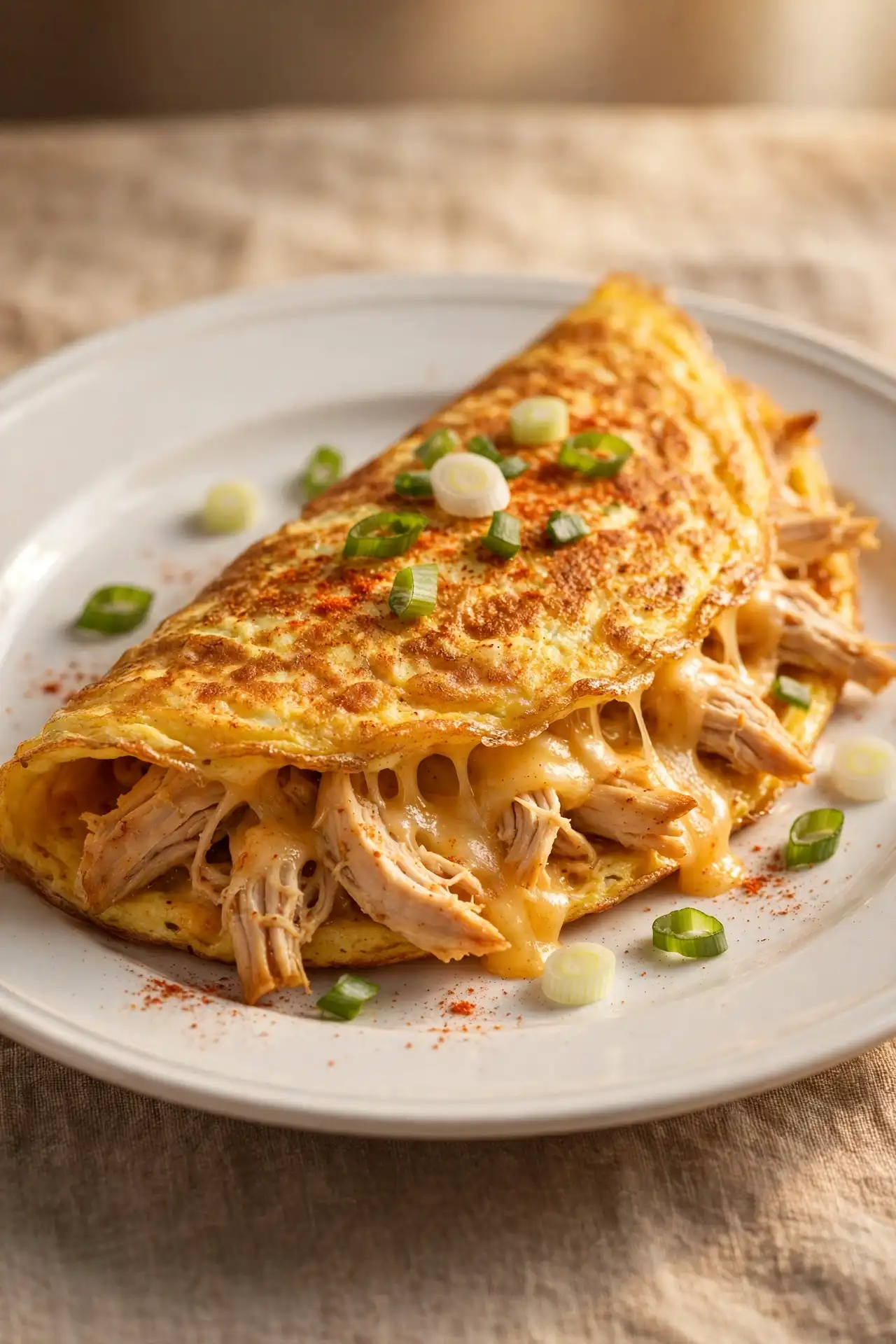
9. Chicken and Cheese Omelette
Why We Love It
Leftover grilled or roasted chicken turns this into one of the most protein-dense breakfasts you can make in under 10 minutes. Shredded chicken and melted cheese hold together firmly when folded, which also makes this omelette recipe easier to handle in the pan than fillings with a lot of moisture. It is the one to reach for when breakfast needs to last until well past noon.
Key Ingredients
- Eggs (3 large) — beaten with a tablespoon of water for a slightly more pliable texture
- Cooked chicken breast (50 to 60g, shredded) — season it lightly with salt and paprika before adding
- Cheddar or mozzarella (30g) — melted over the chicken before folding so it binds the filling
- Smoked paprika (a pinch) — stirred into the egg mixture or dusted on top of the chicken filling
Quick Tips
Use chicken that is already cooked and at room temperature before it goes in. Cold chicken drops the pan temperature, which slows the egg cook time unevenly. A quick 20-second warm in the pan before you add the egg is all it needs to come up to temperature.
Prep: 5 min | Cook: 6 min | Total: 11 min | Serves: 1
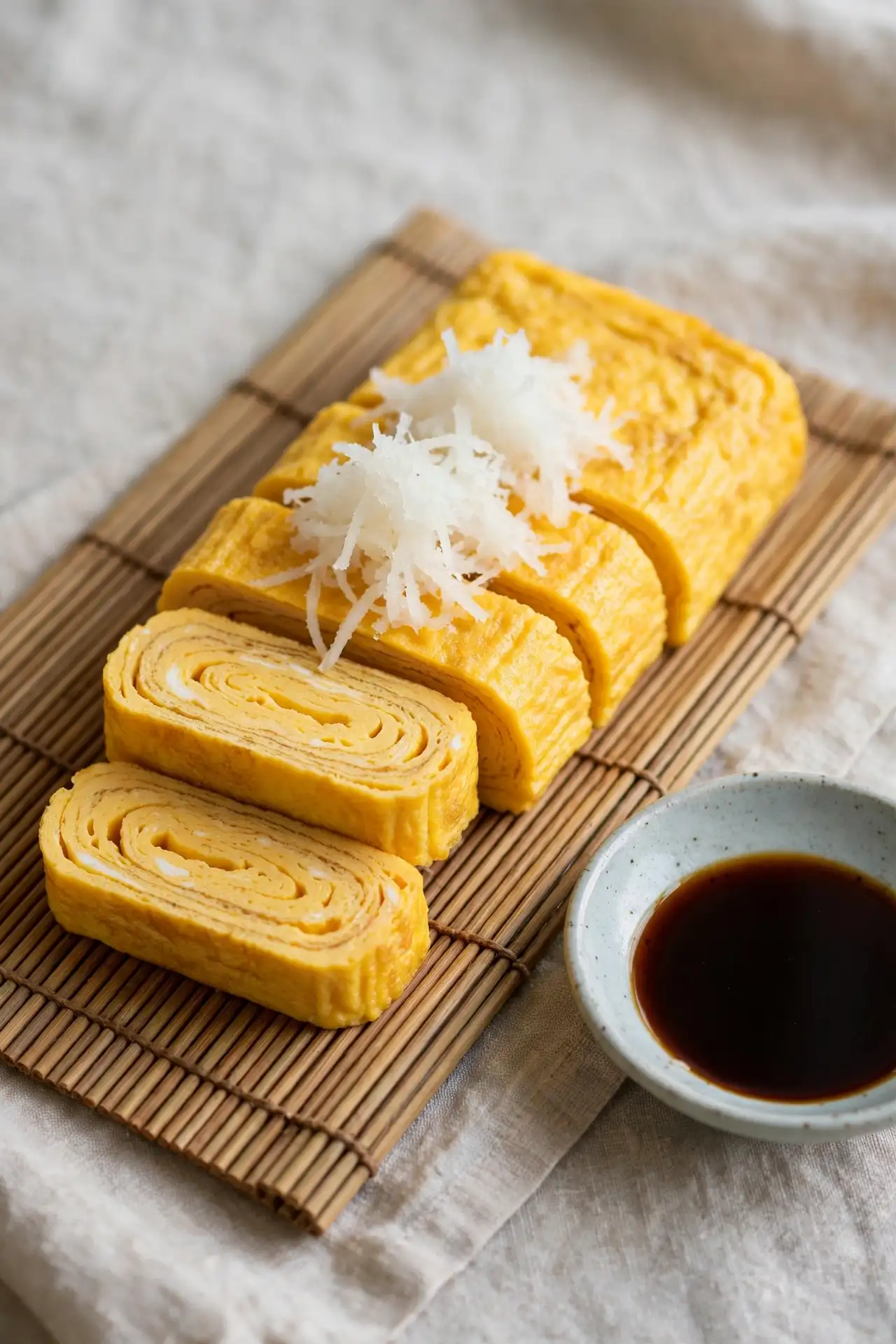
10. Japanese Tamagoyaki
Why We Love It
Tamagoyaki is a rolled egg omelette that requires a specific rectangular pan, a spatula, and about four minutes of focused attention. The result is a sweet-savory layered roll that looks far more involved than it is. Once you try this omelette recipe, the texture is unlike anything a Western-style egg preparation produces — soft, layered, lightly sweet, and dense in a way that one folded omelette never is.
Key Ingredients
- Eggs (3 to 4 large) — beaten with dashi, mirin, soy sauce, and a pinch of sugar before cooking
- Dashi stock (2 tbsp) — the umami base; instant dashi powder dissolved in water works fine
- Mirin (1 tsp) — a mild sweetness without pushing the dish into dessert territory
- Soy sauce (half a tsp) — color and a gentle saltiness through every layer
Quick Tips
A rectangular tamagoyaki pan (makiyakinabe) gives the cleanest final shape, but a small round non-stick pan works if you trim the edges after rolling while still warm. Cook each thin layer on medium heat and begin rolling before it is fully set — that is what produces the soft, layered interior. Brush the pan lightly with oil between each layer.
Prep: 5 min | Cook: 8 min | Total: 13 min | Serves: 1 to 2
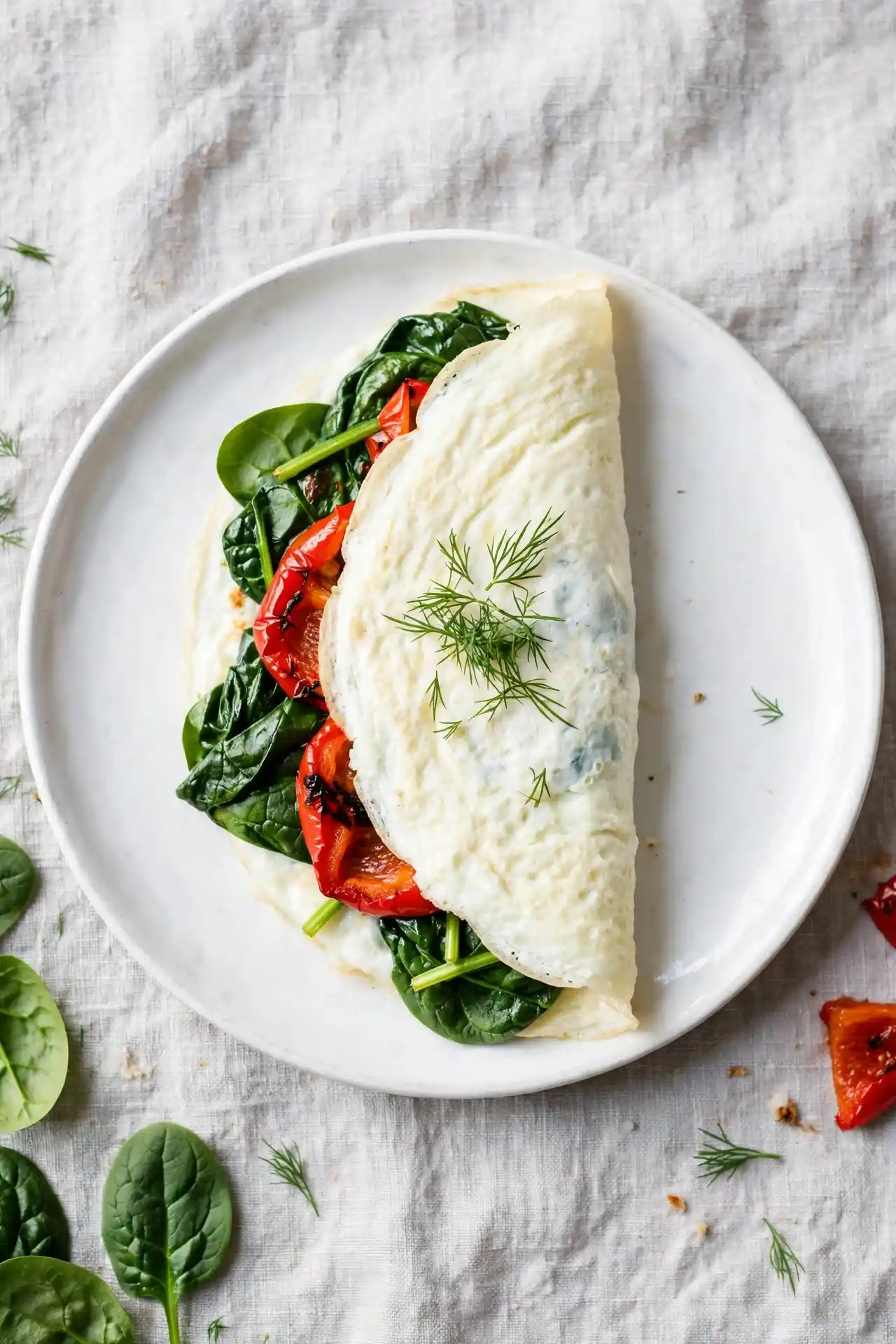
11. Egg White Omelette
Why We Love It
The egg white omelette has a reputation for being the breakfast you eat out of obligation. Done correctly, it does not deserve that reputation. The solution is bold fillings and confident seasoning, because without the fat from yolks, the filling carries all the flavor. Spinach, roasted red pepper, and feta turn this omelette recipe into something you would choose on its own merits.
Key Ingredients
- Egg whites (from 3 large eggs, or 90ml carton whites) — whisked briefly to break up the albumen, not stiff-peaked
- Baby spinach (a handful) — adds color and substance to an otherwise pale egg sheet
- Roasted red peppers (2 tbsp, jarred) — concentrated sweetness that needs no cooking in the pan
- Feta cheese (20g, crumbled) — provides enough salt and fat to make the whites taste rich
Quick Tips
Do not over-whisk egg whites for this. You want them loosened and slightly foamy, not stiff. Stiff whites cook into a foam-like sponge rather than a smooth, foldable sheet. Season the whites generously before they hit the pan — unseasoned egg whites turn flat and rubbery without enough salt.
Prep: 5 min | Cook: 4 min | Total: 9 min | Serves: 1
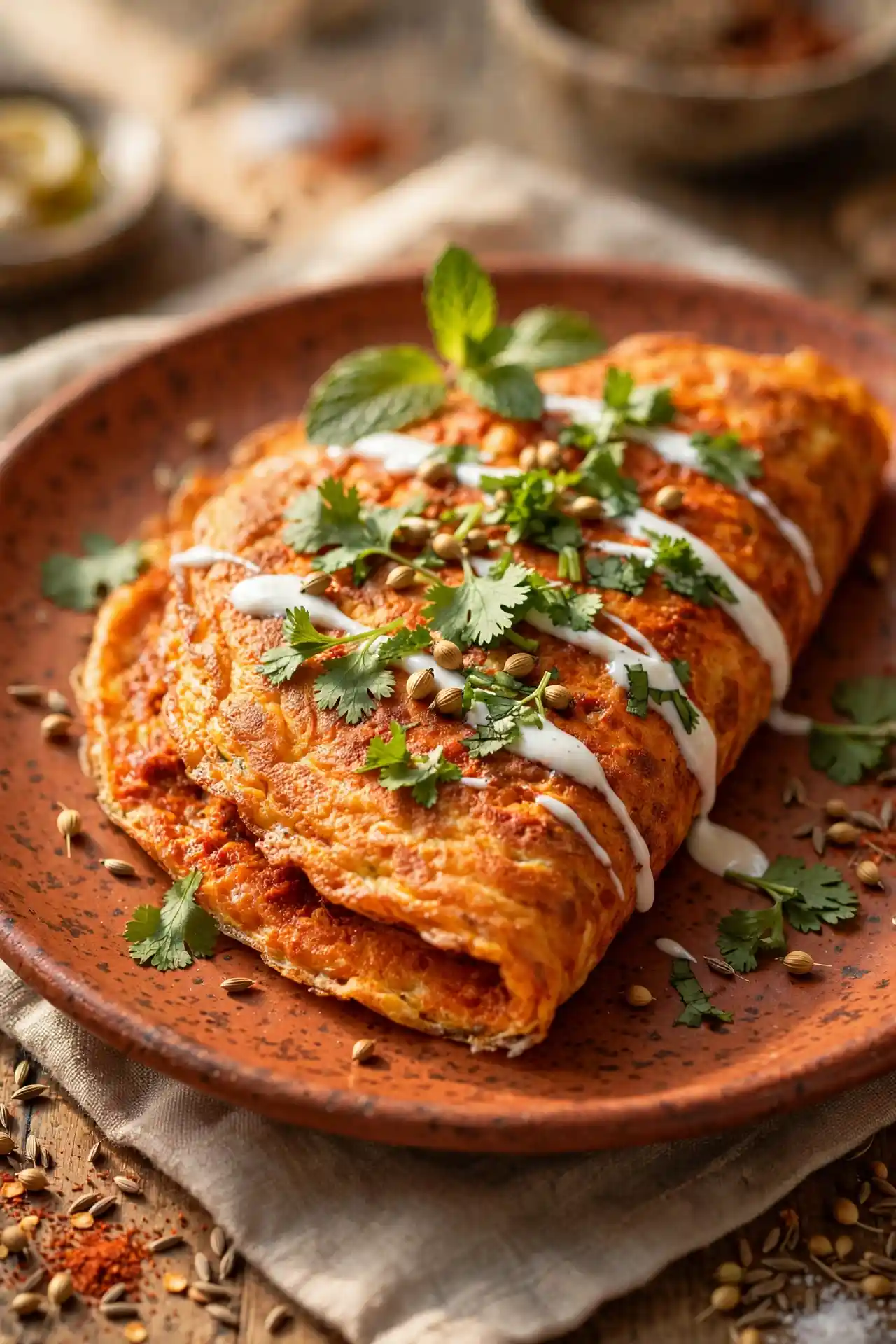
12. Harissa Spiced Omelette
Why We Love It
Harissa paste mixed directly into the egg is one of those combinations that sounds too simple to be as good as it is. The chili-roasted pepper paste provides heat, acidity, and depth in a single ingredient, and it distributes through the eggs as they cook, so the spice comes through consistently rather than hitting in one concentrated bite. This omelette recipe is the fastest way to bring a genuine North African character to a weekday breakfast.
Key Ingredients
- Eggs (2 to 3 large) — beaten with 1 tsp of harissa paste mixed directly into the egg
- Harissa paste (1 to 2 tsp) — rose harissa is milder and works well for those sensitive to heat
- Red onion (a small slice, finely diced) — raw crunch against the soft, spiced egg
- Fresh coriander or mint — stirred in after cooking to cut through the heat of the paste
Quick Tips
Start with 1 teaspoon of harissa and adjust once you know your brand. Heat levels vary significantly between brands, and some are twice as hot as others. If the paste looks oil-heavy, blot it lightly on a paper towel before mixing it into the eggs — excess oil can cause the omelette to separate in the pan. A small spoonful of plain yogurt on top when serving brings the heat back to a manageable level.
Prep: 4 min | Cook: 4 min | Total: 8 min | Serves: 1
Storage and Make-Ahead Tips
Omelettes are best made fresh. Most of these recipes take under 10 minutes from egg to plate, which means making them ahead rarely saves meaningful time. That said, a few entries in this list hold better than others.
The Spanish potato omelette is the clear exception. It keeps in the fridge for up to three days and is traditionally served at room temperature in Spain, so it genuinely rewards making ahead. Slice it, store in an airtight container, and let it sit at room temperature for 20 minutes before serving. The texture at room temperature is actually better than straight from the fridge.
For any other recipe, prep the fillings in advance rather than the finished omelette. Sautéed mushrooms, bell peppers, and shredded cooked chicken will keep for two days in the fridge. This cuts active cook time down to the 3 minutes the egg itself needs. Avoid prepping avocado or fresh tomato ahead of time since both deteriorate quickly once cut.
Fridge: A cooked omelette lasts 1 day maximum in an airtight container. The protein in the egg tightens further during storage, and reheating makes that worse.
Freezer: Avoid freezing finished omelettes from this list. The texture after thawing is uniformly rubbery regardless of filling.
Make-ahead strategy: Prep spice blends, chop vegetables, and shred chicken the night before. The egg always goes in fresh.
Frequently Asked Questions
Which omelette recipe should I start with if I have never made one before?
Start with the cheese omelette. It uses the basic technique (egg into a buttered pan, fold when just set) and the cheese adds enough flavor that small errors in timing are forgivable. Once you can fold a cheese omelette without breaking it, the French omelette becomes a realistic next challenge.
Can I make omelettes ahead of time for meal prep?
For most of these recipes, the answer is no. The texture degrades within a few hours. The Spanish potato omelette is the only entry in this list that genuinely works as a make-ahead meal. Cook it fully, cool it completely, wrap it tightly, and refrigerate for up to three days.
What can I use instead of butter in an omelette recipe?
Avocado oil or light olive oil both work well. Ghee is an excellent option if you want butter-level richness with a slightly higher smoke point, which gives you a bit more margin before the fat browns. Strongly flavored oils like sesame or coconut change the flavor profile significantly, so avoid those unless the recipe calls for it intentionally.
How do I stop my omelette from sticking even in a non-stick pan?
The pan needs to be hot before the fat goes in, and the fat needs to be hot before the egg goes in. Most sticking happens when cold egg hits a pan that is warm but not quite ready. Two to three minutes of preheating on medium heat, then 30 seconds after adding butter or oil, solves most sticking problems regardless of pan quality.
What is the best recipe for feeding a family at once?
The Spanish tortilla serves four from one pan with no individual flipping required. The loaded veggie omelette can be made in a large skillet and cut into portions like a frittata. For individual omelettes made quickly, the masala version is the fastest — the spiced egg mixture comes together in one bowl and goes straight into the pan.
Why does my omelette always turn rubbery?
Overcooking. Eggs set faster than most people expect, especially on medium-high heat. Pull the pan off the heat when the surface still looks slightly wet in the center — residual heat finishes the cook. A rubbery omelette means the proteins have tightened fully and dried out.
Can I use egg whites instead of whole eggs in any of these recipes?
The egg white omelette recipe in this list is already written for whites only, so start there. For any other recipe, you can swap up to half the whole eggs for whites without a major texture change. A full swap does not work well for the tamagoyaki or masala versions — the yolks in those carry essential flavor and help bind the fillings differently than whites alone.
Final Thoughts
Twelve recipes, and the common thread is simpler than the variety suggests: hot pan, seasoned eggs, fillings cooked before they go in. The technique barely changes from one omelette recipe to the next. What changes is the character. Whether you start with a plain French fold on a Tuesday or try rolling tamagoyaki for the first time on a weekend, the same 20cm pan, the same eggs, and about five minutes stand between you and a proper breakfast.