Smash Burger Recipe With Crispy Edges and Homemade Sauce
In This Article
- Why You’ll Love This Smash Burger
- Ingredients You’ll Need
- For the Smash Burger Sauce
- For the Patties and Assembly
- Recipe Timing
- How to Make a Smash Burger — Step by Step
- Common Mistakes to Avoid
- Variations and Substitutions
- What to Serve With Smash Burgers
- Storage, Reheating and Make-Ahead
- Nutrition Information
- Frequently Asked Questions
- Smash Burger — Recipe Card
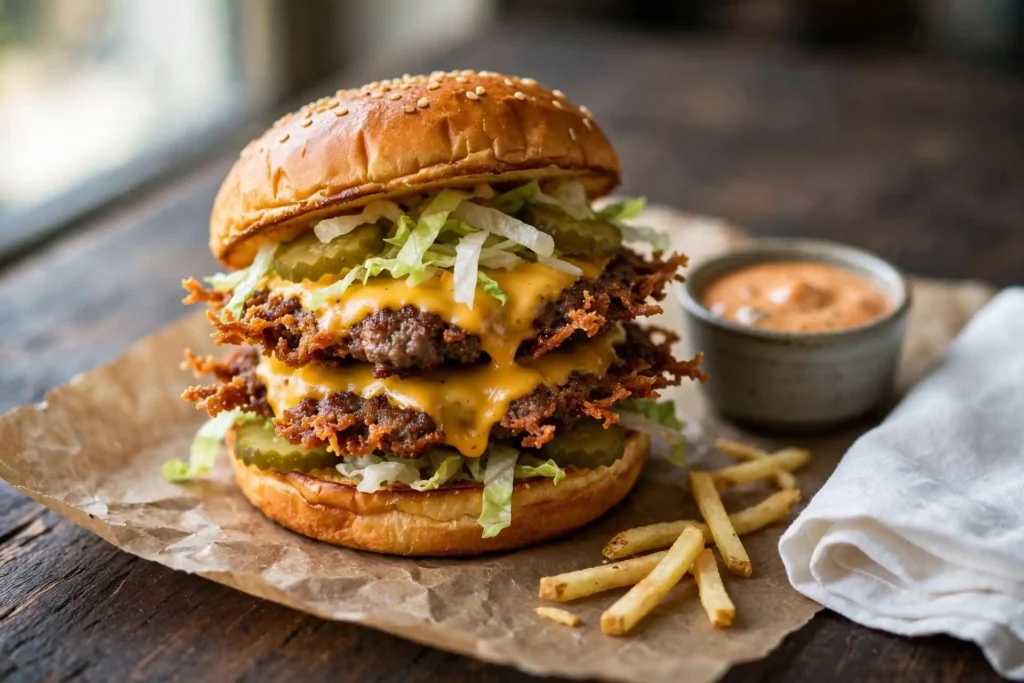
The defining feature of a smash burger is the crispy, lacy crust you get from pressing cold beef hard onto a screaming-hot surface. Most homemade versions miss this because the pan isn’t hot enough, the press isn’t firm enough, or both. The result is a patty that’s closer to a pan-fried burger than the real thing.
This smash burger recipe fixes that with a few specific details: 80/20 beef, a properly preheated cast iron pan, and a hard 10-second press within the first two seconds of the beef hitting the surface. You get two thin patties per burger, each with genuine crust on both sides, sealed together with melted American cheese. A five-ingredient sauce takes two minutes to make. Start to finish: 35 minutes.
Why You’ll Love This Smash Burger:
- The crispy, lacy edges that only the smashing technique produces
- Double patties mean more browned surface area per bite
- The sauce keeps in the fridge for a week — make extra for fries
- No griddle needed, a heavy cast iron pan works exactly as well
- 35 minutes from cold beef to finished burger
Why You’ll Love This Smash Burger
The technique is specific, not complicated. The beef needs to be cold, the pan needs to be hot, and the press needs to happen fast. Get those three things right and the result takes care of itself: a thin patty with a deeply browned perimeter and a juicy center.
80/20 ground beef is the reason the crust forms the way it does. That 20% fat renders out during the smash and creates the contact between beef and pan that drives browning. Leaner beef produces a drier patty without the same texture.
The double patty setup changes the ratio of crust to interior mass. More browned surface relative to the total beef weight means more of that seared flavor in every bite. It’s the main reason a smash burger tastes different from a regular flat burger, even at the same total weight.
Ingredients You’ll Need
For the Smash Burger Sauce
- 3 tbsp mayonnaise
- 1.5 tbsp ketchup
- 1 tbsp yellow mustard
- 1 tsp white wine vinegar adds brightness that cuts through the fat
- 1 tsp sweet pickle relish texture and a note of sweetness
- 1/4 tsp garlic powder
- 1/4 tsp onion powder
- 1/4 tsp smoked paprika depth without heat
- Pinch of white sugar
For the Patties and Assembly
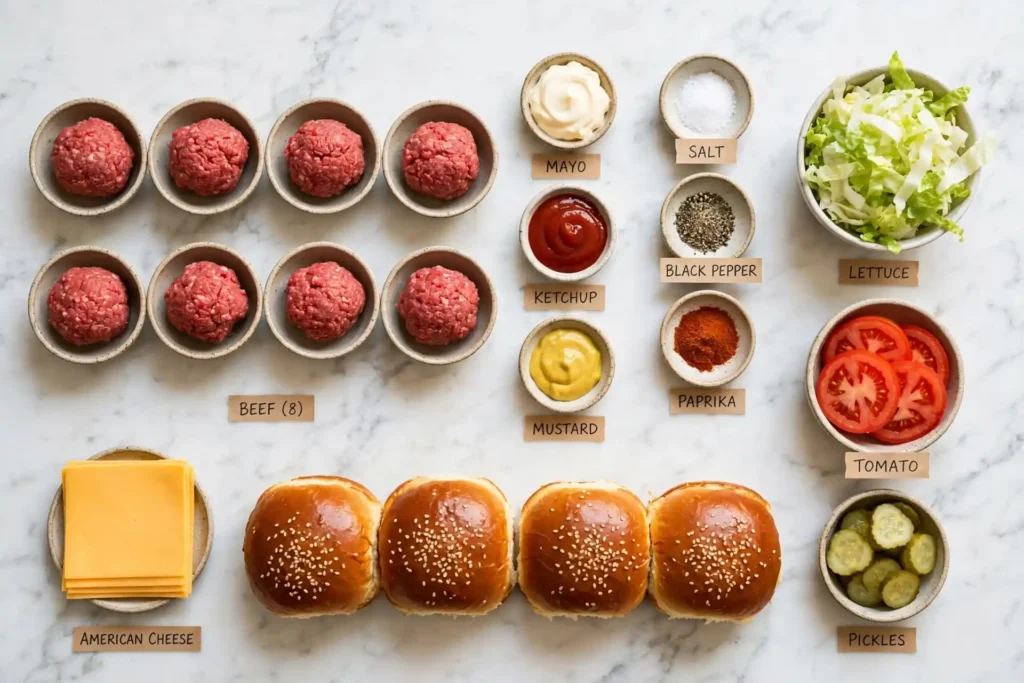
- 700g (1 lb 9 oz) 80/20 ground beef the fat ratio is non-negotiable for proper crust formation
- 1 tsp fine kosher salt
- 1/2 tsp freshly ground black pepper
- 1 tbsp neutral oil with a high smoke point (vegetable or canola)
- 8 slices American cheese melts flat and uniformly — other cheeses don’t behave the same way at this cooking time
- 4 brioche burger buns [INTERNAL LINK: “homemade brioche burger buns” → brioche bun recipe page]
- Shredded iceberg lettuce
- 2 medium tomatoes, sliced
- Dill pickles, sliced
- Thinly sliced white onion (for topping)
Substitution note for cheese: Young cheddar or Monterey Jack will melt reasonably well if American cheese is unavailable. Avoid aged or hard cheeses; they don’t melt uniformly in the short time the patty is in the pan.
Recipe Timing
| Timing Element | Duration |
| Prep Time | 15 minutes |
| Cook Time | 20 minutes |
| Total Time | 35 minutes |
Servings: 4 burgers | Difficulty: Easy | Cuisine: American | Course: Main
How to Make a Smash Burger — Step by Step
Step 1: Make the sauce
Combine the mayonnaise, ketchup, mustard, white wine vinegar, relish, garlic powder, onion powder, smoked paprika, and sugar in a small bowl. Stir until fully mixed. Taste it and adjust: a little more vinegar for brightness, more ketchup if you want it sweeter.
Cover and refrigerate while you prep everything else. The flavor improves after 10 minutes as the spices blend in.
Step 2: Portion the beef
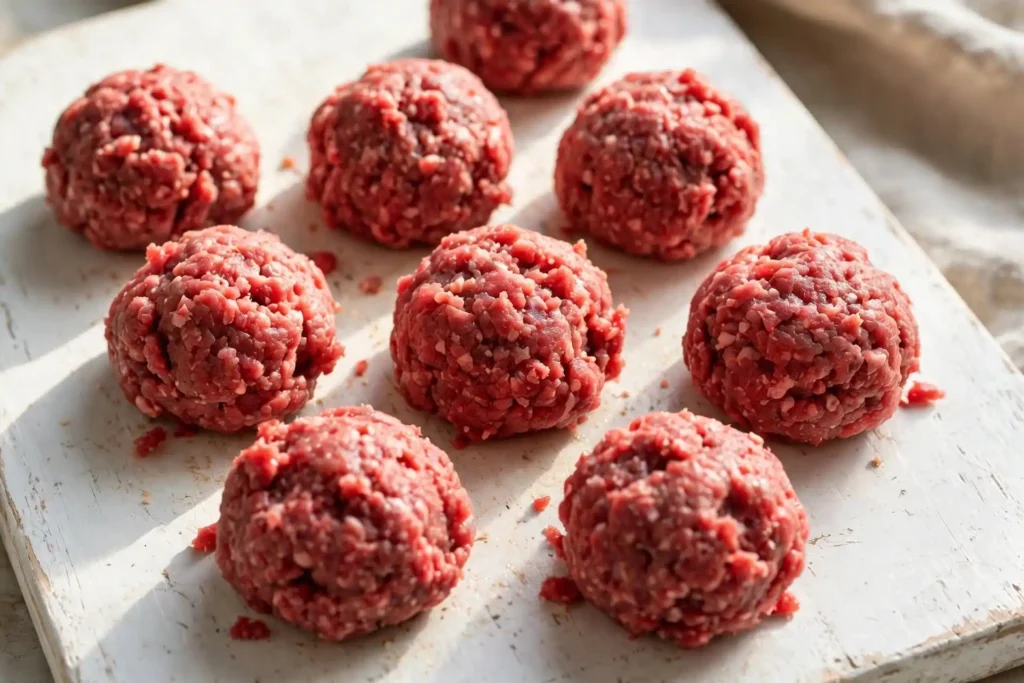
Divide the cold ground beef into 8 equal portions, roughly 87g (3 oz) each. Roll each one loosely into a ball. Do not pack or overwork the meat.
⚠️ Food Safety: Keep the beef refrigerated until just before cooking. Do not leave raw ground beef at room temperature for more than 30 minutes.
Why this works: Keeping the balls loose means the fat hasn’t been compressed yet. When the ball hits the hot pan and you smash it, the fat renders out evenly across the entire patty surface.
Step 3: Heat the pan
Place a large cast iron skillet or heavy stainless steel pan over high heat. Let it heat for 3 to 4 minutes until it starts to smoke. Add the oil and swirl to coat.
Test the heat: a drop of water should vaporize instantly on contact. If it sizzles and pools, the pan needs more time.
Why this works: A properly preheated surface triggers the Maillard reaction the moment the beef lands on it, building the crust before the patty has time to steam and shed moisture. According to food safety guidance on ground beef cooking temperatures{target=”_blank”}, ground beef must reach 71°C (160°F) internally, and the thin patty at this heat gets there quickly.
Step 4: Smash the patties
Place 2 beef balls in the pan, spaced well apart. Lay a small square of parchment paper over one ball and press down hard and fast with a flat metal spatula, using your body weight, for a full 10 seconds. The patty should be approximately 1/4 inch (6mm) thin. Repeat immediately with the second ball.
Season the tops generously with salt and pepper.
Why this works: The parchment paper stops the beef from sticking to the spatula. Pressing for the full 10 seconds ensures maximum contact between the beef surface and the hot pan, which is what drives crust formation.
Step 5: Cook the first side
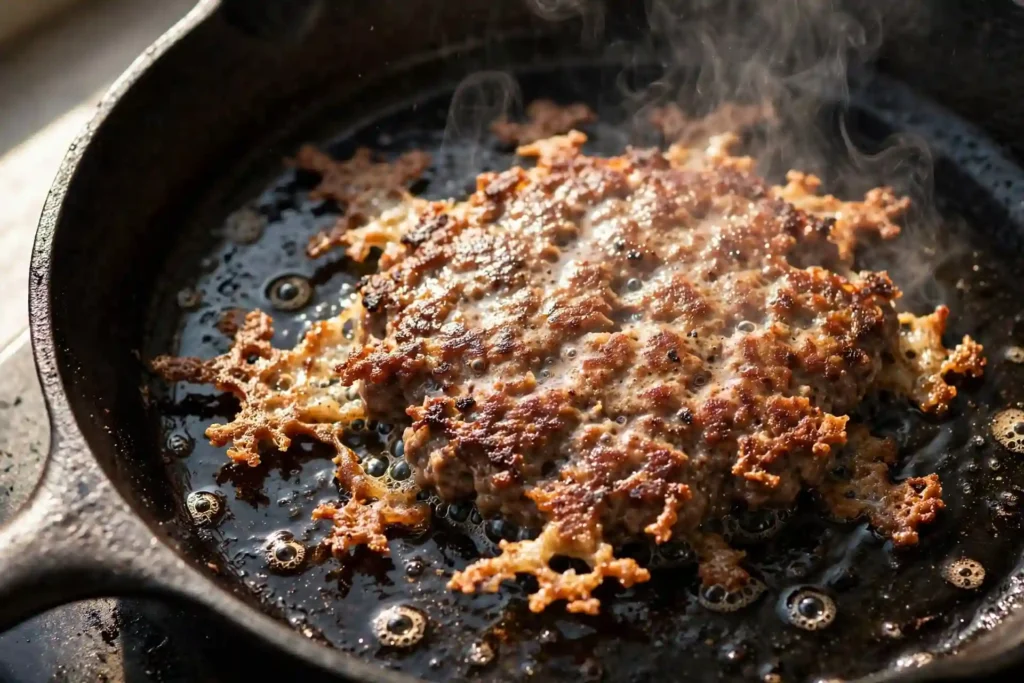
Cook undisturbed for 2 minutes after smashing. Watch the edges: they will shift from pink to brown as the crust forms around the perimeter. Do not press again, do not move the patties.
The patty is ready to flip when the edges are fully browned and it releases cleanly from the pan.
Step 6: Flip and add cheese
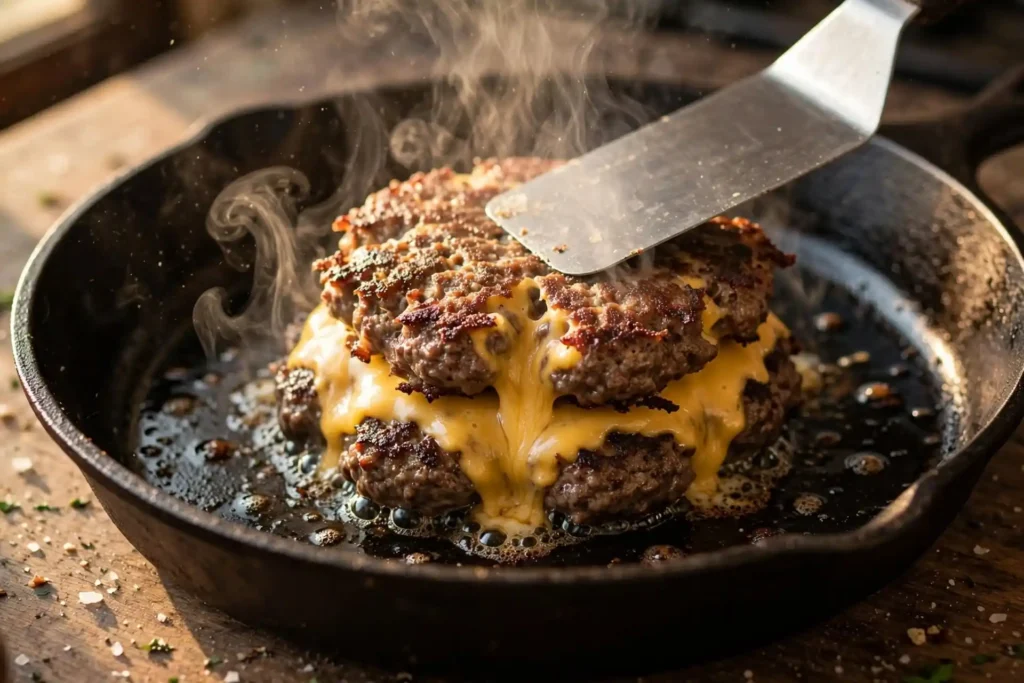
Flip each patty with a thin metal spatula, scraping firmly under the crust. If it sticks, give it 20 more seconds. Cook the second side for 1 minute.
Lay 1 slice of American cheese on each patty. Cook for another 30 seconds until the cheese begins melting over the edges.
⚠️ Food Safety: The internal temperature of ground beef must reach 71°C (160°F). At 1/4 inch thin on a high-heat pan, this happens quickly. Use an instant-read thermometer if you are unsure.
Why this works: Flipping only once preserves the full crust on the first side. The second side cooks faster because the patty is already hot throughout, so 1 minute is enough to brown it without drying it out.
Step 7: Stack and remove
Immediately after the cheese starts melting, stack one patty directly on top of the other while still in the pan. Press gently for 3 seconds with the spatula. The cheese between the two patties seals them together. Remove and set aside.
Cook the remaining 6 patties in batches of 2, following the same process.
Step 8: Toast the buns
Place the cut buns face-down in a dry pan over medium heat for 60 to 90 seconds until the surface is golden. A toasted bun holds up to the sauce without going soggy.
Step 9: Assemble
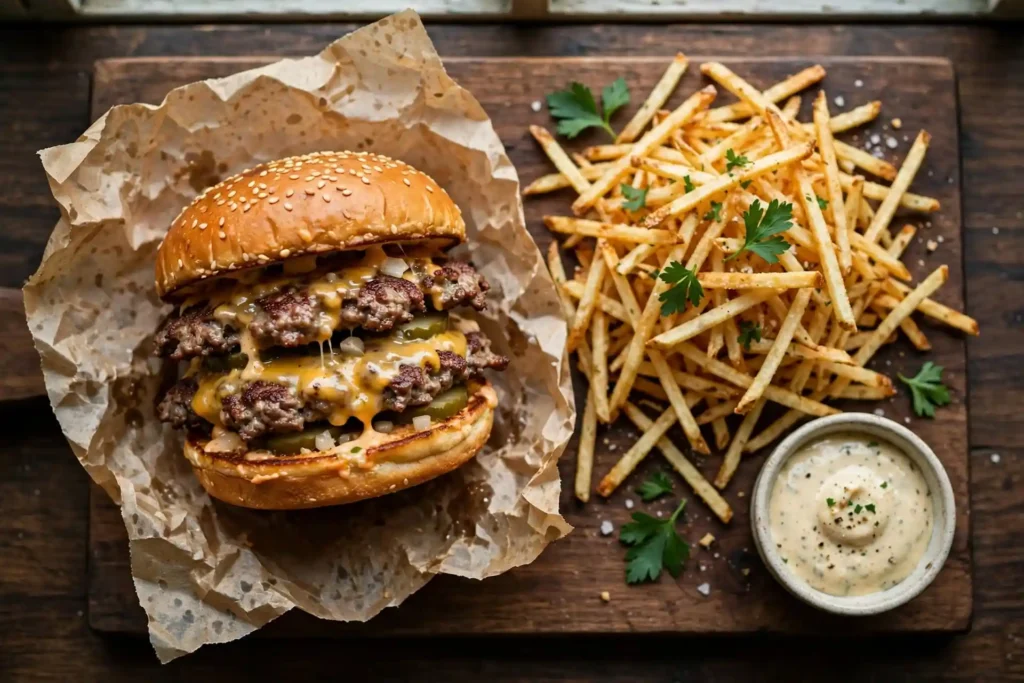
Spread the sauce on both the top and bottom bun. Stack the bottom bun with pickles, then the double patty, then tomato, shredded lettuce, and sliced onion. Cap with the top bun.
Serve immediately. After 5 minutes, the bun starts absorbing moisture from the sauce and the crust softens.
Common Mistakes to Avoid
Mistake 1: Pan not hot enough
Why it happens: Home cooks don’t give the pan enough time to preheat, so the cold beef drops the surface temperature and the patty steams rather than sears.
How to avoid it: Heat the empty pan on high for a full 3 to 4 minutes before adding oil. Do the water drop test before you commit.
Mistake 2: Using lean ground beef
Why it happens: The assumption that leaner is better. For smash burgers specifically, it isn’t.
How to avoid it: Use 80/20 exactly. The fat renders during the smash and creates the crust. 85/15 produces a noticeably drier patty. 90/10 won’t work.
Mistake 3: Pressing too gently or too slowly
Why it happens: Hesitation. A soft one-handed press doesn’t create enough contact between the beef and the pan surface.
How to avoid it: Press with both hands and your body weight within the first 2 seconds of the beef landing, then hold firm for 10 seconds. The window to build the crust closes fast.
Mistake 4: Flipping too early
Why it happens: The edges look done before the crust has fully formed on the underside.
How to avoid it: Trust the 2-minute timer. A properly crusted patty releases cleanly from the pan. If it resists when you try to slide the spatula under, it needs more time.
Variations and Substitutions
Mushroom and Swiss: Swap American cheese for Swiss. Sauté 200g sliced cremini mushrooms in 1 tbsp butter over medium-high heat for about 6 minutes until golden. Pile them on top of the double patty stack before capping with the bun. The earthy mushroom flavor pairs well with the browned beef crust.
Spicy smash burger: Add 1/2 tsp cayenne and 1/4 tsp chili flakes to the sauce. Sliced pickled jalapeños as a topping extend the heat further. The beef and assembly stay exactly the same.
Cheese swap: Pepper jack melts well and adds mild heat. Young provolone is another option. Avoid any aged hard cheese — the short cooking time isn’t enough to melt them properly.
What to Serve With Smash Burgers
- Thin shoestring fries: The obvious pairing. Shoestring fries cook fast enough to come out at the same time as the last burger batch.
- Vinegar-based coleslaw: A sharp, acidic slaw cuts through the richness better than a creamy one. It also adds crunch if you skip the shredded lettuce inside the burger itself.
- Onion rings: Thick, battered onion rings are a classic pairing. [INTERNAL LINK: “homemade beer-battered onion rings” → onion rings recipe page]
- Corn on the cob: Grilled or boiled with butter and flaky salt. Simple enough to run alongside the burgers without much extra work.
- Simple romaine salad: If you want something lighter on the side, a basic romaine salad with lemon and olive oil doesn’t compete with the burger’s flavors.
Storage, Reheating and Make-Ahead
Fridge: Store cooked patties in an airtight container with parchment between layers for up to 3 days. Store the sauce in a sealed jar for up to 7 days. Do not store assembled burgers.
Freezer: Freeze raw beef balls on a parchment-lined tray for 1 hour until firm, then transfer to a sealed zip-lock bag for up to 3 months. Thaw in the fridge for 8 hours before cooking. Cook from cold, not frozen, for the best crust.
Reheating cooked patties: Heat a dry cast iron pan over medium-high and cook the patties for 60 seconds per side. Add a small splash of water, cover with a lid for 20 seconds, then uncover and serve. Microwave reheating works but the crust softens significantly.
Make-ahead: The sauce can be made up to 5 days ahead. Beef balls can be portioned and refrigerated for up to 24 hours before cooking. Do not salt the beef until just before it goes into the pan.
Nutrition Information
Per serving: 1 double smash burger, including bun and 1.5 tbsp sauce
| Nutrient | Per Serving |
| Calories | 685 kcal |
| Protein | 42 g |
| Total Carbohydrates | 38 g |
| Dietary Fiber | 2 g |
| Total Sugars | 7 g |
| Total Fat | 38 g |
| Saturated Fat | 16 g |
| Sodium | 870 mg |
| Cholesterol | 135 mg |
| Potassium | 520 mg |
| Iron | 5 mg |
“Nutritional values are estimates only and may vary based on specific ingredients, brands, and portion sizes used. For precise dietary needs, consult a registered dietitian.”
Frequently Asked Questions
What fat percentage of ground beef works best for a smash burger?
80/20 is the standard. The 20% fat renders during the smash and creates the crust. Anything leaner than 85/15 produces a noticeably drier patty that doesn’t brown as well at this thickness. Do not substitute with extra-lean beef.
How thin should I smash the patty?
Aim for about 1/4 inch (6mm). Thinner than that and the patty can tear or overcook before the edges crust properly. Thicker and you lose the crust-to-interior ratio that makes a smash burger distinct from a regular flat patty.
Can I make smash burgers without a griddle?
A cast iron skillet works just as well. What matters is mass: a heavy pan that holds heat when cold beef lands on it. A thin non-stick pan loses surface temperature too quickly and the beef steams instead of sears.
Why do my smash burgers come out dry?
Two common causes: beef that’s too lean, or patties pressed too thin. Stick to 80/20 and don’t go below 1/4 inch. Overcooking is also a factor — the second side only needs 1 to 1.5 minutes at high heat.
Can I make the smash burger sauce ahead of time?
Yes. It keeps in a sealed container in the fridge for up to 7 days. The flavor actually improves after 24 hours as the spices blend in. Make a double batch and use the extra as a dipping sauce for fries.
What cheese melts best on a smash burger?
American cheese melts flat and stays creamy because it’s formulated to do exactly that. Young cheddar and Monterey Jack are acceptable substitutes. Aged or hard cheeses don’t melt uniformly in the 30 seconds you have before the patty overcooks.
How do I stop the beef from sticking to the spatula when I smash?
Place a small square of parchment paper between the spatula and the beef ball before pressing. Peel it away immediately after. This works more reliably than oiling the spatula because the fat from the beef doesn’t grip parchment.
Conclusion
Once you get the technique calibrated — hot pan, immediate hard press, hands off until it releases — a smash burger is one of the most consistent things you can cook for a group. The sauce takes two minutes and can be made days ahead. The beef portions in under 10 minutes. Each batch cooks in about 4 minutes. If it’s your first time, cook one test patty before the others to see how your specific pan behaves. That single test run tells you whether your heat is right and how firmly you need to press. Adjust, then cook the rest with confidence.
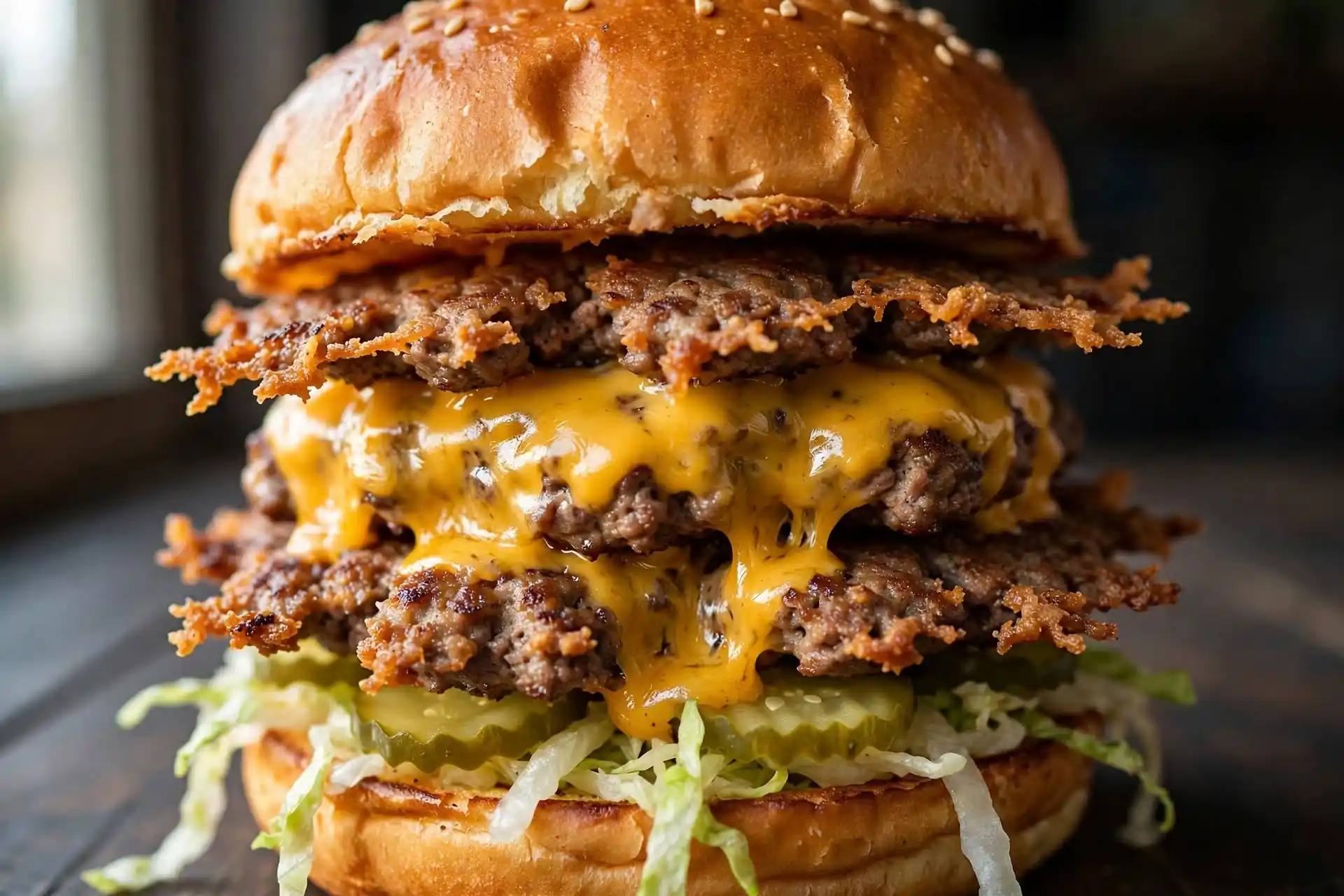
Smash Burger Recipe With Crispy Edges and Homemade Sauce
Ingredients
Method
- Mix mayonnaise, ketchup, mustard, white wine vinegar, relish, garlic powder, onion powder, smoked paprika, and sugar. Stir until combined. Refrigerate.
- Divide cold ground beef into 8 equal balls (87g each). Roll loosely. Do not overwork.
- Heat a cast iron skillet over high for 3 to 4 minutes until smoking. Add oil.
- Place 2 beef balls in the pan. Immediately press each one through a parchment paper square with a flat metal spatula for 10 seconds until 1/4 inch (6mm) thin. Season tops with salt and pepper.
- Cook undisturbed for 2 minutes until edges are fully browned.
- Flip with a thin spatula, scraping firmly under the crust. Cook the second side for 1 minute. Place 1 slice of American cheese on each patty. Cook 30 seconds until cheese melts.
- Stack one patty directly on top of the other in the pan. Press gently for 3 seconds. Remove. Repeat with remaining patties.
- Toast bun halves face-down in a dry pan over medium heat for 60 to 90 seconds.
- Spread sauce on both bun halves. Assemble: pickles, double patty stack, tomato, lettuce, sliced onion. Serve immediately.