
Classic Beef Stew Recipe with Tender, Falling-Apart Meat
In This Article
- Why You’ll Love This Beef Stew
- Ingredients You’ll Need
- For the Stew
- Recipe Timing
- How to Make Beef Stew: Step by Step
- Key Tips for Best Results
- Common Mistakes to Avoid
- Variations and Substitutions
- What to Serve With Beef Stew
- Storage, Reheating, and Make-Ahead
- Allergen Information
- Nutrition Information
- Frequently Asked Questions
- Beef Stew: Recipe Card
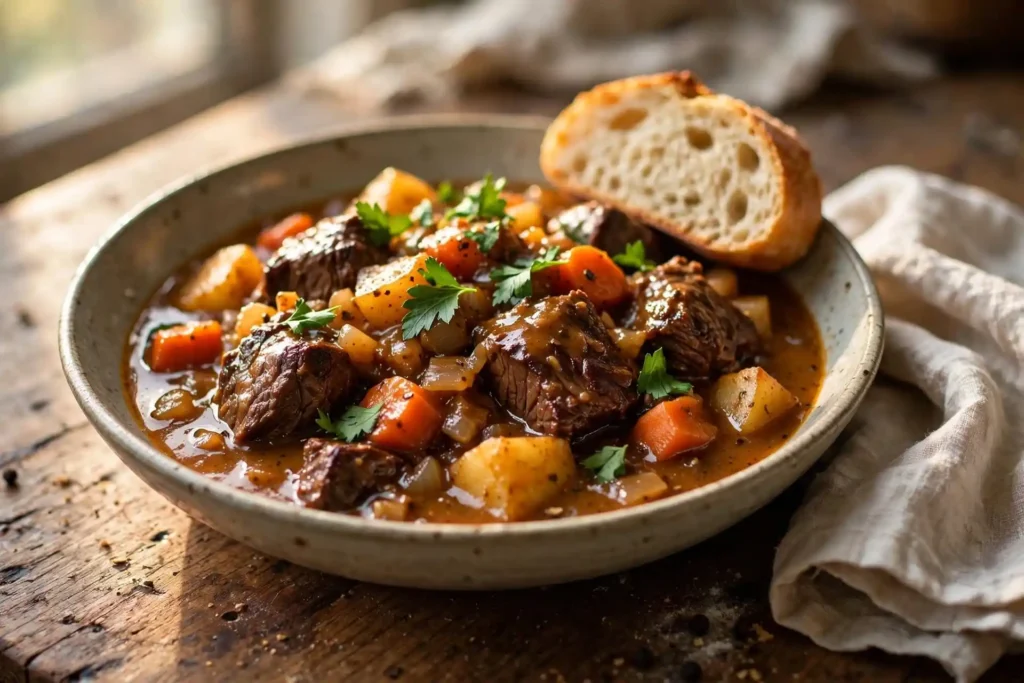
Beef stew is the kind of recipe that rewards patience and punishes shortcuts. The actual hands-on work takes about 20 minutes. Most of what follows is heat, time, and leaving it alone.
This recipe uses beef chuck, which has the right balance of fat and connective tissue to break down into something genuinely tender after two hours of slow braising. The gravy thickens on its own from the flour coating and the collagen dissolving out of the meat. No wine is needed, no obscure ingredients, and no special equipment beyond a heavy pot with a lid.
Why You’ll Love This Beef Stew
- The beef becomes fork-tender, not chewy or stringy, after a proper low-and-slow braise
- The gravy builds itself during cooking from the fond, tomato paste, and collagen in the meat
- It tastes noticeably better the next day, making it a strong candidate for batch cooking
- One pot from the first sear to serving, minimal cleanup
- The ingredient list is short and built from pantry staples
Ingredients You’ll Need
For the Stew
For the beef:
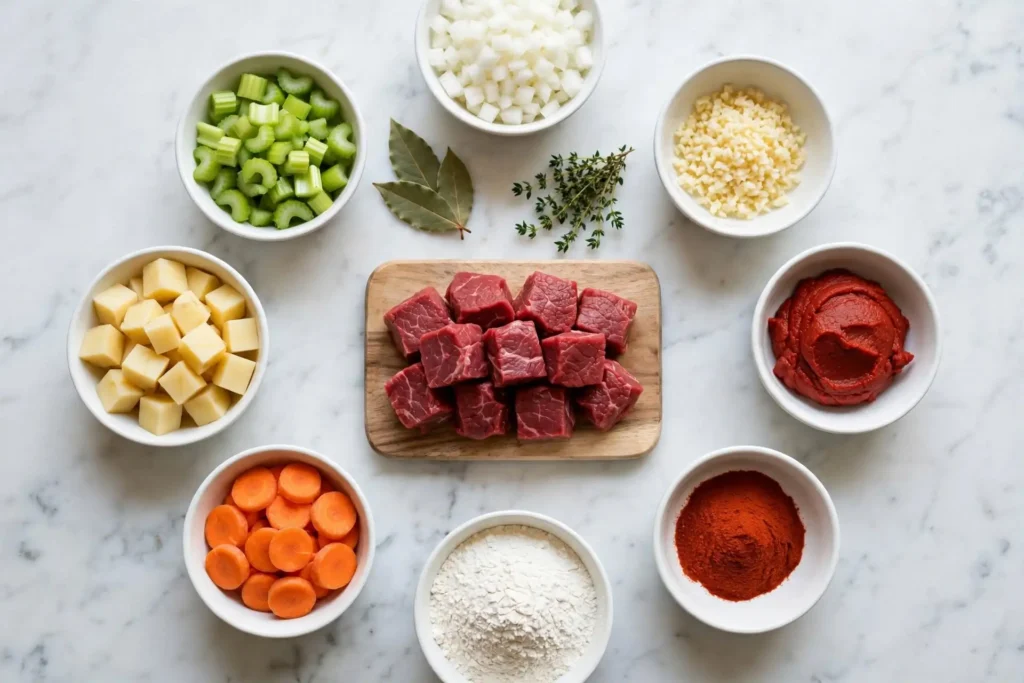
- 1.2 kg (2½ lb) beef chuck, cut into 4 cm (1½ inch) cubes — the connective tissue and intramuscular fat in chuck convert to gelatin during braising, keeping the meat moist and naturally thickening the gravy
- 3 tbsp plain flour — coats the beef for searing and acts as a built-in thickener throughout the simmer
- 1 tsp fine salt
- 1 tsp ground black pepper
For the base:
- 3 tbsp vegetable oil, divided
- 1 large onion, roughly diced
- 4 garlic cloves, minced
- 2 tbsp tomato paste — cooked directly in fat to concentrate its sugars and remove the raw, acidic edge
- 500 ml (2 cups) beef stock, low-sodium preferred
- 250 ml (1 cup) water
- 2 tbsp halal-certified Worcestershire sauce — (substitute: 1½ tbsp soy sauce mixed with ½ tsp tamarind paste, if halal-certified Worcestershire is unavailable)
- 1 tsp sweet paprika
- ½ tsp fine salt, for the cooking liquid
- 3 sprigs fresh thyme, or ½ tsp dried thyme
- 2 bay leaves
For the vegetables:
- 3 medium carrots (approx. 300 g / 10 oz), cut into 3 cm chunks — added late in cooking so they stay intact
- 3 medium Yukon Gold potatoes (approx. 500 g / 1 lb), cut into 3 cm cubes — Yukon Gold holds its shape better than floury varieties; they won’t dissolve into the gravy
- 2 celery stalks, cut into 3 cm pieces
To finish (optional):
- 1 tbsp cornstarch mixed with 2 tbsp cold water — for thickening if the gravy is thinner than you want after cooking
- Fresh flat-leaf parsley, roughly chopped, for garnish
Recipe Timing
| Timing Element | Duration |
| Prep Time | 20 minutes |
| Cook Time | 2 hours |
| Total Time | 2 hours 20 minutes |
Servings: 6 | Difficulty: Medium | Cuisine: International | Course: Main Course
How to Make Beef Stew: Step by Step
Step 1: Coat the beef with flour
Pat the beef chuck cubes dry with paper towels. Place them in a large bowl and add the flour, 1 tsp salt, and black pepper. Toss until every piece is evenly coated. Shake off any excess.
Why this works: A dry surface is essential for browning. Moisture on the meat creates steam the moment it hits the pan, and steamed beef turns grey rather than brown. Drying before flouring gives the Maillard reaction a clean surface to work with.
Step 2: Sear the beef in two batches
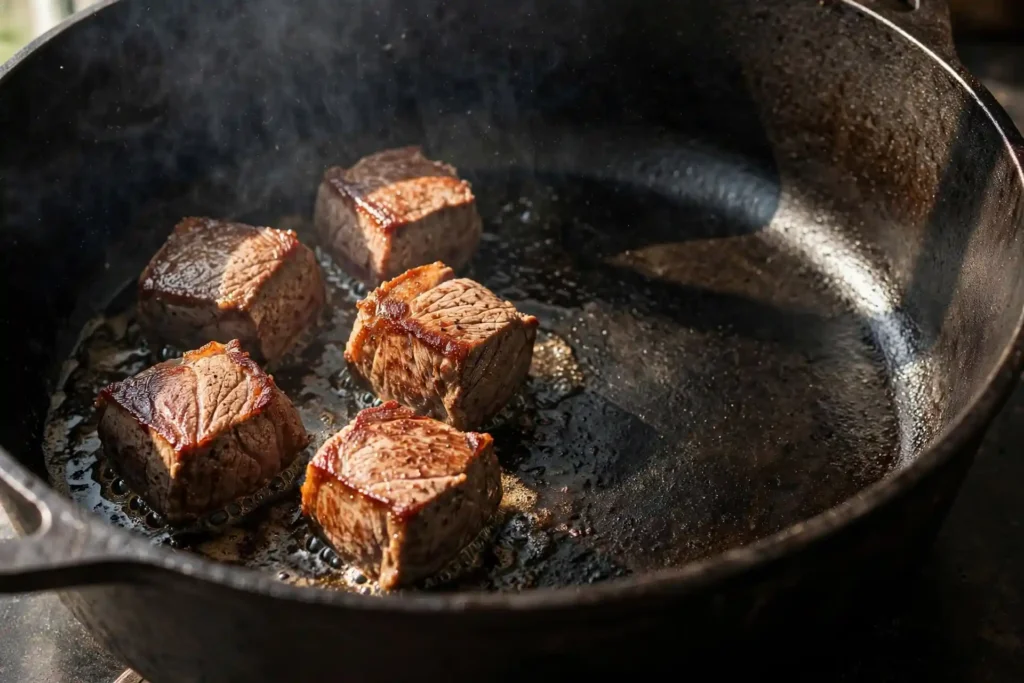
Heat 2 tbsp of vegetable oil in a large Dutch oven or heavy-bottomed pot over high heat until the oil shimmers and begins to smoke lightly. Add half the beef in a single layer, making sure the pieces are not touching. Sear for 3 to 4 minutes without moving, then turn and sear the other side for another 3 minutes until a deep, dark brown crust forms. Transfer to a plate and repeat with the remaining beef, adding more oil if the pot looks dry.
⚠️ Food Safety: Raw beef can carry harmful bacteria including E. coli and Salmonella. Handle it with clean hands, keep it away from other ingredients, and never return seared pieces to the plate that held the raw meat. According to USDA safe handling guidelines (target=”_blank”), wash all surfaces and utensils that contacted raw beef before they touch anything else.
Why this works: Crowding the pan drops the temperature significantly. When the temperature falls, the beef releases moisture before the pan can recover, and the pieces steam instead of sear. Working in batches keeps the heat where it needs to be.
Step 3: Soften the onions
Reduce the heat to medium. Add the remaining 1 tbsp of oil to the same pot. Add the diced onion and cook for 5 to 6 minutes, stirring occasionally, until softened and the edges are barely beginning to color. Do not rush this; onion that is still partially raw gives the finished stew a sharp, slightly astringent quality.
Step 4: Cook the garlic and tomato paste
Add the minced garlic and tomato paste to the softened onions. Cook for 2 minutes, stirring constantly, until the tomato paste shifts from bright red to a deep brick color.
Why this works: Tomato paste cooked directly in fat loses its harsh raw edge. The natural sugars caramelize slightly, adding savory depth without making the stew taste tomato-forward.
Step 5: Deglaze and build the braising liquid
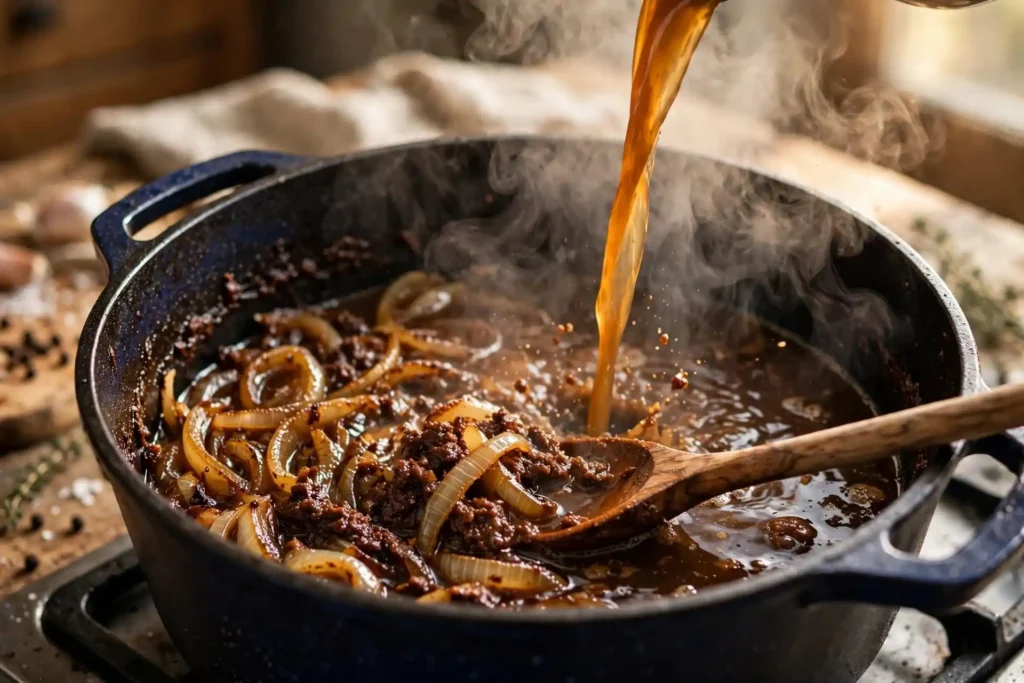
Pour 250 ml of the beef stock into the pot. Use a wooden spoon to scrape up every browned bit stuck to the bottom of the pan. These are concentrated flavor. Cook for 1 minute until the bits dissolve into the liquid.
Add the remaining beef stock, water, Worcestershire sauce, paprika, ½ tsp salt, thyme sprigs, and bay leaves. Stir to combine.
Step 6: Simmer the beef
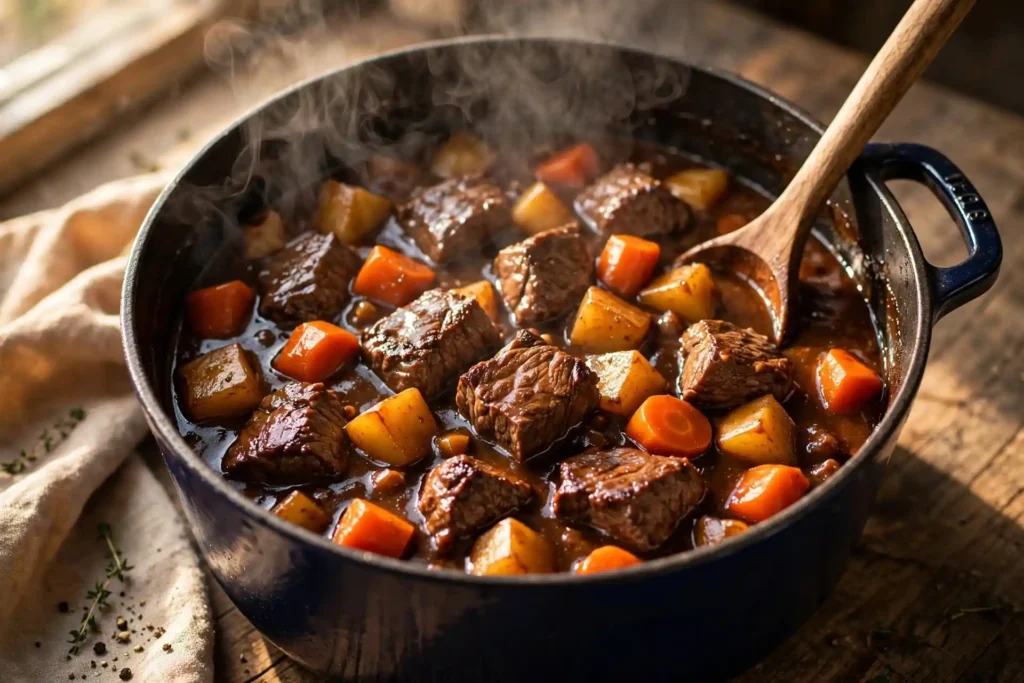
Return the seared beef to the pot, along with any juices that collected on the resting plate. The liquid should come about three-quarters of the way up the meat. Bring to a boil, then reduce the heat to low. Cover and simmer for 1 hour.
Step 7: Add the vegetables
After 1 hour, add the carrots, potatoes, and celery. Stir gently to partially submerge them in the liquid. Cover and continue simmering for another 45 to 50 minutes. The stew is ready when:
- The carrots and potatoes are fully tender when pierced with a paring knife
- The beef pulls apart when you press two forks against a piece
- The gravy coats the back of a spoon
⚠️ Food Safety: The beef must reach an internal temperature well above 75°C (165°F) before serving. At braising temperatures over two hours, this is easily achieved, but check with a thermometer if you are unsure.
Step 8: Adjust consistency and serve
Remove the thyme sprigs and bay leaves. If the gravy is thinner than you’d like, stir in the cornstarch slurry and simmer uncovered for 5 minutes until it thickens to your preference. Taste and adjust salt as needed.
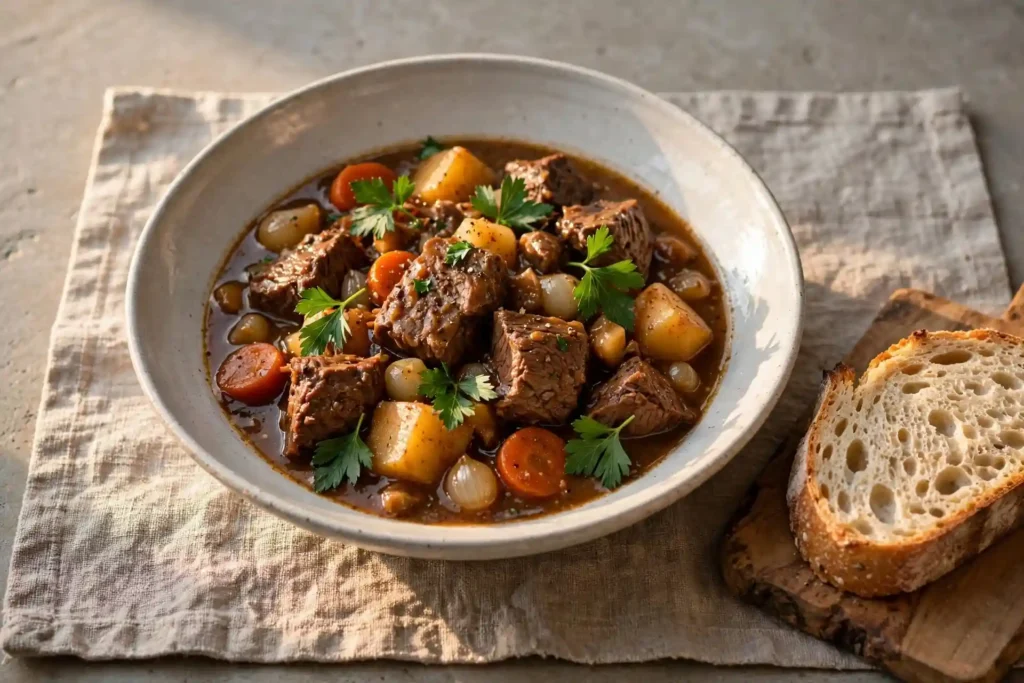
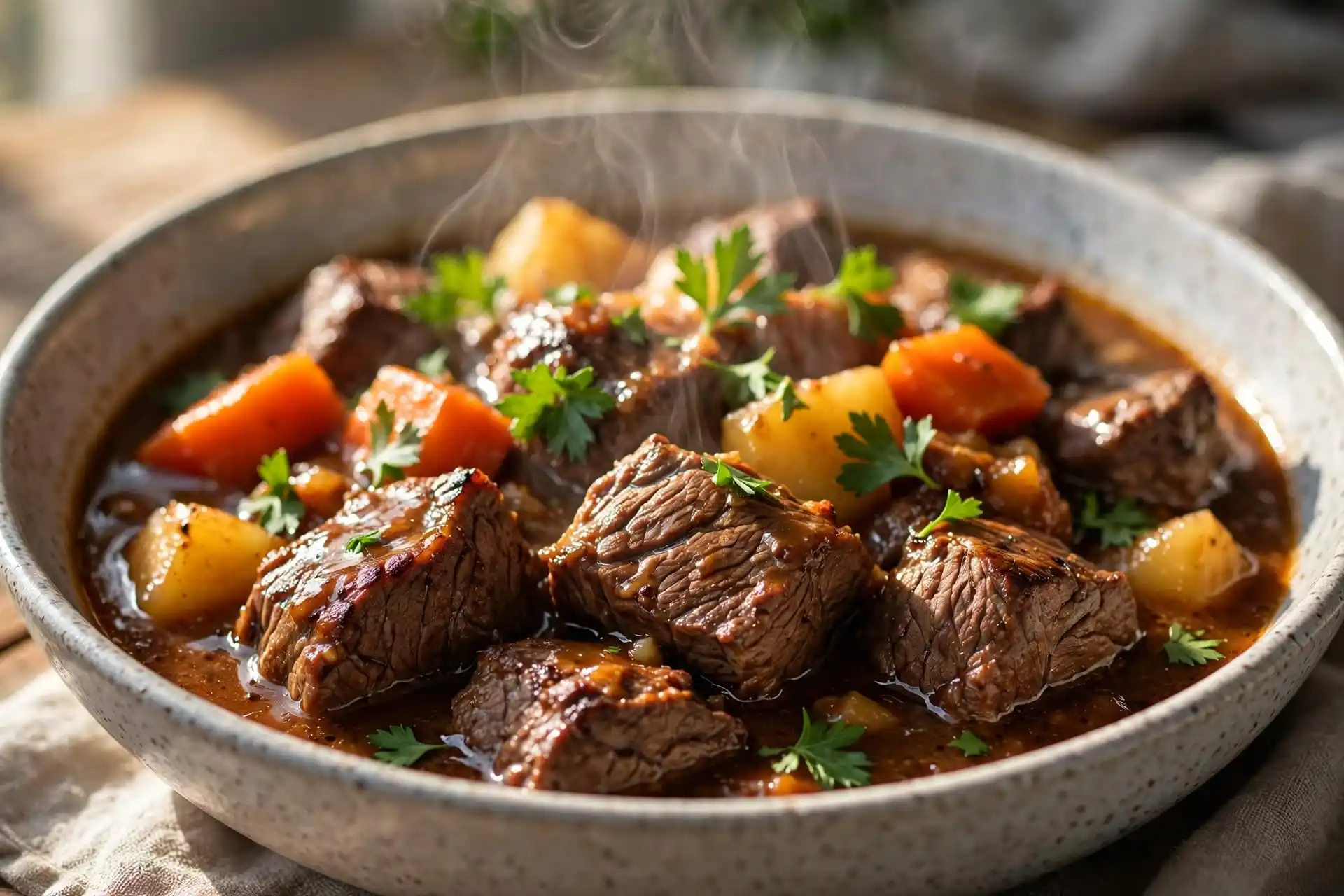
Ladle into bowls and scatter fresh parsley on top.
Why this works: Adding the thickener at the end rather than at the start gives you precise control. Cornstarch added early can become gummy as the liquid reduces.
Key Tips for Best Results
Use chuck, not a lean cut. Sirloin, topside, and round are too lean for a long braise. They lose moisture before the cook time is finished and turn dry and fibrous. Chuck has the connective tissue and intramuscular fat that a two-hour simmer needs to work with. This is not a substitution you can make without affecting the result.
Dry the beef thoroughly before flouring. Pat every surface with paper towels before tossing the cubes in flour. Any moisture left on the meat will steam in the pan instead of browning. The difference between properly dried and undried beef in the pan is visible within 30 seconds.
Keep the simmer at a lazy bubble. The liquid should move slowly with occasional bubbles breaking the surface. A rolling boil tightens the muscle fibers faster than the collagen can convert to gelatin, producing tough meat regardless of how long you cook it. When in doubt, lower the heat.
Common Mistakes to Avoid
Not drying the beef before searing
Wet beef releases steam the moment it hits the oil, dropping the pan temperature and preventing browning. The result is grey, flavourless pieces that contribute no depth to the gravy. Thirty seconds with paper towels before flouring makes a significant difference.
Adding the vegetables at the start
Carrots and potatoes that go in with the beef will be completely broken down and waterlogged by the time the meat is tender. They need 45 to 50 minutes, not two hours. Add them only after the first hour of simmering.
Boiling instead of simmering
High heat does not shorten the time needed to make collagen-rich beef tender. It dries the meat out faster and tightens the muscle fibers. If the lid is rattling, the heat is too high.
Leaving the fond behind
The dark material stuck to the pot after searing is concentrated flavor. If you skip the deglazing step or don’t scrape thoroughly, that flavor stays on the bottom and eventually burns rather than enriching the gravy.
Variations and Substitutions
Slow cooker version. Complete Steps 1 through 5 on the stovetop, then transfer everything to a slow cooker. Cook on low for 7 to 8 hours, adding the vegetables in the last 2 hours. If the gravy needs thickening at the end, transfer the liquid to a small saucepan, bring to a simmer, and stir in the cornstarch slurry.
Mushrooms. Adding 200 g (7 oz) of sliced cremini mushrooms with the onions in Step 3 works well. Cook them until they release their liquid and start to brown before adding the garlic and tomato paste. They add an earthy, savory layer without changing the character of the dish.
No Worcestershire sauce. Mix 1½ tbsp soy sauce with ½ tsp tamarind paste as a direct substitute. The flavor won’t be identical, but it brings a similar savory and slightly tangy quality to the braising liquid.
What to Serve With Beef Stew
Crusty bread. The practical choice. Sourdough or a simple bread roll soaks up the gravy better than anything.
Plain white rice. The gravy coats rice well, and it stretches the recipe further if you need to feed more people than expected.
Mashed potatoes. A scoop underneath turns this into a heavier, more filling meal. Works particularly well on cold evenings.
Egg noodles. Ladle the stew over cooked egg noodles for a different texture. This works well with reheated leftovers.
Simple green salad. A sharp vinaigrette dressing cuts through the richness of the stew if you want something lighter alongside it.
Storage, Reheating, and Make-Ahead
Fridge: Cool the stew to room temperature before transferring to an airtight container. It keeps well for up to 4 days. The flavor is noticeably better on day two as the gelatin from the meat continues to dissolve into the liquid.
Freezer: Cool completely before freezing. Store in airtight, freezer-safe containers or heavy-duty zip-lock bags for up to 3 months. Note that potato texture changes after freezing; Yukon Gold holds up better than most varieties, but if you plan to freeze the batch, consider leaving the potatoes out and adding them fresh when you reheat. Thaw overnight in the refrigerator.
Reheat: Transfer to a saucepan and warm over medium-low heat, stirring occasionally. Add a splash of beef stock or water if the gravy has thickened too much during storage. Heat until steaming throughout. Reheating in a microwave is possible but uneven heat can toughen the beef; stovetop is preferable.
Make-ahead: The full stew can be made up to 2 days in advance and refrigerated. Reheat gently as described above.
Allergen Information
Contains gluten (plain flour in the beef coating). To make this gluten-free, substitute with a certified gluten-free plain flour blend or rice flour for the coating, and use the cornstarch slurry at the end to thicken the gravy.
May contain fish if using a conventional Worcestershire sauce, which contains anchovies. Use a halal-certified version or the soy sauce and tamarind substitute listed in the ingredients.
Contains soy if using the soy sauce substitute. For a soy-free version, use 2 tbsp of coconut aminos in place of the soy sauce.
Nutrition Information
Per serving — recipe makes 6 servings
| Nutrient | Per Serving |
| Calories | 420 kcal |
| Protein | 38 g |
| Total Carbohydrates | 28 g |
| Dietary Fiber | 4 g |
| Total Sugars | 5 g |
| Total Fat | 15 g |
| Saturated Fat | 5 g |
| Sodium | 650 mg |
| Cholesterol | 95 mg |
| Potassium | 850 mg |
| Vitamin C | 18 mg |
| Iron | 4 mg |
Nutritional values are estimates only and may vary based on specific ingredients, brands, and portion sizes used. For precise dietary needs, consult a registered dietitian.
Frequently Asked Questions
What cut of beef is best for beef stew?
Beef chuck is the right choice. It comes from the shoulder, which carries plenty of connective tissue and intramuscular fat. Both break down over two hours of slow braising, producing tender meat and a gravy that thickens naturally. Lean cuts like topside, sirloin, or round don’t have enough fat to stay moist under prolonged heat. They go dry and stringy before becoming tender.
Why is my beef stew meat still tough after cooking?
Two likely reasons: the heat was too high, or it needed more time. Tough beef in a braise usually means the collagen hasn’t fully converted to gelatin yet. If it’s still chewy at the 1.5-hour mark, give it another 30 minutes at a low simmer and check again. Raising the temperature to speed things up will make it worse, not better.
Can I make beef stew ahead of time?
Yes, and it genuinely improves with time. The gelatin from the meat continues to dissolve into the liquid overnight, and the flavors settle and deepen. Make it up to 2 days in advance, store in an airtight container in the fridge, and reheat gently on the stovetop.
How do I thicken beef stew without cornstarch?
Mash two or three of the cooked potato pieces and stir them back into the pot; the starch thickens the gravy without adding anything foreign. Alternatively, simmer the stew uncovered for 10 to 15 minutes at a low heat until it reduces to your preferred consistency.
Can I freeze beef stew?
Yes. Cool it fully before freezing in airtight containers for up to 3 months. The beef and carrots freeze well. Potatoes can become slightly grainy after freezing and thawing, particularly floury varieties. Yukon Gold holds up better, but if texture after freezing matters to you, leave the potatoes out of the portion you plan to freeze.
Can I make beef stew in a slow cooker?
Yes. Sear the beef and build the base on the stovetop through Step 5, then transfer everything to a slow cooker. Cook on low for 7 to 8 hours, adding vegetables in the last 2 hours. If the gravy needs thickening at the end, ladle the liquid into a saucepan, bring to a simmer, and stir in the cornstarch slurry.
How do I know when the beef is done?
Press two forks against a piece of beef and pull in opposite directions. It should come apart without resistance. At that point, the connective tissue has fully converted to gelatin and the meat is ready. If there’s any spring-back or chewiness, cover the pot and give it another 20 to 30 minutes.
Conclusion
The most important moments in this beef stew recipe are the sear at the start and the patience during the simmer. Get both of those right and the rest follows naturally. The stew scales well too. Double the batch, cool half completely, and freeze it in individual portions. Reheated from frozen with a splash of stock, it is a proper meal that took almost no effort the second time around.
Classic Beef Stew Recipe with Tender, Falling-Apart Meat
Ingredients
Method
- Pat the beef chuck dry with paper towels. Toss in flour, 1 tsp salt, and black pepper until evenly coated. Shake off excess.
- Heat 2 tbsp oil in a large Dutch oven over high heat until shimmering. Sear the beef in two batches for 3 to 4 minutes per side until deeply browned. Transfer to a plate.
- Reduce heat to medium. Add remaining 1 tbsp oil and cook the onion for 5 to 6 minutes until softened and edges are barely beginning to color.
- Add garlic and tomato paste. Cook for 2 minutes, stirring constantly, until the paste darkens to a deep brick color.
- Pour in 250 ml of stock and scrape up all the browned bits from the base of the pot. Cook for 1 minute.
- Add remaining stock, water, Worcestershire sauce, paprika, ½ tsp salt, thyme, and bay leaves. Stir to combine.
- Return the seared beef to the pot. Bring to a boil, reduce heat to low, cover, and simmer for 1 hour.
- Add carrots, potatoes, and celery. Cover and continue simmering for 45 to 50 minutes, until vegetables are fork-tender and beef pulls apart with two forks.
- Remove thyme sprigs and bay leaves. Stir in cornstarch slurry if needed and simmer uncovered for 5 minutes until gravy thickens. Taste and adjust salt. Serve garnished with fresh parsley.