
Soft Pumpkin Cookies with Cream Cheese Glaze
In This Article
- Why You’ll Love These Pumpkin Cookies
- Ingredients You’ll Need
- For the Cookie Dough
- For the Cream Cheese Glaze
- Recipe Timing
- How to Make Pumpkin Cookies — Step by Step
- Common Mistakes to Avoid
- Variations and Substitutions
- What to Serve with Pumpkin Cookies
- Storage, Reheating and Make-Ahead
- Allergen Information
- Nutrition Information
- Frequently Asked Questions
- Pumpkin Cookies — Recipe Card
Most pumpkin cookies baked at home end up tasting more like a muffin top than an actual cookie. The texture is soft and cakey, the bottom is flat, and the pumpkin flavor gets lost somewhere under too much cinnamon. It happens because canned pumpkin puree carries a lot of water, and most recipes skip the step of removing some of it before mixing.
A lot of bakers make their first batch in October, pull them from the oven at 12 minutes, and discover that the cookies look done but collapse into a dense, muffin-like texture as they cool. The recipe isn’t usually the problem. The puree is.
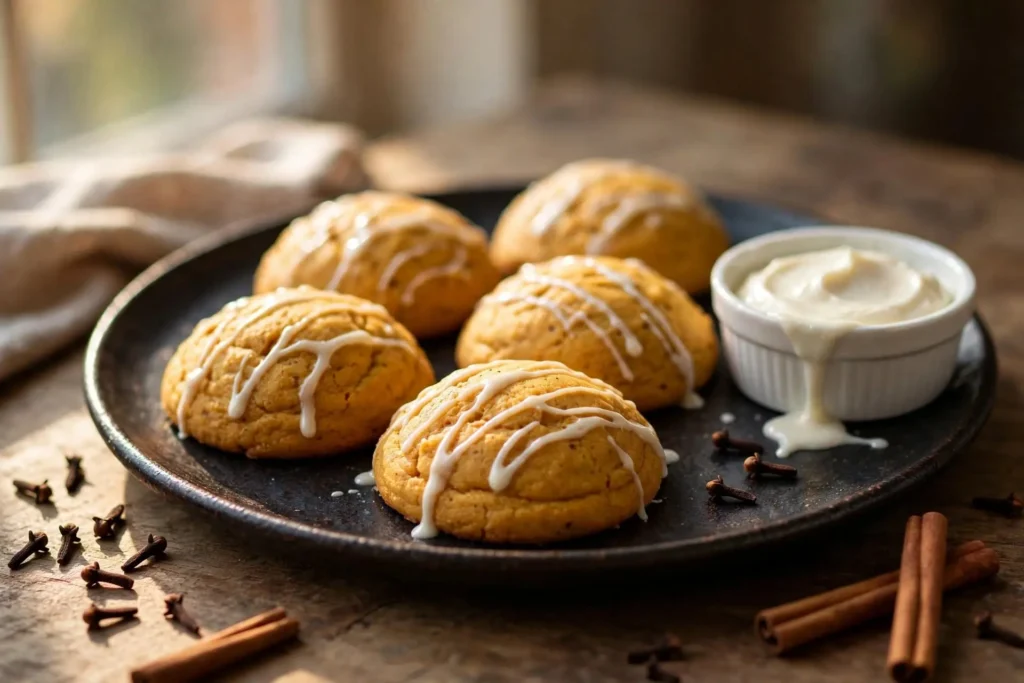
This version fixes that with two small steps: blotting the puree on paper towels before it goes into the dough, and chilling the dough for 30 minutes before baking. Both take less than five minutes of active work. The cream cheese glaze uses three ingredients and takes under five minutes. The result is a thick, spiced cookie with a slight tang from the glaze that keeps the whole thing from being one-note sweet.
Why You’ll Love These Pumpkin Cookies
- Real canned pumpkin puree — not extract, not flavoring, not pumpkin pie filling
- Blotted puree and chilled dough produce thick cookies with a natural dome instead of flat discs
- A four-spice blend — cinnamon, nutmeg, ginger, and cloves — balanced rather than cinnamon-heavy
- Cream cheese glaze with three ingredients adds tang without making these taste like a frosted cake
- Stays soft and fresh for three days at room temperature, or freeze for up to two months
Ingredients You’ll Need
For the Cookie Dough
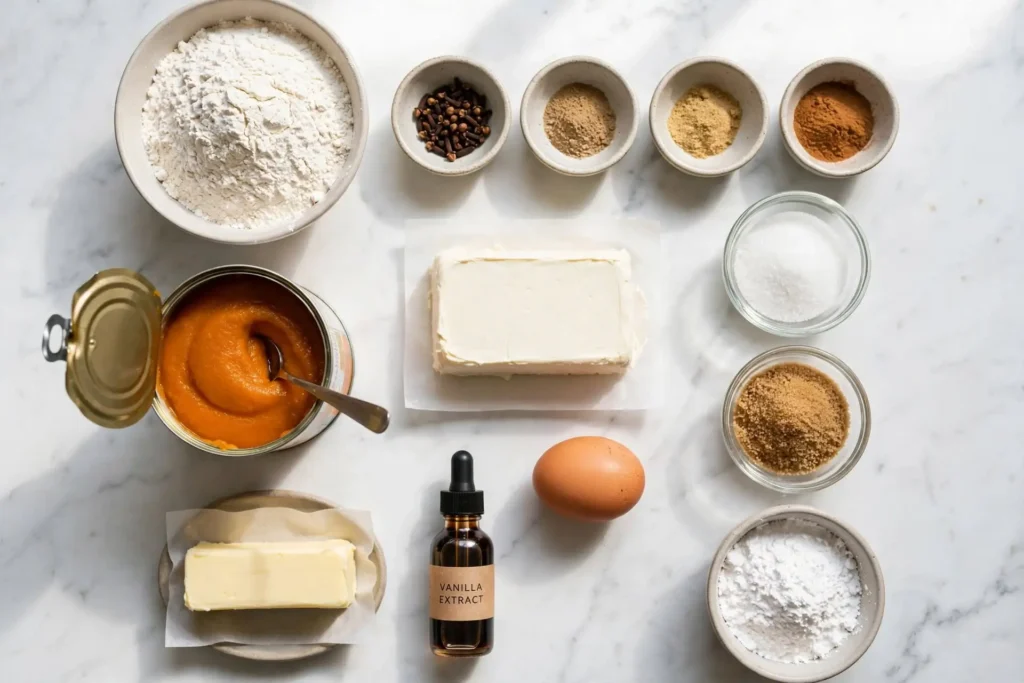
- 2 cups (250g) all-purpose flour, spooned and leveled — dense packing adds too much flour and makes the cookies dry; spoon into the cup and level with a knife
- 1 tsp baking soda
- 1/2 tsp baking powder
- 1/2 tsp fine sea salt — balances the sweetness and brings out the spices
- 1 1/2 tsp ground cinnamon
- 1/2 tsp ground nutmeg
- 1/4 tsp ground ginger
- 1/4 tsp ground cloves
- 1/2 cup (113g) unsalted butter, softened to room temperature — cold butter will not cream properly; remove from the fridge at least 45 minutes before you start
- 3/4 cup (150g) granulated sugar
- 1/2 cup (100g) brown sugar, packed — the molasses in brown sugar adds a subtle depth and moisture that plain white sugar cannot replicate
- 1 large egg, room temperature
- 1 tsp halal-certified vanilla extract or vanilla paste — standard vanilla extract often contains alcohol; halal-certified versions are widely available
- 1 cup (245g) canned pumpkin puree, blotted dry — plain puree only, not pumpkin pie filling, which contains added sugar and pre-mixed spices that will throw off the flavor and texture
For the Cream Cheese Glaze
- 4 oz (113g) full-fat block cream cheese, softened — spreadable or low-fat cream cheese makes the glaze runny; use block only
- 1 cup (120g) powdered sugar, sifted
- 2 to 3 tbsp whole milk — add one tablespoon at a time to control the thickness
- 1/2 tsp halal-certified vanilla extract
Recipe Timing
| Timing Element | Duration |
| Prep Time | 15 minutes |
| Chill Time | 30 minutes |
| Cook Time | 25 minutes |
| Total Time | 70 minutes |
Servings: 24 cookies | Difficulty: Easy | Cuisine: American | Course: Dessert
How to Make Pumpkin Cookies — Step by Step
Step 1: Blot the pumpkin puree
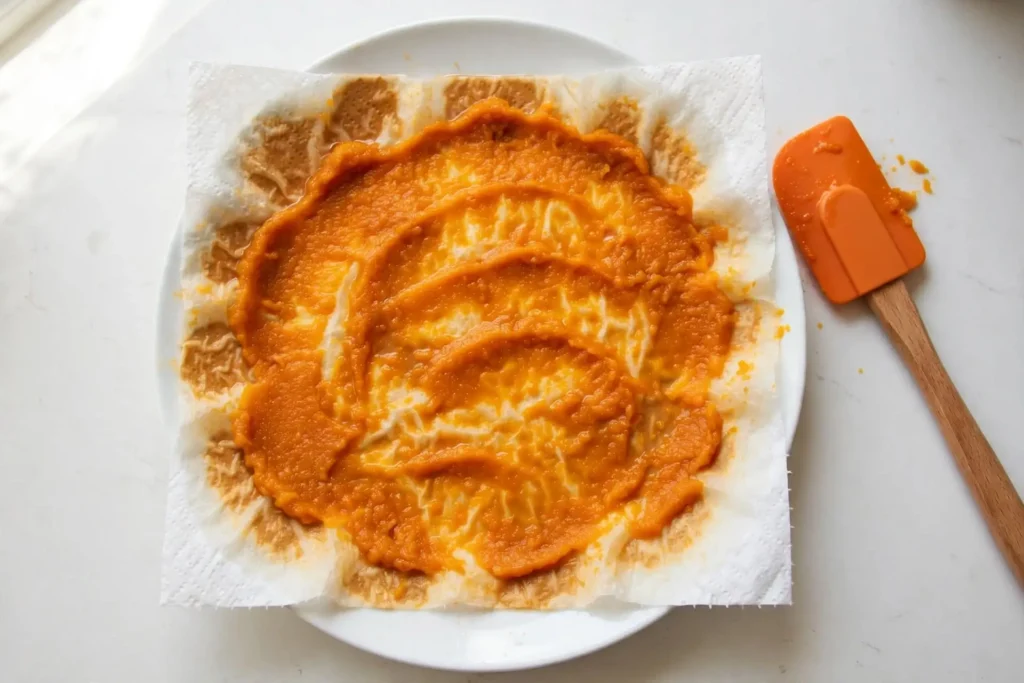
Spread 1 cup of pumpkin puree in a thin layer across a plate lined with paper towels. Lay two more sheets of paper towel on top and press firmly. Leave for 5 minutes, pressing the towels down two or three times. The towels will absorb a visible amount of orange liquid.
Why this works: Canned pumpkin puree is approximately 90% water by weight. Removing some of that moisture before mixing keeps the dough firm enough to hold its shape in the oven. Skip this step and the cookies steam from the inside, producing the cakey, muffin-like texture most people try to avoid.
Step 2: Combine the dry ingredients
Whisk together the flour, baking soda, baking powder, salt, cinnamon, nutmeg, ginger, and cloves in a medium bowl. Whisk for 30 seconds until the spices are evenly distributed and no streaks of one color remain. Set aside.
Step 3: Cream the butter and sugars
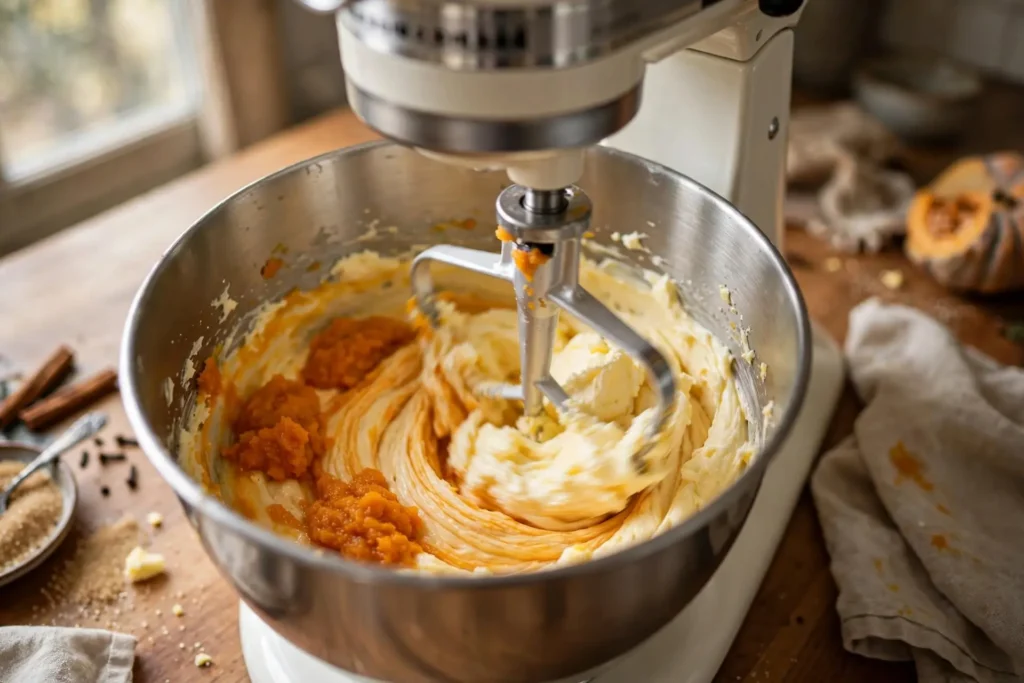
Beat the softened butter, granulated sugar, and brown sugar in a large bowl using a hand mixer or stand mixer fitted with the paddle attachment. Mix on medium speed for a full 3 minutes, until the mixture turns pale yellow and looks noticeably fluffy.
Why this works: Creaming for 3 minutes traps air in the butter, which gives the cookies a lighter texture. One minute of mixing looks similar but hasn’t actually created enough air. The change in color — from yellow to pale cream — is your cue that you’ve gone far enough.
Step 4: Add the egg and vanilla
Add the egg and vanilla extract. Mix on medium speed for 1 minute until fully incorporated and the mixture looks smooth. Scrape down the sides and bottom of the bowl with a spatula before continuing.
⚠️ Food Safety: Use a room-temperature egg. A cold egg dropped into creamed butter can cause the fat to seize and the mixture to curdle, affecting the final texture. If your egg is straight from the fridge, place it in a bowl of warm water for 5 minutes before cracking. According to the USDA safe egg handling guidelines, eggs should reach a safe internal temperature during baking; this recipe bakes at 175°C (350°F), which satisfies that requirement.
Step 5: Mix in the pumpkin
Add the blotted pumpkin puree to the bowl. Mix on low speed for about 30 seconds, just until no orange streaks remain. The batter may look slightly curdled at this stage — that is normal and corrects itself once the flour goes in.
Step 6: Add the flour mixture
Add the flour mixture to the wet ingredients in two additions, mixing on low speed after each just until no dry streaks remain. Stop the mixer the moment the flour is incorporated. Two seconds too long here makes a difference.
Why this works: Overmixing after adding flour develops gluten, which tightens the dough and produces cookies with a tougher, chewier texture than they should have. Stopping at just-combined keeps the gluten relaxed and the texture soft.
Step 7: Chill the dough
Cover the bowl tightly with plastic wrap and refrigerate for 30 minutes. This step is non-negotiable for pumpkin cookies — room-temperature dough spreads before it sets in the oven. The dough can also be chilled overnight, which deepens the spice flavor.
Step 8: Preheat and prep
Preheat the oven to 175°C (350°F). Line two baking sheets with parchment paper. Give the oven at least 10 to 15 minutes to fully preheat. A partially heated oven lets the butter melt before the edges set, causing the cookies to spread flat.
Step 9: Scoop and bake
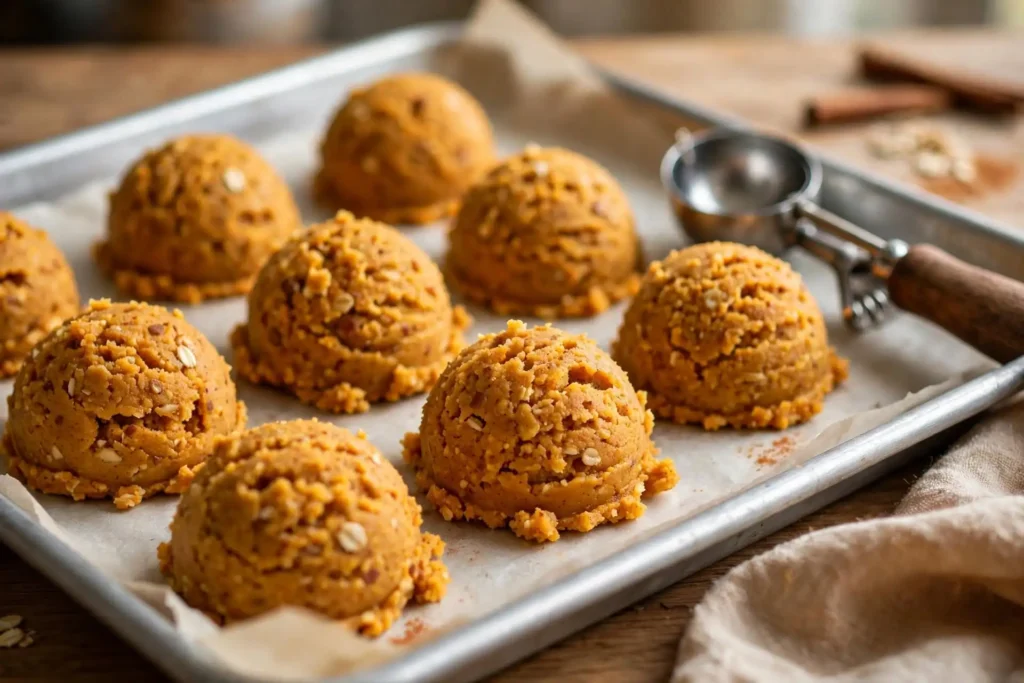
Use a medium cookie scoop (about 1.5 tablespoons) to portion the chilled dough onto the prepared baking sheets, spacing each ball about 5 cm (2 inches) apart. Bake one sheet at a time on the middle rack for 12 to 13 minutes, until the edges look set and matte and the surface has lost its sheen. The centers should still look slightly underbaked when you pull them out — they firm up on the hot pan as they cool.
Step 10: Cool completely
Let the cookies rest on the baking sheet for 5 minutes, then transfer to a wire rack. Cool for at least 20 minutes before adding the glaze. Adding cream cheese to a warm cookie causes the glaze to thin and run off the sides completely.
Step 11: Make and apply the cream cheese glaze
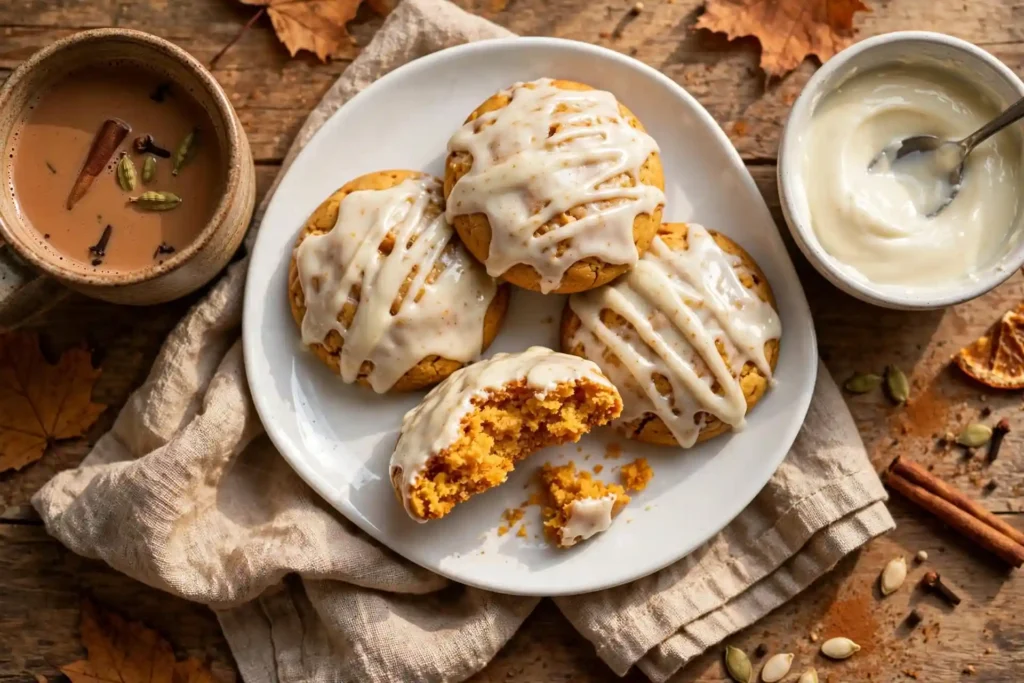
Beat the softened cream cheese in a bowl until completely smooth with no lumps. Add the sifted powdered sugar and vanilla extract and mix on low until combined. Add milk one tablespoon at a time, mixing between each addition, until the glaze drizzles slowly and steadily off the back of a spoon. Drizzle or spread over the fully cooled cookies and allow 10 minutes to set.
Common Mistakes to Avoid
These are the most common places where pumpkin cookies go wrong — most of them preventable in less than a minute.
Using pumpkin pie filling instead of plain pumpkin puree
Pumpkin pie filling contains added sugar, pre-mixed spices, and thickeners. Swapping it in here makes the dough too sweet, throws off the spice balance, and changes the moisture content. Check the label before opening the tin — the only ingredient should be pumpkin, or pumpkin and water.
Skipping the dough chill
Warm dough spreads before the cookies set. The difference between 30 minutes in the fridge and baking immediately is the difference between thick, domed cookies and flat, crispy-edged ones. Chilling overnight only improves the flavor.
Overbaking
These cookies look underdone when they are actually finished. Pull them when the edges are set and matte but the center still looks soft. If the whole surface appears fully dry and firm in the oven, they are already overdone and will be dry once cooled.
Glazing before the cookies have cooled
Cream cheese softens quickly with heat. Even five extra minutes of cooling time can prevent the glaze from running off entirely. Twenty minutes on the wire rack brings the cookies to a temperature where the glaze will hold.
Variations and Substitutions
Add semi-sweet chocolate chips
Fold 3/4 cup (130g) of semi-sweet chocolate chips into the dough at the end of Step 6. Dark or bittersweet chocolate works better here than milk chocolate — the lower sweetness level balances the spice blend without competing with it.
Brown butter glaze instead of cream cheese
Cook 4 tablespoons of unsalted butter in a small saucepan over medium heat, stirring constantly, for 3 to 4 minutes until it turns golden and smells nutty. Whisk in 1 cup of sifted powdered sugar and 1 to 2 tablespoons of milk until smooth. The nutty, slightly caramel quality pairs naturally with the pumpkin and cinnamon.
Dairy-free version
Replace the butter with a firm, block-style plant-based butter (not the spreadable kind, which has too much water). For the glaze, use dairy-free block cream cheese. The texture is very close to the original; the cookies may be marginally more crumbly.
What to Serve with Pumpkin Cookies
Masala chai is the natural pairing here — the cardamom, ginger, and cloves in the tea echo the spice blend in the cookies without competing with the cream cheese glaze.
A scoop of vanilla ice cream next to a barely warm cookie turns this into a simple plated dessert. The glaze softens slightly from the cold and pools around the bottom in a way that works well visually and in flavor.
For a dessert spread, these sit naturally alongside dark chocolate bark or a bowl of roasted salted pistachios. Both provide enough contrast in texture and bitterness to make guests reach for both.
Storage, Reheating and Make-Ahead
Room temperature: Unglazed cookies keep in an airtight container for up to 3 days and stay soft. Once glazed, eat within 24 hours at room temperature.
Fridge: Glazed cookies keep in an airtight container in the fridge for up to 5 days. The cream cheese glaze stays set and the texture stays soft.
Freezer (baked, unglazed): Place cooled cookies in a single layer on a baking sheet and freeze for 1 hour before transferring to a zip-lock freezer bag. Freeze for up to 2 months. Thaw at room temperature for 1 hour, then glaze before serving.
Freezer (raw dough): Scoop the dough into balls and freeze on a parchment-lined baking sheet for 1 hour, then transfer to a freezer bag. Bake from frozen at 175°C (350°F) for 14 to 15 minutes.
Make-ahead: The dough keeps covered in the fridge for up to 48 hours before baking. Make the cream cheese glaze fresh on the day you bake — it does not hold well in the fridge for extended periods.
Allergen Information
Contains gluten (all-purpose flour). To make this gluten-free, substitute a 1:1 gluten-free baking flour blend. The cookies will be slightly denser.
Contains dairy (butter, cream cheese). To make this dairy-free, use a firm block-style plant-based butter and dairy-free cream cheese.
Contains eggs. To make this egg-free, substitute with a flax egg: mix 1 tablespoon of ground flaxseed with 3 tablespoons of water, rest for 5 minutes until it gels, then add in place of the egg. The cookies will be slightly denser and may spread a little more.
If you are cooking for someone with a diagnosed food allergy, consult a registered dietitian or allergist before serving.
Nutrition Information
Per serving (1 cookie with cream cheese glaze):
| Nutrient | Per Serving |
| Calories | 155 kcal |
| Protein | 2 g |
| Total Carbohydrates | 24 g |
| Dietary Fiber | 1 g |
| Total Sugars | 15 g |
| Total Fat | 6 g |
| Saturated Fat | 3.5 g |
| Sodium | 115 mg |
| Cholesterol | 22 mg |
| Potassium | 45 mg |
Nutritional values are estimates only and may vary based on specific ingredients, brands, and portion sizes used. For precise dietary needs, consult a registered dietitian.
Frequently Asked Questions
Why do my pumpkin cookies come out cakey?
The most common cause is undrained pumpkin puree. Canned pumpkin contains a high proportion of water, and adding it straight from the tin pushes the dough into batter territory — the cookies essentially steam from the inside and rise like a muffin rather than spreading and setting like a cookie. Blotting the puree on paper towels for 5 minutes removes enough liquid to change the baked texture noticeably.
Can I use fresh pumpkin instead of canned?
Fresh pumpkin works, but the results depend on the variety and how thoroughly you drain it. Canned pumpkin is consistent in moisture and neutral in flavor, which is why it performs reliably in baking. If you use fresh, roast the pumpkin, let it cool, and then drain the cooked flesh through a cheesecloth-lined colander for at least 30 minutes before measuring.
Do pumpkin cookies need to be refrigerated?
Unglazed cookies are fine at room temperature in an airtight container for up to 3 days. Once you add the cream cheese glaze, refrigerate them — the dairy in the cream cheese needs it. Glazed cookies keep in the fridge for up to 5 days.
Can I freeze pumpkin cookies?
Freeze them unglazed: cool completely, freeze flat on a baking sheet until solid, then transfer to a freezer bag for up to 2 months. Glaze after thawing at room temperature for 1 hour. Pre-glazed cookies can also be frozen but the cream cheese texture changes slightly after thawing.
How do I get pumpkin cookies to hold their shape and not spread flat?
Chilling the dough is the main factor. Cold dough holds its structure long enough in the oven for the edges to set before the butter fully melts. Make sure the oven is completely preheated before the first tray goes in — a partially heated oven is one of the most common reasons cookies spread flat even when the dough was properly chilled.
Can I make pumpkin cookies without eggs?
A flax egg works here: mix 1 tablespoon of ground flaxseed with 3 tablespoons of water and let it sit for 5 minutes before using. The cookies will be slightly more dense and may spread a little more during baking, but the pumpkin spice flavor is not affected.
What frosting goes well with pumpkin cookies?
Cream cheese glaze is the most natural pairing — the tang cuts the sweetness of the brown sugar in the dough. A maple glaze (powdered sugar, a tablespoon of pure maple syrup, and a splash of milk) also works well. If you want to keep it simple, a dusting of powdered sugar is enough.
Conclusion
The two steps that most pumpkin cookie recipes skip — blotting the puree and chilling the dough — account for most of the texture problems people run into. Fix those two things and the rest of this recipe is very straightforward.
One practical note on the glaze: add the milk half a tablespoon at a time. It thins the cream cheese faster than you would expect, and the difference between a drizzle and a puddle happens within one extra tablespoon.
Soft Pumpkin Cookies with Cream Cheese Glaze
Ingredients
Method
- Spread pumpkin puree onto a paper-towel-lined plate. Cover with more paper towels, press firmly, and blot for 5 minutes until no more liquid seeps into the towels.
- Whisk flour, baking soda, baking powder, salt, cinnamon, nutmeg, ginger, and cloves in a medium bowl until evenly combined. Set aside.
- Beat softened butter, granulated sugar, and brown sugar on medium speed for 3 minutes until pale and fluffy.
- Add egg and vanilla extract. Mix on medium speed for 1 minute until smooth. Scrape down the bowl.
- Add blotted pumpkin puree. Mix on low for 30 seconds until no orange streaks remain.
- Add the flour mixture in two additions, mixing on low after each just until no dry streaks remain. Do not overmix.
- Cover the bowl and refrigerate for 30 minutes.
- Preheat oven to 175°C (350°F). Line two baking sheets with parchment paper.
- Scoop 1.5-tablespoon portions onto prepared sheets, spacing 5 cm (2 inches) apart. Bake one sheet at a time on the middle rack for 12 to 13 minutes, until edges are set and matte. Centers should look slightly underdone.
- Rest on the pan for 5 minutes, then transfer to a wire rack. Cool completely, at least 20 minutes, before glazing.
- Beat cream cheese until smooth. Add sifted powdered sugar and vanilla; mix until combined. Add milk one tablespoon at a time until the glaze drizzles slowly off a spoon. Drizzle or spread over cooled cookies.