
Classic Creamy Coleslaw Recipe You’ll Make on Repeat
In This Article
- Why You’ll Love This Coleslaw Recipe
- Ingredients You’ll Need
- For the Coleslaw
- For the Dressing
- Recipe Timing
- How to Make Coleslaw — Step by Step
- Key Tips for Best Results
- Common Mistakes to Avoid
- Variations & Substitutions
- What to Serve With Coleslaw
- Storage & Make-Ahead
- Allergen & Dietary Disclosure
- Nutrition Information
- Frequently Asked Questions
- Coleslaw Recipe — Recipe Card
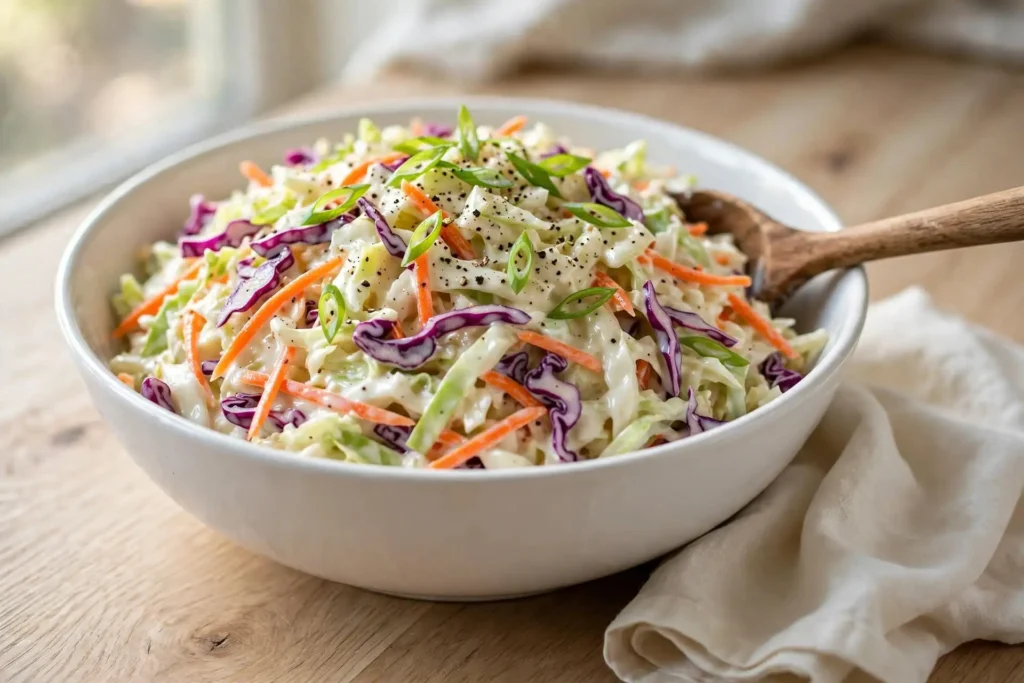
Most coleslaw goes watery within an hour of sitting on the table. At barbecues, it’s usually the dish that starts crisp and comes back to the kitchen as a bowl of thin white liquid with limp vegetables floating in it. This coleslaw recipe fixes that with one step most people skip: salting the cabbage before the dressing ever touches it.
The salt draws out the excess moisture before the dressing gets anywhere near it. Squeeze it out, then combine the vegetables with the dressing, and what’s left holds together for two full days. The dressing itself is a simple mix of mayo, apple cider vinegar, Dijon, and celery seeds, but it’s balanced so it tastes almost too sharp before chilling, then lands exactly right after 30 minutes in the fridge.
Once you understand the two things that make it work, the pre-salting and the chill time, this becomes the kind of coleslaw recipe you stop looking up.
Why You’ll Love This Coleslaw Recipe
- The dressing clings to every strand rather than pooling at the bottom of the bowl
- Red and green cabbage together give it contrast in both color and texture
- The celery seed dressing tastes distinctly different from anything store-bought
- It holds its crunch for up to two days in the fridge, which most coleslaw doesn’t manage
- Works inside fish tacos, piled on a burger, or as a straightforward side with no modifications
Ingredients You’ll Need
For the Coleslaw
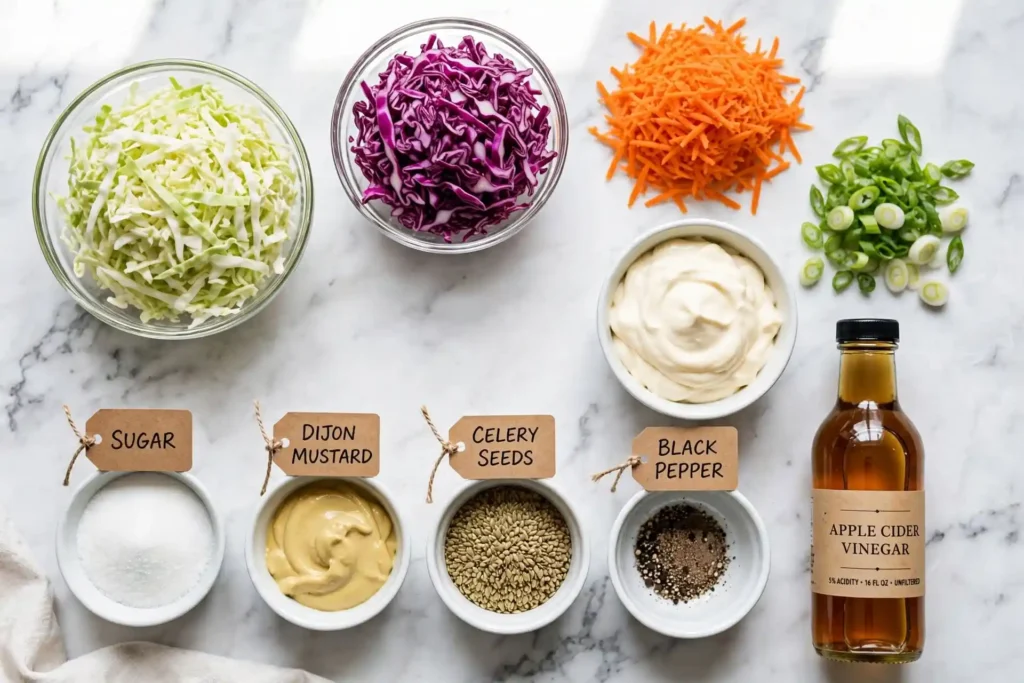
- 3 cups green cabbage, shredded thin (about 1/4 of a medium head) — the base of the slaw; thin shreds absorb dressing evenly while thick chunks stay underdressed and bland
- 1 cup red cabbage, shredded thin — adds a slightly peppery note and a color contrast that makes the bowl look less flat
- 2 medium carrots, grated (approximately 1 cup) — adds natural sweetness and crunch that balances the acidity in the dressing
- 3 green onions, thinly sliced — mild enough not to overpower, but present enough to add a fresh note
- 1/2 tsp fine salt — used only in the pre-salting step; draws moisture out of the cabbage before dressing is added
For the Dressing
- 1/2 cup mayonnaise, full-fat — full-fat holds up properly when mixed with vinegar; reduced-fat breaks down faster and thins the dressing
- 2 tbsp apple cider vinegar — fruity and sharp without being harsh; gives the dressing a rounder edge than white vinegar
- 1 tbsp white sugar — balances the acidity; the slaw should taste tangy rather than sweet
- 1 tsp Dijon mustard — adds depth and helps emulsify the dressing so it clings rather than slides
- 1/2 tsp celery seeds — the flavor that makes this taste like actual coleslaw and not a dressed salad; don’t substitute
- 1/4 tsp freshly ground black pepper
Recipe Timing
| Timing Element | Duration |
| Prep Time | 15 minutes |
| Cook Time | 0 minutes |
| Chill Time | 30 minutes |
| Total Time | 45 minutes |
Servings: 6 | Difficulty: Easy | Cuisine: American | Course: Side Dish
How to Make Coleslaw — Step by Step
Step 1: Pre-salt the cabbage
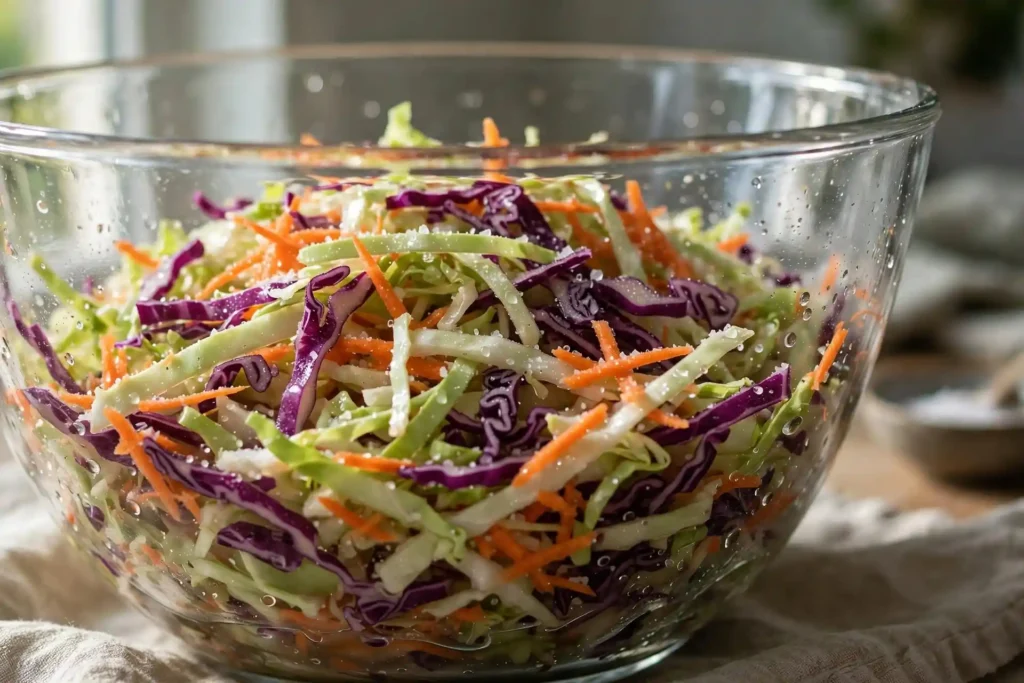
Add the shredded green cabbage, red cabbage, and grated carrots to a large bowl. Sprinkle the fine salt evenly over the vegetables and toss well to distribute. Set the bowl aside at room temperature for 10 minutes.
Why this works: Salt draws water out of the cabbage cells through osmosis. Removing this water before the dressing is added keeps the slaw from going watery as it sits. This step is the single biggest difference between coleslaw that holds overnight and coleslaw that floods its container within the hour.
After 10 minutes, transfer the vegetables to a clean kitchen towel or a piece of cheesecloth. Pull the edges together and squeeze firmly until no more liquid comes out. You should extract roughly 2 to 3 tablespoons of water.
⚠️ Food Safety: Keep shredded vegetables refrigerated until ready to dress. FDA food safety guidelines{target=”_blank”} advise against leaving perishable foods at room temperature for more than 2 hours. In warm weather above 32°C (90°F), that window drops to 1 hour.
Step 2: Make the dressing
In a separate medium bowl, whisk together the mayonnaise, apple cider vinegar, sugar, Dijon mustard, celery seeds, and black pepper. Keep whisking until the dressing is completely smooth with no visible streaks of mustard.
Why this works: Mixing the dressing in a separate bowl before it contacts the vegetables lets you taste and correct the balance first. The mustard also needs proper whisking to emulsify into the mayo rather than sitting in clumps.
Taste the dressing now. It should be quite tangy, almost sharper than you want the finished coleslaw to be. That sharpness softens once it contacts the cabbage and again during the 30-minute rest. A dressing that tastes balanced at this stage will taste flat after chilling.
[INTERNAL LINK: “homemade salad dressings from scratch” → salad dressing recipes category page]
Step 3: Combine and toss
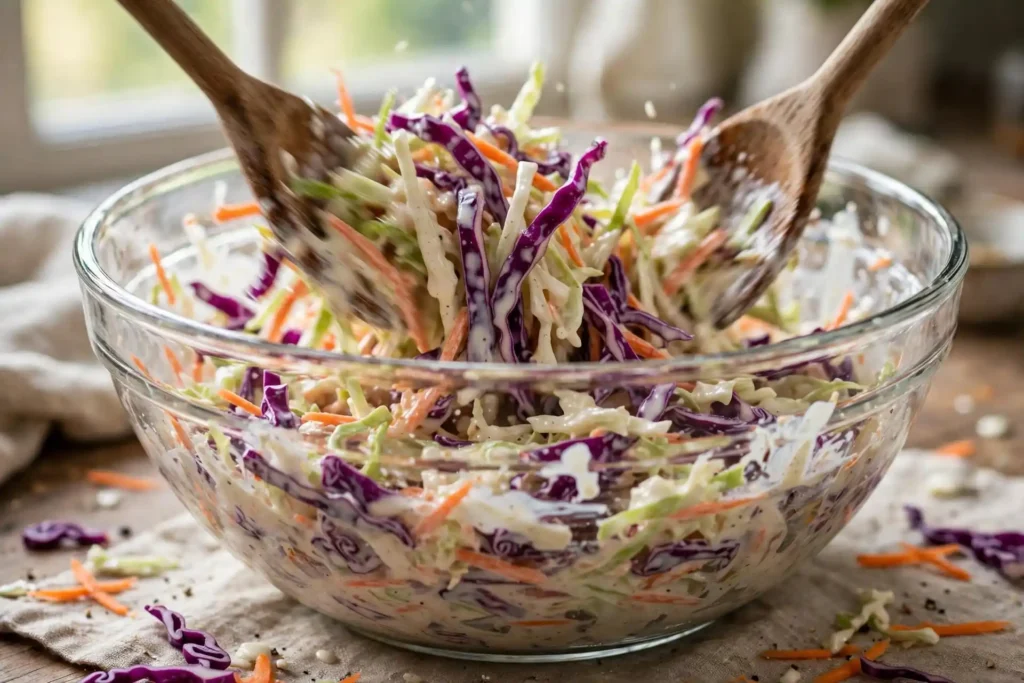
Transfer the squeezed vegetables and sliced green onions into the dressing bowl. Toss with tongs or two large spoons until every strand is coated. Work through the whole bowl rather than just the surface layer.
Why this works: Thorough tossing at this stage means you won’t need to add more dressing after chilling, which is the most common reason a coleslaw recipe ends up too wet and loose.
Step 4: Chill, then serve
Cover the bowl with plastic wrap or a lid and refrigerate for at least 30 minutes. Before serving, taste once more and adjust with a pinch of salt, a small splash of vinegar, or a bit of extra sugar based on your preference.
Why this works: Chilling gives the celery seeds time to soften and release their flavor into the dressing. The sugar finishes dissolving fully, and the cabbage absorbs just enough dressing to taste integrated rather than just coated on the surface.
Key Tips for Best Results
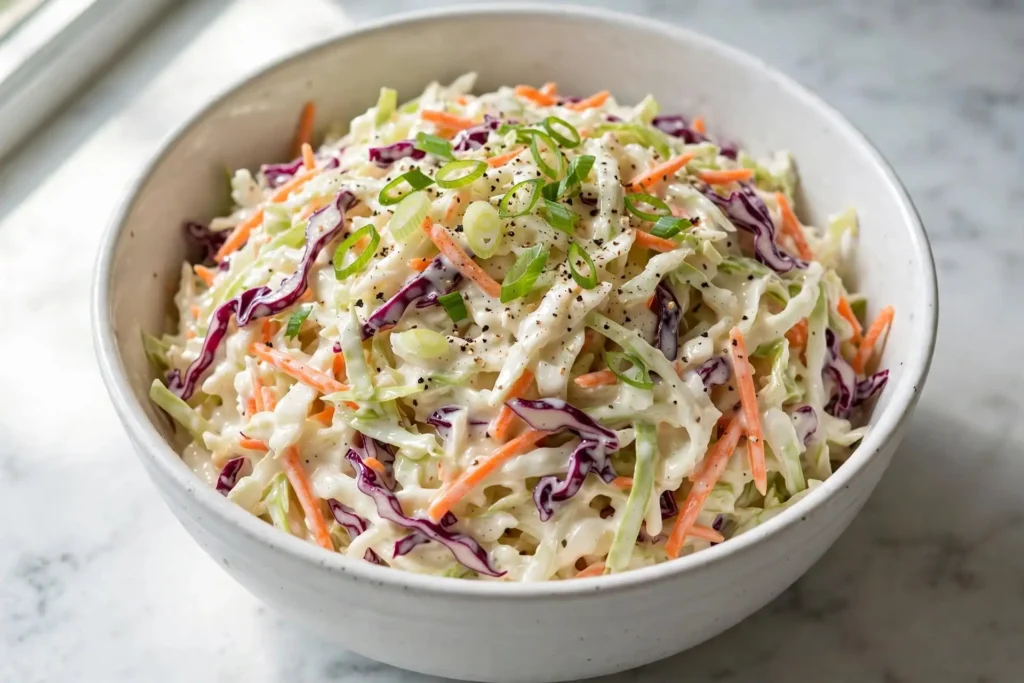
Shred the cabbage as thin as you can. Aim for shreds no thicker than 2mm. Thick pieces don’t absorb the dressing evenly, which gives the bowl an inconsistent texture where some bites taste underdressed and others taste too heavy. A mandoline or a sharp chef’s knife both work well.
Don’t second-guess the dressing balance after chilling. If you tasted it before mixing and it was right (sharp, slightly too acidic), leave it alone after the chill. Acid mellows noticeably over 30 minutes, the celery seeds give off more flavor, and adding more anything at that point usually overshoots.
For a crowd, double the vegetable quantities but make the dressing in two separate batches. Doubling the dressing in one bowl makes it harder to whisk evenly and harder to taste for balance. Two smaller batches give you more precision.
Common Mistakes to Avoid
Skipping the pre-salting step
Without salting first, the cabbage releases its water slowly into the dressing over time. Within an hour, you end up with thin dressing at the bottom of the bowl and bland, soggy vegetables above it. Ten minutes of salting followed by a firm squeeze prevents this entirely.
Using reduced-fat mayonnaise
Low-fat mayo contains more water and reacts differently with vinegar than full-fat does. The dressing won’t cling properly, thins faster, and can start to separate before serving. This coleslaw recipe specifically works with full-fat mayo, not a light version.
Serving immediately after mixing
Freshly mixed coleslaw has raw celery seeds that haven’t released their flavor, and the acidity tastes sharp and unbalanced. The 30-minute minimum chill changes the flavor meaningfully. It’s not a suggestion.
Over-dressing from the start
The quantities listed are calibrated for the amount of vegetable in this recipe. If you add more dressing thinking the bowl looks dry, the vegetables continue releasing moisture during chilling and you end up with a wet, overdressed result. Add extra only in small increments and only after tasting.
Variations & Substitutions
No-mayo version
Replace the mayonnaise with 3 tbsp extra virgin olive oil and increase the apple cider vinegar to 3 tbsp total. Add 1 tsp of honey in place of the sugar. The dressing becomes lighter and sharper. It holds up better at outdoor tables in warm weather because it won’t turn the way a mayo-based dressing does.
Greek yogurt version
Replace half the mayonnaise with full-fat plain Greek yogurt. The tang increases slightly, the calories drop, and the texture stays creamy enough that most people won’t notice the swap. This works well as a topping for spiced wraps or alongside grilled meats. [INTERNAL LINK: “grilled chicken recipe” → grilled chicken recipes category]
Fennel and green apple addition
Thinly slice half a small fennel bulb and cut one green apple into matchsticks. Add both to the cabbage before dressing. The fennel gives a subtle anise note and the apple adds extra crunch and tartness. This version pairs specifically well with fish and seafood dishes.
What to Serve With Coleslaw
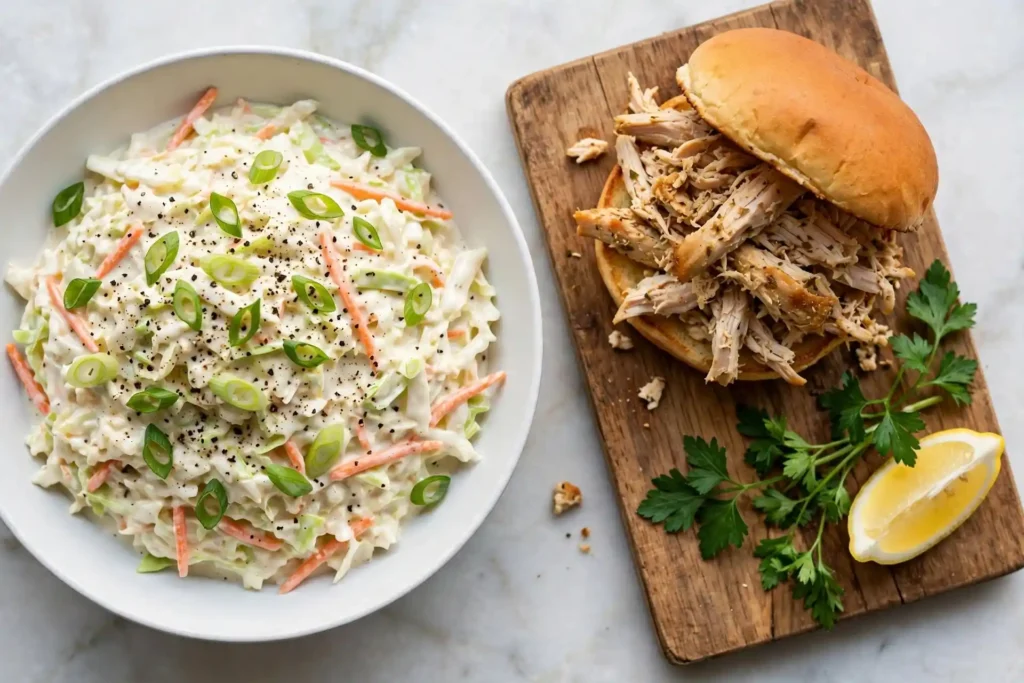
Pulled beef or chicken sandwiches. The creamy dressing cuts through rich, fatty meat. Pile the coleslaw directly on the bun rather than serving it separately.
Grilled corn on the cob. Cold, creamy coleslaw alongside hot grilled corn is a contrast that works well on the same plate.
Fish tacos. This coleslaw recipe goes inside the taco rather than beside it. Use the no-mayo olive oil version if the taco already has a creamy sauce.
Biryani or spiced rice. A cold, tangy side next to a heavily spiced rice dish cools the palate between bites in a way that plain salad doesn’t. [INTERNAL LINK: “easy biryani recipe” → biryani recipe page]
Beef burgers. Both as a topping and as a side. The tang in the dressing balances the richness of a well-seasoned beef patty without competing with it.
Storage & Make-Ahead
Fridge: Store in an airtight container for up to 3 days. Stir before serving and pour off any pooled liquid at the bottom. Day two is often the best, when the flavors have fully merged and the celery seeds have had time to bloom.
Freezer: Not recommended. Mayonnaise-based dressings separate when frozen. After thawing, the fat and liquid divide into a greasy, watery mess that can’t be brought back together.
Make-ahead: Shred the cabbage and grate the carrots up to 24 hours in advance. Store the dry vegetables in an airtight container in the fridge. Mix the dressing separately in a jar and refrigerate it. Combine them 30 to 45 minutes before serving, let the bowl rest in the fridge, then serve. The result is identical to making it fully fresh on the day.
Allergen & Dietary Disclosure
Contains eggs (from mayonnaise). To make this egg-free, substitute with a vegan mayo made from aquafaba or sunflower oil. Most vegan mayo brands behave identically in this dressing.
Contains mustard. To make this mustard-free, omit the Dijon and add an extra teaspoon of apple cider vinegar in its place to maintain the acidity level.
To make this allergen-free for any specific dietary need, verify every ingredient brand label for cross-contamination risks. Never assume an ingredient is safe based on its generic name alone.
Nutrition Information
Per serving, based on 6 servings from the exact ingredient quantities listed above:
| Nutrient | Per Serving |
| Calories | 175 kcal |
| Protein | 1 g |
| Total Carbohydrates | 10 g |
| Dietary Fiber | 2 g |
| Total Sugars | 6 g |
| Total Fat | 15 g |
| Saturated Fat | 2 g |
| Sodium | 215 mg |
| Cholesterol | 8 mg |
| Potassium | 210 mg |
| Vitamin C | 28 mg |
| Calcium | 38 mg |
| Iron | 0.5 mg |
“Nutritional values are estimates only and may vary based on specific ingredients, brands, and portion sizes used. For precise dietary needs, consult a registered dietitian.”
Frequently Asked Questions
How do I stop my coleslaw from going watery?
Salt the shredded cabbage for 10 minutes before adding any dressing, then squeeze the released moisture out firmly using a kitchen towel. This removes the water before it can dilute the dressing. Using full-fat mayonnaise also matters: reduced-fat versions contain more water and thin out faster when they contact vinegar.
Can I make this coleslaw recipe the night before?
Yes. This coleslaw recipe actually improves overnight in the fridge. The celery seeds soften and release more flavor into the dressing, the acidity mellows, and everything integrates. Stir it well before serving and pour off any liquid that has settled at the bottom of the container.
What’s the best vinegar for coleslaw dressing?
Apple cider vinegar gives the most balanced result: fruity, sharp, and not overpowering. White wine vinegar is a solid second option. Plain white vinegar works but delivers a sharper, less rounded finish, particularly noticeable on the first day before the flavors have had time to mellow.
How long does homemade coleslaw last in the fridge?
Up to 3 days in an airtight container. After that, the cabbage becomes too soft and the dressing starts to thin even with proper pre-salting. Days two and three are both fine as long as you drain any pooled liquid and toss before serving.
Can you freeze coleslaw?
Not this version. Mayonnaise breaks when frozen and thawed: the fat and water separate into an unrecoverable texture. The no-mayo olive oil variation doesn’t freeze well either because the vegetables turn soft. Make only as much as you’ll use within 3 days.
What can I use instead of mayo in this coleslaw recipe?
Full-fat plain Greek yogurt replaces mayo almost 1:1 and gives a tangier, slightly lighter result. Vegan mayo works identically in the dressing and is the better option if you need the recipe to be egg-free. Both substitutes hold up well through the chilling period.
How do I shred cabbage thinly without a mandoline?
Halve the cabbage and cut out the core. Place the cut side flat on your board and use a sharp chef’s knife to slice across in thin strips. Short, controlled strokes give you more accuracy than long sawing motions. A sharp knife produces cleaner, more even shreds than a dull one regardless of technique.
Conclusion
This coleslaw recipe is straightforward once you understand why each step exists. The pre-salting is the step that makes or breaks it. Skip it and the dressing thins out within the hour. Do it properly and the slaw stays crisp and well-dressed for two days. That single step is the difference between coleslaw you’re proud of and coleslaw you apologize for. Make the dressing taste sharp before it touches the cabbage. Give the whole thing at least 30 minutes in the fridge. Those two things do most of the work.
Classic Creamy Coleslaw Recipe
Ingredients
Method
- Combine shredded green cabbage, red cabbage, and grated carrots in a large bowl. Sprinkle with fine salt and toss to coat. Set aside for 10 minutes.
- Transfer the salted vegetables to a clean kitchen towel and squeeze firmly until no more liquid comes out.
- In a separate bowl, whisk together mayonnaise, apple cider vinegar, sugar, Dijon mustard, celery seeds, and black pepper until smooth. Taste and adjust if needed — it should taste quite tangy at this stage.
- Add the squeezed vegetables and sliced green onions to the dressing bowl. Toss thoroughly until every strand is coated.
- Cover and refrigerate for at least 30 minutes. Taste once more, adjust seasoning, and serve.