Protein Pancakes: Fluffy, High-Protein, Ready in 25 Minutes
In This Article
- Why You’ll Love These Protein Pancakes
- Ingredients You’ll Need
- Recipe Timing
- How to Make Protein Pancakes: Step by Step
- Key Tips for Best Results
- Common Mistakes to Avoid
- Variations and Substitutions
- What to Serve With Protein Pancakes
- Storage, Reheating, and Make-Ahead
- Allergen and Dietary Information
- Nutrition Information
- Frequently Asked Questions
- Protein Pancakes: Recipe Card
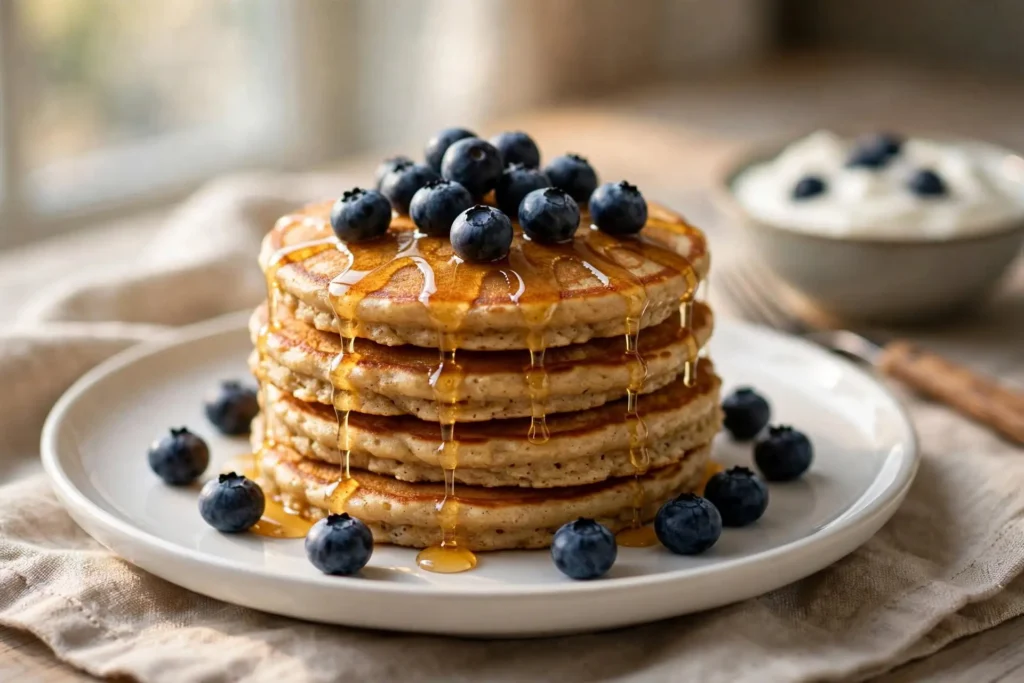
These protein pancakes pack 31 grams of protein per serving without tasting like a chalky gym supplement. The batter uses blended oats, Greek yogurt, eggs, and a scoop of whey protein powder, and it cooks into a soft, thick pancake that holds together properly on a hot griddle.
Most high-protein pancake recipes lean too hard on protein powder and end up rubbery. This version balances the powder with Greek yogurt and eggs, which keeps the texture fluffy and the flavor clean.
If you’ve been making the same two-ingredient banana-egg pancakes on rotation, this gives you something more filling and better structured.
Why You’ll Love These Protein Pancakes
- 31g of protein per serving with no protein shake aftertaste
- Batter blends in under 5 minutes, one blender to wash
- Works with vanilla whey or any unflavored protein powder
- Freezes well for weekday meal prep
- No banana required, so the flavor stays neutral and the texture doesn’t turn gummy
Ingredients You’ll Need
For the batter (serves 2, makes 8 small pancakes):
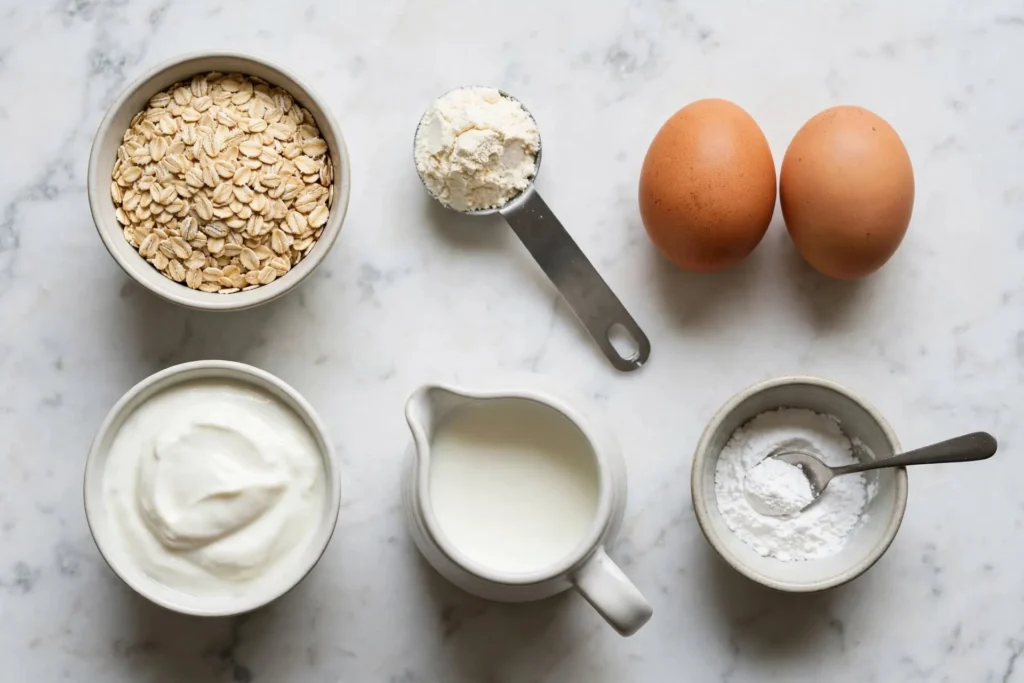
- 1/2 cup (45g) rolled oats, blended to flour — blending oats fresh gives a finer, lighter texture than buying pre-made oat flour, which varies in grind size
- 1 scoop (30g) vanilla whey protein powder — use a halal-certified whey protein and check the label for pork-derived gelatin, which appears in some blended supplements
- 1 tsp baking powder — creates the lift that keeps these from cooking flat
- 1/4 tsp fine salt
- 2 large eggs — whole eggs bind the batter and the fat in the yolk prevents the pancakes from drying out during cooking
- 1/2 cup (125g) plain full-fat Greek yogurt — full-fat gives the batter structure; low-fat versions have higher water content and make the center wet
- 3 tbsp whole milk
- 1 tsp vanilla extract
- 1 tsp neutral oil or butter per batch (for the pan)
Recipe Timing
| Timing Element | Duration |
| Prep Time | 10 minutes |
| Cook Time | 15 minutes |
| Total Time | 25 minutes |
Servings: 2 | Difficulty: Easy | Cuisine: American | Course: Breakfast
How to Make Protein Pancakes: Step by Step
Step 1: Blend the oat flour
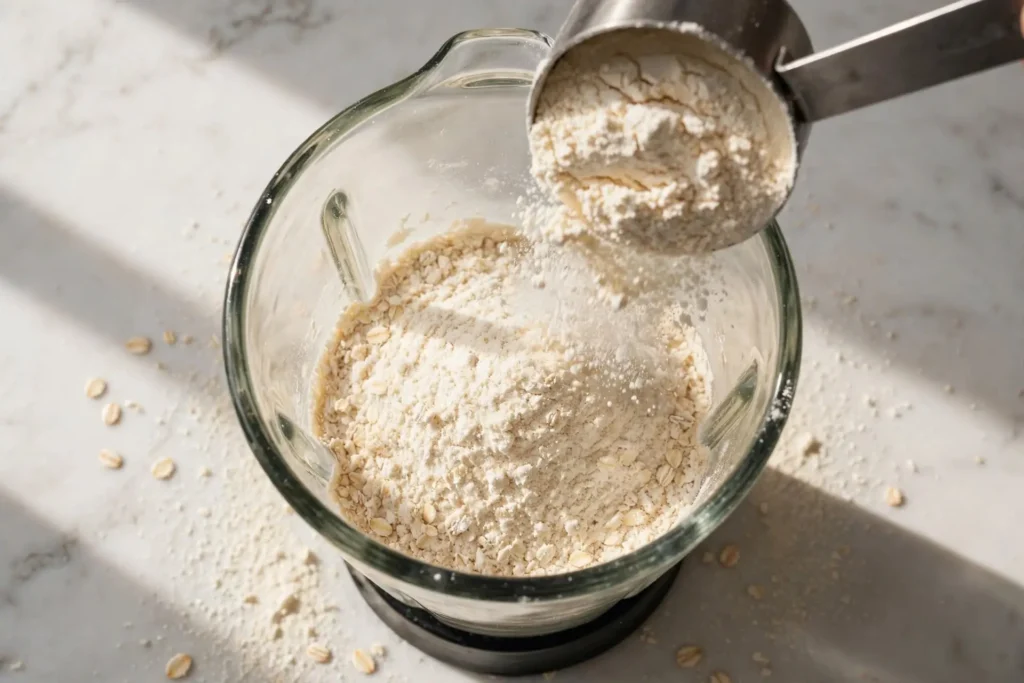
Add the rolled oats to a blender. Pulse for 20-25 seconds until you have a fine flour with no large pieces remaining.
Why this works: Blending oats fresh gives better control over the texture. Pre-made oat flour absorbs liquid inconsistently depending on the brand, which makes it harder to predict batter thickness.
Step 2: Add the dry ingredients
Add the protein powder, baking powder, and salt directly into the blender with the oat flour. Pulse twice to combine evenly.
Step 3: Add the wet ingredients
Add the eggs, Greek yogurt, milk, and vanilla extract to the blender. Blend on low for 15-20 seconds until smooth. The batter should be slightly thicker than standard pancake batter but still pourable.
Why this works: Combining everything in one blender pass minimizes overmixing. Overworked batter activates the gluten structure in the oats and the proteins in the powder too early, which is the main reason protein pancakes turn rubbery.
Step 4: Rest the batter
Let the batter sit uncovered for 3-5 minutes. Small bubbles should appear on the surface by the time you start cooking.
Why this works: The baking powder begins reacting with the liquid during the rest. Pancakes cooked from batter that went straight from blender to pan are noticeably flatter.
⚠️ Food Safety: This batter contains raw eggs. Do not taste the uncooked batter, and make sure every pancake is fully cooked through before serving.
Step 5: Heat the pan
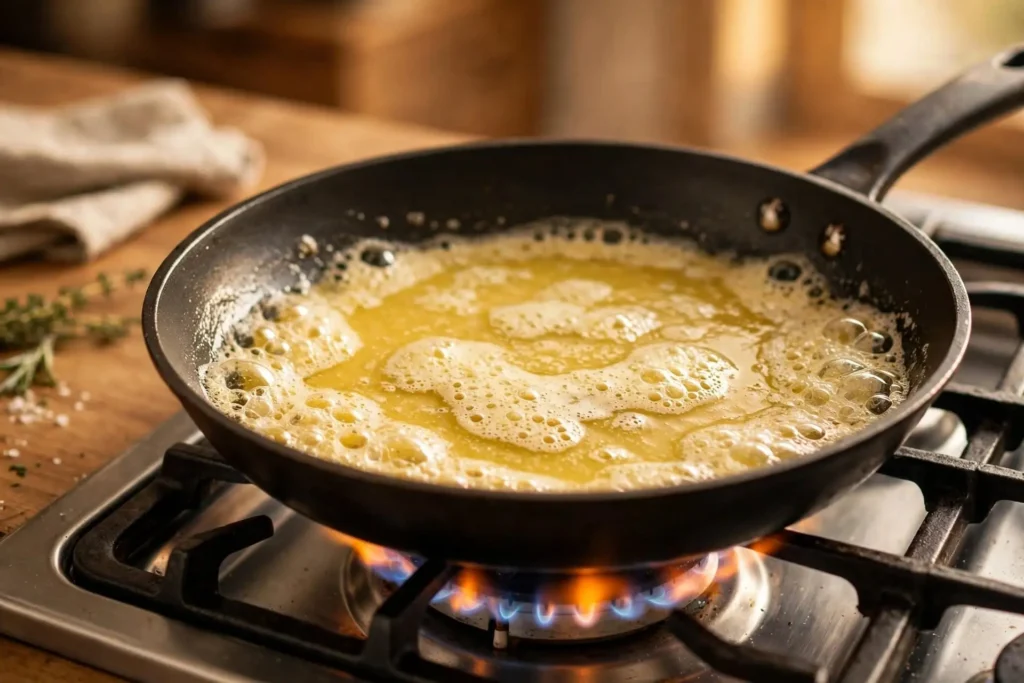
Place a non-stick skillet or griddle over medium heat. Add 1 tsp of oil or butter. Let it heat until the butter stops foaming, or until a drop of water flicked onto the surface evaporates within 1-2 seconds.
Step 6: Cook the protein pancakes
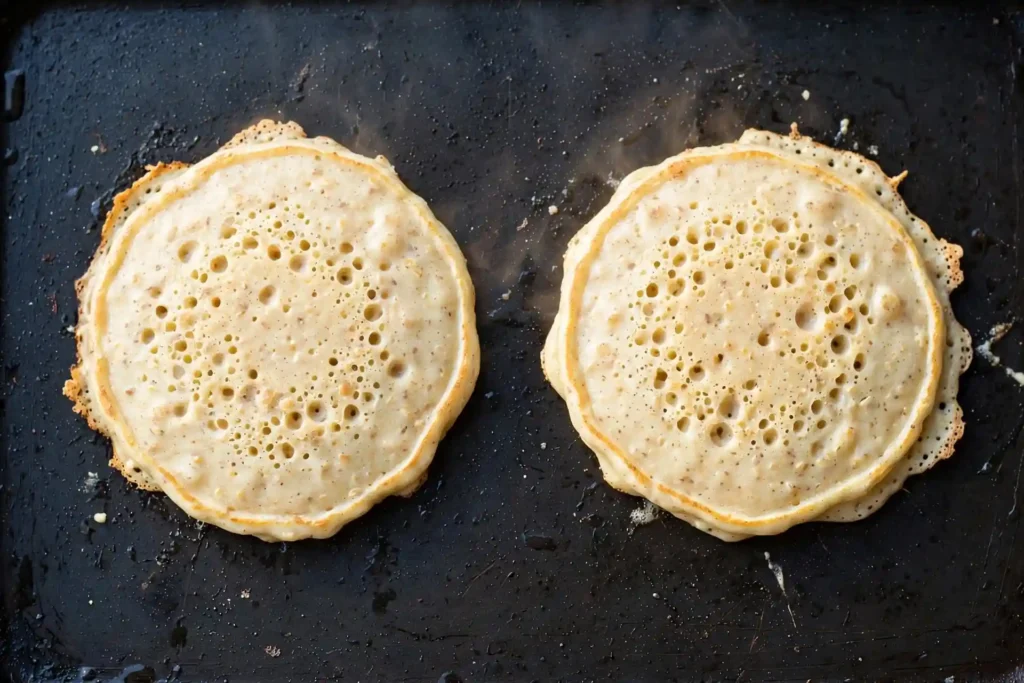
Pour roughly 3 tablespoons of batter per pancake onto the pan, spacing them at least 3cm apart. Cook for 2-3 minutes until the edges look set and 3-4 bubbles have broken open on the surface and stayed open.
Flip once with a thin spatula. Cook for another 90 seconds until the bottom is golden brown and the center springs back when pressed gently with a fingertip. If it leaves a dent, give it 30 more seconds.
Why this works: The bubble signal is more reliable than timing alone. The bubbles tell you the batter is structurally set enough to hold together through the flip. Flipping before that point is why pancakes fall apart.
⚠️ Food Safety: Ensure the center of each pancake is fully cooked through before serving. Undercooked batter containing raw eggs should not be consumed.
Key Tips for Best Results
Use full-fat Greek yogurt. Low-fat versions have a higher water content, which thins the batter and leaves the center wet even when the edges look done. Full-fat gives the batter the body it needs.
Keep the heat at medium, not medium-high. Protein powder contains more sugar than regular flour, and it scorches faster. If your first pancake comes out dark on the outside before the center sets, drop the heat a notch and wait 60 seconds before adding the next round.
Don’t adjust the batter if it thickens in the bowl. Oat flour keeps absorbing liquid after blending. If you add more milk to thin it out, the pancakes spread too wide and cook unevenly. Pour it as-is.
Common Mistakes to Avoid
Mistake 1: Flipping too early
Why it happens: The surface still looks wet after 90 seconds, so the instinct is to check by attempting a flip.
How to avoid it: Wait for 3-4 bubbles to break open and stay open. Slide the spatula under without lifting. If there’s resistance, the pancake needs another 30-60 seconds.
Mistake 2: Using too much protein powder
Why it happens: The assumption that more protein powder equals more protein in the pancake, so people add an extra scoop.
How to avoid it: One scoop (30g) per batch of 8 pancakes is the correct ratio. More than that and the batter seizes up during cooking, turning dense regardless of technique.
Mistake 3: Over-blending
Why it happens: A smooth batter looks like the goal, so the blender runs longer than necessary.
How to avoid it: 15-20 seconds on low is enough. A few small lumps from the oat flour are fine and will not be noticeable in the finished pancake.
Variations and Substitutions
Without protein powder: Replace the whey protein with 2 extra tablespoons of Greek yogurt and 1 tablespoon of ground flaxseed. The protein per serving drops to around 18g, but the texture stays comparable.
Plant-based version: Swap the whey protein for a pea or rice-based vanilla protein powder, use oat milk instead of whole milk, and replace the Greek yogurt with a thick coconut yogurt. Plant-based protein powders absorb more liquid, so add 1-2 extra tablespoons of oat milk if the batter seems very thick.
Cottage cheese swap: Blend 1/2 cup of full-fat cottage cheese until completely smooth before adding it to the blender. It works almost identically to Greek yogurt, with a slightly milder flavor and nearly identical protein content.
What to Serve With Protein Pancakes
- Fresh berries and a spoonful of Greek yogurt on top — the yogurt adds more protein and the tartness cuts through any sweetness from the protein powder
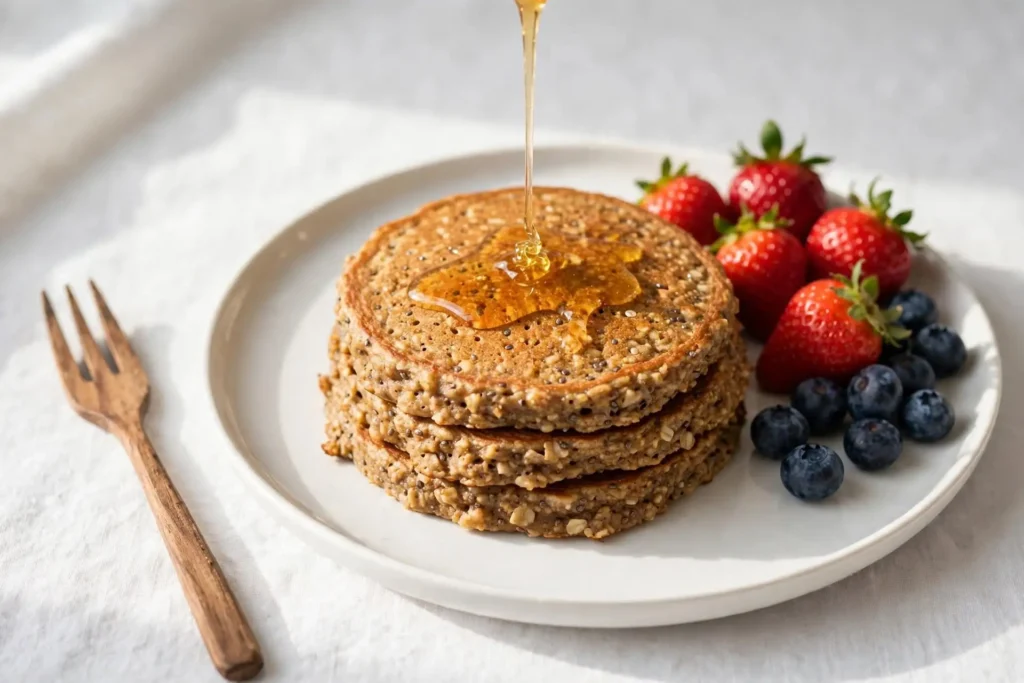
- A drizzle of honey or pure maple syrup, kept light since the pancakes are already dense and filling on their own
- Sliced banana and a pinch of cinnamon for a sweeter, more substantial breakfast
- Almond or peanut butter spread directly on each pancake instead of syrup — it pairs better with the vanilla flavor than a fruit topping does
- A small handful of chopped walnuts scattered on top for texture and to add healthy fats to the meal
Storage, Reheating, and Make-Ahead
Fridge: Store cooled pancakes in an airtight container for up to 3 days. Place a small square of parchment paper between each pancake to prevent them from sticking together.
Freezer: Lay the cooked pancakes flat on a baking sheet and freeze for 1 hour until solid. Transfer to a freezer bag or airtight container. They keep for up to 2 months. Thaw overnight in the fridge or reheat directly from frozen in a toaster.
Reheat: Warm in a dry non-stick pan over medium-low heat for 1-2 minutes per side, or in a toaster until heated through. Avoid the microwave if you want to preserve the edges — microwaving makes the outer layer rubbery and the center steamy.
Make-Ahead Batter: The batter keeps in the fridge for up to 12 hours, covered. The oat flour will settle and the batter will thicken slightly. Stir once before using — do not add extra liquid. Pancakes cooked from cold batter may need an additional 30 seconds per side.
Allergen and Dietary Information
Contains dairy (Greek yogurt, whey protein powder, whole milk) and eggs.
Contains gluten (oats). For a gluten-free version, use certified gluten-free rolled oats and a gluten-free protein powder. Standard oats are processed in facilities that handle wheat.
To make this dairy-free: use coconut yogurt, a plant-based protein powder, and oat or almond milk in place of the dairy ingredients. Texture will be slightly softer.
To make this egg-free: replace the 2 eggs with 2 flax eggs (2 tbsp ground flaxseed mixed with 6 tbsp water, rested 5 minutes before using). The pancakes will be slightly more fragile when flipping.
To make this dairy-free or egg-free, try substituting as noted above. Always check individual ingredient labels if cooking for someone with a confirmed allergy.
For reference on general food safety and allergen labeling, see the USDA Food Safety guidelines{target=”_blank”}.
Nutrition Information
Per serving (4 pancakes):
| Nutrient | Per Serving |
| Calories | 300 kcal |
| Protein | 31g |
| Total Carbohydrates | 23g |
| Dietary Fiber | 2g |
| Total Sugars | 3g |
| Total Fat | 9g |
| Saturated Fat | 2g |
| Sodium | 280mg |
| Cholesterol | 190mg |
| Potassium | 300mg |
| Calcium | 150mg |
| Iron | 2mg |
Nutritional values are estimates only and may vary based on specific ingredients, brands, and portion sizes used. For precise dietary needs, consult a registered dietitian.
For general protein intake reference, see NIH dietary protein guidance{target=”_blank”}.
Frequently Asked Questions
Why are my protein pancakes rubbery and dense?
The most common cause is too much protein powder relative to the other ingredients. One scoop (30g) per 8-pancake batch is the correct ratio. Beyond that, the batter seizes during cooking regardless of technique. Over-blending is the second culprit — 15-20 seconds on low is enough; anything longer develops the batter too much.
Can I make protein pancakes without protein powder?
Yes. Replace the single scoop with 2 extra tablespoons of Greek yogurt and 1 tablespoon of ground flaxseed. The protein per serving drops from 31g to roughly 18g, but the texture is actually slightly softer and easier to work with.
What type of protein powder works best?
Vanilla whey concentrate blends smoothly and cooks without scorching. Whey isolate works but produces a slightly drier result. Plant-based protein (pea or rice) absorbs more liquid, so add 1-2 extra tablespoons of milk when using it. Avoid protein powders sweetened with sucralose — it intensifies with heat and can turn bitter in the finished pancake.
Can I freeze protein pancakes?
Yes, and they reheat well. Freeze them flat on a baking sheet for 1 hour first, then transfer to a freezer bag. They keep for 2 months. Reheat in a toaster or dry pan rather than a microwave for best texture.
Why do my protein pancakes fall apart when I flip them?
The flip happened too early. Wait until 3-4 bubbles have broken open and stayed open on the surface and the edges look fully dry. Slide a thin spatula underneath before lifting — if the pancake resists, it needs another 30-60 seconds.
Can I use cottage cheese instead of Greek yogurt?
Yes. Blend 1/2 cup of full-fat cottage cheese until completely smooth before adding it to the batter. The flavor is slightly milder than Greek yogurt, and the finished pancakes are nearly identical in texture. Protein content stays roughly the same.
Can I make the batter ahead of time?
The batter keeps covered in the fridge for up to 12 hours. It will thicken as the oat flour continues absorbing liquid — stir it once before using and don’t thin it with extra milk. Pancakes from cold batter may need 30 extra seconds per side to cook through.
Conclusion
These protein pancakes land at 31g of protein per serving with a texture that doesn’t sacrifice anything to get there. The Greek yogurt and eggs carry most of the structural load, which means the protein powder can stay at a single scoop without pushing the batter into gummy territory. The flip timing is the one thing worth paying attention to — wait for those bubbles, and the rest of the recipe is straightforward. Make a double batch on Sunday and store them flat in the freezer. Breakfast for the week, done.
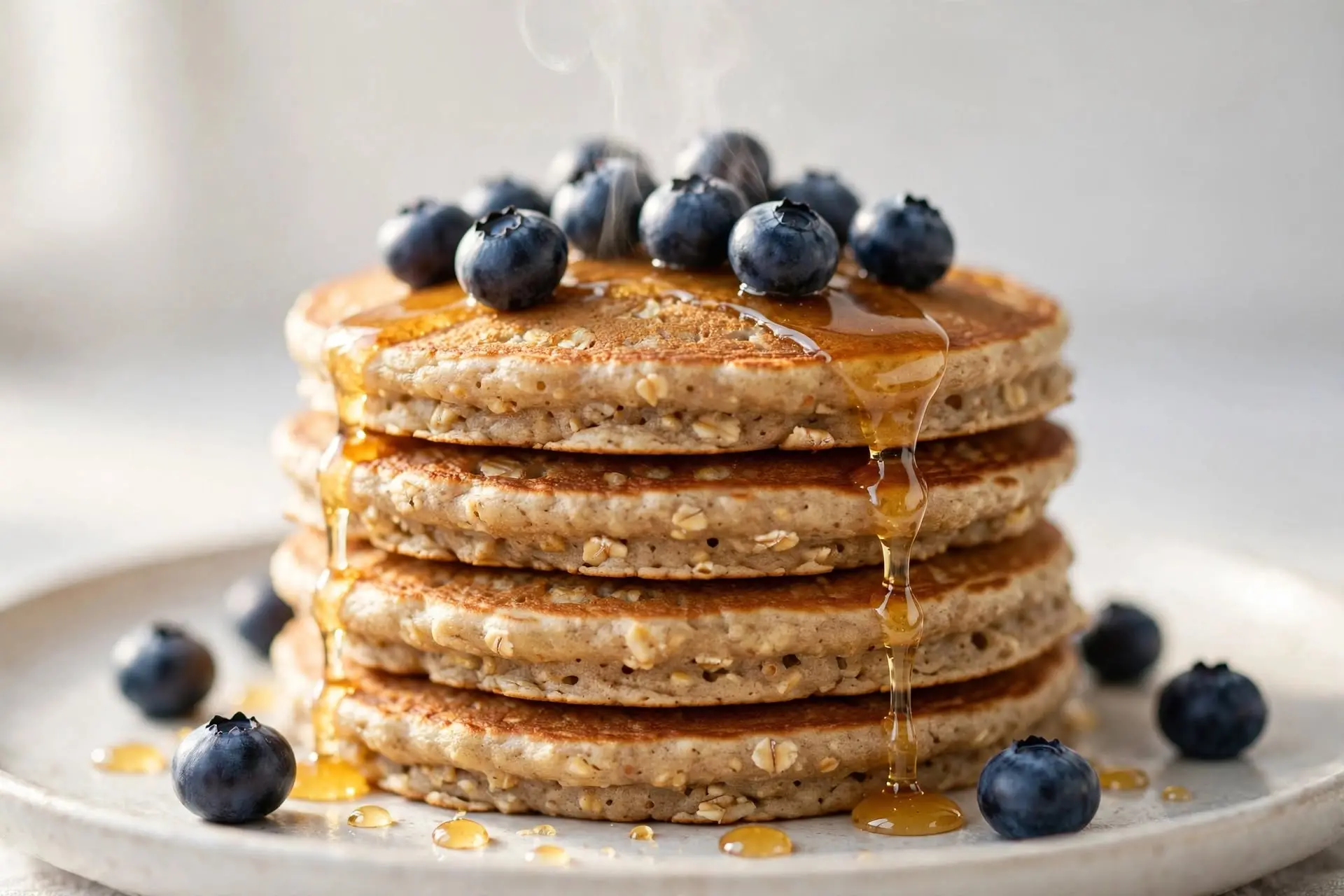
Protein Pancakes
Ingredients
Method
- Blend rolled oats in a blender for 20-25 seconds to a fine flour with no large pieces remaining.
- Add protein powder, baking powder, and salt to the blender. Pulse twice to combine.
- Add eggs, Greek yogurt, milk, and vanilla extract. Blend on low for 15-20 seconds until smooth and pourable.
- Rest the batter uncovered for 3-5 minutes until small bubbles appear on the surface.
- Heat a non-stick skillet over medium heat with 1 tsp oil or butter until the fat shimmers and butter stops foaming.
- Pour 3 tablespoons of batter per pancake, spacing at least 3cm apart. Cook 2-3 minutes until edges are set and 3-4 bubbles have broken open and stayed open.
- Flip once with a thin spatula. Cook for another 90 seconds until the bottom is golden brown and the center springs back when pressed. Repeat with remaining batter.