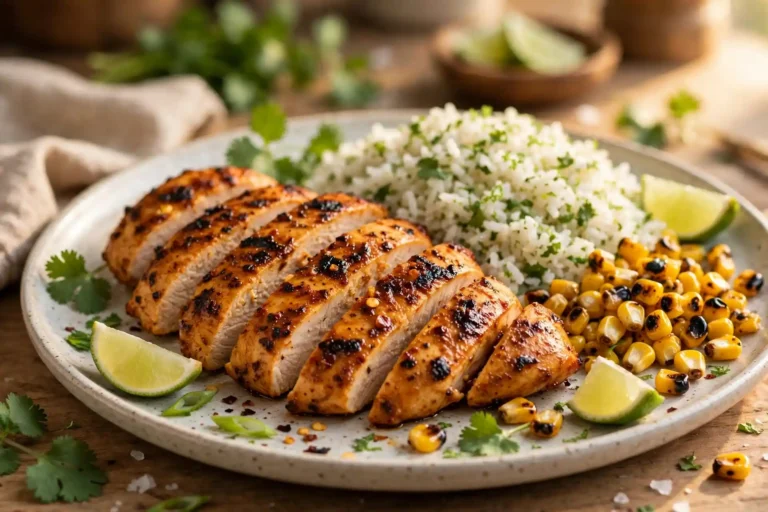
15 Christmas Dinner Ideas for a Warm, Festive Table
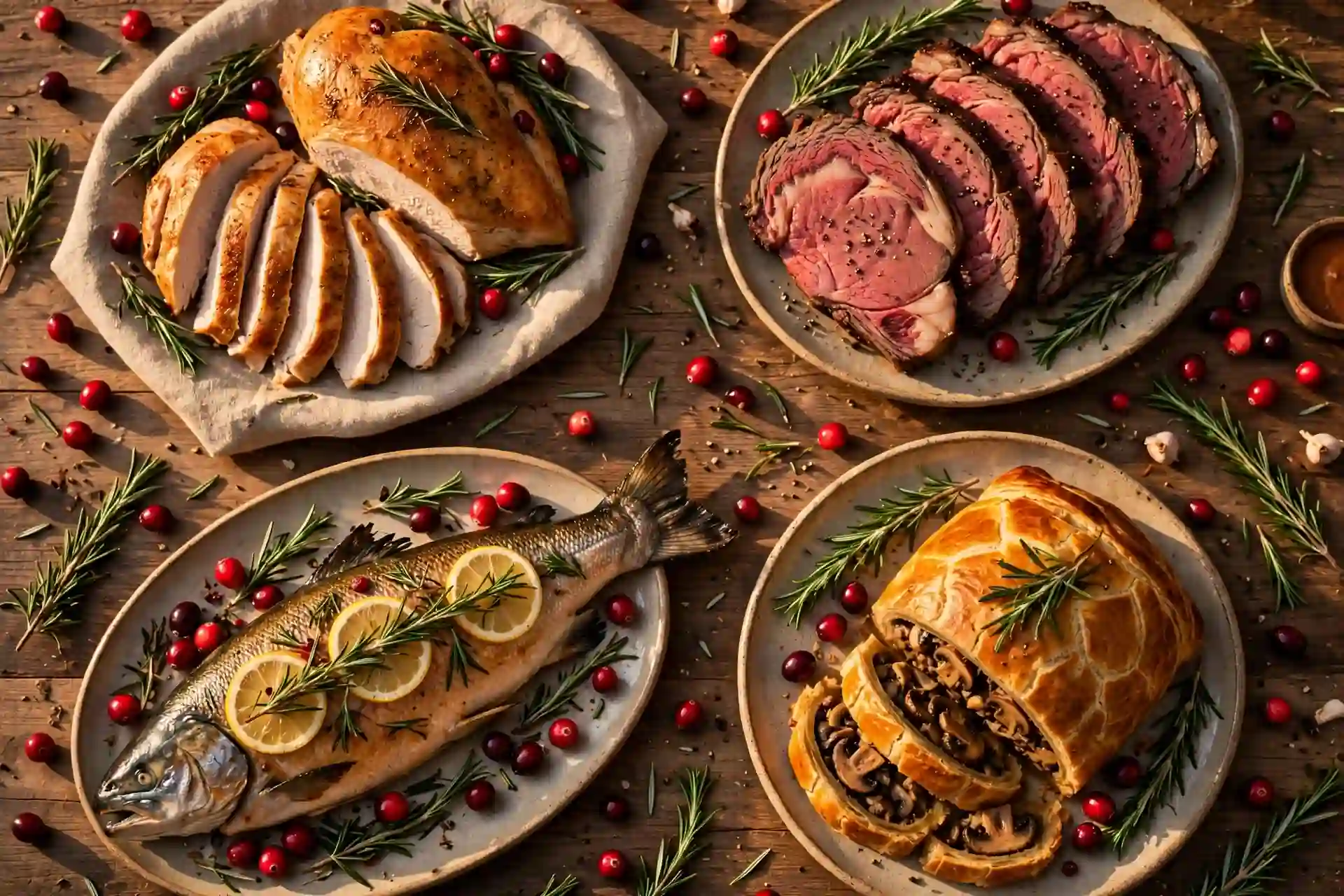
Christmas at our house always starts the same way, with a cold kitchen in the morning, a list taped to the fridge, and the smell of citrus and rosemary long before anyone sits down. I learned early that a festive meal does not need twelve side dishes or a whole day of panic, it needs one confident main dish, a sauce that can wait on the stove, and enough vegetables to make the table look generous. That lesson shaped this collection of Christmas dinner ideas, because each dish below was chosen for a real December evening, not for a magazine photo. You will find both kinds here, with clear internal temperatures, honest resting times, and sauces that forgive a busy cook. The list also keeps a halal table in mind from the start, so no dish asks you to swap out a main ingredient at the last minute. Pick the main that fits your oven, your crowd, and your energy, add one vegetable and one starch from your own pantry, and let dinner feel festive without feeling frantic.
Why These Christmas Dinner Ideas Work
A festive main dish fails most often for one of three reasons: the oven is crowded, the meat is carved too soon, or the sauce is started too late. This list answers all three by giving each main a clear resting window, a sauce that can be made ahead or finished in the pan, and a serving size that matches a normal family table. Roasts teach thermometer cooking instead of guesswork, the seafood dishes teach fast high heat, and the vegetarian centerpieces teach how to build richness without meat. Together they cover a whole bird alternative, a classic beef roast, lamb, chicken, duck, fish, shellfish, and meat free plates, so a mixed table can serve everyone from one list without cooking two separate dinners.
1. Citrus Rosemary Roasted Turkey Breast with Pomegranate Pan Sauce

Why We Love It
Orange and rosemary perfume the skin while the meat underneath stays moist, because a bone in breast roasts more evenly than a whole bird on a crowded day. Pomegranate juice in the pan sauce adds a tart festive color without sweetness taking over, and the sauce comes together from the same roasting pan. It suits a smaller family table or a cook who wants turkey flavor without carving a whole bird at the table.
Key Ingredients
- 1 bone in turkey breast, about 3 lb, skin on and patted dry: Turkey at 3 lb feeds six with slices left for sandwiches, because a smaller breast dries out fast and a larger breast needs a longer roast that crowds the oven.
- 1 orange, zested and sliced, plus 2 tbsp olive oil and 2 tbsp chopped rosemary: Orange at 1 whole gives zest for the rub and slices for the pan, because orange cooked only under the skin turns bitter and rosemary at 2 tbsp perfumes the skin without overpowering the meat.
- 1 cup pomegranate juice, plus 1 cup low sodium chicken broth and 1 tbsp honey: Pomegranate juice at 1 cup gives tart color to the sauce, because a smaller amount fades into broth and honey at 1 tbsp rounds the tart edge without making the sauce taste like dessert.
- 1 tbsp cornstarch mixed with 2 tbsp cold water, plus 1 tsp salt and 0.5 tsp black pepper: Cornstarch at 1 tbsp thickens the pan sauce to coat a spoon, because flour added to hot pan juices can clump and salt at 1 tsp seasons the skin through the roast.
Quick Tips
- Rub the breast with oil, orange zest, rosemary, salt, and pepper, set orange slices under the breast in the pan, and roast at 325 degrees Fahrenheit for 90 minutes until a thermometer in the thickest part reads 165 degrees Fahrenheit, because orange slices keep the bottom moist and a thermometer prevents dry turkey.
- Tent the breast loosely with foil for the last 20 minutes if the skin darkens too fast, because foil slows browning without steaming the skin soft for the whole roast.
- While the breast rests for 20 minutes, pour pomegranate juice and broth into the hot pan, scrape up browned bits, simmer for 6 minutes, stir in the cornstarch mixture, and cook for 2 minutes until glossy, because resting lets juices settle and a pan sauce made after resting tastes richer than a sauce made from a dry pan.
| Prep | Cook | Rest | Total | Serves |
|---|---|---|---|---|
| 20 min | 90 min | 20 min | 130 min | 6 |
Nutrition Snapshot (approx per serving): 380 calories, 42 g protein, 12 g carbs, 1 g fiber. Protein comes mainly from turkey breast, carbs come mainly from pomegranate juice and honey, and fiber comes mainly from orange slices left in the pan, which is why a slice with vegetables makes a complete festive plate.
2. Garlic Herb Prime Rib Roast with Horseradish Yogurt Cream

Why We Love It
A hot oven start gives prime rib a dark crust, while a lower oven finish keeps the center rosy from edge to edge. Horseradish yogurt cream cuts the richness without the heaviness of a butter sauce, and it can be stirred together hours ahead. It suits a table where the roast is the event, because carving thick slices at the table turns serving into part of the celebration.
Key Ingredients
- 1 bone in prime rib roast, about 4 lb, tied and brought to room temperature for 1 hour: Prime rib at 4 lb feeds eight with thick slices, because a smaller roast overcooks in the time the crust needs and a room temperature roast cooks more evenly.
- 6 garlic cloves, minced, plus 3 tbsp olive oil and 2 tbsp chopped thyme and rosemary: Garlic at 6 cloves gives a savory crust across a large roast, because garlic rubbed only on top fades and herbs at 2 tbsp total cling to the oil for even flavor.
- 1 cup plain whole milk Greek yogurt, plus 3 tbsp prepared horseradish and 1 tbsp lemon juice: Yogurt at 1 cup gives a cool creamy base for eight servings, because a smaller amount runs out before the last slice and horseradish at 3 tbsp gives heat without masking the beef.
- 2 tsp salt, plus 1 tsp black pepper and 1 tbsp Dijon mustard: Salt at 2 tsp seasons a large roast through the crust, because unsalted beef tastes flat even with a rich sauce and mustard at 1 tbsp helps the herb rub stick.
Quick Tips
- Rub the roast with mustard, oil, garlic, herbs, salt, and pepper, set it bone side down in a roasting pan, and roast at 450 degrees Fahrenheit for 20 minutes, then lower the heat to 325 degrees Fahrenheit for 130 minutes until a thermometer in the center reads 130 degrees Fahrenheit for medium rare, because a hot start builds crust and a lower finish protects the center.
- Stir yogurt, horseradish, lemon juice, and a pinch of salt together, chill for at least 30 minutes, and taste before serving, because chilling lets horseradish heat bloom and a cold sauce contrasts better with hot beef.
- Rest the roast for 30 minutes, carve into slices about 0.5 inch thick, and spoon any pan juices over the slices, because resting lets the center rise a few degrees and thick slices stay warm longer than thin slices.
| Prep | Cook | Rest | Total | Serves |
|---|---|---|---|---|
| 20 min | 150 min | 30 min | 200 min | 8 |
Nutrition Snapshot (approx per serving): 520 calories, 38 g protein, 4 g carbs, 0 g fiber. Protein comes mainly from prime rib, carbs come mainly from yogurt and lemon juice, and fiber is low in this dish, which is why a green vegetable and a potato side balance the plate well.
3. Slow Roasted Leg of Lamb with Mint Chimichurri and Root Vegetables

Why We Love It
Slow roasting turns a leg of lamb tender all the way through, while carrots and parsnips roasted underneath soak up the juices and become a side dish in the same pan. Mint chimichurri stays bright against rich lamb, and it needs no cooking at all. It suits a cook who wants the oven to do the work, because the roast can be checked once an hour and the sauce is ready before the meat comes out.
Key Ingredients
- 1 bone in leg of lamb, about 4 lb, trimmed of thick fat: Lamb at 4 lb feeds eight with slices for leftovers, because a smaller leg cooks too fast for slow roasting and trimming thick fat prevents a greasy pan sauce.
- 2 lb mixed carrots and parsnips, cut into 2 inch pieces, plus 2 tbsp olive oil: Root vegetables at 2 lb fill the pan in one layer, because vegetables piled deep steam instead of roasting and pieces cut to 2 inches cook at the same rate as the lamb browns.
- 1 cup chopped mint leaves, plus 0.5 cup chopped parsley, 0.33 cup olive oil, and 2 tbsp red wine vinegar: Mint at 1 cup gives the chimichurri its festive freshness, because mint used only as a garnish fades against lamb and vinegar at 2 tbsp sharpens the oil without souring the sauce.
- 5 garlic cloves, sliced, plus 2 tsp salt and 1 tsp black pepper: Garlic at 5 cloves studded into the meat flavors the roast from inside, because garlic rubbed only outside burns during a long roast and salt at 2 tsp seasons a large leg through.
Quick Tips
- Cut small slits in the lamb, push garlic slices into the slits, rub with oil, salt, and pepper, set the lamb over root vegetables in a roasting pan, and roast at 325 degrees Fahrenheit for 180 minutes until a thermometer in the thickest part reads 145 degrees Fahrenheit for medium, because garlic inside the meat perfumes every slice and vegetables under the roast catch the drippings.
- Stir mint, parsley, oil, vinegar, and a pinch of salt together, rest the sauce for 20 minutes, and taste for salt before serving, because a rested chimichurri tastes rounder than one served at once.
- Rest the lamb for 25 minutes, carve into slices about 0.25 inch thick across the grain, and serve with roasted vegetables and chimichurri spooned over, because thin slices across the grain stay tender and resting keeps the center juicy.
| Prep | Cook | Rest | Total | Serves |
|---|---|---|---|---|
| 25 min | 180 min | 25 min | 230 min | 8 |
Nutrition Snapshot (approx per serving): 480 calories, 36 g protein, 22 g carbs, 4 g fiber. Protein comes mainly from lamb, carbs come mainly from carrots and parsnips, and fiber comes mainly from root vegetables, which is why a plate with chimichurri feels rich but balanced.
4. Brown Sugar and Sage Roasted Chicken with Roasted Grapes

Why We Love It
Brown sugar helps chicken skin turn deep golden, while sage keeps the flavor savory rather than sweet. Grapes roasted in the same pan burst into a warm jammy sauce that needs no extra pot, and the whole dish uses one pan from oven to table. It suits a smaller festive table, because a whole chicken feels special without the timing stress of a large roast.
Key Ingredients
- 1 whole chicken, about 4 lb, patted dry and trussed: Chicken at 4 lb feeds four generously, because a smaller bird leaves little meat for a festive plate and trussing keeps the legs close so the breast does not dry out.
- 2 cups seedless red grapes, plus 2 tbsp brown sugar and 2 tbsp olive oil: Grapes at 2 cups roast into a jammy pan sauce for four servings, because fewer grapes disappear into the pan and brown sugar at 2 tbsp browns the skin without making the sauce taste like candy.
- 12 fresh sage leaves, plus 4 garlic cloves, smashed, and 1 lemon, halved: Sage at 12 leaves gives an earthy festive aroma, because sage cooked only on top crisps and fades and lemon halved inside the cavity steams the breast from within.
- 1.5 tsp salt, plus 0.75 tsp black pepper: Salt at 1.5 tsp seasons a whole bird through the skin, because salt added only after roasting sits on the surface and pepper at 0.75 tsp adds warmth without heat.
Quick Tips
- Rub the chicken with oil, brown sugar, salt, and pepper, tuck sage under the skin and in the cavity with garlic and lemon, scatter grapes around the bird, and roast at 425 degrees Fahrenheit for 75 minutes until a thermometer in the thigh reads 165 degrees Fahrenheit, because high heat crisps skin and grapes roasted beside the bird catch the juices.
- Baste the chicken with pan juices once after 40 minutes, because one baste adds color without opening the oven so often that the temperature drops.
- Rest the chicken for 15 minutes, carve into legs, thighs, wings, and breast slices, and spoon burst grapes and pan juices over the meat, because resting lets the breast stay moist and grapes served from the pan taste warm and jammy.
| Prep | Cook | Rest | Total | Serves |
|---|---|---|---|---|
| 20 min | 75 min | 15 min | 110 min | 4 |
Nutrition Snapshot (approx per serving): 540 calories, 38 g protein, 18 g carbs, 1 g fiber. Protein comes mainly from chicken, carbs come mainly from grapes and brown sugar, and fiber comes mainly from grapes, which is why a green salad balances the sweet pan sauce.
5. Baked Whole Salmon with Cranberry Citrus Butter and Dill

Why We Love It
Baking a whole salmon keeps the fish moist in a way that single fillets often miss, because the skin and bones protect the flesh from direct heat. Cranberry citrus butter melts over the hot fish into a festive sauce, and dill adds a clean herbal note that suits a winter table. It suits a fish loving table, because one pan serves six without frying or flipping delicate fillets.
Key Ingredients
- 1 whole salmon, about 3 lb, cleaned, scaled, and patted dry: Salmon at 3 lb feeds six with center slices, because a smaller fish leaves little meat after bones and a whole fish baked in its skin stays moist.
- 0.5 cup fresh cranberries, halved, plus 1 orange, sliced, and 4 tbsp butter: Cranberries at 0.5 cup give tart festive pops across the fish, because cranberries cooked whole stay too sharp and butter at 4 tbsp carries citrus and cranberry flavor over the whole fish.
- 0.25 cup chopped dill, plus 2 garlic cloves, sliced, and 1 tbsp olive oil: Dill at 0.25 cup gives a fresh herbal layer, because dill added only on top after baking fades and garlic slices in the cavity perfume the flesh gently.
- 1 tsp salt, plus 0.5 tsp black pepper: Salt at 1 tsp seasons a whole fish inside and out, because salt added only to the skin leaves the thick center bland and pepper at 0.5 tsp adds warmth without masking dill.
Quick Tips
- Score the skin in three shallow cuts, rub with oil, salt, and pepper, fill the cavity with orange slices, dill, and garlic, and bake at 400 degrees Fahrenheit for 28 minutes until a thermometer in the thickest part reads 145 degrees Fahrenheit and the flesh flakes easily, because scoring helps heat reach the center and a thermometer prevents dry salmon.
- While the salmon bakes, melt butter in a small pan over medium heat for 3 minutes, stir in cranberries and a squeeze of orange juice, and cook for 4 minutes until cranberries soften, because butter melted with cranberries turns into a sauce that clings to hot fish.
- Rest the salmon for 5 minutes, spoon cranberry citrus butter over the top, scatter remaining dill, and serve in large center cut pieces, because resting lets the flesh firm for clean serving and sauce spooned over hot fish melts into every slice.
| Prep | Cook | Rest | Total | Serves |
|---|---|---|---|---|
| 20 min | 28 min | 5 min | 53 min | 6 |
Nutrition Snapshot (approx per serving): 420 calories, 36 g protein, 6 g carbs, 1 g fiber. Protein comes mainly from salmon, carbs come mainly from cranberries and orange, and fiber comes mainly from cranberries, which is why a rice or potato side completes the plate.
6. Garlic Butter Shrimp and Scallop Skillet with Spinach and Lemon

Why We Love It
Shrimp and scallops cook in minutes, so this skillet rescues a festive evening when the main roast plan changes or the table needs a second main dish. Garlic butter with lemon keeps the seafood bright instead of heavy, and spinach wilts into the sauce to make a complete pan. It suits a cook who wants a special dish without a long oven wait, because the whole skillet can be ready while bread warms in the oven.
Key Ingredients
- 1 lb large shrimp, peeled and deveined, plus 0.5 lb dry sea scallops, patted very dry: Shrimp at 1 lb and scallops at 0.5 lb give a generous mix for four servings, because shrimp alone can feel ordinary and scallops patted dry sear golden instead of steaming.
- 4 tbsp butter, plus 4 garlic cloves, sliced, and 1 lemon, zested and juiced: Butter at 4 tbsp makes a sauce that coats seafood and spinach, because butter used in a smaller amount disappears into the pan and lemon juice added at the end keeps the sauce bright.
- 4 cups baby spinach, plus 0.25 tsp red pepper flakes: Spinach at 4 cups wilts to a soft green bed for the skillet, because spinach added in a small amount vanishes under seafood and red pepper flakes at 0.25 tsp warm the butter without heat taking over.
- 0.5 tsp salt, plus 0.25 tsp black pepper and 2 tbsp chopped parsley: Salt at 0.5 tsp seasons seafood evenly, because seafood salted only in the pan tastes uneven and parsley at 2 tbsp adds fresh color at serving.
Quick Tips
- Heat a large skillet over medium high heat with 2 tbsp butter, sear scallops for 2 minutes per side until golden, remove them, and set aside, because scallops seared alone keep a crust that a crowded pan would lose.
- Melt remaining butter in the same skillet, cook garlic for 1 minute, add shrimp and cook for 3 minutes until pink and curled, stir in spinach for 2 minutes until wilted, because garlic cooked longer than 1 minute turns bitter and shrimp cooked past curling turn rubbery.
- Return scallops to the pan, add lemon juice and zest, rest for 2 minutes off heat, and serve at once with parsley, because a short rest off heat lets the sauce settle and lemon added off heat stays bright.
| Prep | Cook | Rest | Total | Serves |
|---|---|---|---|---|
| 15 min | 9 min | 2 min | 26 min | 4 |
Nutrition Snapshot (approx per serving): 340 calories, 32 g protein, 6 g carbs, 2 g fiber. Protein comes mainly from shrimp and scallops, carbs come mainly from lemon and spinach, and fiber comes mainly from spinach, which is why crusty bread or rice turns this skillet into a full dinner.
7. Seared Beef Tenderloin Medallions with Mushroom Shallot Sauce

Why We Love It
Medallions cook faster than a whole tenderloin roast, yet they still feel refined enough for a festive table. A mushroom shallot sauce made in the same pan captures the browned flavor from searing, and it needs no long simmer. It suits a small table that wants beef without a large roast, because four medallions can be seared in one pan while potatoes finish in the oven.
Key Ingredients
- 1.5 lb beef tenderloin, cut into 4 medallions about 1.5 inch thick: Tenderloin at 1.5 lb gives four thick medallions, because medallions cut thinner than 1 inch overcook before a crust forms and thick medallions stay rosy inside.
- 8 oz cremini mushrooms, sliced, plus 2 shallots, finely diced, and 2 tbsp butter: Mushrooms at 8 oz make a sauce generous enough for four medallions, because fewer mushrooms disappear into the pan and shallots at 2 whole sweeten the sauce as they soften.
- 1 cup low sodium beef broth, plus 1 tbsp Dijon mustard and 1 tsp chopped thyme: Broth at 1 cup deglazes the pan into a sauce that coats a spoon, because broth used in a smaller amount evaporates before mushrooms soften and mustard at 1 tbsp sharpens the sauce without sourness.
- 1 tbsp olive oil, plus 1 tsp salt and 0.5 tsp black pepper: Oil at 1 tbsp helps the pan sear at high heat, because butter alone burns before a crust forms and salt at 1 tsp seasons thick medallions through.
Quick Tips
- Pat medallions very dry, season with salt and pepper, heat oil in a large skillet over high heat, and sear medallions for 3 minutes per side until browned and a thermometer reads 135 degrees Fahrenheit for medium rare, because dry meat sears instead of steaming and a thermometer protects tenderloin from overcooking.
- Remove medallions to a warm plate, melt butter in the same skillet, cook shallots for 3 minutes, add mushrooms and cook for 6 minutes until browned, because mushrooms cooked in the searing pan pick up beef flavor and shallots softened first sweeten the sauce.
- Pour in broth, scrape up browned bits, stir in mustard and thyme, simmer for 4 minutes until slightly thick, rest medallions for 5 minutes, and spoon sauce over, because resting lets medallions relax and sauce spooned over rested meat stays on the slice.
| Prep | Cook | Rest | Total | Serves |
|---|---|---|---|---|
| 15 min | 19 min | 5 min | 39 min | 4 |
Nutrition Snapshot (approx per serving): 430 calories, 38 g protein, 7 g carbs, 1 g fiber. Protein comes mainly from beef tenderloin, carbs come mainly from mushrooms and shallots, and fiber comes mainly from mushrooms, which is why roasted potatoes and a green vegetable complete the plate.
8. Roasted Butternut Squash and Sage Lasagna with Halal Ricotta

Why We Love It
Roasted butternut squash gives lasagna a sweet earthy depth that tomato sauce alone cannot give, while sage keeps each layer tasting like winter. Ricotta and halal mozzarella melt into creamy layers that slice cleanly after a short rest, so the dish can be served as a true centerpiece. It suits a vegetarian festive table, because the lasagna looks generous in the pan and feeds a crowd without a separate meat main.
Key Ingredients
- 1 butternut squash, about 3 lb, peeled and cut into 0.5 inch cubes: Squash at 3 lb roasts into enough filling for a full lasagna, because a smaller squash leaves dry pasta layers and cubes cut to 0.5 inch roast evenly.
- 12 no boil lasagna sheets, plus 2 cups halal-certified ricotta and 2 cups shredded halal-certified mozzarella: Lasagna sheets at 12 make four layers in a 9 by 13 inch pan, because fewer sheets leave a shallow dish and ricotta at 2 cups gives creamy layers that hold slices together.
- 2 tbsp chopped sage, plus 2 tbsp olive oil and 3 garlic cloves, minced: Sage at 2 tbsp gives a winter herbal note through the squash, because sage added only on top fades and garlic at 3 cloves roasted with squash adds depth without sharpness.
- 1 cup whole milk, plus 0.5 cup halal-certified parmesan made with vegetarian rennet and 1 tsp salt: Milk at 1 cup loosens the ricotta so no boil sheets soften, because a dry ricotta layer leaves pasta stiff and parmesan at 0.5 cup gives a savory top crust.
Quick Tips
- Toss squash cubes with oil, garlic, half the sage, and salt, roast at 400 degrees Fahrenheit for 28 minutes until tender at the edges, and mash half the squash lightly, because mashed squash binds layers and whole cubes give texture.
- Layer sauce, sheets, ricotta mixed with milk, squash, and mozzarella four times, top with parmesan and remaining sage, cover with foil, and bake at 375 degrees Fahrenheit for 30 minutes, because foil traps steam that softens no boil sheets.
- Remove foil, bake for 12 minutes more until bubbling and golden, rest for 15 minutes, and slice into eight squares, because resting lets layers set for clean slices and a lasagna cut hot collapses.
| Prep | Cook | Rest | Total | Serves |
|---|---|---|---|---|
| 20 min | 70 min | 15 min | 105 min | 8 |
Nutrition Snapshot (approx per serving): 460 calories, 20 g protein, 52 g carbs, 5 g fiber. Protein comes mainly from ricotta, mozzarella, and parmesan, carbs come mainly from lasagna sheets and squash, and fiber comes mainly from squash, which is why a salad balances this rich centerpiece.
9. Cranberry Walnut Stuffed Acorn Squash with Wild Rice and Halal Feta

Why We Love It
Acorn squash roasted until tender becomes its own serving bowl, so each guest gets a complete festive plate without carving. Wild rice with cranberries and walnuts gives a chewy sweet savory filling, and feta adds salty contrast that keeps the squash from tasting too sweet. It suits a mixed table, because a stuffed squash can sit beside a roast as a vegetarian main without needing a separate menu.
Key Ingredients
- 4 acorn squash, halved and seeded, plus 2 tbsp olive oil: Squash at 4 whole gives eight halves for eight servings, because a smaller squash leaves little room for filling and oil brushed inside helps the edges caramelize.
- 2 cups cooked wild rice blend, plus 1 cup dried cranberries and 1 cup chopped walnuts: Wild rice at 2 cups cooked gives a hearty base for eight halves, because rice used in a smaller amount leaves squash hollow and cranberries at 1 cup add festive tartness in every spoonful.
- 1 cup crumbled halal-certified feta, plus 1 onion, diced, and 2 tsp chopped thyme: Feta at 1 cup gives salty contrast across eight halves, because feta stirred only on top melts away and onion cooked soft adds sweetness that balances cranberries.
- 1 tsp salt, plus 0.5 tsp black pepper and 1 tbsp maple syrup: Salt at 1 tsp seasons squash flesh through roasting, because squash salted only after filling tastes bland inside and maple syrup at 1 tbsp glazes the cut edges without sweetening the whole filling.
Quick Tips
- Brush squash halves with oil and maple syrup, season with salt and pepper, set cut side down in a baking dish, and roast at 400 degrees Fahrenheit for 30 minutes until tender when pierced, because roasting cut side down steams the flesh tender.
- Cook onion in a pan over medium heat for 6 minutes, stir in wild rice, cranberries, walnuts, and thyme, cook for 3 minutes, and fold in feta off heat, because feta folded off heat keeps its shape instead of melting into the rice.
- Turn squash cut side up, fill each half generously, bake for 12 minutes more until heated through, rest for 5 minutes, and serve warm, because a short second bake warms the filling without drying the squash.
| Prep | Cook | Rest | Total | Serves |
|---|---|---|---|---|
| 20 min | 51 min | 5 min | 76 min | 8 |
Nutrition Snapshot (approx per serving): 380 calories, 10 g protein, 52 g carbs, 6 g fiber. Protein comes mainly from feta and walnuts, carbs come mainly from wild rice and cranberries, and fiber comes mainly from squash, wild rice, and walnuts, which is why one half with a salad makes a filling vegetarian dinner.
10. Honey Mustard Chicken Thighs with Brussels Sprouts and Sweet Potatoes

Why We Love It
Chicken thighs stay juicy in a hot oven in a way that breast often does not, and honey mustard glazes them without a separate sauce pot. Brussels sprouts and sweet potatoes roast in the same pan and catch the glaze, so dinner needs only one tray. It suits a busy December evening, because the tray can go in the oven while the table is set and the chicken needs little attention after that.
Key Ingredients
- 8 bone in skin on chicken thighs, about 3 lb total, patted dry: Thighs at 8 give two per person for four servings, because thighs cooked in a smaller amount leave the tray looking empty and bone in thighs stay juicy during roasting.
- 3 tbsp honey, plus 3 tbsp Dijon mustard and 2 tbsp olive oil: Honey at 3 tbsp and mustard at 3 tbsp in equal parts give a glaze that browns without burning, because honey used alone burns fast and mustard alone tastes too sharp.
- 1 lb Brussels sprouts, halved, plus 2 sweet potatoes, peeled and cut into 1 inch cubes: Brussels sprouts at 1 lb and sweet potatoes at 2 whole fill the tray in one layer, because vegetables piled deep steam and cubes cut to 1 inch roast at the same rate as sprouts.
- 1 tsp salt, plus 0.5 tsp black pepper and 1 tbsp chopped thyme: Salt at 1 tsp seasons chicken and vegetables through roasting, because vegetables salted only after roasting taste flat and thyme at 1 tbsp adds a winter herbal note.
Quick Tips
- Whisk honey, mustard, oil, salt, pepper, and thyme, toss vegetables in half the glaze, arrange thighs skin side up on top, brush with remaining glaze, and roast at 425 degrees Fahrenheit for 38 minutes until a thermometer in the thickest thigh reads 165 degrees Fahrenheit, because thighs roasted over vegetables keep the vegetables moist with drippings.
- Turn vegetables once after 20 minutes without moving the chicken, because turning vegetables evens browning while chicken skin left alone stays crisp.
- Rest the tray for 8 minutes, spoon pan juices over thighs and vegetables, and serve with extra mustard at the table, because resting lets thigh juices settle and pan juices spooned over the tray taste like a sauce.
| Prep | Cook | Rest | Total | Serves |
|---|---|---|---|---|
| 15 min | 38 min | 8 min | 61 min | 4 |
Nutrition Snapshot (approx per serving): 560 calories, 36 g protein, 42 g carbs, 6 g fiber. Protein comes mainly from chicken thighs, carbs come mainly from sweet potatoes, and fiber comes mainly from Brussels sprouts and sweet potatoes, which is why this tray needs no extra starch.
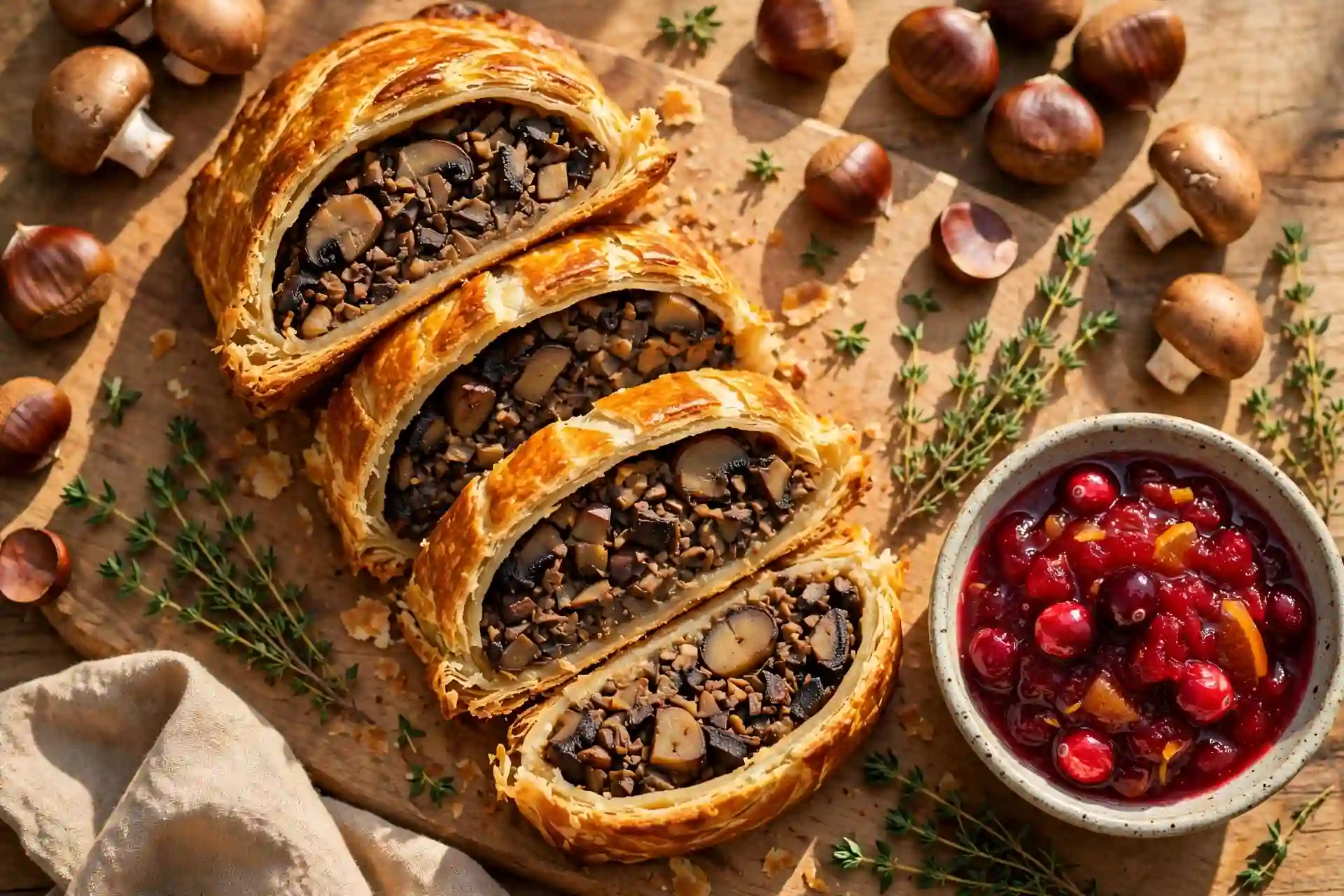
11. Mushroom and Chestnut Wellington with Cranberry Orange Sauce
Why We Love It
Mushrooms cooked down until dark and savory give a wellington a rich center that can stand beside any roast, while chestnuts add a soft nutty texture that keeps the filling from feeling like a side dish. Puff pastry baked golden makes the dish look festive the moment it is sliced, and cranberry orange sauce adds a bright contrast. It suits a vegetarian guest of honor, because a wellington sliced at the table feels like a main dish, not a compromise.
Key Ingredients
- 1.5 lb mixed mushrooms, finely chopped, plus 1 cup cooked chestnuts, chopped: Mushrooms at 1.5 lb cook down into a dense savory filling, because mushrooms used in a smaller amount leave pastry hollow and chestnuts at 1 cup add body that mushrooms alone lack.
- 1 sheet puff pastry, thawed, plus 1 egg, beaten, for egg wash: Pastry at 1 sheet wraps a full log for six slices, because a smaller sheet tears around a thick filling and egg wash at 1 whole gives an even golden shine.
- 2 shallots, diced, plus 2 tbsp butter and 2 tsp chopped thyme: Shallots at 2 whole sweeten the mushroom base, because onion used in a larger amount waters the filling and thyme at 2 tsp adds a winter note that suits chestnuts.
- 1 cup fresh cranberries, plus 1 orange, juiced and zested, and 2 tbsp honey: Cranberries at 1 cup cook into a sauce for six servings, because fewer cranberries leave the sauce thin and honey at 2 tbsp balances tart cranberries without turning the sauce sweet.
Quick Tips
- Cook mushrooms in a dry pan over medium high heat for 12 minutes until dark and dry, add butter and shallots, cook for 5 minutes, stir in chestnuts and thyme, cool for 15 minutes, and chill the filling for 20 minutes, because a cool dry filling keeps pastry crisp and a warm wet filling makes pastry soggy.
- Shape the filling into a log on the pastry, fold pastry over, seal edges with egg wash, chill the log for 15 minutes, score the top lightly, brush with egg wash, and bake at 400 degrees Fahrenheit for 32 minutes until deep golden, because a chilled log holds its shape in the oven and scoring lets steam escape.
- Simmer cranberries, orange juice, zest, and honey for 10 minutes until cranberries burst, rest the wellington for 10 minutes, slice into six pieces about 1.5 inch thick, and serve with warm sauce, because resting lets the filling firm for clean slices and sauce served warm contrasts with crisp pastry.
| Prep | Cook | Chill | Rest | Total | Serves |
|---|---|---|---|---|---|
| 30 min | 59 min | 35 min | 10 min | 134 min | 6 |
Nutrition Snapshot (approx per serving): 440 calories, 11 g protein, 52 g carbs, 5 g fiber. Protein comes mainly from mushrooms, chestnuts, and egg wash, carbs come mainly from puff pastry and cranberry sauce, and fiber comes mainly from mushrooms and chestnuts, which is why a green salad balances this rich pastry main.
12. Sage Chestnut Stuffing Bake with Halal Turkey Sausage and Cranberries

Why We Love It
Stuffing baked as a main dish turns a beloved side into a centerpiece, with crisp edges and a soft savory center in every scoop. Halal turkey sausage adds meaty flavor without pork, and cranberries give a festive tart pop that keeps the bake from tasting heavy. It suits a table that loves stuffing most of all, because this bake can be served in generous squares beside gravy and vegetables.
Key Ingredients
- 1 lb halal-certified turkey sausage, casings removed: Sausage at 1 lb gives meaty flavor through a full baking dish, because sausage used in a smaller amount disappears into bread and halal turkey sausage keeps the dish within halal rules.
- 12 cups cubed day old white bread, plus 2 cups low sodium chicken broth: Bread at 12 cups fills a 9 by 13 inch pan for eight servings, because fresh bread turns soggy and broth at 2 cups moistens cubes without making the bake wet.
- 1 cup cooked chestnuts, chopped, plus 1 cup dried cranberries and 2 tbsp chopped sage: Chestnuts at 1 cup add a soft nutty bite, because chestnuts used only on top leave the center plain and cranberries at 1 cup add tart contrast in every square.
- 2 onions, diced, plus 3 celery stalks, diced, and 3 tbsp butter: Onions at 2 whole and celery at 3 stalks build a savory base for the bread, because vegetables cooked soft first flavor the whole bake and butter at 3 tbsp carries sage flavor through.
Quick Tips
- Cook sausage in a large pan over medium high heat for 8 minutes, breaking it into small pieces, add butter, onions, and celery, cook for 8 minutes until soft, and cool for 10 minutes, because sausage browned first gives deeper flavor and vegetables cooled slightly keep bread from turning mushy.
- Toss bread cubes with sausage mixture, chestnuts, cranberries, and sage, pour broth over in two parts, rest for 10 minutes, and press into a buttered 9 by 13 inch pan, because broth added in parts absorbs evenly and resting lets cubes soak without collapsing.
- Cover with foil and bake at 375 degrees Fahrenheit for 30 minutes, remove foil and bake for 18 minutes more until crisp on top, rest for 10 minutes, and cut into eight squares, because foil keeps the center moist and a final uncovered bake crisps the top.
| Prep | Cook | Rest | Total | Serves |
|---|---|---|---|---|
| 25 min | 64 min | 10 min | 99 min | 8 |
Nutrition Snapshot (approx per serving): 420 calories, 18 g protein, 52 g carbs, 4 g fiber. Protein comes mainly from turkey sausage, carbs come mainly from bread and cranberries, and fiber comes mainly from chestnuts, onions, and celery, which is why a green vegetable balances this hearty bake.
13. Orange Thyme Roasted Duck Legs with Parsnip Mash

Why We Love It
Duck legs roasted slowly turn meltingly tender, while the skin crisps in a way that chicken skin rarely matches. Orange and thyme cut the richness with citrus and herbal brightness, and parsnip mash gives a silky sweet base that catches the pan juices. It suits a small festive table that wants a luxurious main without a large roast, because four legs fit in one pan and need little carving.
Key Ingredients
- 4 duck legs, about 2.5 lb total, skin scored and patted dry: Duck legs at 4 give one per person for four servings, because duck legs roasted in a smaller amount leave the pan dry and scored skin renders fat for crisp skin.
- 1 orange, sliced, plus 2 tbsp chopped thyme and 2 tbsp olive oil: Orange at 1 whole gives slices for the pan and juice for the mash, because orange used only as garnish leaves duck rich without contrast and thyme at 2 tbsp perfumes the skin during a long roast.
- 2 lb parsnips, peeled and cut into 1 inch pieces, plus 4 tbsp butter and 0.5 cup whole milk: Parsnips at 2 lb mash into a generous base for four servings, because parsnips used in a smaller amount leave plates empty and butter at 4 tbsp makes the mash silky.
- 1 tsp salt, plus 0.5 tsp black pepper and 3 garlic cloves, smashed: Salt at 1 tsp seasons duck skin and mash through cooking, because duck salted only after roasting tastes bland under crisp skin and garlic at 3 cloves roasted in the pan adds depth.
Quick Tips
- Score duck skin in a crosshatch without cutting the meat, rub with oil, salt, pepper, and thyme, set legs over orange slices and garlic in a roasting pan, and roast at 325 degrees Fahrenheit for 95 minutes until a thermometer in the thickest part reads 175 degrees Fahrenheit and skin is crisp, because scored skin renders fat slowly and a lower oven keeps the meat tender.
- While the duck roasts, boil parsnips in salted water for 18 minutes until very tender, drain, mash with butter, milk, and a squeeze of orange juice, and season to taste, because parsnips mashed while hot turn silky and orange juice added at mashing brightens the mash.
- Rest duck legs for 10 minutes, spoon parsnip mash onto plates, set a leg on each plate, and spoon pan juices over, because resting lets duck juices settle and mash served under duck catches the juices.
| Prep | Cook | Rest | Total | Serves |
|---|---|---|---|---|
| 20 min | 95 min | 10 min | 125 min | 4 |
Nutrition Snapshot (approx per serving): 620 calories, 32 g protein, 38 g carbs, 6 g fiber. Protein comes mainly from duck legs, carbs come mainly from parsnips, and fiber comes mainly from parsnips, which is why a bitter green salad balances this rich plate.
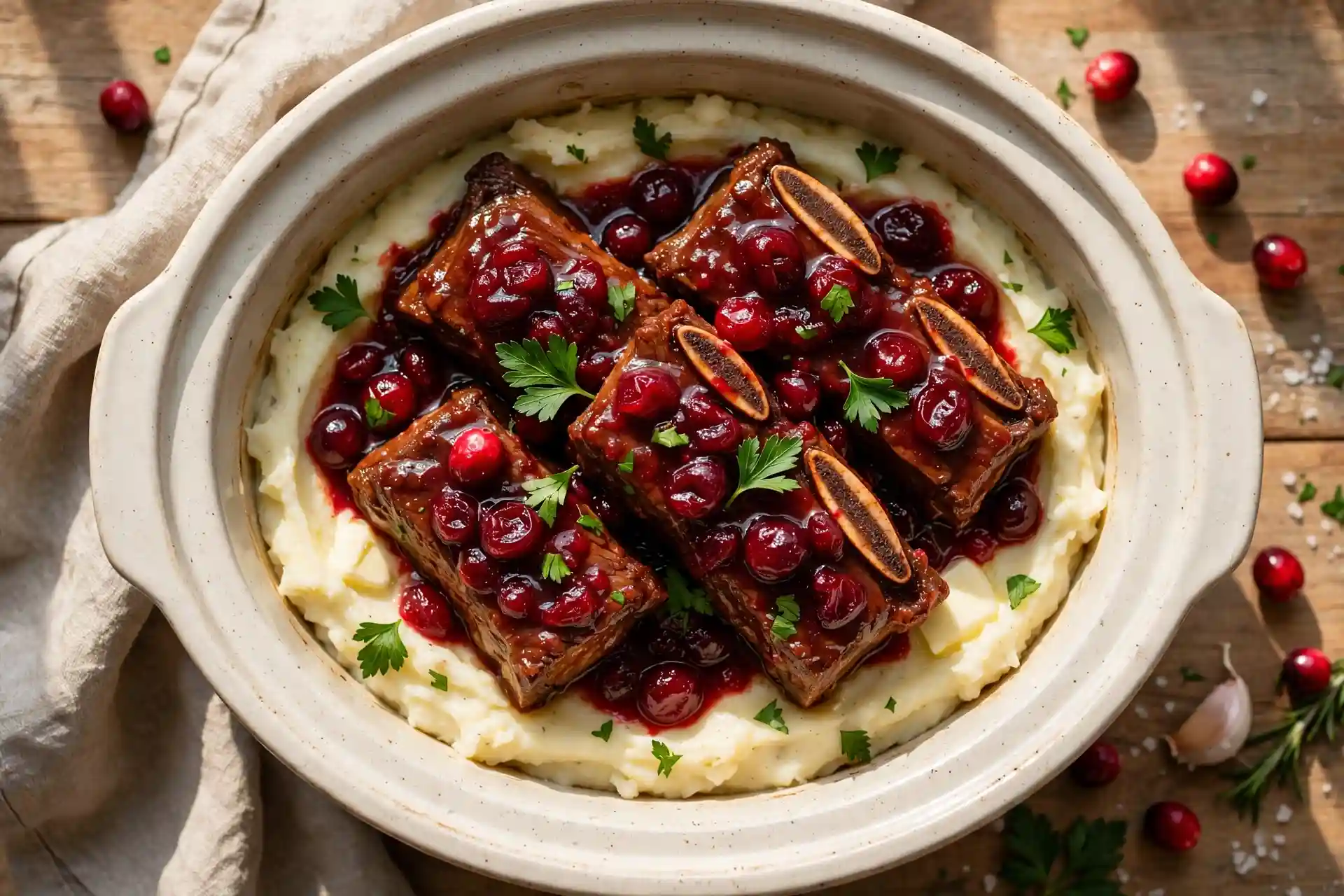
14. Slow Cooker Cranberry Beef Short Ribs with Creamy Mashed Potatoes
Why We Love It
Beef short ribs cooked slowly in cranberry sauce turn spoon tender while the cook is free for the rest of the day, because the slow cooker holds a steady low heat without oven watching. Cranberries add a festive tartness that balances rich beef, and mashed potatoes soak up the sauce beautifully. It suits a host who wants the main dish finished before guests arrive, because the ribs can rest in the cooker while potatoes are mashed.
Key Ingredients
- 3 lb bone in beef short ribs, patted dry: Short ribs at 3 lb feed six with meat falling from the bone, because short ribs cooked in a smaller amount leave little meat after bones and bone in ribs give a richer sauce.
- 1.5 cups fresh cranberries, plus 1 cup low sodium beef broth and 2 tbsp honey: Cranberries at 1.5 cups cook into a tart sauce for six servings, because fewer cranberries fade into broth and honey at 2 tbsp balances tartness without sweetening the beef.
- 2 lb Yukon Gold potatoes, peeled and cut into 1 inch pieces, plus 4 tbsp butter and 0.75 cup whole milk: Potatoes at 2 lb mash into a generous base for six servings, because potatoes used in a smaller amount leave plates short of a side and butter at 4 tbsp makes the mash creamy.
- 1 onion, sliced, plus 3 garlic cloves, sliced, 1 tsp salt, and 0.5 tsp black pepper: Onion at 1 whole and garlic at 3 cloves build a savory base under the ribs, because aromatics cooked under meat sweeten during a long cook and salt at 1 tsp seasons the sauce through.
Quick Tips
- Season ribs with salt and pepper, sear in a hot pan over medium high heat for 3 minutes per side until browned, set ribs over onion and garlic in the slow cooker, and pour over cranberries, broth, and honey, because searing adds depth that a slow cooker alone cannot give.
- Cover and cook on low for 480 minutes until meat pulls easily from the bone, because a long low cook breaks down short rib collagen without drying the meat.
- During the last 20 minutes of slow cooking, boil potatoes in salted water for 18 minutes until tender, drain, mash with butter and warm milk, rest ribs for 10 minutes, skim fat from the sauce, and serve ribs over mash with sauce spooned over, because warm milk keeps mash smooth and skimming fat keeps the cranberry sauce bright.
| Prep | Cook | Rest | Total | Serves |
|---|---|---|---|---|
| 25 min | 486 min | 10 min | 521 min | 6 |
Nutrition Snapshot (approx per serving): 640 calories, 38 g protein, 42 g carbs, 4 g fiber. Protein comes mainly from beef short ribs, carbs come mainly from potatoes and cranberries, and fiber comes mainly from potatoes and cranberries, which is why a green vegetable balances this rich plate.
15. Creamy Pumpkin Sage Pasta Bake with Halal Mozzarella and Toasted Pepitas
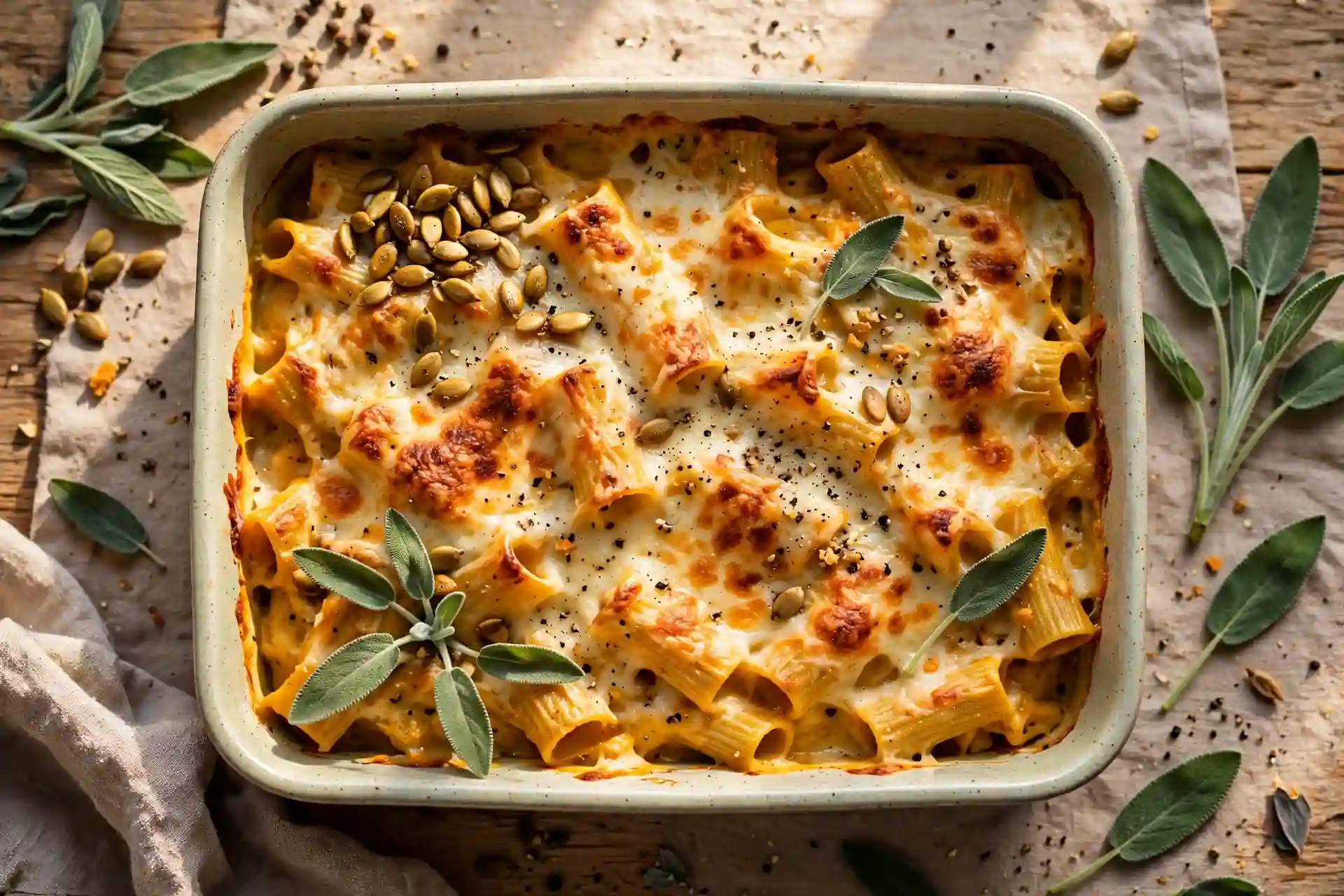
Why We Love It
Pumpkin puree whisked into a creamy sauce gives pasta a velvety festive color without a heavy cream sauce, while sage adds a winter herbal note that keeps the dish from tasting like a sweet pie. Halal mozzarella melts into a golden top, and toasted pepitas add crunch that a soft pasta bake needs. It suits a crowd that wants comfort in a baking dish, because the bake can be assembled ahead and finished in the oven before serving.
Key Ingredients
- 1 lb short pasta, such as rigatoni, plus 1 can pumpkin puree, 15 oz: Pasta at 1 lb fills a 9 by 13 inch pan for eight servings, because pasta used in a smaller amount leaves a shallow bake and pumpkin puree at 15 oz gives a thick sauce that coats every tube.
- 2 cups shredded halal-certified mozzarella, plus 0.5 cup halal-certified parmesan made with vegetarian rennet: Mozzarella at 2 cups melts into a golden top and creamy layers, because mozzarella used only on top leaves the center dry and parmesan at 0.5 cup adds savory depth.
- 1 cup whole milk, plus 2 tbsp butter and 2 tbsp chopped sage: Milk at 1 cup loosens pumpkin puree into a pourable sauce, because pumpkin puree used alone clings too thickly and sage at 2 tbsp gives a winter flavor through the sauce.
- 0.5 cup pepitas, toasted, plus 3 garlic cloves, minced, and 1 tsp salt: Pepitas at 0.5 cup give crunch on top for eight servings, because pepitas stirred into the sauce soften and garlic at 3 cloves cooked in butter adds depth without sharpness.
Quick Tips
- Boil pasta in salted water for 10 minutes, 2 minutes less than the package time, drain, and toss with a little oil, because pasta finished in the oven softens further and pasta boiled fully before baking turns mushy.
- Melt butter in a large pan over medium heat, cook garlic for 1 minute, whisk in pumpkin puree, milk, sage, and salt, simmer for 5 minutes, and toss with pasta and half the mozzarella, because a simmered sauce thickens enough to coat pasta without drying in the oven.
- Transfer to a buttered 9 by 13 inch pan, top with remaining mozzarella and parmesan, bake at 375 degrees Fahrenheit for 22 minutes until bubbling, rest for 10 minutes, scatter toasted pepitas, and cut into eight squares, because resting lets the sauce set for clean squares and pepitas added after baking stay crisp.
| Prep | Cook | Rest | Total | Serves |
|---|---|---|---|---|
| 15 min | 37 min | 10 min | 62 min | 8 |
Nutrition Snapshot (approx per serving): 480 calories, 19 g protein, 58 g carbs, 5 g fiber. Protein comes mainly from mozzarella and parmesan, carbs come mainly from pasta and pumpkin, and fiber comes mainly from pumpkin and pepitas, which is why a salad balances this creamy bake.
Storage and Make-Ahead Tips
Cool turkey breast, prime rib, lamb, chicken, salmon, beef tenderloin, duck legs, and short ribs within 2 hours, then refrigerate in covered containers for up to 3 days, because roasted meats kept at room temperature lose safety and texture fast. Keep lasagna, stuffing bake, pasta bake, and stuffed squash refrigerated for up to 3 days, and keep pepitas, chimichurri, and horseradish yogurt cream in separate containers, because pepitas soften in storage and fresh sauces lose brightness when stored on top of hot food. Keep shrimp and scallop skillet refrigerated for up to 2 days, because seafood loses texture after that window and reheated seafood needs to be steaming hot throughout. Freeze prime rib slices, lamb slices, short ribs in sauce, lasagna squares, stuffing bake squares, and pasta bake squares for up to 1 month, thaw overnight in the fridge, and reheat until hot, because salmon, shrimp, scallops, wellington pastry, and parsnip mash turn soft or watery after freezing and are best made fresh. Make cranberry sauces, chimichurri, horseradish yogurt cream, and mushroom filling ahead in separate containers, because ready sauces and fillings turn a festive roast into a short finish. Reheat roasts and lasagna in an oven at 325 degrees Fahrenheit until warm through, reheat short ribs in sauce on low heat, and add fresh herbs, pepitas, and cold sauces only after reheating, because fresh finishes added before storage lose brightness and crunch.
Allergen and Dietary Notes
Gluten: Lasagna sheets in butternut squash lasagna, puff pastry in mushroom chestnut wellington, bread cubes in sage chestnut stuffing bake, and rigatoni in pumpkin sage pasta bake contain gluten, so use gluten-free lasagna sheets, pastry, bread, and pasta where needed and check broth labels for the other dishes. Dairy: Butter in turkey breast pan sauce, salmon cranberry butter, shrimp scallop skillet, tenderloin sauce, lasagna, stuffing bake, duck parsnip mash, short rib mash, and pasta bake, plus yogurt in horseradish cream, ricotta and mozzarella and parmesan in lasagna, feta in stuffed squash, and mozzarella and parmesan in pasta bake contain dairy, while turkey breast without butter sauce, prime rib with a dairy-free horseradish swap, lamb with chimichurri, roasted chicken with grapes, salmon with an oil based sauce, and short ribs without mash need care, so dairy-free tables should choose lamb, roasted chicken, and salmon with dairy-free swaps for the creamy dishes. Egg: Egg wash in mushroom chestnut wellington and egg in pasta dough where fresh pasta is used contain egg, while the other dishes in this list do not use egg as a main ingredient, so check fresh pasta labels for the pasta bake. Tree nut: Walnuts in cranberry walnut stuffed squash and chestnuts in mushroom chestnut wellington and sage chestnut stuffing bake contain tree nut, so skip those fillings and toppings for a tree nut allergy and keep the rest of the squash and wellington base where safe. Sesame and peanut: Pepitas in pumpkin sage pasta bake are seeds, not peanuts, but check labels for cross contact, and no peanut or sesame is used as an ingredient in this list. Fish and shellfish: Salmon in baked whole salmon contains fish, and shrimp and scallops in the garlic butter skillet contain shellfish, so skip those two dishes for a fish or shellfish allergy. Soy: No soy sauce is used in this list, but check broth and sausage labels where needed.
Frequently Asked Questions
How far ahead can I prep a festive main dish?
Make cranberry sauces, chimichurri, horseradish yogurt cream, and mushroom wellington filling up to 2 days ahead and refrigerate in covered containers, because sauces and fillings hold flavor well and a roast cooked fresh gives the best texture. Assemble lasagna, stuffing bake, and pasta bake up to 1 day ahead, cover, refrigerate, and add 10 minutes to the covered bake time, because cold assembled bakes need extra time to heat through. Season turkey breast, prime rib, lamb, and chicken up to 1 day ahead and refrigerate uncovered for the last few hours where skin crispness matters, because salt applied ahead seasons deeply and dry skin crisps better.
How do I fit a roast and sides in one oven?
Plan the oven around the roast temperature, not the sides, because a roast needs a steady temperature and sides can adapt. Roast turkey breast at 325 degrees Fahrenheit with root vegetables in the same pan, roast prime rib at 325 degrees Fahrenheit after the hot start with potatoes on a lower rack, and roast lamb at 325 degrees Fahrenheit with vegetables underneath, because vegetables roasted with meat catch flavor and free a rack. Hold finished sides covered with foil at 200 degrees Fahrenheit for up to 30 minutes while meat rests, because resting meat gives a natural window and a low oven keeps sides warm without drying them.
What can picky eaters eat from this list?
For a picky eater who avoids spice and strong flavors, citrus turkey breast with sauce on the side, honey mustard chicken thighs with mustard on the side, and creamy pumpkin pasta bake give mild, familiar flavors without chili heat. For a picky eater who dislikes mixed vegetables and sauces, seared beef tenderloin medallions with sauce on the side, roasted chicken with grapes on the side, and mashed potatoes from the short rib plate with sauce on the side give control, because sides and sauces kept separate let each person build a plate to taste without a separate meal. For a picky eater who avoids seafood, turkey breast, prime rib, lamb, chicken, duck, lasagna, stuffed squash, stuffing bake, wellington, and pasta bake give plenty of land based choices. For a picky eater who dislikes soft textures, prime rib slices with crisp edges, honey mustard chicken thighs with crisp skin, and pasta bake topped with toasted pepitas give crunch in every bite.
How do I know when a roast is done without drying it?
Use a thermometer in the thickest part away from bone, because color and time alone mislead on a large roast. Pull turkey breast and chicken thighs at 165 degrees Fahrenheit, pull salmon at 145 degrees Fahrenheit, pull prime rib at 130 degrees Fahrenheit for medium rare, pull lamb at 145 degrees Fahrenheit for medium, pull beef tenderloin at 135 degrees Fahrenheit for medium rare, and pull duck legs at 175 degrees Fahrenheit for tender meat, because each protein has a different safe and tender point. Rest every roast for the time given in its entry, because resting lets juices settle and a roast carved at once loses moisture onto the board.
Can I make a festive table without pork or alcohol?
Yes, every dish in this list is written without pork and without alcohol, because the list was built for a halal table from the start. Turkey sausage in the stuffing bake must be halal-certified chicken or turkey sausage, and cheese in lasagna, stuffed squash, and pasta bake must be halal-certified cheese made with vegetarian or microbial rennet, because traditional parmesan made with animal rennet is not strictly halal. Check broth, bread, pastry, and sausage labels before cooking, because a label check takes a minute and protects the whole table.
How long do festive leftovers keep in the fridge?
Cooked roasts, lasagna, stuffing bake, pasta bake, and stuffed squash keep for up to 3 days in covered containers in the fridge, with seafood skillet best within 2 days, because seafood and crisp pastry lose texture first. Reheat until steaming hot throughout, and discard any dish left at room temperature for more than 2 hours, because festive leftovers often sit out during a long meal. Do not freeze salmon, shrimp, scallops, wellington pastry, or parsnip mash, because freezing turns fish rubbery, pastry soggy, and mash watery.
Final Thoughts
A Christmas table rewards a cook who plans backwards from the moment plates are served, not from the moment cooking starts. Learn how your own oven runs by cooking one roast with a thermometer and writing down the time it took to reach temperature, because every oven runs slightly different and that one note makes next year calmer. When the turkey breast, the wellington, or the short ribs are resting, the table can be set, the vegetables can be warmed, and dinner can feel like a celebration instead of a race. That habit is what makes a festive meal feel warm year after year, and it is why this collection of Christmas dinner ideas works for a real December evening.
Search recipes
Latest Posts
23 Keto Chicken Recipes for Low Carb Dinners
November 26, 2026