15 Salmon Recipes for Quick Fish Dinners

At 6:00 pm, I take salmon fillets out of the fridge, and hear the same question from my family: is fish really going to be ready in 15 minutes, or will it dry out again.
That question is fair, because salmon cooked too long turns dry fast, even when it looks fine on the outside. I have served overcooked salmon before, and I know how quickly a fast fish dinner can turn into a meal no one wants to finish.
These salmon recipes came from fixing that problem, one fillet at a time. A dish stayed here only when it gave a clear internal temperature, a clear finish, and a nutrition snapshot, so a reader can see protein, carbs, and fiber at a glance, not guess from a vague claim.
Use the snapshots first, then choose by method. A pan salmon fits a fast night, an oven salmon fits a night when the oven can do the work, and a taco salmon fits a night when dinner should be eaten by hand.
Why These 15 Recipes Work
These salmon recipes were chosen for temperature first, and for nutrition context second. Each dish uses salmon cooked until it flakes easily and reaches 145 degrees Fahrenheit inside, a sauce or topping that keeps salmon moist, and a finish step, such as lemon, herbs, or a glaze, that keeps salmon from tasting flat.
Nutrition context is built into every entry, not added as a vague claim. Each recipe gives an approximate per-serving snapshot with calories, protein, carbs, and fiber, so a health-conscious reader can compare a pan salmon with a pasta salmon, or a taco salmon with a chowder salmon, and choose with numbers, not with a label alone. That context is why this list works for a family table, with different flavors and different nutrition profiles each night.
1. Salmon with Lemon Butter Sauce
Why We Love It
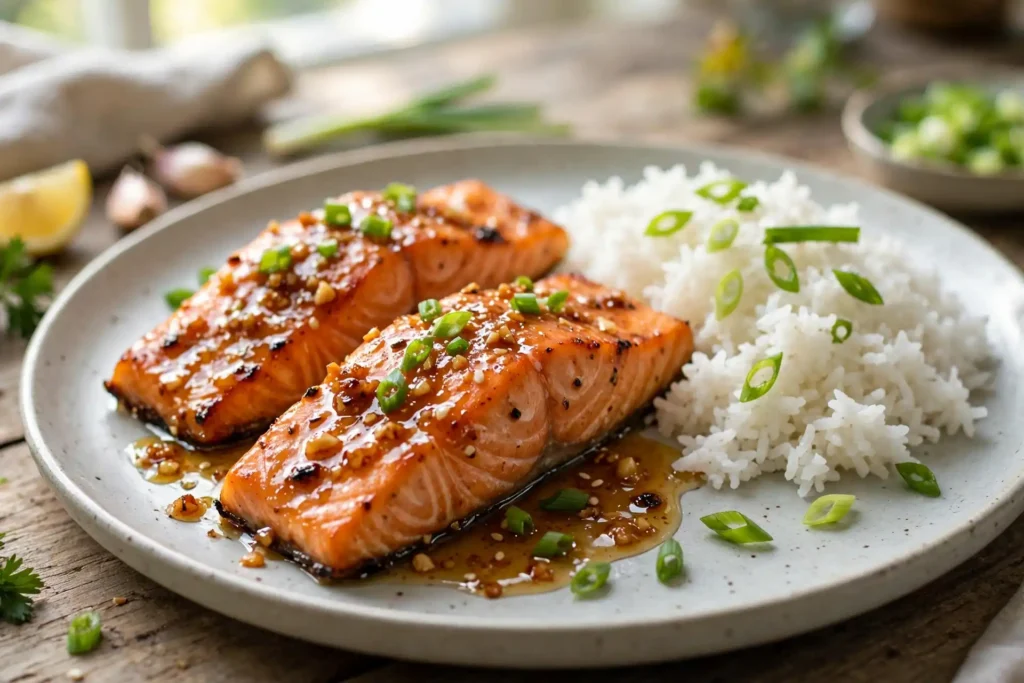
Salmon with lemon butter is a classic dish, because butter melted with lemon gives richness without heaviness. Salmon seared skin side down for 5 minutes turns crisp, lemon butter spooned on top at the end keeps salmon moist, and parsley on top adds fresh contrast. This is a dinner for a fast night, because it cooks in one pan, with rice or vegetables on the side.
Key Ingredients
- 4 salmon fillets, 6 oz each: Salmon fillets cooked skin side down turn crisp. Thin fillets would overcook fast in a hot pan.
- 3 tbsp butter, melted: Melted butter with lemon gives richness. Cold butter would seize in a hot pan.
- 1 lemon, juiced: Lemon juice at the end keeps sauce bright. Lemon juice added too early would cook away in hot butter.
- 2 tbsp parsley, chopped: Chopped parsley on top gives fresh contrast. Parsley cooked for a long time would lose flavor.
Quick Tips
- Pat salmon dry, season with salt, place salmon skin side down in a hot pan, cook for 5 minutes, without moving salmon, so skin turns crisp.
- Flip salmon, cook for 3 minutes more, until salmon flakes easily and reaches 145 degrees Fahrenheit inside, then remove from heat.
- Melt butter in the same pan, stir lemon juice in off heat, spoon sauce over salmon at once, because butter sauce separates fast as it cools.
| Prep | Cook | Total | Serves |
|---|---|---|---|
| 10 min | 8 min | 18 min | 4 |
Nutrition Snapshot (approx per serving): 380 calories, 34 g protein, 2 g carbs, 0 g fiber. Protein comes from salmon, carbs stay low because no rice or pasta is used, and fiber is low, so serve with vegetables for fiber.
2. Honey Garlic Salmon

Why We Love It
Honey garlic salmon is a sweet and savory dish, because honey caramelizes in a hot pan while garlic gives depth. Salmon seared first gives a crisp edge, honey garlic sauce added at the end coats salmon without burning, and a short cook keeps salmon moist. This is a dinner for a fast night, because it cooks in one pan, with rice on the side to soak up sauce.
Key Ingredients
- 4 salmon fillets, 6 oz each: Salmon fillets cooked in a hot pan turn crisp. Thin fillets would overcook fast.
- 3 tbsp honey: Honey added at the end caramelizes without burning. Honey added too early would burn in a hot pan.
- 4 garlic cloves, minced: Minced garlic cooked in sauce for 2 minutes stays sweet. Garlic cooked for a long time would turn bitter.
- 2 tbsp soy sauce: Soy sauce balances honey with salt. More soy sauce would make salmon too salty.
Quick Tips
- Sear salmon in a hot pan for 4 minutes per side, until salmon flakes easily and reaches 145 degrees Fahrenheit inside, then remove salmon from the pan.
- Add honey, garlic, and soy sauce to the same pan, simmer for 2 minutes, until sauce thickens, then return salmon to the pan.
- Spoon sauce over salmon at once, because honey sauce thickens fast as it cools, and serve over rice.
| Prep | Cook | Total | Serves |
|---|---|---|---|
| 10 min | 10 min | 20 min | 4 |
Nutrition Snapshot (approx per serving): 400 calories, 34 g protein, 18 g carbs, 0 g fiber. Protein comes from salmon, carbs come mainly from honey, and fiber is low, so serve with vegetables for fiber.
3. Salmon Teriyaki with Rice

Why We Love It
Salmon teriyaki is a glossy dish, because teriyaki sauce reduced in a pan coats salmon without drowning it. Salmon seared first gives a crisp edge, teriyaki sauce added at the end thickens in 3 minutes, and rice underneath soaks up sauce. This is a dinner for a family table, because it serves a crowd from one pan, with vegetables on the side.
Key Ingredients
- 4 salmon fillets, 6 oz each: Salmon fillets cooked in a hot pan turn crisp. Thin fillets would overcook fast.
- 1/2 cup teriyaki sauce: Teriyaki sauce reduced in the pan coats salmon. More sauce would make salmon too salty.
- 3 cups cooked rice: Cooked rice soaks up teriyaki sauce. Rice cooked fresh stays fluffy, rice reheated stays firm.
- 2 tbsp sesame seeds: Sesame seeds on top add crunch. Sesame seeds mixed in too early would turn soft under sauce.
Quick Tips
- Sear salmon in a hot pan for 4 minutes per side, until salmon flakes easily and reaches 145 degrees Fahrenheit inside, then remove salmon from the pan.
- Add teriyaki sauce to the same pan, simmer for 3 minutes, until sauce thickens, then return salmon to the pan.
- Serve salmon over rice, spoon sauce over salmon, top with sesame seeds at the table, so seeds stay crisp.
| Prep | Cook | Total | Serves |
|---|---|---|---|
| 10 min | 12 min | 22 min | 4 |
Nutrition Snapshot (approx per serving): 480 calories, 35 g protein, 48 g carbs, 2 g fiber. Protein comes from salmon, carbs come mainly from rice, and fiber comes from sesame seeds.
4. Cajun Salmon with Roasted Vegetables

Why We Love It
Cajun salmon is a spiced dish, because Cajun seasoning rubbed on salmon gives heat without heaviness. Salmon rubbed with seasoning, then roasted, stays moist, vegetables roasted in the same pan absorb seasoning, and a squeeze of lemon at the end keeps salmon bright. This is a dinner for a weekend, because it bakes while you set the table, with no extra pan to wash.
Key Ingredients
- 4 salmon fillets, 6 oz each: Salmon fillets roasted in the oven stay moist. Thin fillets would overcook fast in a hot oven.
- 2 tbsp Cajun seasoning: Cajun seasoning rubbed on salmon gives heat. More seasoning would make salmon too spicy.
- 4 cups mixed vegetables, such as zucchini and bell peppers: Mixed vegetables roasted in the same pan absorb seasoning. Vegetables cut small roast evenly.
- 1 lemon, cut into wedges: Lemon wedges squeezed at the end keep salmon bright. Lemon juice added too early would cook away in the oven.
Quick Tips
- Rub salmon with Cajun seasoning, place salmon on a sheet pan with vegetables in a single layer, so vegetables roast evenly.
- Roast in a 400 degree Fahrenheit oven for 15 minutes, until salmon flakes easily and reaches 145 degrees Fahrenheit inside, then remove from the oven.
- Squeeze lemon over salmon at once, because lemon added too early loses brightness in the oven.
| Prep | Cook | Total | Serves |
|---|---|---|---|
| 15 min | 15 min | 30 min | 4 |
Nutrition Snapshot (approx per serving): 390 calories, 35 g protein, 14 g carbs, 4 g fiber. Protein comes from salmon, fiber comes from vegetables, and carbs come mainly from vegetables.
5. Salmon Tacos with Avocado Crema
Why We Love It
Salmon tacos are a handheld dinner, because salmon flaked into tortillas with avocado crema tastes fresh without heaviness. Salmon cooked until it flakes, then broken into chunks, fills tortillas, avocado crema on top adds cool contrast, and cabbage on top adds crunch. This is a dinner for a night when dinner should be eaten by hand, with lime wedges on the side.
Key Ingredients
- 1.5 lb salmon fillets: Salmon fillets cooked until they flake break into chunks well. Salmon cooked too long would dry out before flaking.
- 8 corn tortillas, 6 inch: Corn tortillas warmed in a dry pan fold without cracking. Cold tortillas would crack when filled.
- 1 avocado, mashed: Mashed avocado mixed with lime juice gives crema. Avocado mashed too early would turn brown.
- 2 cups shredded cabbage: Shredded cabbage on top adds crunch. Cabbage mixed in too early would wilt under hot salmon.
Quick Tips
- Cook salmon in a hot pan for 4 minutes per side, until salmon flakes easily and reaches 145 degrees Fahrenheit inside, then break salmon into chunks.
- Warm tortillas in a dry pan for 1 minute each, fill with salmon, top with avocado crema and cabbage at the table, so tortillas stay warm and cabbage stays crisp.
- Serve with lime wedges, because lime squeezed at the table stays bright.
| Prep | Cook | Total | Serves |
|---|---|---|---|
| 15 min | 10 min | 25 min | 4 |
Nutrition Snapshot (approx per serving): 440 calories, 32 g protein, 32 g carbs, 6 g fiber. Protein comes from salmon, fiber comes from cabbage and avocado, and carbs come mainly from tortillas.
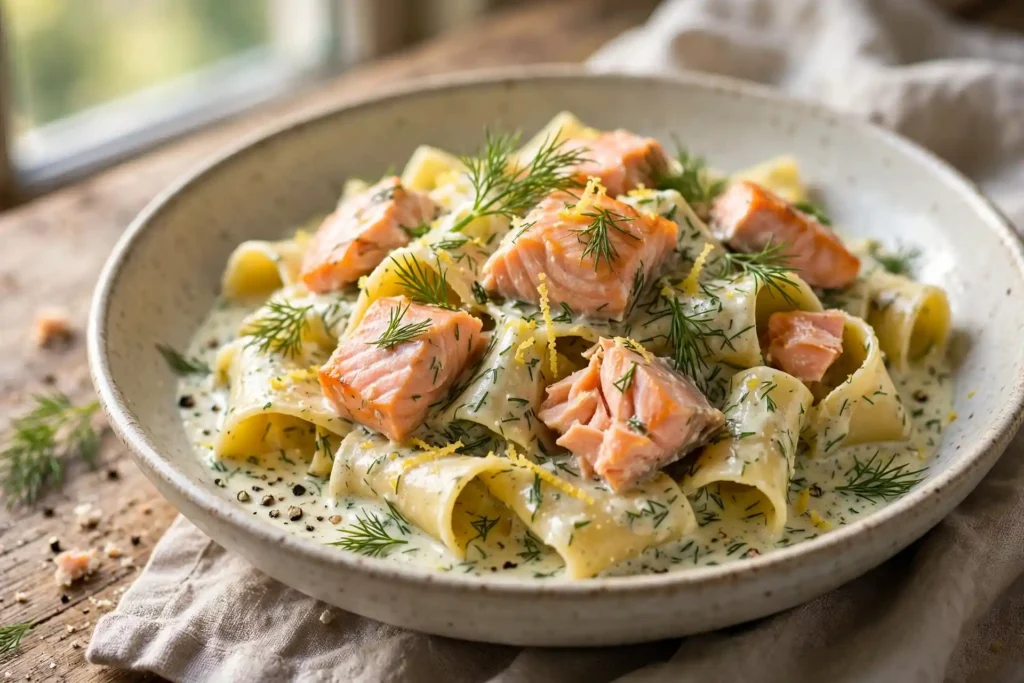
6. Salmon Pasta with Creamy Dill Sauce

Why We Love It
First, salmon pasta is a creamy dinner, because salmon flaked into pasta with dill sauce tastes rich without heaviness. Salmon cooked until it flakes, then broken into chunks, mixes into pasta, dill sauce made in the same pan coats pasta, and lemon zest at the end keeps pasta bright. This is a dinner for a family table, because it serves a crowd from one pot, with bread on the side.
Key Ingredients
- 1 lb salmon fillets: Salmon fillets cooked until they flake break into chunks well. Salmon cooked too long would dry out before flaking.
- 12 oz penne pasta: Penne cooked until tender holds sauce well. Pasta cooked too long would turn mushy.
- 1 cup cream: Cream simmered for 5 minutes thickens into sauce. Cream boiled hard would split in sauce.
- 2 tbsp fresh dill, chopped: Chopped dill added at the end gives fresh flavor. Dill cooked for a long time would turn bitter.
Quick Tips
- Cook salmon in a hot pan for 4 minutes per side, until salmon flakes easily and reaches 145 degrees Fahrenheit inside, then break salmon into chunks.
- Cook penne for 2 minutes less than package time, drain, then toss penne with cream sauce for 2 minutes, so pasta absorbs sauce.
- Stir salmon and dill into pasta at the end, off heat, top with lemon zest at the table, so dill stays fresh.
| Prep | Cook | Total | Serves |
|---|---|---|---|
| 15 min | 20 min | 35 min | 4 |
Nutrition Snapshot (approx per serving): 560 calories, 32 g protein, 52 g carbs, 3 g fiber. Protein comes from salmon, carbs come mainly from penne, and fiber comes from dill.
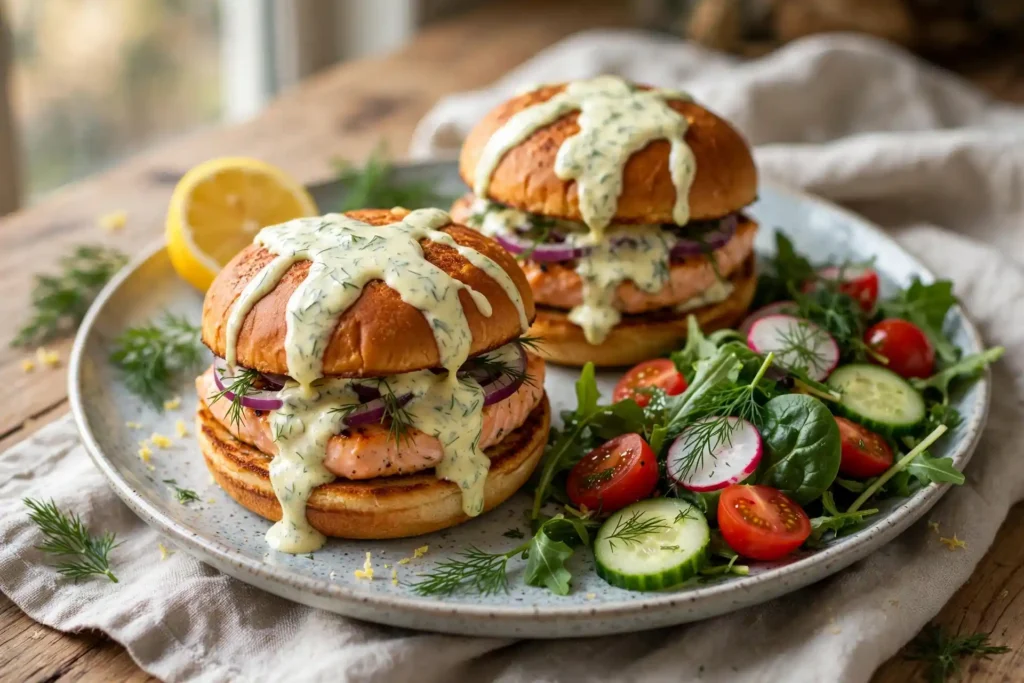
7. Salmon Burgers with Lemon Dill Sauce
Why We Love It
My family asks for this one when they want a burger, not a fillet, and salmon burgers give that handheld meal without beef. Salmon chopped and mixed gently holds shape in a pan, lemon dill sauce on top adds cool contrast, and a toasted bun holds burgers without falling apart. This is a dinner for a night when dinner should be eaten by hand, with salad on the side.
Key Ingredients
- 1.5 lb salmon fillets, chopped: Chopped salmon mixed gently holds shape in burgers. Overworked salmon makes burgers dense.
- 1/4 cup breadcrumbs: Breadcrumbs hold burgers together and keep them moist. More breadcrumbs would make burgers dry.
- 1 egg, beaten: Beaten egg helps burgers hold shape in the pan. Without egg, burgers would fall apart.
- 4 hamburger buns, toasted: Toasted buns hold salmon burgers without falling apart. Untoasted buns would turn soggy under sauce.
Quick Tips
- Chop salmon, mix salmon, breadcrumbs, and egg gently, shape burgers into patties, about 1 inch thick, then chill patties for 15 minutes, so patties hold shape.
- Cook burgers in a hot pan for 4 minutes per side, until burgers reach 145 degrees Fahrenheit inside, then remove from heat.
- Place burgers on toasted buns, top with lemon dill sauce at the table, so buns stay firm and sauce stays fresh.
| Prep | Cook | Total | Serves |
|---|---|---|---|
| 20 min | 10 min | 30 min | 4 |
Nutrition Snapshot (approx per serving): 480 calories, 34 g protein, 38 g carbs, 2 g fiber. Protein comes from salmon and egg, carbs come mainly from buns and breadcrumbs, and fiber is low, so serve with salad for fiber.
8. Salmon Curry with Coconut Milk

Why We Love It
Salmon curry is a warm dish, because salmon simmered in coconut milk absorbs spice without drying out. Salmon added at the end, not at the start, stays moist in curry, coconut milk softens curry spice without cream, and curry powder bloomed in oil gives warm depth. This is a dinner for a night when plain salmon feels too plain, with rice on the side to soak up sauce.
Key Ingredients
- 1.5 lb salmon fillets, cut into chunks: Salmon chunks added at the end stay moist in curry. Salmon cooked for a long time would dry out in curry.
- 1 can coconut milk, 13.5 oz: A full can coats salmon in a creamy sauce without cream.
- 2 tbsp curry powder: Curry powder bloomed in oil for 1 minute gives warm depth. Raw curry powder tastes dusty.
- 1 onion, diced: Diced onion softened for 8 minutes gives a sweet base. Raw onion would taste sharp in curry.
Quick Tips
- Bloom curry powder in oil in a pan for 1 minute, add onion, cook for 8 minutes, until onion softens, then add coconut milk.
- Simmer coconut milk for 10 minutes, add salmon chunks, cook for 8 minutes, until salmon flakes easily and reaches 145 degrees Fahrenheit inside.
- Serve over rice at once, because salmon curry thickens fast as it cools, and salmon dries out if reheated too long.
| Prep | Cook | Total | Serves |
|---|---|---|---|
| 15 min | 25 min | 40 min | 4 |
Nutrition Snapshot (approx per serving): 460 calories, 34 g protein, 12 g carbs, 2 g fiber. Protein comes from salmon, carbs stay lower because no rice is counted in the snapshot, and fiber comes from onion.
9. Miso Glazed Salmon

Why We Love It
Miso glazed salmon is a glossy dish, because miso mixed with honey and soy gives a sweet and salty glaze. Salmon brushed with glaze, then baked, turns golden on top, miso added at the right time does not burn, and a short bake keeps salmon moist. This is a dinner for a fast night, because it bakes in one pan, with rice or vegetables on the side.
Key Ingredients
- 4 salmon fillets, 6 oz each: Salmon fillets baked in the oven stay moist. Thin fillets would overcook fast in a hot oven.
- 3 tbsp miso paste: Miso paste mixed with honey gives a sweet and salty glaze. More miso would make salmon too salty.
- 1 tbsp honey: Honey balances miso with sweetness. More honey would make glaze burn in the oven.
- 1 tbsp soy sauce: Soy sauce thins miso glaze. More soy sauce would make glaze too salty.
Quick Tips
- Mix miso, honey, and soy sauce until smooth, brush glaze on salmon, then rest salmon for 10 minutes, so glaze absorbs.
- Bake in a 400 degree Fahrenheit oven for 12 minutes, until salmon flakes easily and reaches 145 degrees Fahrenheit inside, then remove from the oven.
- Brush extra glaze on top at once, because glaze sets fast as salmon cools.
| Prep | Cook | Total | Serves |
|---|---|---|---|
| 15 min | 12 min | 27 min | 4 |
Nutrition Snapshot (approx per serving): 390 calories, 34 g protein, 12 g carbs, 0 g fiber. Protein comes from salmon, carbs come mainly from honey, and fiber is low, so serve with vegetables for fiber.
10. Salmon Fried Rice

Why We Love It
Salmon fried rice is a fast dinner, because cold rice fries crisp in a hot pan while salmon cooks beside it. Cold rice grains stay separate in a hot pan, salmon added at the right time stays moist, and soy sauce added at the end seasons rice without making it soggy. This is a dinner for a night when leftover rice sits in the fridge, and dinner needs to use it up.
Key Ingredients
- 1 lb salmon fillets, cut into chunks: Salmon chunks added at the right time stay moist in fried rice. Salmon cooked too long would dry out.
- 4 cups cold cooked rice: Cold rice fries crisp in a hot pan. Fresh rice would turn mushy in fried rice.
- 2 eggs, beaten: Beaten eggs scrambled in the pan give protein and color. Eggs added too early would overcook in fried rice.
- 3 tbsp soy sauce: Soy sauce added at the end seasons rice. Soy sauce added too early would make rice soggy.
Quick Tips
- Heat oil in a large pan over high heat, add salmon chunks, cook for 5 minutes, until salmon flakes easily and reaches 145 degrees Fahrenheit inside, then remove salmon.
- Scramble eggs in the same pan for 2 minutes, add cold rice, fry for 8 minutes, without stirring too often, so rice crisps.
- Stir salmon and soy sauce in at the end, off heat, taste for salt, then serve at once, because fried rice loses crispness fast as it cools.
| Prep | Cook | Total | Serves |
|---|---|---|---|
| 10 min | 15 min | 25 min | 4 |
Nutrition Snapshot (approx per serving): 520 calories, 32 g protein, 52 g carbs, 2 g fiber. Protein comes from salmon and eggs, carbs come mainly from rice, and fiber is low, so serve with vegetables for fiber.
11. Salmon Salad with Citrus Dressing

Why We Love It
Salmon salad is a light dinner, because salmon flaked over greens with citrus dressing tastes fresh without heaviness. Salmon cooked until it flakes, then cooled slightly, breaks into chunks over greens, citrus dressing made fresh gives bright flavor, and avocado on top adds creaminess. This is a dinner for a hot night, because it tastes cool without losing protein.
Key Ingredients
- 1.5 lb salmon fillets: Salmon fillets cooked until they flake break into chunks well. Salmon cooked too long would dry out before flaking.
- 6 cups mixed greens: Mixed greens underneath hold salmon without wilting at once. Greens mixed with hot salmon would wilt fast.
- 1 orange, segmented: Orange segments give sweetness and citrus flavor. Orange juice alone would make salad watery.
- 1 avocado, sliced: Sliced avocado on top adds creaminess. Avocado sliced too early would turn brown.
Quick Tips
- Cook salmon in a hot pan for 4 minutes per side, until salmon flakes easily and reaches 145 degrees Fahrenheit inside, then let salmon cool for 5 minutes, so greens stay crisp.
- Whisk orange juice, olive oil, and mustard until smooth, pour dressing over greens at the table, so greens do not wilt before serving.
- Top salad with salmon chunks, orange segments, and avocado at the table, so salad stays fresh and bright.
| Prep | Cook | Total | Serves |
|---|---|---|---|
| 15 min | 10 min | 25 min | 4 |
Nutrition Snapshot (approx per serving): 420 calories, 32 g protein, 14 g carbs, 5 g fiber. Protein comes from salmon, fiber comes from greens and avocado, and carbs come mainly from orange and avocado.
12. Salmon en Papillote with Vegetables

Why We Love It
Salmon en papillote is a gentle dinner, because salmon sealed in parchment steams with vegetables without drying out. Salmon placed on vegetables in parchment, sealed tightly, steams in its own juices, vegetables underneath absorb salmon flavor, and opening the packet at the table keeps salmon moist. This is a dinner for a quiet night, because it cooks in one packet, with no pan to wash.
Key Ingredients
- 4 salmon fillets, 6 oz each: Salmon fillets steamed in parchment stay moist. Thin fillets would overcook fast in a hot oven.
- 4 cups mixed vegetables, such as zucchini and carrots, sliced thin: Thin sliced vegetables steam tender in parchment. Thick vegetables would stay hard in the center.
- 4 sheets parchment paper: Parchment paper sealed tightly traps steam. Paper sealed loosely would let steam escape.
- 1 lemon, sliced thin: Thin lemon slices on top give bright flavor. Lemon juice alone would make packets watery.
Quick Tips
- Place vegetables on parchment in a single layer, place salmon on top, top with lemon slices, then fold parchment tightly, sealing edges, so steam stays inside.
- Bake packets in a 400 degree Fahrenheit oven for 15 minutes, until salmon flakes easily and reaches 145 degrees Fahrenheit inside, then remove from the oven.
- Open packets at the table, so steam escapes at serving and salmon stays moist.
| Prep | Cook | Total | Serves |
|---|---|---|---|
| 15 min | 15 min | 30 min | 4 |
Nutrition Snapshot (approx per serving): 360 calories, 34 g protein, 10 g carbs, 3 g fiber. Protein comes from salmon, fiber comes from vegetables, and carbs come mainly from vegetables.
13. Salmon Chowder with Potatoes

Why We Love It
Salmon chowder is a creamy dinner, because salmon chunks simmered in a potato broth stay tender without drying out. Potatoes cooked until soft thicken chowder without cream heaviness, salmon added at the end stays moist, and a splash of cream at the end keeps chowder silky. This is a dinner for a cold night, because it fills a bowl with fish and potatoes in every spoonful.
Key Ingredients
- 1.5 lb salmon fillets, cut into chunks: Salmon chunks added at the end stay moist in chowder. Salmon cooked for a long time would dry out.
- 3 potatoes, cubed: Cubed potatoes soften in broth without falling apart. Small cubes would turn mushy in chowder.
- 4 cups fish stock: Fish stock forms a rich broth. Water alone would leave chowder flat.
- 1/2 cup cream: Cream stirred in at the end gives silkiness. Cream boiled for a long time would split in chowder.
Quick Tips
- Simmer potatoes and stock for 20 minutes, until potatoes are tender, then blend partly, leaving some potatoes whole, so chowder stays thick.
- Add salmon chunks, simmer for 8 minutes, until salmon flakes easily and reaches 145 degrees Fahrenheit inside, then remove from heat.
- Stir cream in at the end, off heat, taste for salt, then serve at once, because chowder thickens fast as it cools.
| Prep | Cook | Total | Serves |
|---|---|---|---|
| 15 min | 28 min | 43 min | 4 |
Nutrition Snapshot (approx per serving): 440 calories, 32 g protein, 28 g carbs, 3 g fiber. Protein comes from salmon, carbs come mainly from potatoes, and fiber comes from potatoes.
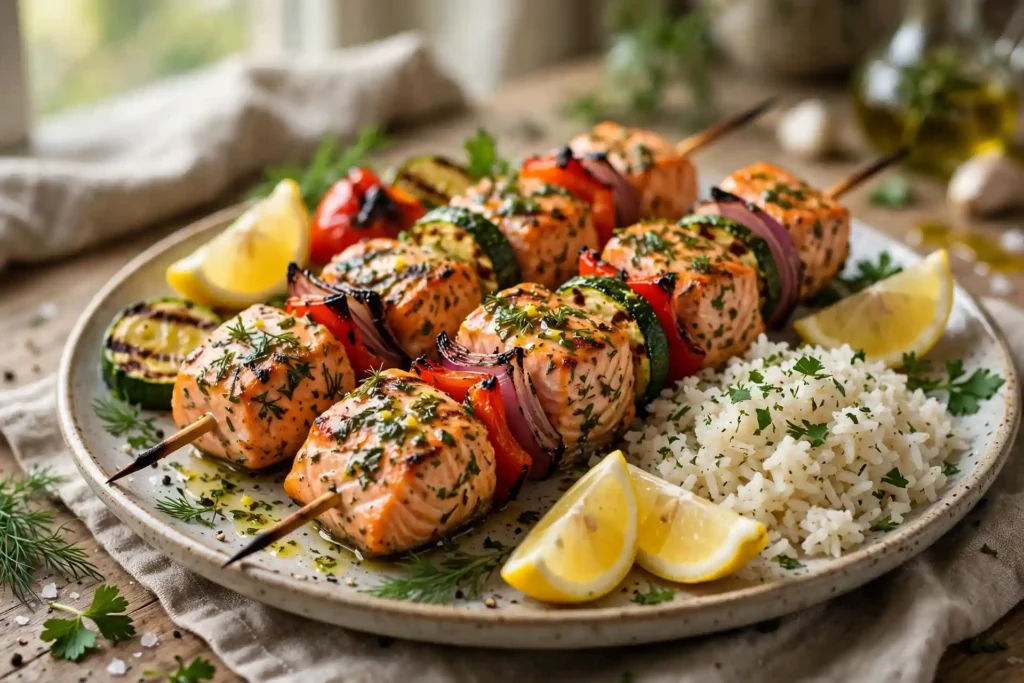
14. Salmon and Spinach Quiche
Why We Love It
Quiche is a baked dinner, because salmon and spinach set in eggs and cream into a firm slice. Salmon cooked until it flakes, then mixed into egg filling, stays moist in the oven, spinach wilted first releases water before baking, and a crust baked until golden holds filling without turning soggy. This is a dinner for a weekend, because it bakes while you set the table, with salad on the side.
Key Ingredients
- 1 lb salmon fillets, cooked and flaked: Cooked salmon flaked into quiche stays moist. Raw salmon added to quiche would cook unevenly.
- 4 cups spinach, wilted: Spinach wilted and squeezed dry releases water before baking. Wet spinach would make quiche soggy.
- 4 eggs, beaten: Beaten eggs set quiche filling in the oven. Eggs added cold would make filling lumpy.
- 1 pie crust, 9 inch: Pie crust baked until golden holds filling. Unbaked crust would turn soggy under filling.
Quick Tips
- Wilt spinach in a pan for 3 minutes, squeeze spinach dry with a towel, so quiche does not turn watery.
- Mix salmon, spinach, eggs, and cream until smooth, pour filling into crust, then bake in a 375 degree Fahrenheit oven for 35 minutes, until filling sets and top turns golden.
- Rest quiche for 10 minutes before slicing, so filling sets and slices hold shape.
| Prep | Cook | Total | Serves |
|---|---|---|---|
| 20 min | 35 min | 55 min | 6 |
Nutrition Snapshot (approx per serving): 420 calories, 26 g protein, 22 g carbs, 2 g fiber. Protein comes from salmon and eggs, carbs come mainly from pie crust, and fiber comes from spinach.
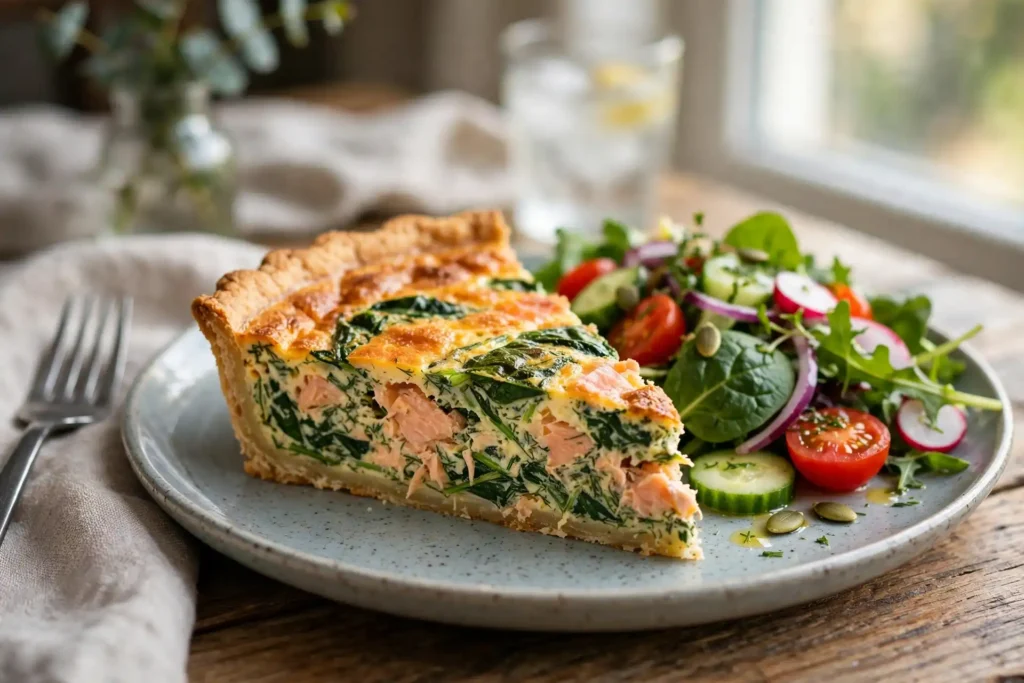
15. Salmon Skewers with Lemon Herb Marinade
Why We Love It
Skewers are a grilled dinner, because salmon chunks marinated in lemon and herbs cook fast on skewers without drying out. Salmon marinated for 20 minutes absorbs lemon flavor, skewers turned every 3 minutes cook evenly, and vegetables between salmon chunks add color. This is a dinner for a summer night, because skewers cook fast on a grill or in a hot oven, with rice on the side.
Key Ingredients
- 1.5 lb salmon fillets, cut into chunks: Salmon chunks cut evenly cook at the same rate on skewers. Uneven chunks would cook unevenly.
- 1/4 cup lemon juice, fresh: Fresh lemon juice marinates salmon without cooking it. Bottled lemon juice would taste flat in marinade.
- 2 tbsp olive oil: Olive oil in marinade keeps salmon moist on skewers. Marinade without oil would leave salmon dry.
- 2 tbsp mixed herbs, such as parsley and dill, chopped: Chopped herbs in marinade give fresh flavor. Herbs added after grilling would taste raw.
Quick Tips
- Mix lemon juice, olive oil, and herbs, marinate salmon chunks for 20 minutes, no longer, because lemon left too long would start to cook salmon.
- Thread salmon and vegetables onto skewers, leaving small gaps between pieces, so heat reaches all sides.
- Grill skewers over medium-high heat for 3 minutes per side, until salmon flakes easily and reaches 145 degrees Fahrenheit inside, then serve at once.
| Prep | Cook | Total | Serves |
|---|---|---|---|
| 20 min | 12 min | 32 min | 4 |
Nutrition Snapshot (approx per serving): 380 calories, 34 g protein, 4 g carbs, 1 g fiber. Protein comes from salmon, carbs stay low because no rice is counted in the snapshot, and fiber comes from vegetables on skewers.
Storage and Make-Ahead Tips for Salmon Recipes
Store leftovers from these salmon recipes in airtight containers in the fridge for 2 to 3 days. Cool salmon before sealing the container, and reheat until steaming hot throughout, then serve at once. Salmon dries out fast when reheated, so reheat gently on low heat.
Salmon dishes in this list freeze well for up to 2 months in freezer-safe containers, except for salads, tacos, and quiche toppings. Thaw overnight in the fridge, then reheat on low heat with a splash of stock if salmon has dried out.
For make-ahead cooking, prep sauces, dressings, and marinades a day early and store them separately in the fridge. Cook salmon fresh when possible, since salmon holds texture better on the day, while sauces and marinades often taste better the next day.
Do not freeze salmon salad, salmon tacos, or salmon burgers with sauce in this list, because greens wilt, tortillas turn soggy, and buns lose texture after thawing. Freeze salmon fillets and salmon chunks alone, without rice, pasta, or sauce, and cook rice, pasta, and sauce fresh when you serve them. Salads, tacos, and burgers are best assembled fresh, with salmon prepped a day early if needed.
Allergen and Dietary Notes
Use this section with the salmon recipes above to check gluten, dairy, egg, soy, and fish before cooking, and check every label for the dish you choose.
Fish is present in every dish in this list, since salmon is the main protein. No dish in this list is claimed to be safe for a fish allergy, and salmon should be omitted entirely for guests with a fish allergy, not substituted with another fish.
Dairy is present in specific dishes in this list. Salmon with Lemon Butter Sauce contains dairy in butter, Salmon Pasta contains dairy in cream, Salmon Burgers contain dairy in lemon dill sauce if yogurt is used, Salmon Chowder contains dairy in cream, and Salmon Quiche contains dairy in cream. To make those dairy dishes dairy-free, try substituting dairy-free butter and cream, and omit cheese where the dish allows it.
Gluten is present in specific dishes in this list. Salmon Tacos contain gluten if flour tortillas are used, Salmon Pasta contains gluten in penne pasta, Salmon Burgers contain gluten in breadcrumbs and hamburger buns, Salmon Fried Rice contains gluten in soy sauce, and Salmon Quiche contains gluten in pie crust. To make those dishes gluten-free, try substituting corn tortillas, gluten-free pasta, buns, breadcrumbs, pie crust, and tamari for soy sauce, and check every sauce label.
Soy is present in specific dishes in this list, including Honey Garlic Salmon, Salmon Teriyaki, Miso Glazed Salmon, Salmon Fried Rice, and Salmon Skewers if soy sauce is added, and other dishes in this list do not list soy as a core ingredient. To make those dishes soy-free, try substituting coconut aminos for soy sauce, and check stock and sauce labels. Sesame is present in Salmon Teriyaki in sesame seeds, so omit sesame seeds if sesame is a concern.
Egg is present in specific dishes in this list, including Salmon Burgers in beaten egg, Salmon Fried Rice in beaten eggs, and Salmon Quiche in beaten eggs, and other dishes in this list do not list egg as a core ingredient, except where pasta or breadcrumbs are used. To make those dishes egg-free, try substituting a milk and flour wash, and check pasta labels for egg. Nut is present only as a garnish in some dishes in this list, so omit nuts if nut is a concern. No dish in this list is claimed to be safe for any allergy, and labels should be checked before serving, especially for guests with allergies.
Frequently Asked Questions
These answers focus on dishes in this list, not on general cooking advice.
Which recipe should I start with if I am new to salmon cooking?
Start with Salmon with Lemon Butter Sauce, the simplest of these salmon recipes for a new cook. It uses one pan, a short ingredient list, and a clear doneness cue, since salmon is done when it flakes easily with a fork and reaches 145 degrees Fahrenheit inside. The dish also teaches a basic skill you can reuse in other salmon dishes, because you learn to sear skin side down, flip once, and finish with lemon butter at the end.
Why does my salmon turn dry?
Dry salmon usually comes from overcooking, cooking at a temperature that is too high, or reheating salmon too long, and this list fixes all three. Cook salmon until it flakes easily and reaches 145 degrees Fahrenheit inside, not longer, use a sauce or topping to keep salmon moist, and reheat salmon gently on low heat. If salmon is still dry at the end, spoon sauce or lemon butter over salmon for 2 minutes, so salmon absorbs moisture.
Can I use frozen salmon in these recipes?
Yes, with one rule: thaw salmon in the fridge overnight before cooking, and this list works best when salmon is thawed fully. Frozen salmon cooked directly in a pan cooks unevenly, and salmon cooked from frozen in the oven takes longer to reach 145 degrees Fahrenheit inside. Do not thaw salmon on the counter, since bacteria grow fast at room temperature.
What is the best way to keep salmon skin crisp?
Pat salmon dry, season with salt, place salmon skin side down in a hot pan, and do not move salmon for 5 minutes, because dry skin crisps in a hot pan and moving salmon early tears skin. Check crispness by looking at the edges after 5 minutes, since skin turns golden at the edges first, and flip salmon only once, after skin is crisp.
Are these salmon recipes suitable for a large family?
Yes, most dishes here serve 4 to 6 people, and several scale well. Double the salmon and sauce for pan dishes, pasta dishes, and chowder, and use a larger pan, so the food cooks evenly rather than steaming. Keep the timing close to the original, and check doneness by temperature rather than by time alone, because a doubled pan takes longer to heat.
Which recipe in this list is best for picky eaters?
For a spice-averse eater, start with Salmon with Lemon Butter Sauce, one of the milder dishes in this list, served with plain rice, because the flavor is buttery and mild, with no heat to avoid. For a texture-averse eater, start with Salmon Pasta or Salmon Chowder, because both are soft and creamy, with no crisp coating forced on top. For a vegetable-averse eater, start with Salmon Teriyaki, because vegetables appear only on the side, or with Salmon Burgers with only salmon and sauce, so vegetables can be added separately, not mixed in.
Can I make these dishes dairy-free or gluten-free?
Yes, with specific substitutions named in the Allergen and Dietary Notes section. Use gluten-free tortillas, pasta, buns, breadcrumbs, pie crust, and tamari for the gluten-containing dishes, and use dairy-free butter and cream for the buttery and creamy dishes. Omit cheese where the dish allows it, and check every sauce and stock label for hidden gluten or dairy.
Final Thoughts
Salmon earns its place when dinner needs to be fast, but fast does not mean careless. A fillet cooks in 8 to 12 minutes, which leaves almost no room to fix a mistake, so the skill that matters here is knowing when to stop. Pull salmon when it flakes and reaches 145 degrees Fahrenheit inside, even if it still looks slightly soft, because salmon keeps cooking off heat.
Learn that stop point first, and the rest opens up. Lemon Butter shows skin crisped without moving the fillet, Teriyaki shows sauce reduced in the same pan, and En Papillote shows steam doing the work when you seal the packet tightly.
Search recipes
Latest Posts
21 Chicken Breast Recipes for Dinner That Save Weeknights
November 27, 2026