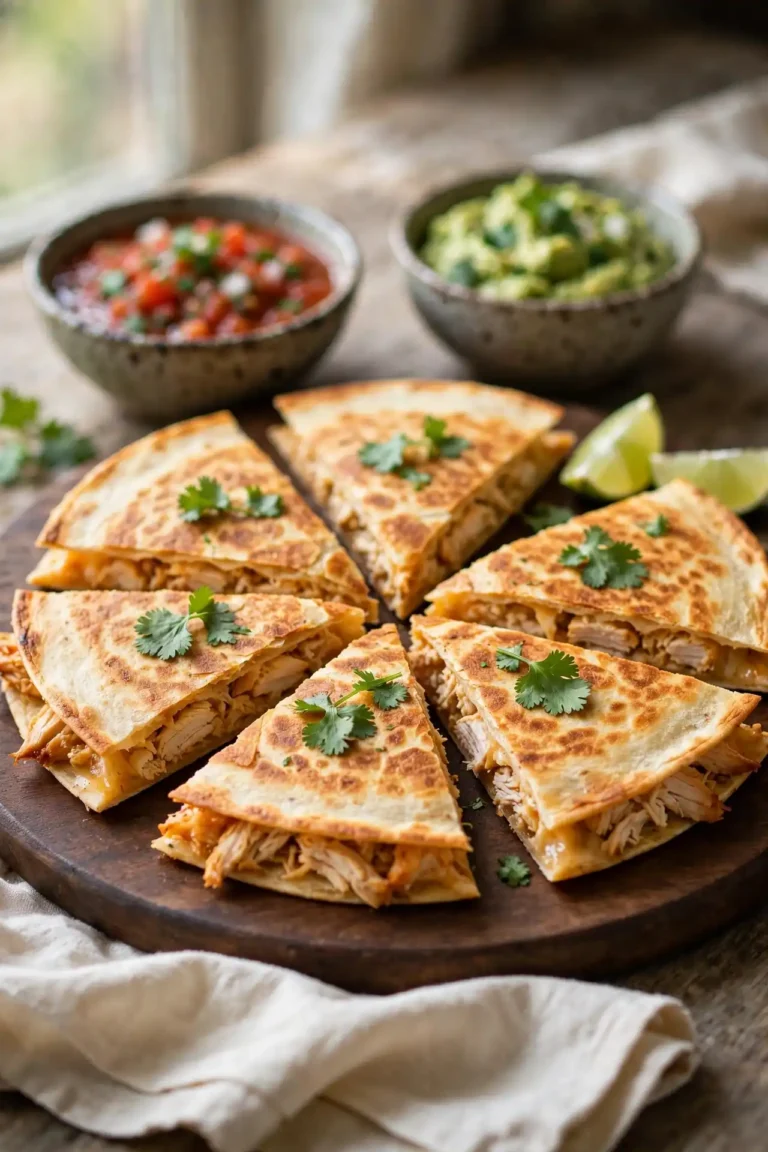
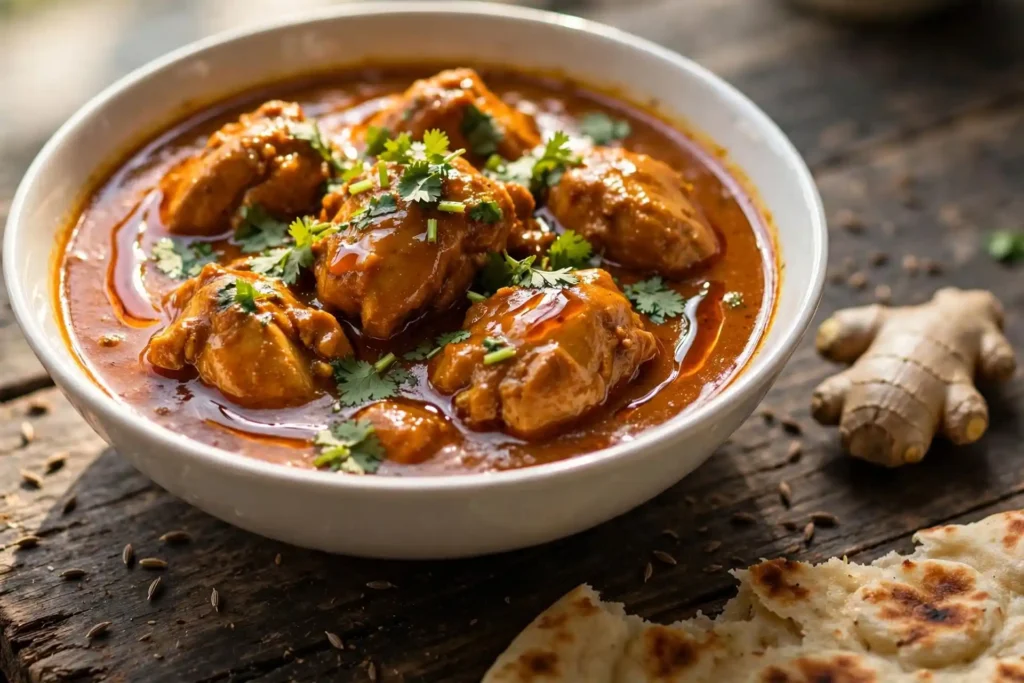
Chicken Curry Recipe: Rich, Spiced, and Ready in 50 Minutes
In This Article
- Why You’ll Love This Chicken Curry
- Ingredients You’ll Need
- How to Make Chicken Curry: Step by Step
- Key Tips for Best Results
- Common Mistakes to Avoid
- Variations and Substitutions
- What to Serve With Chicken Curry
- Storage, Reheating and Make-Ahead
- Allergen Information
- Nutrition Information
- Frequently Asked Questions
- Chicken Curry: Recipe Card
Most chicken curry recipes either skip the foundation or dump everything into the pan at once. The onions get soft but not golden, the spices never properly bloom in the fat, and the result tastes flat. This recipe fixes that. The onions get a full 18 to 20 minutes. The masala cooks until the oil separates around the edges. The chicken goes in already marinated.
None of it is complicated. But the sequence and timing make a noticeable difference in the finished dish. This is the chicken curry I make on weeknights when the food still has to be good.
Why You’ll Love This Chicken Curry
- The gravy is thick and glossy without any cream or coconut milk
- Cumin seeds bloomed in hot oil at the start add a depth that ground cumin alone doesn’t deliver
- A 20-minute yogurt marinade makes the chicken visibly more tender after simmering
- Works with boneless thighs or bone-in pieces without changing the core method
- The masala base can be made two days ahead, cutting active weeknight time in half
Ingredients You’ll Need
For the Marinade
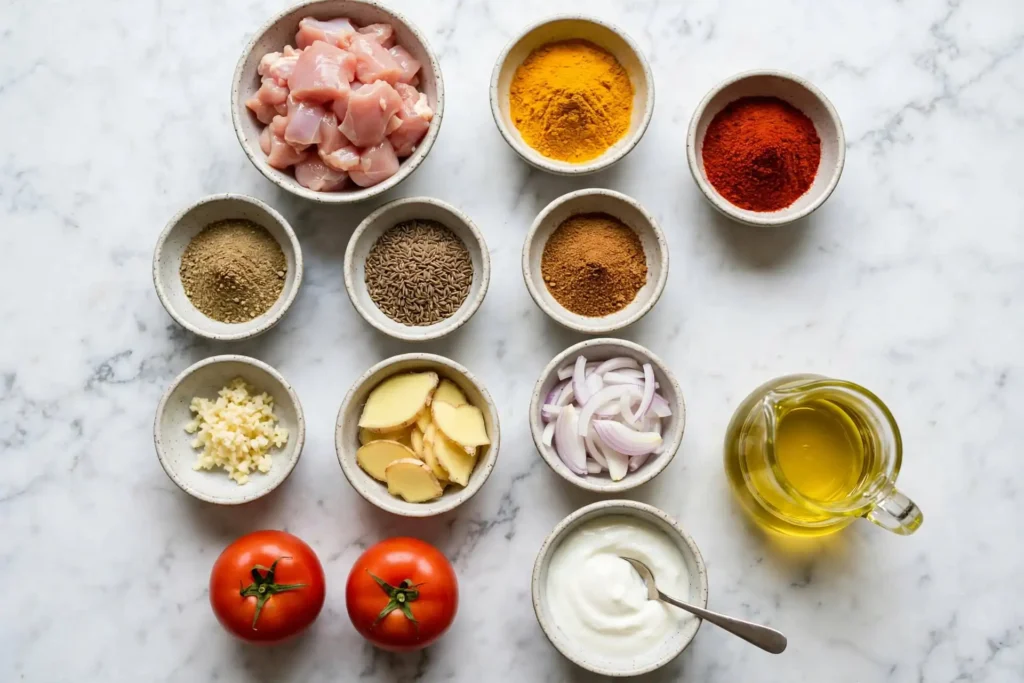
- 700g boneless, skinless chicken thighs, cut into roughly 2-inch pieces — thighs hold up better than breast during a 20-minute simmer and absorb spices more effectively
- 2 tbsp plain yogurt — lactic acid in yogurt gently tenderizes the meat without breaking it down
- 1 tsp turmeric powder
- 0.5 tsp salt
For the Curry Base
- 3 tbsp neutral oil (sunflower or vegetable)
- 1 tsp cumin seeds — bloomed in oil first for a nuttier, more layered flavor than ground cumin can produce
- 2 medium onions, finely sliced (about 280g) — needs to cook until deeply golden, not just soft
- 5 garlic cloves, minced
- 1 tbsp fresh ginger, finely grated
- 2 medium tomatoes, blended or very finely chopped (about 250g) — blending gives a smoother, more integrated gravy
- 1.5 tsp ground coriander
- 1 tsp ground cumin
- 1 tsp red chili powder (adjust to taste)
- 0.5 tsp turmeric powder
- 1 tsp salt (adjust to taste)
- 0.5 cup water, added gradually during cooking
- 0.5 tsp garam masala — added at the very end to preserve its aromatic quality
- Small handful of fresh cilantro, roughly chopped, to garnish
Recipe Timing
| Timing Element | Duration |
| Prep Time | 15 minutes |
| Cook Time | 35 minutes |
| Total Time | 50 minutes |
Add 20 minutes if marinating the chicken beforehand — strongly recommended.
Servings: 4 | Difficulty: Medium | Cuisine: South Asian | Course: Main Course
How to Make Chicken Curry: Step by Step
Step 1: Marinate the Chicken
Combine the chicken pieces with yogurt, turmeric, and salt in a bowl. Mix until every piece is coated. Cover and set aside for 20 minutes at room temperature, or up to 4 hours in the fridge.
Why this works: Yogurt contains lactic acid, which gently breaks down the surface proteins of the chicken. Even a short 20-minute marinade makes the meat measurably more tender after simmering.
⚠️ Food Safety: If marinating longer than 30 minutes, keep the chicken refrigerated. Discard any leftover marinade that has been in contact with raw poultry.
Step 2: Build the Onion Base
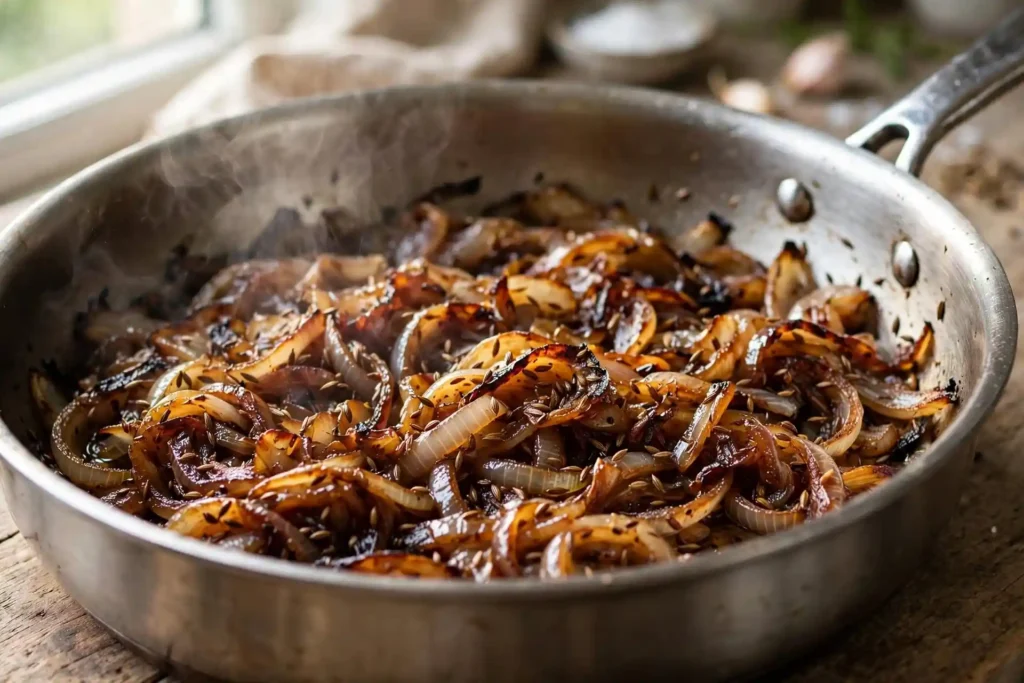
Heat the oil in a heavy-bottomed pan over medium heat. Add the cumin seeds and let them sizzle for 30 to 45 seconds until they darken slightly and smell nutty. Add the sliced onions and cook for 18 to 20 minutes, stirring every 3 to 4 minutes, until they reach a deep amber-brown color.
Why this works: Properly caramelized onions are the flavor foundation of the entire curry. Stopping when they are pale gold or just softened leaves the gravy tasting flat and one-dimensional. The color should be a rich, deep brown before you move on.
Step 3: Add Garlic and Ginger
Push the onions to one side of the pan. Add the garlic and ginger directly to the oil and cook for 60 to 90 seconds, stirring constantly, until the raw smell disappears and the paste turns light golden. Stir everything together until fully combined.
Step 4: Cook Down the Tomatoes and Spices
Add the blended or finely chopped tomatoes and stir into the onion mixture. Cook for 6 to 8 minutes, stirring occasionally, until the tomatoes are completely broken down and the oil begins to separate and pool around the edges of the pan.
Add the ground coriander, ground cumin, red chili powder, turmeric, and salt. Stir thoroughly and cook for another 2 minutes.
Why this works: The oil separating from the masala is not a visual cue to rush past. It confirms that the water from the tomatoes has cooked off and the spices have properly bloomed in the fat. Skipping this stage results in a grainy, raw-tasting curry.
Step 5: Add the Chicken
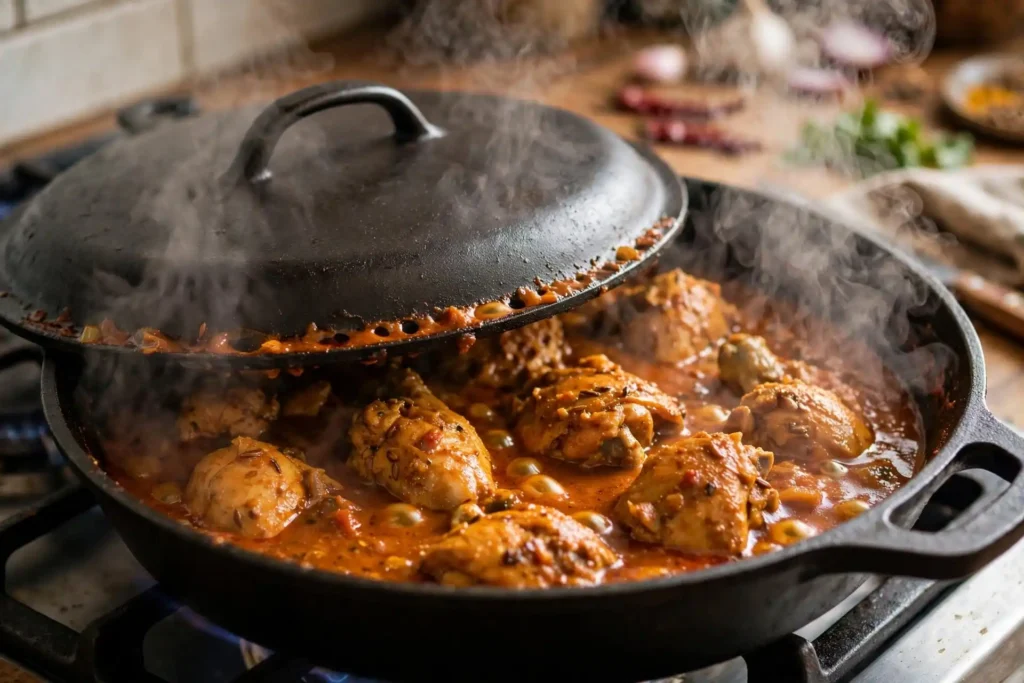
Add the marinated chicken pieces directly to the masala. Stir to coat every piece thoroughly. Cook uncovered over medium-high heat for 5 to 6 minutes, stirring occasionally, until the chicken is no longer pink on the outside.
⚠️ Food Safety: Once raw chicken is added to the pan, cook through without interruption to a safe internal temperature. Do not partially cook and pause. Per USDA safe temperature guidelines (target=”_blank”), poultry must reach an internal temperature of 75°C (165°F).
Step 6: Simmer Until Cooked Through
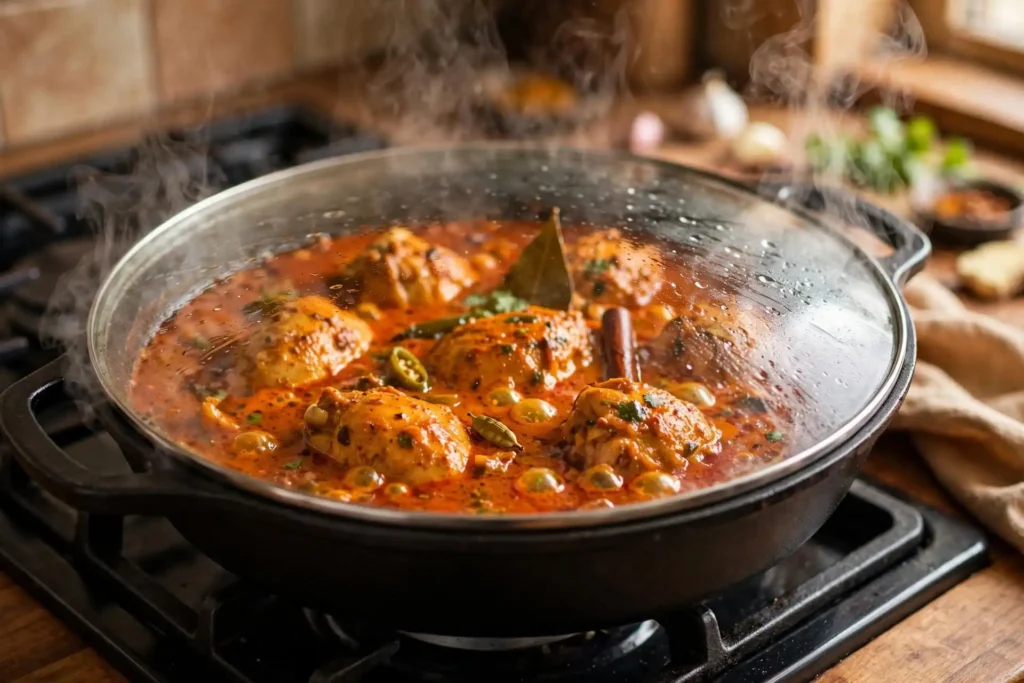
Add the water and stir. Reduce the heat to medium-low, cover the pan, and simmer for 18 to 20 minutes, stirring once halfway through. The chicken is done when a meat thermometer reads 75°C (165°F) at the thickest piece, and the pieces feel tender when pressed gently with a spoon.
Step 7: Finish and Serve
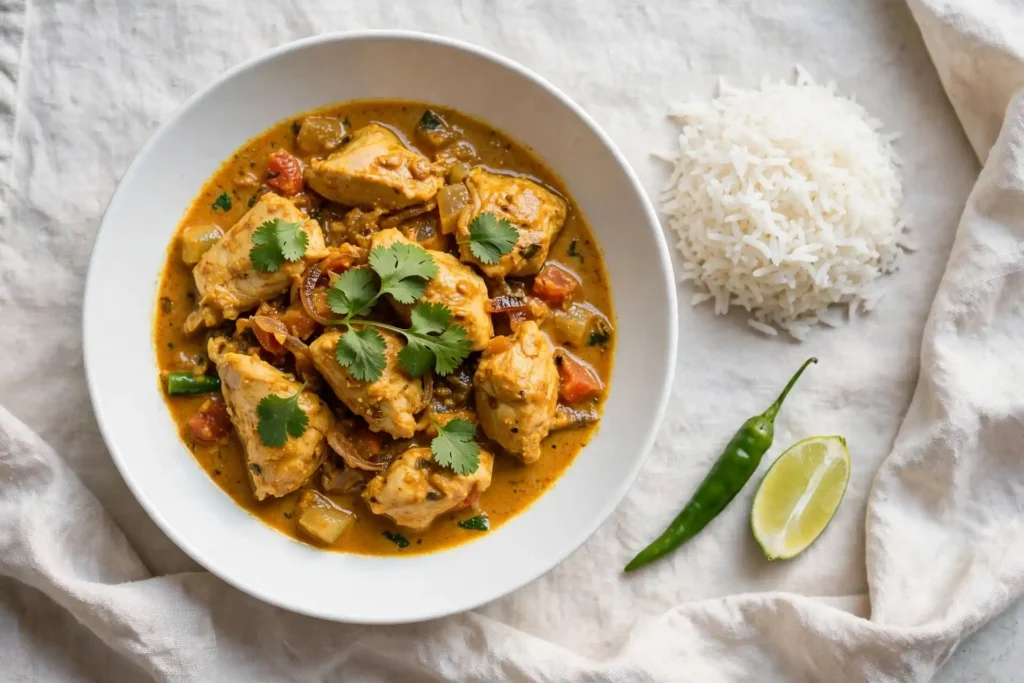
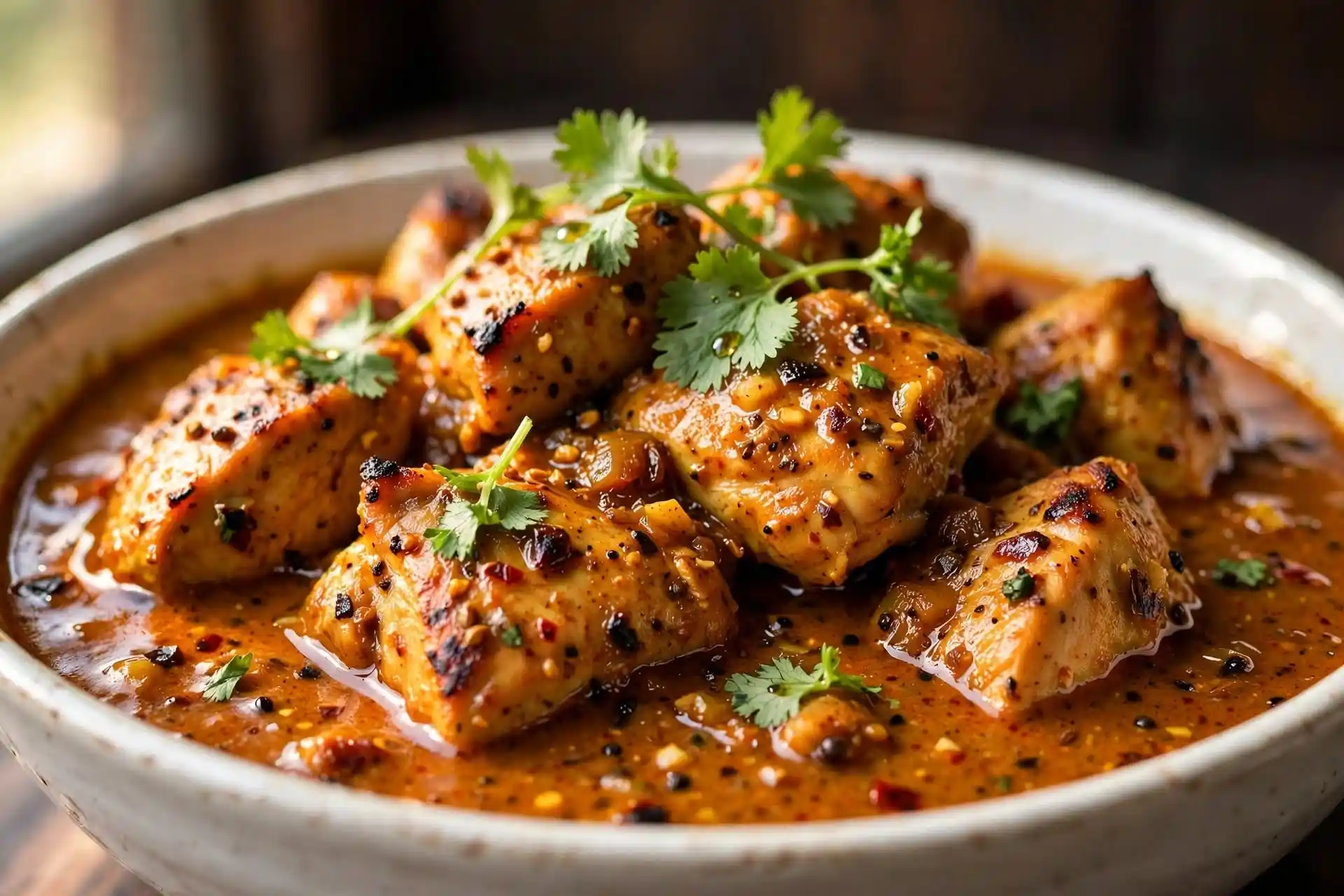
Remove the lid. If the gravy is thinner than you want, simmer uncovered for 3 to 4 more minutes until it tightens. Sprinkle the garam masala over the top, stir once, and taste for salt. Garnish with fresh cilantro and serve immediately.
Why this works: Garam masala loses its aroma quickly with prolonged heat. Adding it at the very end keeps the warm, fragrant top note intact, which is a large part of what makes a finished chicken curry smell as good as it tastes.
Key Tips for Best Results
The onions need the full time. This is the one step where impatience shows up in the final dish. If your onions are light gold after 12 minutes, give them 6 to 8 more. The color before you add garlic should be a rich, dark amber.
Season in layers, not just at the end. Add salt at both the marinade stage and the masala stage. Seasoning once at the finish makes the curry taste like it was seasoned at the end.
Use chicken thighs, not breast. Breast meat tightens and dries out during the simmer. Thighs stay tender and hold the flavor of the masala better. Bone-in thighs work too — they just need an extra 8 to 10 minutes on the simmer.
Common Mistakes to Avoid
Adding water before the masala is ready.
Tomatoes release a significant amount of water during cooking. If you add more liquid before the oil has separated, you dilute the flavor and end up with a thin, pale gravy that never quite recovers. Wait for oil separation before adding anything.
Skipping the marinade.
Without the yogurt marinade, the surface of the chicken sears faster than the inside can cook through. The texture becomes tight. Twenty minutes is enough to make a real difference.
Covering the pan too early.
The lid goes on after the chicken has cooked uncovered with the masala for 5 to 6 minutes. Covering immediately traps steam before the chicken has had a chance to absorb the concentrated masala flavors.
Not checking the internal temperature.
Color alone is not a reliable indicator for chicken in a red curry. A thin slice cut through the thickest piece should show no pink, with clear juices. A meat thermometer reading 75°C (165°F) removes all guesswork.
Variations and Substitutions
Bone-in chicken: Use 1kg of bone-in, skinless chicken pieces. Keep the method identical but extend the covered simmer to 30 to 35 minutes. The chicken is done when it pulls away from the bone with light pressure and reads 75°C (165°F) internally. Bone-in pieces add a little extra body to the gravy.
Dairy-free marinade: Replace the yogurt with 2 tbsp of lemon juice. The tenderizing effect is slightly lighter but still noticeable after 20 minutes. Works well if you are avoiding dairy or serving guests with dairy sensitivities.
Heat adjustment: The recipe as written is medium-spicy. For a milder version, reduce the red chili powder to 0.25 tsp and add 1 tbsp of tomato paste to maintain the color. For a hotter result, increase to 1.5 tsp and add one thinly sliced green chili along with the garlic in Step 3.
What to Serve With Chicken Curry
Steamed basmati rice: The most natural pairing. Plain, lightly salted basmati absorbs the gravy without competing with the spices.
Naan or roti: Good for scooping the curry and picking up every bit of gravy from the bowl.
Cucumber raita: A small bowl of plain yogurt with grated cucumber, a pinch of cumin, and a pinch of salt cools the heat and cuts through the richness of the gravy.
Simple lentil dal: A plain dal alongside turns this into a complete meal and works well for feeding a larger group without increasing the amount of chicken curry.
Sliced raw onion with lemon juice and salt: Two minutes to prepare, genuinely improves the meal. A standard accompaniment in South Asian cooking for good reason.
Storage, Reheating and Make-Ahead
Fridge: Store in an airtight container for up to 4 days. The flavor deepens noticeably after the first day.
Freezer: Cool completely before freezing. Store in a sealed container or zip-lock bag for up to 3 months. Thaw overnight in the fridge before reheating. [INTERNAL LINK: “freezer-friendly chicken meals” → freezer meal category page]
Reheating: Reheat on the stovetop over medium-low heat with 2 to 3 tbsp of water to loosen the gravy. Stir occasionally until the chicken reaches 75°C (165°F) throughout. The microwave works in a pinch but dries the chicken out more than stovetop reheating does.
Make-ahead: The masala base (everything up to and including Step 4) can be made up to 2 days ahead and refrigerated. When ready to cook, reheat the masala until hot, add freshly marinated chicken, and continue from Step 5.
Allergen Information
Contains dairy (plain yogurt in the marinade). To make this dairy-free, substitute the yogurt with 2 tbsp of lemon juice or 2 tbsp of unsweetened coconut yogurt.
Nutrition Information
Per serving, based on 4 equal servings
| Nutrient | Per Serving |
| Calories | 385 kcal |
| Protein | 32g |
| Total Carbohydrates | 11g |
| Dietary Fiber | 2g |
| Total Sugars | 5g |
| Total Fat | 23g |
| Saturated Fat | 4g |
| Sodium | 675mg |
| Cholesterol | 115mg |
| Potassium | 500mg |
| Vitamin C | 12mg |
| Iron | 3mg |
Nutritional values are estimates only and may vary based on specific ingredients, brands, and portion sizes used. For precise dietary needs, consult a registered dietitian.
Frequently Asked Questions
Can I use bone-in chicken pieces instead of boneless thighs?
Yes. Use 1kg of bone-in, skinless pieces and extend the covered simmer to 30 to 35 minutes. The chicken is done when it reads 75°C (165°F) internally and pulls away from the bone with light pressure. Bone-in pieces tend to add a bit more body to the gravy as well.
Why does my chicken curry always come out watery?
Two common reasons: the masala wasn’t reduced enough before adding the chicken, or the lid went on too early. Both issues trap moisture before the flavor has concentrated. Make sure the oil is separating from the masala before you add any liquid, and always cook the chicken uncovered with the masala for 5 to 6 minutes first.
Can I make chicken curry ahead of time?
Yes, and it actually improves overnight as the spices settle and the flavor deepens. Store it in the fridge for up to 4 days. The masala base on its own can be made 2 days ahead and refrigerated, which makes it a very practical option for busy weeknights.
What is the difference between garam masala and curry powder?
Garam masala is a finishing blend added at the end of cooking, warm and aromatic. Curry powder is a cooking blend anchored in turmeric, meant to go into the pan early. This recipe uses both at different stages for different reasons and they are not interchangeable.
How do I know when the chicken is fully cooked?
A meat thermometer is the most reliable method: the thickest piece should read 75°C (165°F). Without one, cut the largest piece open. There should be no pink, and the juices should run completely clear. See USDA safe temperature guidelines (target=”_blank”) for further reference.
Can I freeze chicken curry?
Yes. Cool it completely, freeze in a sealed container for up to 3 months, and thaw overnight in the fridge. Reheat on the stovetop with 2 to 3 tbsp of water to bring the gravy back to its original consistency.
Can I use curry powder instead of the individual spices listed here?
You can, but the flavor will be different. Individual spices added at separate stages build complexity and let you adjust heat, warmth, and acidity independently. A curry powder blend adds everything at once and typically gives a flatter result. If substituting, start with 2 tbsp and taste as you go.
Conclusion
Good chicken curry comes down to three things done right: onions cooked all the way to deep golden, masala reduced until the oil separates, and garam masala added only at the end. Get those three right and the rest of the recipe is mostly just patience and timing. Once this method becomes familiar, you’ll stop measuring the spices from memory and start tasting as you go. That’s when chicken curry goes from something you follow a recipe for to something you actually know how to cook.
Chicken Curry Recipe: Rich, Spiced, and Ready in 50 Minutes
Ingredients
Method
- Mix chicken with yogurt, turmeric, and salt. Set aside 20 minutes at room temperature.
- Heat oil over medium heat. Add cumin seeds and cook 30 to 45 seconds until fragrant. Add onions and cook 18 to 20 minutes, stirring regularly, until deep amber-brown.
- Add garlic and ginger directly to the oil. Cook 60 to 90 seconds until golden and raw smell is gone. Stir into onions.
- Add tomatoes. Cook 6 to 8 minutes until broken down and oil separates at the pan edges. Add ground coriander, cumin, chili, turmeric, and salt. Cook 2 more minutes.
- Add marinated chicken. Stir to coat and cook uncovered over medium-high heat for 5 to 6 minutes until no longer pink on the outside.
- Add 0.5 cup water. Reduce heat to medium-low, cover, and simmer 18 to 20 minutes until chicken reaches 75°C (165°F) internally.
- Uncover and simmer 3 to 4 minutes if the gravy needs thickening. Add garam masala, adjust salt, garnish with cilantro. Serve immediately.